

For education founders in India
To start a school in India you need, in this order: a non-profit body to run it (a registered society, a registered trust or a Section 8 company), land and a building that meet the norms, a certificate of recognition from your State education department under the RTE Act, and, if you will teach Class 9 to 12, affiliation with a Board such as CBSE or your State Board. The rules for the first three differ from State to State. The CBSE rules are the same across the country and are published in full.
This guide on how to start a school in India (or how to open a school in India, as many people search for it) uses only official documents, read in October 2026: the RTE Act 2009, the CBSE Affiliation Bye-Laws 2018 with their 2025 and 2026 amendments, the SARAS 7.0 manual and the National Education Policy 2020. It is not legal or tax advice. Where a rule is set by your State, we say so.
In this article
- Who approves what: the four layers
- Step 1: Trust, society or Section 8 company
- Step 2: State recognition under the RTE Act
- Step 3: Land and building requirements
- Step 4: CBSE affiliation, NOC and documents
- Procedure to start a CBSE school in Tamil Nadu
- How long it takes
- Cost to start a school in India: what can be verified
- Open schooling and other models
- Alone, a franchise, or co-founding a company
- Questions and answers
Who approves what: the four layers
There is no single “licence” to open a school. There are four layers, each with its own authority. A school that stops at Class 8 deals with the first three; one that goes on to Class 10 or 12 adds the fourth.
| Layer | Who decides | What you receive |
|---|---|---|
| 1. The body that runs the school | The registering authority for societies, trusts or companies | Registration certificate, registered trust deed or certificate of incorporation |
| 2. Land, building and safety | Revenue, fire, public works and public health authorities of your State or local body | Land, fire safety, building safety, and drinking water and sanitation certificates |
| 3. Recognition (Class 1 to 8) | The authority named in your State’s RTE Rules | Certificate of recognition (RTE Act, sections 18 and 19) |
| 4. Affiliation (Class 10 and 12 examinations) | The Board: CBSE, your State Board or another Board | Affiliation grant letter |
This article covers CBSE in detail because its rules are national and public. State Boards and other Boards set their own conditions; ask the Board directly.
Step 1: Trust, society or Section 8 company
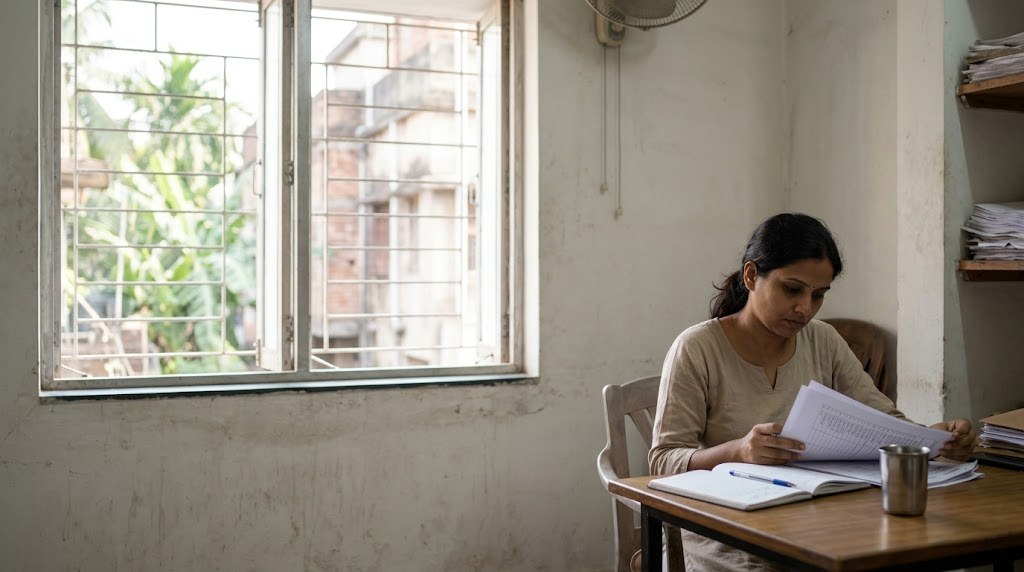
CBSE lists the private bodies whose schools it may affiliate: societies registered under the Societies Registration Act 1860 or under State Acts as educational, charitable or religious societies; registered trusts; and companies registered under section 8 of the Companies Act 2013 that have education as one of their objects (clause 2.1.8). A sole proprietor or an ordinary private limited company is not on that list.
Two conditions shape how the school is governed:
- Non-proprietary character. The body must not vest control in a single individual or in members of one family (clause 2.3.2).
- No profit motive. The body must run the school “as a community service and not as a business” (clause 9.1.3), and capitation fees and donations for admission are prohibited (clause 7.1).
How each form is registered and taxed is outside this guide. Ask a chartered accountant or company secretary in your State before you choose, because the choice is hard to undo once land is held in the body’s name.
How to register a school in India: two different registrations
When people ask how to register a school in India, they usually mean one of two things, and you need both. The first is registering the body that will run the school: a society, a trust or a Section 8 company, with the registering authority for that form (this step). The second is getting the school itself recognised, which in law is the certificate of recognition from your State under section 18 of the RTE Act (Step 2). A registration certificate for the society or trust does not by itself allow the school to be established or to function.
Step 2: State recognition under the RTE Act
The RTE Act applies to elementary education, which is Class 1 to 8 for children aged six to fourteen. Section 18 says that no school, other than one run by the government or a local authority, shall be established or function without a certificate of recognition. Section 19 says recognition is given only when the school meets the norms in the Schedule to the Act.
Running without recognition has a price written into the Act. Under section 18(5), a person who establishes or runs a school without a certificate of recognition is liable to a fine of up to one lakh rupees, and ten thousand rupees for each day the contravention continues.
The Schedule sets a floor that every State builds on. Its main items are:
| Item in the Schedule | Norm |
|---|---|
| Teachers, Class 1 to 5 | Two teachers for up to 60 children, three for 61 to 90, four for 91 to 120, five for 121 to 200 |
| Teachers, Class 6 to 8 | At least one teacher per class, covering Science and Mathematics, Social Studies and Languages; at least one teacher for every 35 children |
| Building | All-weather building; at least one classroom for every teacher; barrier-free access; separate toilets for boys and girls; safe drinking water; playground; boundary wall or fencing |
| Working days and hours | 200 days and 800 instructional hours a year for Class 1 to 5; 220 days and 1,000 hours for Class 6 to 8 |
One more duty follows recognition. Under section 12(1)(c), a private unaided school must admit children from weaker sections and disadvantaged groups in the neighbourhood to at least 25 per cent of the strength of Class 1. The State reimburses the school up to its own per-child expenditure or the amount the school actually charges, whichever is less.
What differs by State: the authority that issues the certificate, the form, the period and the conditions are set in each State’s RTE Rules. Some States also keep older approvals from before the RTE Act. In June 2026 the Ministry of Education advised all States and Union Territories to remove requirements such as “Permission to Establish”, “Essentiality Certificate” or “Notice of Intention” where they are no longer necessary. These are advisories, so ask your District Education Officer or State education department what applies today.
Step 3: Land and building requirements
For State recognition, land and building norms come from your State’s rules. For CBSE, the minimum was rewritten by Circular No. 04/2026 dated 19 January 2026, which replaced the old clauses 3.3 to 3.7 of the Bye-Laws with one table. Many pages online still quote the older figures.
| Category | Where the school is | Up to Secondary (Class 10) | Up to Senior Secondary (Class 12) |
|---|---|---|---|
| A | Anywhere in the country | 6,000 sq. m. | |
| B | Within municipal limits of “Y” category cities notified by the Government of India; State capital cities; hilly areas | 2,400 sq. m. | 3,200 sq. m. |
| C | Within municipal limits of “X” category cities; Arunachal Pradesh, Sikkim, Andaman and Nicobar Islands, Lakshadweep | 1,600 sq. m. | 2,400 sq. m. |
Source: CBSE Circular No. 04/2026, amended clause 3.3. Read it for the full wording of each category.
Other conditions matter as much as the area:
- The land must be one contiguous plot, with the building on one part and a playground on the rest (clauses 3.1.1 to 3.1.3).
- All schools should have a play area of at least 2,000 sq. m. within the campus. Schools on relaxed norms may instead arrange sports facilities nearby for at least 15 years, under conditions set in the circular.
- Title documents must be in the name of the school or of the society, trust or company. A lease must be registered and run for at least 15 years (clause 3.8).
- The number of sections you may run is tied to the built-up area. Under Notification No. 06/2026, three sections are permitted for every 400 sq. m. of built-up area.
Want to build a school in India without carrying all of this alone?
NIJIN Inc., which runs NIJIN Academy in Japan, is looking for one person to start and lead NIJIN Academy India as its business head and its principal. It is not a franchise: you lead it as its founder instead of buying a format. Teaching experience is not required. What form the academy takes under India’s rules for schools and open schooling is worked out with you.
Two ways to start: co-found the local company and hold shares (for example, 20% for you and 80% for NIJIN), or start on a service contract, even as a side job alongside your current work. Investment is optional. Either way, the compensation guide is the same: 10% of revenue (excluding tax), not a guaranteed income.
Step 4: CBSE affiliation, NOC and documents
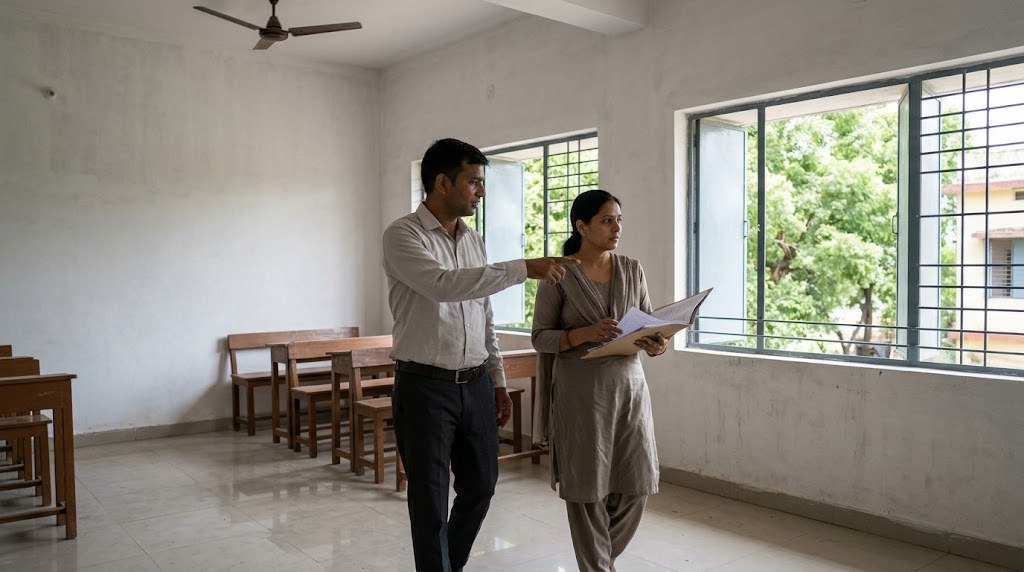
CBSE affiliates schools for the Class 10 and Class 12 examinations. Affiliation is “composite”: you must run every class from the starting class up to the level granted. The Bye-Laws allow Class 1 to 8, 1 to 10, 1 to 12, 6 to 8, 6 to 10 and 6 to 12 (clause 2.9). A school that stops at Class 8 applies for “Approval for Middle Class Syllabus” and, under the 2026 notification, must apply for upgradation within five years.
The NOC. The Bye-Laws ask private schools for a No Objection Certificate from the State Government (clause 2.3.5). Since Circular No. 04/2025 dated 20 February 2025, the SARAS manual says a school may apply with or without it. The State recognition certificate remains mandatory.
Documents CBSE lists for fresh affiliation of a private school
- No Objection Certificate from the State education department (or an application without it under Circular 04/2025)
- State recognition certificate, valid on the date of application
- Society registration certificate, Section 8 company incorporation certificate or registered trust deed
- Land certificate in CBSE’s format, issued not more than one year earlier, and a built-up area certificate
- Fire safety, building safety, and safe drinking water and sanitation certificates
- Salary details of teaching and non-teaching staff for the last six months, paid through ECS
- System-generated self-certification signed by the principal and the manager
Source: SARAS 7.0 manual, section 1.3, summarised. Read the manual for the exact wording.
How the SARAS application runs
- Register and complete KYC. Pay the initial Rs 10,000, adjusted against the final fee if Part A is accepted.
- Fill Part A and upload the mandatory documents. If they are not as prescribed, the application is rejected and the fee forfeited; you may apply again in the next window.
- Fill Part B and pay the balance within 15 days.
- Inspection. For the 2027–28 session, CBSE inspects 100% of fresh affiliation applications physically.
- Decision. A grant letter, or a rejection with reasons, which the school may ask to have reviewed within 15 days.
CBSE states that it has not authorised any agency or consultant for affiliation; a school that meets the requirements can apply by itself.
Procedure to start a CBSE school in Tamil Nadu (and other States)
The CBSE part of the procedure is the same in every State. What changes is the State layer: who registers your trust or society, which office gives recognition, and which certificates the State asks for. In Tamil Nadu, the State layer sits with the School Education Department, Government of Tamil Nadu.
| Order | What you do | Who decides | Covered above in |
|---|---|---|---|
| 1 | Register the body that will run the school | Registering authority for trusts, societies or companies | Step 1 |
| 2 | Secure land and the building, fire, water and sanitation certificates | Local and State authorities | Step 3 |
| 3 | Get State recognition and the State’s no-objection or approval for a CBSE school | In Tamil Nadu, the School Education Department | Step 2 and Step 4 |
| 4 | Apply for CBSE affiliation online | CBSE (SARAS portal) | Step 4 |
We could not find an official step-by-step guide from the Government of Tamil Nadu with forms, fees and timelines, so we do not list them here. Before you apply, ask the School Education Department or your district education office which form, office and fee apply to your school.
Tamil Nadu’s own law: permission first, then recognition
In Tamil Nadu, private schools are also governed by a State law, the Tamil Nadu Private Schools (Regulation) Act, 2018. It was published as Tamil Nadu Act No. 35 of 2019 after it received the assent of the President on 7 August 2019, and it applies to all private schools in the State, aided or unaided. It sets two separate steps:
- Permission to establish (sections 4 to 6). No educational agency may establish a private school without the prior written permission of the competent authority. The authority is to decide within three months of receiving the application, and an applicant who is refused may appeal within thirty days.
- Certificate of recognition (sections 7 and 8). Within three years of the permission order, the agency must apply for a certificate of recognition; if it does not, the permission lapses. The authority may inspect the site, and it considers factors such as the schools already in the locality, the need for the school, the proposed number of pupils, the playground, and the laboratory, library and other facilities.
The forms, fees and documents are left to rules made under the Act, and the Act speaks of a “competent authority” rather than naming one office. Ask the School Education Department which rules and which office apply to your school before you buy or lease land.
How long it takes
No official document gives one figure for the whole journey, and we will not invent one. The official documents do show the order of events, and that order means years, not months.
- The school must already be running when it applies to CBSE. The application asks for a State recognition certificate, a UDISE number, enrolled students and six months of staff salary records.
- CBSE takes applications in a yearly window, well ahead of the session. For 2027–28, the window opened on 26 February 2026 and, after extensions, closed on 10 October 2026.
- State recognition has its own clock, set in each State’s RTE Rules.
A realistic plan starts with the entity, the land and State recognition, opens with the lower classes, and applies to the Board in a later window.
Cost to start a school in India: what can be verified
Search for the cost to start a school in India and you find figures from a few lakh to several crore. They are estimates from firms that sell set-up services and depend almost entirely on local land prices, so we do not quote them. The official fees below are the only fixed numbers.
| CBSE application (school in India) | Fee stated in the SARAS 7.0 manual |
|---|---|
| Registration and KYC | Rs 10,000 (adjusted against the final fee) |
| Approval for Middle Class Syllabus | Rs 50,000 |
| Fresh affiliation up to Secondary level | Rs 1,50,000 |
| Fresh affiliation up to Senior Secondary level | Rs 2,50,000 |
Fees are as printed in the manual checked in October 2026 and can change. They are a small part of the total.
The lines that decide your budget each need a local quote: land (purchase or a registered lease of 15 years or more), construction, laboratories and a library beyond Class 8, salaries until fee income covers them, State fees and audited accounts.
Open schooling and other models
A full recognised school is not the only route in India’s own policy. The National Education Policy 2020 records that, according to the NSSO 75th round household survey of 2017–18, 3.22 crore children aged 6 to 17 were out of school. It speaks of “multiple pathways to learning involving both formal and non-formal education modes”, of expanding the open and distance learning of the National Institute of Open Schooling (NIOS) and State Open Schools, and of making requirements for schools less restrictive “to allow alternative models of education” (paragraphs 3.1, 3.5 and 3.6).
NIOS offers Secondary and Senior Secondary courses and an Open Basic Education programme at levels A, B and C, which it describes as equivalent to Class 3, 5 and 8 and which, it says, was extended in 2000 to children aged 6 to 14.
If your idea is a small learning centre, an online school or support for children who have left school, do not assume which category you fall in. Ask your State education department in writing whether it needs recognition as a school. Our guide to alternative schools in India looks at these models.
Alone, a franchise, or co-founding a company
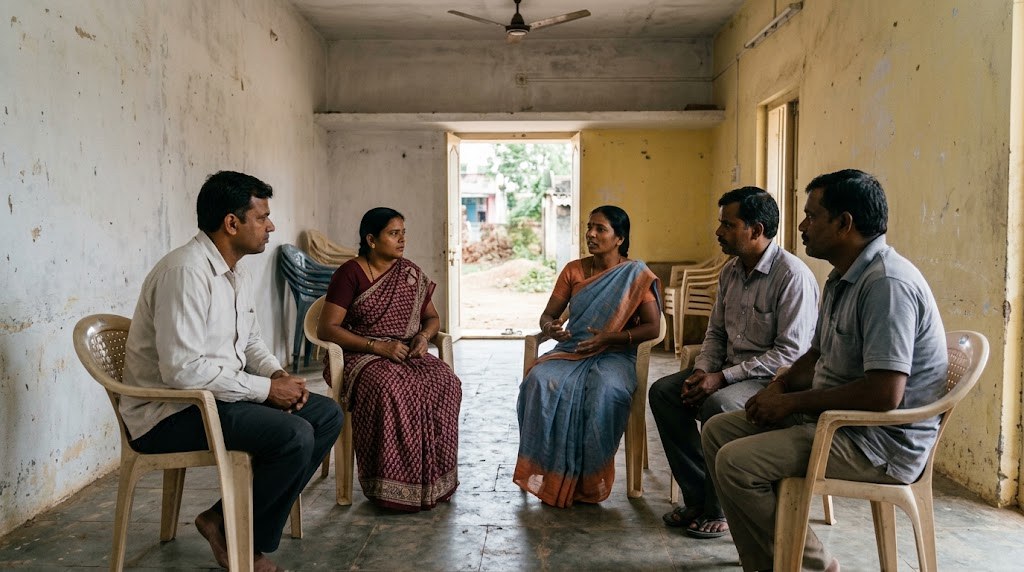
The legal steps are the same for everyone. What changes is who carries the design, the capital and the risk.
| From zero, alone | School franchise | Co-founding a local company (NIJIN Academy India) | |
|---|---|---|---|
| What you start with | Your own idea, name and curriculum | A brand and operating system licensed from a franchisor | A working model of an alternative school, online and in person, built with more than 1,000 children in Japan |
| Ownership | The society, trust or Section 8 company you form | Your own body runs the school; the brand belongs to the franchisor | A local company set up together (for example, 20% of the shares for you and 80% for NIJIN), or a service contract |
| Money in | All of it is yours to raise | Your own capital, plus the fees set in the franchise agreement | Optional. If you invest, the guideline is that you invest JPY 1 to 2 million and NIJIN invests JPY 4 to 8 million; exact amounts are decided together |
| Your role | Founder | Franchisee | Founder, business head and principal |
Franchise terms differ by franchisor; the middle column describes the general form, not any brand. The legal form NIJIN Academy India takes under Indian law is to be discussed in the interview.
NIJIN Academy is an alternative school in Japan for elementary and junior high school students who do not fit conventional school. Opened in September 2023, it is a hybrid: a metaverse campus, about 100 live online classes a month, and physical classrooms.
Figures are those published by NIJIN. “Attendance recognition” means the child’s registered school counts learning at NIJIN Academy as school attendance.
On pay, NIJIN states one formula: as a guideline, the Country Head receives 10% of revenue excluding tax, up to a cap of JPY 50 million. It is a guideline and not a promise of income; with no revenue, the formula pays nothing. Amounts are stated in Japanese yen only, and every other term is to be discussed in the interview.
Questions and answers
What are the requirements to start a school in India?
A registered society, trust or Section 8 company; land, a building and safety certificates that meet the norms; a certificate of recognition under the RTE Act for Class 1 to 8; and Board affiliation for Class 9 to 12. State-level details vary, so confirm them with your State education department.
Is opening a school profitable in India?
Not as a business in the usual sense. A CBSE school must be run by a society, trust or Section 8 company “as a community service and not as a business” (Bye-Laws clause 9.1.3), and capitation fees and admission donations are prohibited (clause 7.1). Fees still have to cover salaries, the building and running costs, and how fees are regulated depends on your State. For the numbers behind this question, read Is school a profitable business in India?
How much land is required to open a CBSE school?
Under Circular No. 04/2026: 6,000 sq. m. anywhere in the country; 2,400 or 3,200 sq. m. in Y category cities, State capitals and hilly areas; and 1,600 or 2,400 sq. m. in X category cities and certain States and Union Territories.
How to get a NOC for CBSE affiliation?
The NOC is issued by the education department of your State or Union Territory under its own procedure. Since Circular No. 04/2025, the SARAS manual says a school may apply with or without it.
Can a private limited company run a school in India?
For CBSE affiliation, the Bye-Laws name only registered societies, registered trusts and Section 8 companies of non-proprietary character. State recognition rules may add conditions. Take professional advice on other education activities.
How much does it cost to set up a school in India?
No official source gives a total; it depends mainly on land and construction. The fixed official numbers are CBSE’s application fees: Rs 1,50,000 for fresh affiliation up to Secondary and Rs 2,50,000 up to Senior Secondary.
What is the procedure to start a CBSE school in Tamil Nadu?
Register a society, trust or Section 8 company; get the State’s written permission to establish the school and then its certificate of recognition under the Tamil Nadu Private Schools (Regulation) Act; secure the land and the safety certificates; run the school; and apply to CBSE through SARAS in its yearly window. Since Circular No. 04/2025, CBSE accepts applications with or without the State NOC, but State recognition remains mandatory.
Start a school in India as a founder, not from zero
NIJIN is looking for one founder to start and lead NIJIN Academy India as its business head and principal, as a co-owner of a local company (for example, 20% of the shares) or on a service contract. Investment is optional. Teaching experience is not required, and English alone is enough to apply.
Apply now → Want to know more first? Read the Country Head role in India, or see all open roles.Where to go next
Country Head pages are open for several countries, and the global page covers every other country.
Related guides for founders
- How to open a school in Pakistan
- Alternative schools in India
- How to start a school in the Philippines
- How to start a microschool
- How to start an online school
- How to start an education business
- Country manager in education: the role and pay models
- Cost to start a school in India: a realistic breakdown
- How to start an online school in India
- Education business ideas in India
- How to start a CBSE school in India: affiliation steps
- How to start a Montessori school in India: 5 steps
- School business plan in India: what to put in it
- School recognition under the RTE Act
- How to open a school in a village in India
Sources
All rules and figures were read in the original documents in October 2026. Circulars change the Bye-Laws often, so please check the originals for later updates.
- https://www.dsel-education.gov.in/documents/acts-and-policies (Ministry of Education, Department of School Education & Literacy: Acts and Policies)
- https://dsel-education.gov.in/static/uploads/2025/09/ee3cf9ae4ddbc3d0582e98f050290edc.pdf (RTE Act 2009 with amendments)
- https://dsel-education.gov.in/static/uploads/2026/07/0ea720c4a46a3c7ebf81f7b6396ddf67.pdf (Advisory of 30 June 2026)
- https://dsel-education.gov.in/static/uploads/2026/06/d915f0bd5cf530e7684c54d66dbb419b.pdf (Advisory of 23 June 2026)
- https://www.cbse.gov.in/cbsenew/documents/affiliation-Bye-Laws.pdf (CBSE Affiliation Bye-Laws 2018)
- https://www.cbse.gov.in/cbsenew/aff-bye-laws.html
- https://saras.cbse.gov.in/SARAS/Circulars/Circular04_2026639044408174897436.pdf (Circular No. 04/2026, land requirement)
- https://saras.cbse.gov.in/SARAS/manuals/SARAS_MANUAL.pdf (SARAS 7.0 manual)
- https://saras.cbse.gov.in/SARAS/Home/Circulars (CBSE affiliation circulars)
- https://saras.cbse.gov.in/SARAS/Manuals/Chapter_12_FREQUENTLY_ASKED_QUESTIONS_GENERAL.pdf
- https://www.cbse.gov.in/cbsenew/documents/Press_Release_Saras_7_27022026.pdf (SARAS 7.0 window for 2027–28)
- https://static.pib.gov.in/WriteReadData/userfiles/NEP_Final_English_0.pdf (National Education Policy 2020)
- https://digital.nios.ac.in/about.php (NIOS: About)
- https://sdmis.nios.ac.in/modules/obe-registration/obe (NIOS Open Basic Education)
- https://nijin.co.jp/recruit/nijin-academy-india-country-head/