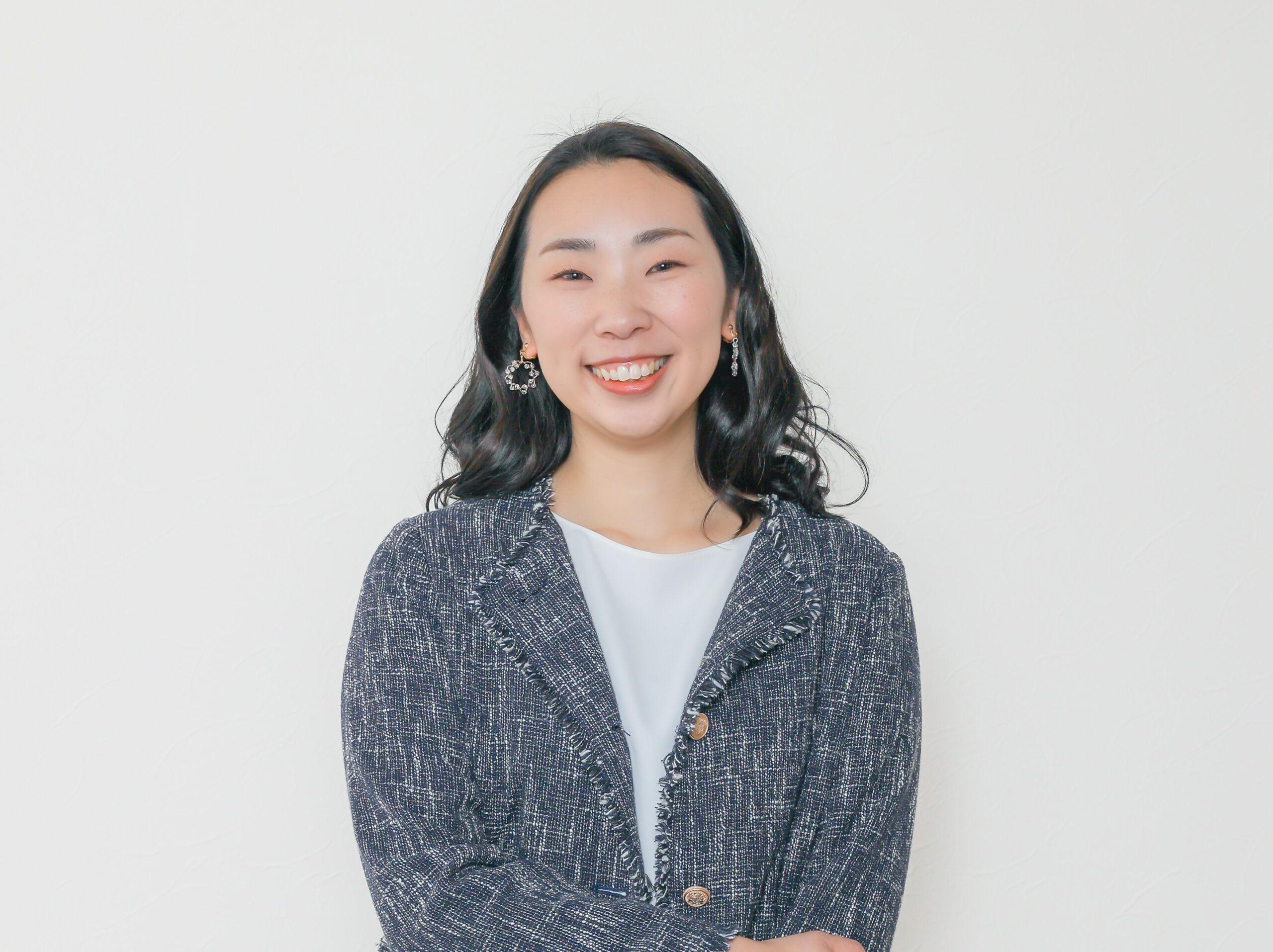
“I want to save the children who quietly find it harder and harder to breathe inside the framework called school.” That was the wish of Ai Tanaka, known as “Aiai”, who was feeling stifled inside the system too. After teaching at a public high school, Aiai now works at NIJIN Academy with children from elementary to high school age. We also asked about “Niji-ko”, the correspondence-course support school that opened in April.
Profile
- Seeing children who are not attending school not as “problem children” but as “children with fascinating potential”
- So that students can meet “a self they could never have met inside school alone”
- Less “support for school non-attendance”, more “a place where a life starts moving”
Seeing children who are not attending school not as “problem children” but as “children with fascinating potential”
—What work do you do at NIJIN now?
I work with children all over Japan in the metaverse, and one day a week I run the Nagoya Nakamura classroom. Alongside that I am a homeroom teacher at NIJIN High School (known as “Niji-ko”), our correspondence-course support school.
My morning starts with PE with the children in the metaverse. After that I talk with students on Slack and oVice, and keep up exchanges with parents and guardians. During the day I have meetings with people from companies: “Could we spark this kind of chemical reaction with the children?” And in the late afternoon I help high school students think through their projects. That is what my days are like.
To be honest, I used to think remote work would be a much lonelier thing. In reality it is the exact opposite. On the other side of the screen, there is a feeling that every single day someone’s life is definitely moving.
For example, a child who had said “Going all the way to the EDIX venue (one of Japan’s largest education trade fairs) is such a pain…” ended up staying longer than anyone on the day, debating energetically with working adults. Or a high school student who had closed up, saying “I can only cope with chat messages…”, one day suddenly told me how they felt in their own voice.
Far more than when I was a schoolteacher, I am able to be involved in what really matters: “who does this child want to be, who do they want to become?” The moments when I feel that keep adding up, day after day.
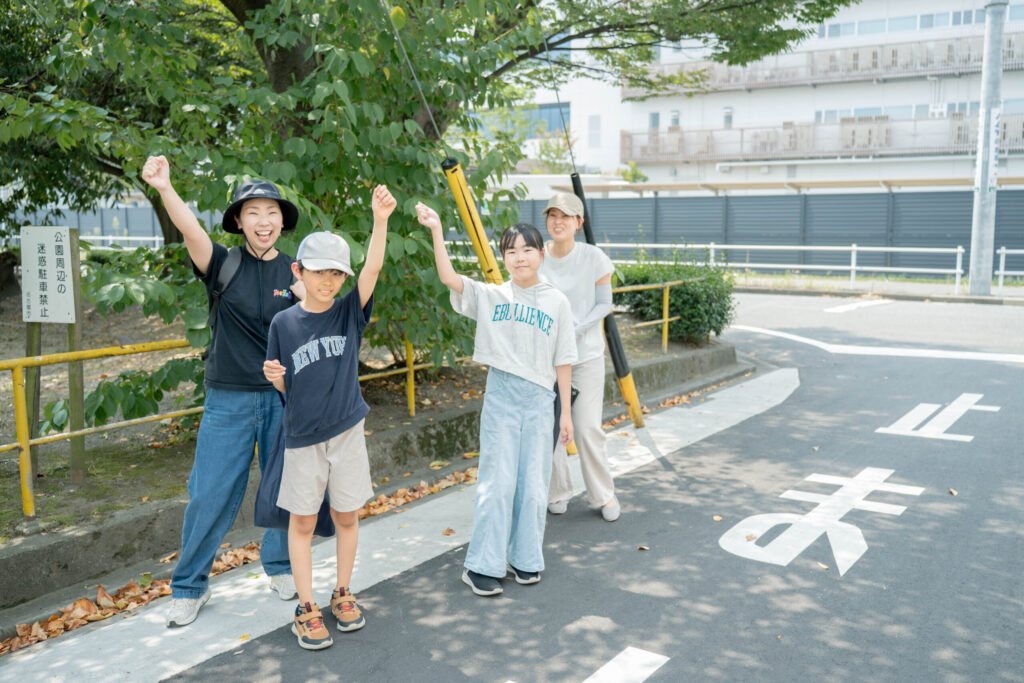
— After a career as a high school teacher, why did you decide to join NIJIN Academy, and then Niji-ko?
Children who can no longer come to school, children who spend the day in the nurse’s room, and children who become less able to move the more they are told “Come on, you can do it”. In schools, when non-attendance happens, the question becomes “Whose fault is it?”, and the child, the family and even the homeroom teacher all end up blaming themselves. I felt stifled by that for a long time. Because beyond it, it seemed there was only one right answer: “get them back to school, even if it means forcing it”.
That was when I came across NIJIN Academy. There were people there who said, and truly meant it, “Going back to school is not the only right answer in education.”
And then there were the children. A child who had done nothing but play games had started making games; a child who couldn’t show their face on camera was organising an event. They were vibrant, shining. Seeing children who are not attending school not as “problem children” but as “children with fascinating potential”: when I met that new way of looking, the one who was saved was me. I learnt that there were options other than “going back to school”, and I could feel from the heart, “Nobody needs to be blamed. It’s all right for options like this to exist.” Niji-ko, which opened this April, is the same. I am convinced it is not “a place to catch up on lost learning” but “a place where you build your own life”.
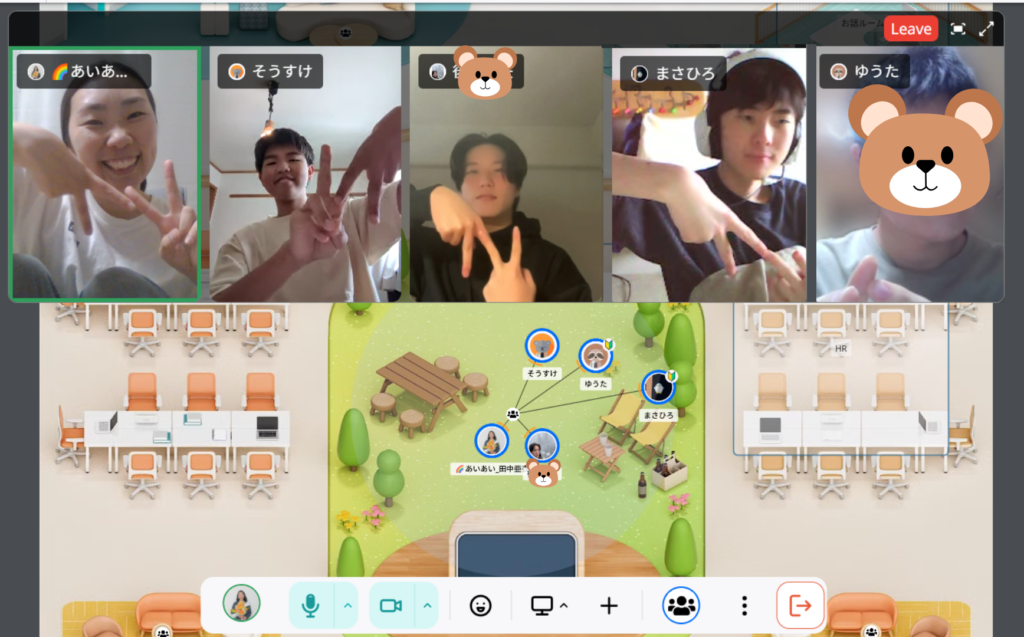
So that students can meet “a self they could never have met inside school alone”
— What is hard, and what is rewarding, about the work that is particular to Niji-ko?
Niji-ko isn’t a job where it’s enough just to follow the standards set by the Ministry of Education. “How could we connect what this child loves with the real world?” “Which company, or who, should we team up with to make this project really interesting?” I am thinking about things like that all the time. There is no right answer, and no such thing as the correct teaching method. Every day we start from a blank page and feel our way towards the goal where that child shines.
Honestly, I am terrible at things like email and admin, and there are perfectly ordinary days when I’m backed into a corner going “Aaargh!” (laughs). But there are moments when people from companies really listen to what a high school student has to say and treat them as an equal: “That’s a good idea.” At those moments the child’s face is truly different. It’s as if they are meeting “a self they could never have met inside school alone”. Getting to be there for that is the most interesting part of this job.
— Is there an episode with a student that has stayed with you?
There’s a student called Yuta. He had always thrown himself into sport, but at a certain point, for various reasons, he drifted away from it. Then, just when life had become dull, he found “Niji-ko” and decided to enrol, thinking “This looks like fun!” At first he was partly watching to see how things went, but little by little he began talking with everyone, and now he is organising a sports day, saying, “I want everyone else to discover how much fun the sport I love is!” He has become the leader of this project, and when I see how alive his face looks, I feel truly glad that I took on Niji-ko myself.
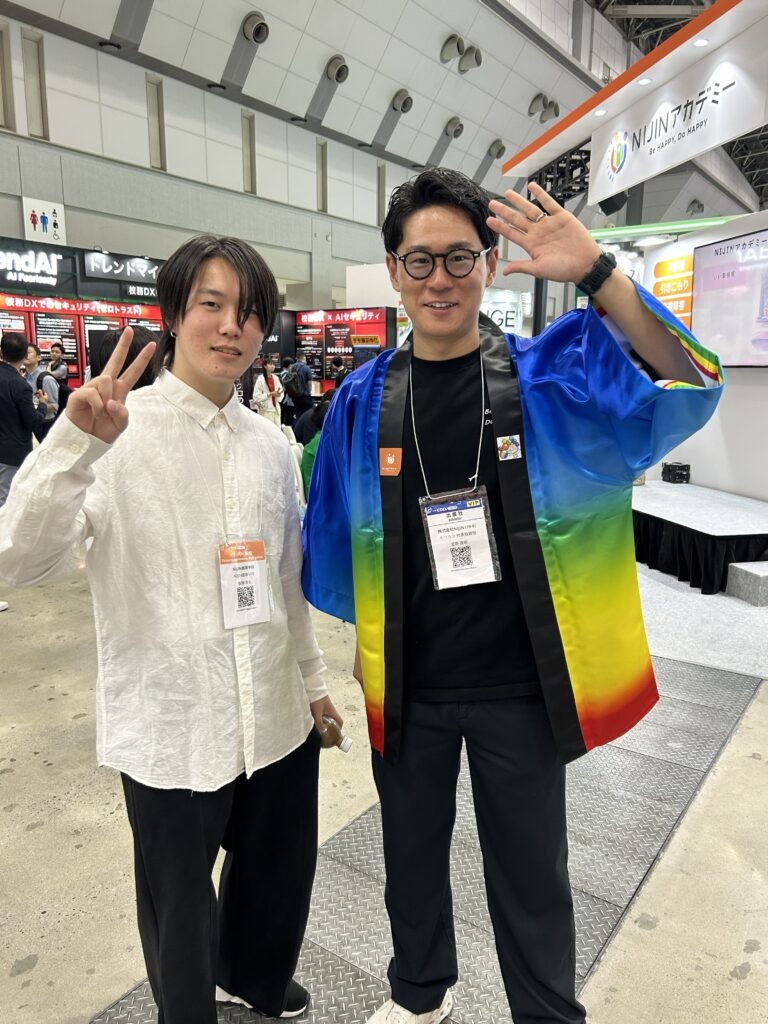
Less “support for school non-attendance”, more “a place where a life starts moving”
— As a teacher at Niji-ko, at NIJIN Academy and at a physical campus, what do you want to take on from here?
From here on, I want to create learning in which the metaverse and the physical world connect more naturally. Even children who can’t leave the house can connect with friends across the country in the metaverse. And if they come to a physical classroom, they can meet friends in person. I think “having both” really matters.
I teach at Niji-ko and NIJIN Academy fully remotely, and in Nagoya, where I live, I also run a physical classroom. There, together with children from elementary to high school age, we develop products and plan festivals that bring in the local community. Not just study: I want to create more experiences in which what they love connects with society. In the long run I want to make a place where children and adults alike can think, “I’m allowed to say what I love, more than I do.” It may be closest to say that rather than support for school non-attendance, I want to create “a place where a life starts moving”.
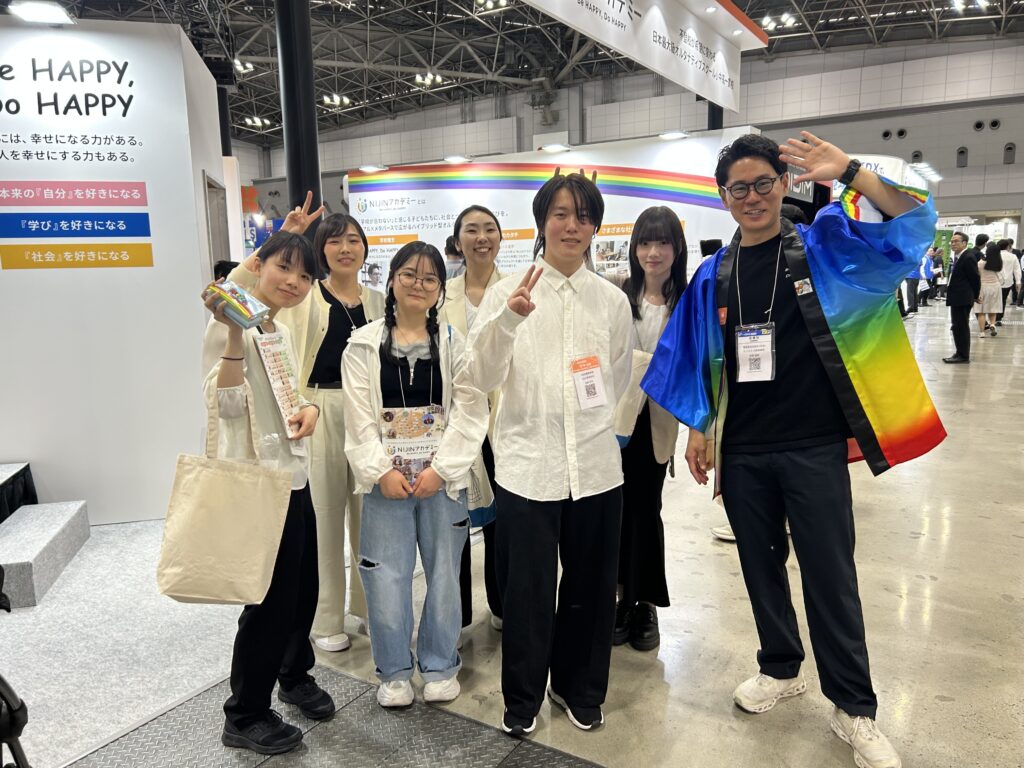
— A message, please, for our readers who are schoolteachers now and are unsure about their career or the way they work!
I think a great many teachers are really conscientious people. So they tell themselves “I have to try harder” and keep wearing themselves down. I was like that too. But looking back now, I feel the most important thing was “Am I excited by what I’m doing?” Children watch “adults who are having fun taking on challenges” far more closely than they watch perfect teachers. An adult who messes up and keeps going while saying “Oh no, help me!” is, surprisingly, the one children enjoy watching (laughs).
If right now you are thinking, even a little, “Is it all right to carry on like this?”, please don’t ignore that feeling. There is education outside school too. And here there is also a way of working that lets you yourself breathe a little more easily.
▼ More about Niji-ko here
Read next | Voices of colleagues taking on challenges at NIJIN