For education founders
A microschool franchise is the right to run a small school under another organization’s brand and system in return for fees, and in the United States, if the deal meets the FTC’s definition of a franchise, the seller must hand you its Franchise Disclosure Document (FDD) at least 14 calendar days before you sign anything or pay anything. That document, not the sales call, is where the real cost, the real contract and the real track record are written down.
This guide compares a microschool franchise in the U.S. with two other routes: starting your own, or co-founding a local school company with an established operator. It does not rate any franchisor. Still deciding what kind of school to build? Start with how to start a microschool.
In this article
- What a microschool franchise is, in legal terms
- Franchise, network, license or platform: four models
- Microschool franchise cost: the lines to add up
- The FDD checklist: what to read before you sign
- State education law: the part no franchise can sell you
- Franchise, start your own, or co-found a local company
- Six steps before you sign or pay
- Questions and answers
What a microschool franchise is, in legal terms

“Microschool” has no single legal definition in the U.S. “Franchise” does have a federal one, and it does not depend on what the seller calls the deal.
Under the FTC Franchise Rule, a franchise is “any continuing commercial relationship or arrangement, whatever it may be called,” in which three things are true (16 CFR 436.1(h)):
- You get the right to operate a business identified with the franchisor’s trademark.
- The franchisor exerts, or has the authority to exert, a significant degree of control over how you operate, or gives you significant assistance in how you operate.
- As a condition of getting or opening the business, you make, or commit to make, a required payment to the franchisor or its affiliate.
So a microschool “affiliate program,” “license” or “network membership” can still be a franchise in law if all three elements are present, and the Rule’s main protection, the disclosure document, then applies. If a deal looks like a franchise but no FDD is offered, ask the seller in writing which part of the definition, or which exemption, they rely on.
Demand is real: the National Center for Education Statistics reports that about 5.2 percent of U.S. children aged 5 to 17 learned at home in 2022–23, up from about 3.7 percent in 2018–19.
Franchise, network, license or platform: four models
Offers sold as microschool franchise opportunities in the USA mix quite different arrangements. Sort them by who owns what and who pays whom.
| Model | What you usually get | How money usually flows | Who owns the local school | FDD likely? |
|---|---|---|---|---|
| Franchise | Brand, operating manual, training, territory terms | Initial fee plus ongoing fees (often royalties or per-student fees) to the franchisor | You, under a time-limited agreement | Yes, if the three elements are met and no exemption applies |
| Network or affiliation | Name or membership, community of founders, shared practices | Membership or affiliation fee; sometimes none | You | Depends on how much control and payment are involved |
| Curriculum or platform license | Learning software, curriculum, sometimes billing tools | License or per-student platform fee | You | Often not, if there is no trademark-based business and no significant control |
| Co-founded local company | An operating model, plus a partner that owns shares with you | Both sides invest capital; profit and pay follow the company’s own rules | The company, owned jointly | Not a franchise sale; you read a shareholders’ agreement instead |
This table describes common patterns, not any specific organization. The legal answer for a given offer depends on its actual terms; ask a franchise lawyer.
None of these is better in general. What changes is how much you pay, how much you control, and what you own at the end.
Microschool franchise cost: the lines to add up
Microschool franchise cost is a total, not a single fee, and the FDD is built to show it. Item 5 covers initial fees, Item 6 covers other fees, and Item 7 must show your “estimated initial investment” in a table that lists each type of expense, the amount, the method of payment, when it is due and to whom it is paid. We quote no typical amounts: the only reliable figures are in the current FDD of the offer in front of you.
| Cost line | What to look for | Where it appears |
|---|---|---|
| Initial franchise or license fee | Amount, whether any part is refundable, how it is paid | FDD Item 5 |
| Ongoing fees | Royalty percentage, per-student or per-seat fees, technology, marketing fund, renewal and transfer fees | FDD Item 6 |
| Space | Lease, deposit, build-out, furniture, safety equipment; whether the franchisor must approve the site | FDD Items 7, 8 and 11 |
| Required purchases | Curriculum, devices, software or supplies you must buy from the franchisor or approved suppliers | FDD Item 8 |
| Staff | Lead guide and assistant pay, background checks, cover for illness | Your own budget (not set by the franchisor) |
| Compliance and insurance | State registration or notice, fire and building checks, liability insurance | Your own budget, after asking your state and local authorities |
| Working capital | Months of costs you must cover before tuition covers them | FDD Item 7 (franchisor’s estimate) and your own plan |
A detail worth knowing about “low-fee” offers. The Franchise Rule does not apply if the total required payments to the franchisor from before opening until six months after opening are under a threshold, which is $735 in the current eCFR text (16 CFR 436.8(a)(1)). A model that charges almost nothing up front and earns from per-student fees later may therefore come without an FDD, so ask for the same information yourself.
The FDD checklist: what to read before you sign
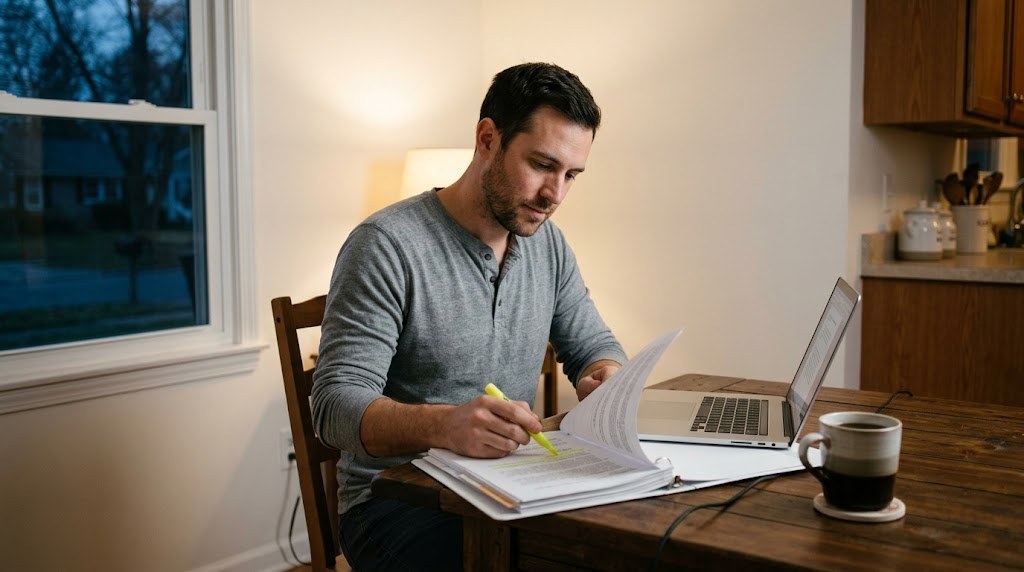
The FTC describes the Rule as requiring franchisors to give every prospective franchisee a disclosure document with 23 specific items of information. Four timing and scope rules frame the whole process:
Source: 16 CFR Part 436, §§ 436.2 and 436.5, on eCFR. The seven-day period applies to material changes the franchisor makes unilaterally, not to changes you negotiated.
For a microschool, read these items with a pen in hand:
- Items 1 to 4: who you are dealing with. How long the franchisor has run and franchised this type of business, its leaders’ recent experience, and any litigation or bankruptcy.
- Items 5, 6 and 7: every fee and the total initial investment. Add them up yourself and compare with your own break-even budget.
- Item 8: what you must buy, and from whom. Required curriculum, software and devices are a large share of a small school’s spending.
- Item 11: assistance, training and systems. What the franchisor actually does before opening and after, whether it must approve your site, the typical time from signing to opening, and which computer systems you must use.
- Item 12: territory. Whether you get any protected area, or whether another site can open near you.
- Item 15: personal participation. Whether you must run the school yourself or may hire a manager to run it.
- Item 17: renewal, termination, transfer and disputes. The FTC’s buyer’s guide warns that renewals are not automatic and that a terminated franchisee is likely to lose the entire investment.
- Item 19: financial performance representations. Any claim about sales, income or profit must appear here. If none is made, be wary of earnings figures offered elsewhere.
- Item 20: outlets and franchisee contacts. Openings, closings and transfers for three years, names and phone numbers of current franchisees, and contacts for those who left in the last fiscal year. Call both groups.
- Item 21: financial statements. Normally audited statements comparing at least two fiscal years; a start-up franchise system may phase in audits. Ask an accountant to read them.
- Item 22: the contracts. The franchise agreement and related agreements are attached. Read them in full, not only the summary in Item 17.
The FTC’s guide adds that several states have their own franchise registration or disclosure laws; if the FDD does not describe them, check with your state attorney general, consumer affairs office or securities division.
State education law: the part no franchise can sell you
A franchisor can license a brand and a method. It cannot decide what your microschool is under state law. Private schools and home education are regulated state by state, and the same small setting might count as a private school, a homeschool co-op or support program, a tutoring business, or childcare, depending on the state, the hours and the ages. We do not say which applies to you.
The U.S. Department of Education keeps a state-by-state index of registration, licensing and other requirements for K–12 private and home schools, with comparison charts. Use it to find the right office, then confirm with your state department of education and, for buildings, your local authorities.
Questions to put to your state, in writing, before you sign a franchise agreement
- At what hours, number of children or ages does our setting count as a private school?
- If we are not a school, what are we, and are the children legally homeschooled or enrolled elsewhere?
- Do staff need a teaching certificate, and which background checks apply?
- Which building, fire, health and zoning rules apply to this address?
- If families use a state scholarship or education savings account, which rules does the provider have to meet?
Then ask the franchisor which of these answers its system depends on. A model built around one state’s rules may need changes in yours.
Franchise, start your own, or co-found a local company

The third column describes one specific option, NIJIN Academy’s Country Head role, from our own published terms.
| Microschool franchise | Start your own | Co-found a local company (NIJIN Academy US) | |
|---|---|---|---|
| What you own | Your local business, under a license that can end | All of it | 20% of the shares; NIJIN holds 80% |
| Upfront money | Initial fee plus the initial investment in FDD Item 7 | Whatever you choose to spend | As a guide, JPY 1 to 2 million from you and JPY 4 to 8 million from NIJIN, decided together |
| Ongoing payments | Royalties or per-student fees to the franchisor | None to anyone else | No franchise fees; it is a jointly owned company |
| Your pay | Whatever the school earns after fees and costs | Whatever the school earns after costs | As a guide, 10% of revenue (excluding tax), capped at JPY 50 million; not guaranteed |
| Model and support | The franchisor’s system and manual | You design everything | A working hybrid model from Japan, adapted with you |
| Main document to read | FDD and franchise agreement | Your own business plan | Shareholders’ and company documents, discussed in the interview |
NIJIN terms are those published on the NIJIN Academy US Country Head page. Amounts are stated in Japanese yen only. Every other term is discussed in the interview.
Want to build a school in the U.S. without buying a franchise?
NIJIN Academy is an alternative school in Japan, opened in September 2023 by NIJIN Inc. Children join from home through a metaverse campus, choose from about 100 live online classes a month, and can go to 52 physical classrooms across Japan. NIJIN is looking for one person to launch and lead NIJIN Academy US as business head and principal. It is not a franchise: we set up a local company together and you hold 20% of the shares. Teaching experience is not required.
Two ways to start: co-found the local company and hold shares (for example, 20% for you and 80% for NIJIN), or start on a service contract, even as a side job alongside your current work. Investment is optional. Either way, the compensation guide is the same: 10% of revenue (excluding tax), not a guaranteed income.
See the Country Head role in the United StatesSix steps before you sign or pay
- Write your own budget first. Estimate rent, staff and insurance in your town, and the number of children you need to break even.
- Ask your state what you would be. Send the questions above to your state department of education and keep the written reply.
- Get the FDD, and use the 14 days. Do not sign or pay before the waiting period ends. Note the issuance date on the cover.
- Call current and former franchisees. Use the Item 20 lists. The FTC’s guide says this may be the most reliable way to check a franchisor’s claims.
- Get two professional reviews. An accountant for Item 21 and your budget, and a lawyer experienced in franchise matters for Items 17 and 22.
- Compare the three routes. Put total cost, control and ownership side by side, using the table above.
Questions and answers
How much does a microschool franchise cost?
There is no single honest figure. The total is the initial fee (FDD Item 5), ongoing fees (Item 6) and the full estimated initial investment (Item 7), plus staff, space and compliance costs in your town. Read those three items in the current FDD of the specific offer and add your own local quotes.
Are there microschool franchise opportunities in the USA?
Yes, several organizations offer franchise, affiliation or licensing models for small schools in the U.S. They differ widely in fees, control and ownership. Use the four-model table and the FDD checklist above to compare them on the same terms; we do not rank individual brands.
Is a microschool franchise for sale the same as buying an existing school?
Not always. A “for sale” listing may be a new territory or the transfer of an existing outlet. Item 17 sets out transfer terms and Item 20 shows how many outlets changed hands; also ask for the school’s actual records.
Do I need a teaching certificate to run a microschool franchise?
It depends on your state and on the legal category of your setting, not on the franchisor. Some categories require certified teachers and some do not. Ask your state department of education in writing.
Is NIJIN Academy a microschool franchise?
No. In a franchise you pay to use a format. With NIJIN Academy US, we set up a local company together, you hold 20% of the shares and NIJIN holds 80%, and you lead it as founder, business head and principal.
I am looking for country manager jobs in education in the USA. Is this a job or a business?
Both. The Country Head is paid, as a guide, 10% of revenue up to JPY 50 million, and also owns 20% of the local company. When there is no revenue, the formula pays nothing. Form of engagement, location and timing are discussed in the interview.
Start a school in the U.S. as a co-founder, not a franchisee
NIJIN is looking for one founder to launch and lead NIJIN Academy US as business head and principal, holding 20% of the local company. Teaching experience is not required. If you have led an organization and hired a team, read the role.
See the Country Head role in the United StatesWhere to go next
Country Head pages are open for several countries, and the global page covers every other country. Our English careers page lists everything else we are working on.
Related guides for founders
- How to start a microschool: seven steps for founders
- Education franchise in India
- Edupreneur: what the word means
- How to start an education business
- Country manager in education: the role and three pay models
- How to start a microschool in Texas
- How to start a microschool in Florida: 2026 rules
Sources
Legal citations refer to the eCFR text as viewed in October 2026. Dollar thresholds in the Franchise Rule are adjusted from time to time; please check the current text.
- https://www.ecfr.gov/current/title-16/part-436
- https://www.ftc.gov/legal-library/browse/rules/franchise-rule
- https://www.ftc.gov/business-guidance/resources/consumers-guide-buying-franchise
- https://www.ed.gov/birth-grade-12-education/education-choice/state-regulation-of-private-and-home-schools
- https://ies.ed.gov/learn/press-release/higher-percentage-k-12-students-are-receiving-academic-instruction-home
- https://nijin.co.jp/recruit/nijin-academy-us-country-head/