For education founders in India
Before you sign for an education franchise in India, get five things in writing: every fee line in rupees (franchise fee, royalty, setup, marketing and renewal), the exact territory you are protected in, which approvals you must obtain yourself, what happens to your centre if you leave, and contact details of current franchisees you can call. India has no franchise-specific law, so the agreement you sign does most of the work of protecting you.
Most pages about education franchise opportunities in India are brand lists. This guide ranks no franchisor. It explains, from the side of the person who pays, the money lines in each type of franchise (preschool, K-12 school, tutoring or coaching, skill training), the approvals that stay your job, and the questions to ask. It ends by comparing a franchise with starting alone and with co-founding a company.
In this article
- What you actually buy in an education franchise
- The law: India has no franchise act
- The money: every fee line to ask about
- Format by format: what changes
- The checklist before you sign
- How to judge the “best” education franchise in India for you
- Franchise, starting alone, or co-founding
- Questions and answers
What you actually buy in an education franchise

In an education franchise, a brand owner (the franchisor) lets you (the franchisee) run a preschool, school, coaching centre or training centre under its name and methods. You pay an upfront fee and usually an ongoing share, and receive some mix of brand, curriculum, training, software, marketing and an operating manual.
What you usually do not receive is the business itself. You typically rent the building, hire the staff, collect the fees and answer to the authorities. The split varies by type.
| Type | Who it serves | What the franchisor typically supplies | What usually stays with you |
|---|---|---|---|
| Preschool / play school | Children aged about 3 to 6 | Brand, early-years curriculum, kits, staff training, interior guidelines | Premises, staff, parent trust, safety and any local registration |
| K-12 school | Class 1 to Class 12 (often starting smaller) | Brand, academic plan, principal and teacher training, admissions support | Land and building, the legal entity, state approvals, board affiliation, large payroll |
| Tutoring / coaching centre | School students or exam aspirants | Course content, test series, faculty training, lead generation | Rented space, tutors, state registration where required, fee refunds |
| Skill / computer training | Teenagers and adults | Courses, software, certificates under the brand’s name | Centre, trainers, placements you promise, checking what the certificate is worth |
The law: India has no franchise act
The United States International Trade Administration’s India Country Commercial Guide states that, unlike the United States and other western countries, India does not have specific laws on franchising, and that franchising is governed by national and regional statutes and codes rather than one comprehensive statute. In plain terms, there is no franchise statute that tells a franchisor what it must disclose to you before you sign.
Your franchise agreement is a contract, so the Indian Contract Act, 1872 is the starting point. Section 27 says that every agreement by which anyone is restrained from exercising a lawful profession, trade or business of any kind is, to that extent, void, with a limited exception for someone who sells the goodwill of a business. How it applies to a particular non-compete clause is a question for your lawyer.
What this means for you. Ask for the numbers, because no franchise law makes the franchisor offer them. What is said in a sales meeting but not written into the agreement is hard to rely on later. Have an Indian advocate read the agreement and a chartered accountant check fees and tax before you pay anything, even a “token” amount.
The money: every fee line to ask about
Searches such as “school franchise in India under 10 lakhs” or “school franchise in India cost” show what people ask first. No honest single figure exists: the total depends on format, city and what the headline number leaves out. Ask for each line below in writing, in rupees, with GST shown separately.
| Fee line | What it usually pays for | The question to ask |
|---|---|---|
| Franchise fee (one-time) | The right to use the brand and system for the term | Is any part refundable if approval or premises fall through? For how many years does it last? |
| Royalty (ongoing) | Continued use of brand, content, support | A percentage of what exactly: fees collected, fees billed, or a fixed amount per student? Is there a minimum even in a bad month? |
| Setup and fit-out | Interiors, furniture, signage, IT, kits | Must I buy from the franchisor’s vendors? Can I see an itemised quote before I sign? |
| Territory | Protection from another unit of the same brand nearby | Is the area defined on a map or by pin codes? Does it cover online enrolments from my area? |
| Marketing or brand fund | National and local advertising | How is it spent, and do I see an account of it each year? |
| Materials, books, software | Per-student kits, licences, platforms | Is the price fixed for the term, or can it rise? Can I buy elsewhere? |
| Renewal, transfer, exit | Renewing at the end of the term, selling the unit, closing | What do I pay to renew or sell? What happens to students and their fees if I close? |
Then run your own break-even before reading the franchisor’s projections: fixed monthly costs (rent, salaries, minimum royalty, loan repayment) divided by what each student leaves you after per-student costs and royalty. If the answer is close to full capacity, the model does not work at that site.
Format by format: what changes
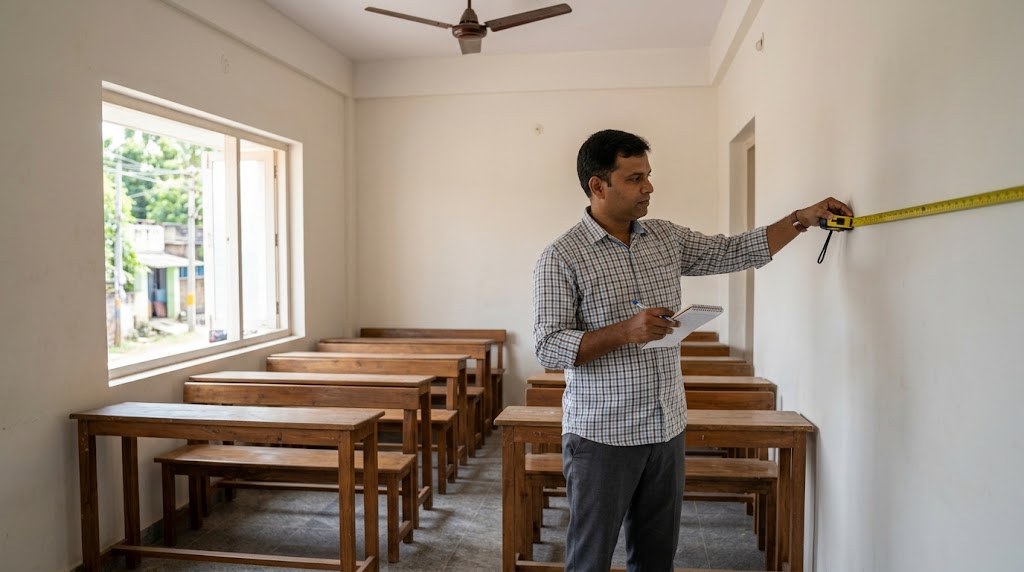
Preschool and play school
India’s National Education Policy 2020 moves from the old 10+2 structure to a 5+3+3+4 structure covering ages 3 to 18, which brings Early Childhood Care and Education (ECCE) from age 3 into the school system. The policy lists stand-alone pre-schools among the institutions that will deliver ECCE, alongside Anganwadis and pre-primary sections in primary schools. So preschools are recognised in policy, but the rules may change as states implement it. Ask your state authorities what applies to your address today.
K-12 school
A school is the largest commitment: land, a building, a legal entity, the approvals your state requires and, if you want it, board affiliation. A brand cannot grant you the last two. The Central Board of Secondary Education (CBSE) affiliates schools for its secondary and senior secondary board examinations through its own online affiliation system, and states that more than 24,000 schools are affiliated to it. Treat “we will get you affiliation” as an offer to help, and ask how many of the brand’s schools actually hold affiliation.
Tutoring and coaching centre
According to a government press release of 7 February 2024, the Ministry of Education has prepared Guidelines for Regulation of Coaching Centres and sent them to the states and union territories. They cover registration, fees, infrastructure, a code of conduct, counsellor support, records, complaints and penalties. Because education is on the concurrent list, each state decides how to adopt them. Ask whether your state requires registration, who registers, and whether the brand’s fee and refund terms fit your state’s rules.
Skill and computer training
The key question is what the certificate is worth to a learner. If the franchisor says a course is government-recognised, ask which body recognises it and check that body’s own website yourself.
Looking for a way to build an education company, not buy a format?
NIJIN Academy is an alternative school in Japan, opened in September 2023 by NIJIN Inc. Children attend from home through a metaverse campus, choose from about 100 live online classes a month, and can go to 52 physical classrooms across Japan. NIJIN is looking for one Country Head to start and lead NIJIN Academy India as business head and principal. It is not a franchise: you co-found a local company and hold 20% of its shares.
Two ways to start: co-found the local company and hold shares (for example, 20% for you and 80% for NIJIN), or start on a service contract, even as a side job alongside your current work. Investment is optional. Either way, the compensation guide is the same: 10% of revenue (excluding tax), not a guaranteed income.
See the Country Head role in IndiaThe checklist before you sign
Do not sign until every line has a written answer.
- The legal name and address of the entity you are actually contracting with.
- Whether the brand is a registered trade mark, and in whose name (searchable on the IP India website).
- Every fee line from the table above, in rupees, with GST and payment dates; the term and renewal conditions.
- Your territory, defined on a map or by pin codes, and whether online sign-ups from your area count.
- Which licences, registrations, recognition or affiliation you must obtain, and what the franchisor will do to help.
- What happens to your fees if approval is refused or delayed.
- Who owns the student and parent data, and what happens to it if the agreement ends.
- Compulsory vendors, minimum royalty or student targets, and what happens if you miss them.
- Grounds on which the franchisor can terminate, and the notice period.
- What you may and may not do after the agreement ends, read with your advocate in light of Section 27 of the Contract Act.
- How disputes are resolved: which court or arbitration, and in which city.
- Names and phone numbers of at least five current franchisees, and two who have left.
How to judge the “best” education franchise in India for you
Lists of the “best education franchise in India” or the “best school franchise in India with low investment” are often written by franchisors or their agents. The best one for you is the one whose numbers still work when enrolment is lower than planned.
- Write your own limits first. The maximum you can invest without borrowing against your home, and the months you can survive with no profit.
- Shortlist by format, not by brand. A preschool, a school, a coaching centre and a skill centre each need a different kind of manager.
- Ask for the agreement before the pitch. A franchisor that will not share a draft agreement before you pay a token amount has told you something.
- Call franchisees the brand did not choose. Visit centres in a city like yours. Ask what they earn after royalty, and whether they would sign again.
- Check approvals at the source. Ask the state department or board directly, not the franchisor, what your site needs.
- Pay for advice. An advocate on the agreement, a chartered accountant on fees and tax.
Franchise, starting alone, or co-founding

The table compares three routes into an education business in India.
| Education franchise | Starting alone from zero | Co-founding a company (NIJIN Country Head) | |
|---|---|---|---|
| What you own | Your own unit; the brand and system stay with the franchisor | Everything you build | 20% of the shares of a local company; NIJIN holds 80% |
| Money you put in | Franchise fee, setup and ongoing royalty, set by the franchisor | All of it, yourself | As a guide, JPY 1 to 2 million from you and JPY 4 to 8 million from NIJIN, decided together |
| Ongoing payments | Royalty and other fees to the franchisor | None to a brand | Not a franchise, so you are a shareholder rather than a licensee; other terms are discussed in the interview |
| Model and support | The franchisor’s manual and training | You design it all | NIJIN Academy’s hybrid model from Japan, adapted to India with you |
| Your role | Unit operator within the brand’s rules | Founder of everything | Founder, business head and principal of NIJIN Academy India |
| Your pay | What the unit earns after all costs and fees | What the business earns | As a guide, 10% of revenue (excluding tax), up to JPY 50 million. Not guaranteed; no revenue means no pay under this formula |
| Main risk | Fixed fees may continue even when enrolment is low | Every mistake is made for the first time | A new organisation in a new country; the right first group of children has to be found |
NIJIN figures are those published on NIJIN’s recruitment page for India and are stated in Japanese yen only. Every other term is to be discussed in the interview.
No route is better in general. A franchise suits someone happy to follow a defined format; co-founding suits someone who wants to lead a company and hire its team. NIJIN Academy serves children who do not fit conventional school. India’s National Education Policy 2020, citing the NSSO 75th round survey of 2017–18, puts out-of-school children aged 6 to 17 at 3.22 crore. Choosing which children to serve first would be the Country Head’s first real task.
Questions and answers
Which is the best education franchise in India?
There is no neutral ranking, and this article rates no brand. The best one for you is the one whose agreement you have read, whose franchisees you have called, and whose numbers work at lower enrolment. Use the checklist and six steps above.
Can I start a school franchise in India under 10 lakhs?
Some offers are advertised at that level, but check what the figure leaves out: rent and deposit, interiors, salaries until break-even, royalty, and approvals. A full K-12 school also needs land and a building.
Is there a franchise law in India?
Not a franchise-specific one. Franchising is governed by general national and regional laws, starting with the Indian Contract Act, 1872. Ask an Indian advocate how they apply to your contract.
Is an online education franchise in India easier?
It removes the building, not the rest: families who trust you, people who teach, clear refund terms. Check whether your territory protects you online.
Do I need teaching experience to run an education franchise?
Franchisors set their own conditions. Running a centre is mostly management: hiring, parents, money and compliance. For the NIJIN Country Head role, teaching experience is not required; experience of managing an organisation and hiring people is what matters.
Is this a job or a business?
If you are searching for country director jobs in India, note the difference. A franchise is a business you buy into and pay for. The NIJIN Country Head role is closer to a business than a job: it is a founder role in a company you co-own with NIJIN, with pay tied to revenue (as a guide, 10%, up to JPY 50 million) and no guaranteed income. Contract type, location and start date are discussed in the interview.
Build NIJIN Academy India as a co-founder, not a franchisee
NIJIN is looking for one person to start and lead NIJIN Academy in India as its business head and principal. Teaching experience is not required. If you have led and hired people, read the role.
See the Country Head role in IndiaWhere to go next
NIJIN Academy Country Head pages are open for several countries, and the global page covers every other country.
Related guides for founders
- How to start a school in India
- Alternative schools in India
- Microschool franchise: how the model works
- Edupreneur meaning, for people who want to build in education
- How to start an education business
- Country manager in education: the role and three pay models
Sources
This article is general information, not legal or tax advice. Rules differ by state and change over time; check the original sources and the relevant authority.
- https://www.trade.gov/country-commercial-guides/india-distribution-and-sales-channels-0
- https://www.indiacode.nic.in/bitstream/123456789/2187/2/A187209.pdf
- https://static.pib.gov.in/WriteReadData/userfiles/NEP_Final_English_0.pdf
- https://pib.gov.in/PressReleasePage.aspx?PRID=2003661
- https://www.cbse.gov.in/cbsenew/affiliation.html
- https://ipindia.gov.in/
- https://nijin.co.jp/recruit/nijin-academy-india-country-head/
- https://nijin.co.jp/recruit/nijin-academy-country-head/