For education founders
To start a microschool you need six things, in this order: a clearly named group of children you serve, ten or so families who will commit before you open, one or two adults the children trust, a safe space you can afford at half capacity, a budget that breaks even at a small number of pupils, and written confirmation from your education authority of what your setting legally is. Curriculum and branding come after these.
This guide on how to start a microschool is written to be country-neutral. It does not tell you what the law is where you live, because that differs by country and often by state or province. It tells you which questions to ask, in which order, and what a workable model looks like on paper before you spend money.
In this article
- What a microschool is, and what it is not
- Why small schools are being started now
- Step 1: Name the children you serve
- Step 2: Find the founding families before the building
- Step 3: Choose the learning model you can actually run
- Step 4: Staff for trust first, subject knowledge second
- Step 5: Find a space that is safe, legal and cheap enough
- Step 6: Build the budget from the break-even number
- Step 7: The regulation checklist
- The first twelve months, in order
- Starting alone or inside a network
- Questions and answers
What a microschool is, and what it is not
There is no international legal definition of a microschool. In practice the word describes a deliberately small learning community, usually a few children to a few dozen, often of mixed ages, led by one or two adults, and run by its founder instead of by a district or a large operator. In some countries the same thing is called a learning pod, a learning centre, a free school, a home-education cooperative or a small independent school.
The label matters less than the legal category your authority puts you in. A group that meets two mornings a week to support home-educated children is a different thing, in law and in cost, from a full-time setting that replaces school. Decide which one you are building before anything else.
| Format | What families get | Typical legal question | Main cost |
|---|---|---|---|
| Part-time learning community | A few sessions a week alongside home education or school | Is this tutoring, childcare, or a school? | Lead adult’s time |
| Full-time microschool | The child’s main place of education | Must it register as a school? Who inspects it? | Staff and premises |
| Hybrid (online plus physical) | Live online classes with regular in-person days | Where is the child legally enrolled? | Teachers’ hours and platform |
| Classroom inside a network | A local site of an existing school or operator | Which duties sit with the network, which with you? | Space; fees shared with the network |
Why small schools are being started now
The demand is not a fashion. It comes from two gaps that official statistics describe plainly.
The first is access. UNESCO’s Institute for Statistics and the Global Education Monitoring Report estimate that 272 million children and youth were out of school worldwide in 2023, a figure published in the 2025 SDG 4 Scorecard. The second is learning. The World Bank, with UNESCO, UNICEF and other partners, estimated in 2022 that 70% of 10-year-olds in low- and middle-income countries could not read and understand a simple text.
There is a third gap in countries where almost every child is enrolled: children who are on the roll but no longer attend. Japan’s education ministry (MEXT) counted 353,970 elementary and junior high school students as futoko, long-term non-attenders, in fiscal year 2024. That is 38.6 in every 1,000 pupils and a record for the twelfth year running. A small setting, close to home, with adults who know every child, is one of the few formats that can reach these children.
Step 1: Name the children you serve
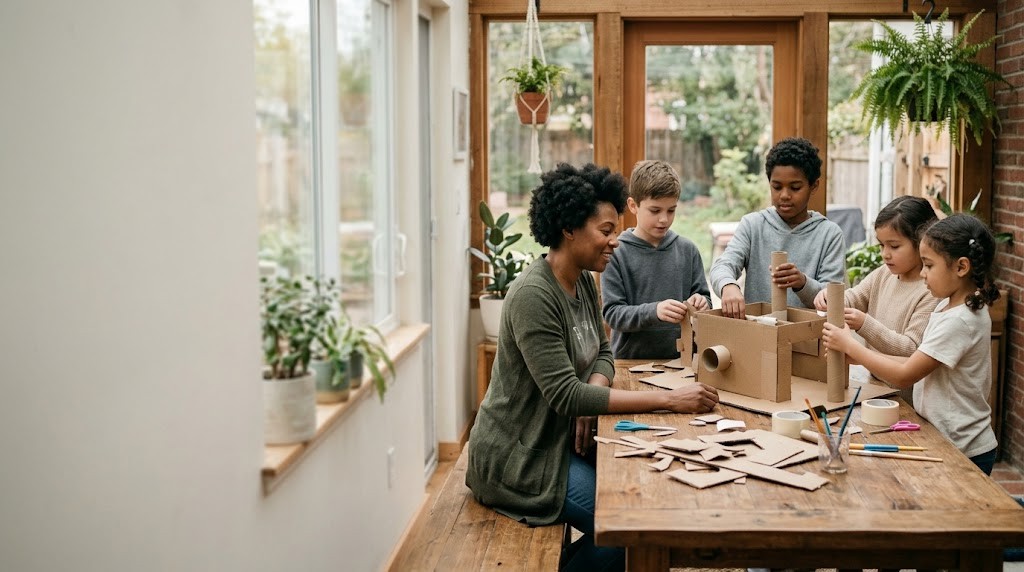
“Children who need something different” is not a group. A founder needs a sentence a parent recognises in three seconds. For example: children aged 8 to 12 who have stopped attending school; children whose families move between countries; children in a district where the nearest secondary school is far away; children who are well ahead in one subject and bored.
Write down four facts about the group: age range, what is not working for them now, what the family is currently doing instead, and what the family would count as success in one year. If you cannot fill these in from conversations with real parents, you are not ready for step 2.
Step 2: Find the founding families before the building
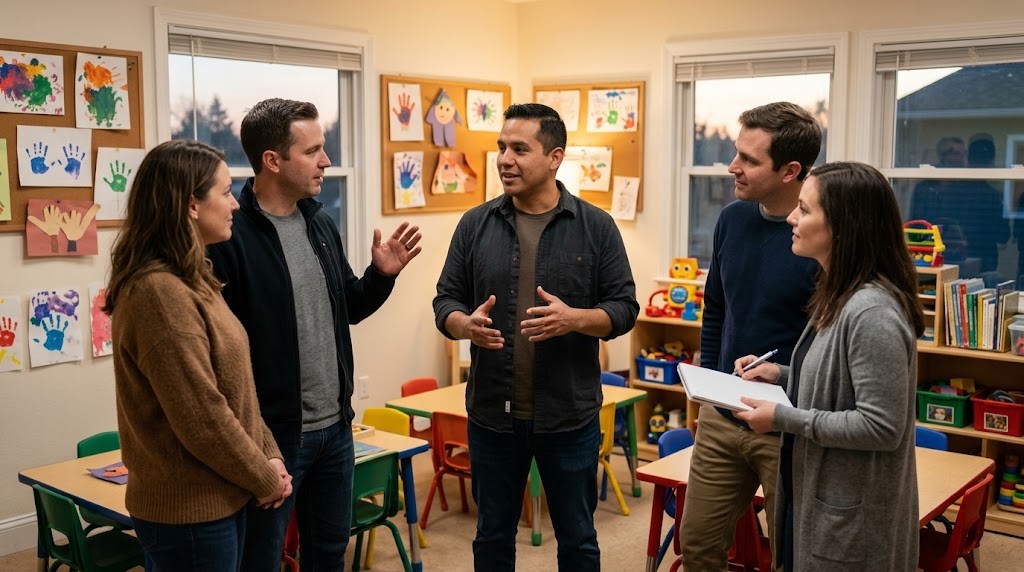
A microschool is viable or not at a very small number. That makes the first families a design decision, not a marketing task. Talk to at least thirty households in your target group. Ask what they have tried, what it cost, how far they will travel, and what would make them leave.
Then ask for a commitment that costs the family something: a signed letter of intent, a deposit held in a way your local consumer law allows, or attendance at three trial days. Interest is free and tells you little. Ten committed families tell you your age range, your opening hours, your location and your fee.
Step 3: Choose the learning model you can actually run
Pick a model that one adult can run on a day when the other adult is ill. Founders usually choose among four documented approaches: a structured curriculum taught in small groups; mastery-based individual plans using existing materials; project and inquiry work around a shared theme; or self-directed learning in which children plan their day with an adult mentor. Many combine a structured morning with open afternoons.
Whatever you choose, decide early how learning will be recorded and shown to parents and, where required, to the authority or to the school the child is still registered at. In Japan, for instance, MEXT’s notice of 25 October 2019 allows a school principal to count learning outside school, including learning at home using ICT, as attendance when set conditions are met. That only works when the outside setting keeps records the school can read.
Step 4: Staff for trust first, subject knowledge second
In a setting of fifteen children, the lead adult is the school. Parents choose the person. Hire for three things: children relax around them, parents believe them, and they keep records without being chased. Subject depth can be added through part-time specialists, online classes or a partner network.
Whether the lead adult needs a teaching licence depends on your legal category and your country; ask the authority, do not assume. As one documented example of a model built for non-licensed leaders, NIJIN Academy’s physical classrooms in Japan do not require a teaching licence, can run from one day a week for five hours between 9:00 and 16:00, and pay the classroom leader a base of JPY 13,200 per enrolled student per month, according to NIJIN’s recruitment pages.
Most countries have rules or strong expectations about background checks for adults working with children, about first aid, and about reporting concerns. Build these into hiring from day one, even where a small setting is formally exempt.
Want to build this in your own country, with a model that already runs?
If the steps so far describe what you want to do, there is a faster route than starting from a blank page. NIJIN Academy is an alternative school in Japan, opened in September 2023 and run by NIJIN Inc. It is a hybrid: children join from home through a metaverse campus, choose from about 100 live online classes a month, and can also go to 48 physical classrooms across Japan. NIJIN is now looking for a Country Head in each country: one founder who will start and lead NIJIN Academy there, as both its business head and its principal.
See the Country Head roleStep 5: Find a space that is safe, legal and cheap enough
Do not sign a long lease in year one. The realistic options are a rented room in a community centre, a place of worship, a library or a business that is empty on weekdays; a shared classroom in an existing tutoring centre; or a home, where zoning and insurance allow it. Check, in writing, the permitted use of the building, the maximum number of occupants, fire exits, toilets, and whether your insurance covers children on the premises.
Choose the space for the journey, not for the photographs. Families of children who have struggled with school rarely sustain a long commute.
Step 6: Build the budget from the break-even number
A microschool’s finances fit on one page. Fill in the table with real quotes from your own town, in your own currency, and do the arithmetic before you promise anything to a family.
| Line | What to include | Fixed or per child |
|---|---|---|
| Lead adult(s) | Pay, taxes and social contributions, cover for illness | Fixed |
| Space | Rent, utilities, cleaning, insurance | Fixed |
| Compliance | Registration fees, background checks, accounting, legal advice | Fixed |
| Materials and software | Books, devices, licences, consumables | Per child |
| Food, trips, transport | Only if included in the fee | Per child |
| Founder’s own pay | The amount you need to keep doing this for three years | Fixed |
The break-even formula. Children needed = total fixed costs per month ÷ (monthly fee per child − per-child costs per month).
If that number is higher than the space holds, or higher than the families you have committed, change the model before you open: fewer days, a shared space, a part-time second adult, or a different fee. Then run it again at 60% of your expected enrolment, because that is where most small schools spend their first year.
Funding sources differ by country: family fees, sliding-scale fees backed by donors, employer or foundation grants, public funding or vouchers where the law provides them, and revenue shared with a network. Do not build year one on a grant you have not yet been awarded.
Step 7: The regulation checklist
This is the step that cannot be copied from another country, or even from another state. Take the list below to the official body responsible for schools where you live, and ask for the answers in writing.
- At what number of children, hours per week or ages does a setting have to register as a school?
- If we are not a school, what are we: tutoring, childcare, a home-education group, a non-formal education provider?
- Where are the children legally enrolled, and who is responsible for their compulsory education?
- Do staff need a teaching qualification, and what background checks apply?
- Which curriculum, assessment or reporting duties apply to us or to the parents?
- Which building, fire, health, food and zoning rules apply to this address?
- What legal form may operate a school here (company, non-profit, trust, cooperative), and how are fees taxed?
- Which insurance is compulsory, and which is expected?
- How is children’s personal data to be stored and shared?
- Who inspects us, how often, and what happens if we grow past a threshold?
| Country | Where to start asking |
|---|---|
| England | Department for Education guidance on independent school registration and on elective home education (gov.uk); your local authority |
| United States | Your state department of education; rules for private schools and home education are set state by state |
| India | The Right of Children to Free and Compulsory Education Act pages of the Ministry of Education, and your state education department |
| Philippines | The Department of Education (DepEd) and its regional office |
| Japan | The Ministry of Education (MEXT) and the municipal board of education |
This table names authorities only. It does not state what the law requires. Requirements change, and a lawyer or the authority itself is the only reliable source.
The first twelve months, in order
- Months 1 to 2: thirty conversations. Define the group. Collect what families have tried and what it cost them.
- Months 2 to 3: the written answer. Take the checklist to the authority. Choose the legal form.
- Months 3 to 4: trial days. Run three to five sessions in a borrowed room. Watch which children return.
- Months 4 to 5: commitments and budget. Sign founding families. Run the break-even number at 60%.
- Month 6: open small. Fewer days and fewer children than you could take. Fix the daily rhythm.
- Months 7 to 12: records and retention. Report to parents every month. Ask every family that leaves why.
Starting alone or inside a network
Starting alone gives you full control and full workload: curriculum, admissions, compliance, payroll and the teaching itself. Joining or launching the local arm of an existing model gives you a tested daily programme, online classes that widen what a small site can offer, and people to ask. You give up some freedom and share revenue.
Neither is better in general. If your strength is running an organisation and hiring people, and less the design of a curriculum from nothing, the second route may fit you well.
Figures are those published by NIJIN. “Attendance recognition” means that the school a child is registered at counts learning at NIJIN Academy as school attendance; the decision is made by each school’s principal.

Questions and answers
How many students does a microschool need?
There is no fixed number. The number that matters is your own break-even figure from step 6, tested against how many children your space and your lead adult can safely hold. Work it out before you set a fee.
Do I need to be a qualified teacher to start a microschool?
It depends on the legal category of your setting and on your country or state. Some categories require qualified teachers and some do not. Ask the education authority, in writing. The founder’s essential skills are organising, hiring and earning parents’ trust.
Is a microschool legal?
Small settings operate lawfully in many countries, but under different names and rules: as registered schools, as support for home education, as non-formal education, or as sites of a larger school. What is lawful for you depends on your location, your hours and the ages you serve. Use the checklist in step 7.
How much does it cost to start a microschool?
It varies too much by city for any single figure to be honest. The pattern is stable, though: the lead adult and the space are most of the cost, both are fixed, and both must be covered at well below full enrolment. The wider money questions are covered in how to start an education business.
Can a microschool be partly online?
Yes. A hybrid of live online classes and regular in-person days lets a small site offer more subjects and more peers than its room could hold. NIJIN Academy in Japan runs this way, with about 100 live online classes a month and 48 physical classrooms. The online layer is covered in how to start an online school.
Start a school in your country, with a team behind you
NIJIN is looking for one founder per country to start and lead NIJIN Academy there. Teaching experience is not required. If you want to start a company in your own country and solve a problem in education, read the role.
Read the Country Head role and applyWhere to go next
NIJIN Academy Country Head pages are open for several countries, and the global page covers every other country. Our English careers page lists everything else we are working on.
Related guides for founders
- How to start an education business, from a problem to a first paying family
- How to start an online school that children keep attending
- Alternative school vs traditional school: what actually differs
- Homeschooling vs online school vs alternative school
- Country manager in education: the role and three pay models
Sources
All figures in this article are quoted with the year they refer to. Please check the original for later updates.
- https://www.unesco.org/gem-report/en/publication/2025sdg4scorecard
- https://www.unesco.org/gem-report/en/view/outofschool
- https://www.worldbank.org/en/news/press-release/2022/06/23/70-of-10-year-olds-now-in-learning-poverty-unable-to-read-and-understand-a-simple-text
- https://www.mext.go.jp/content/20260305-mxt_jidou02-100002753_3.pdf
- https://www.mext.go.jp/a_menu/shotou/seitoshidou/1422155.htm
- https://www.gov.uk/government/publications/independent-school-registration
- https://www.gov.uk/government/publications/elective-home-education
- https://www.education.gov.in/rte
- https://www.deped.gov.ph/
- https://www.ed.gov/
- https://nijin.co.jp/recruit/nijin-academy-country-head/
- https://nijin.co.jp/recruit/en/