For education founders in India
To start an NGO for education in India, you choose one of three legal forms (a public charitable trust, a society under the Societies Registration Act, 1860, or a Section 8 company under the Companies Act, 2013), register it, open a bank account in its name, and then apply for income-tax registration, an NGO Darpan ID and, only when you need them, FCRA and CSR registration. If your NGO will run a school for Classes 1 to 8, it also needs a certificate of recognition under the RTE Act before it opens.
This guide takes each step in order and quotes only official sources. It is not legal or tax advice: rules differ by state and change, so check each step with the office named or with a chartered accountant or lawyer.
In this article
- First, decide what your NGO will actually do
- Trust, society or Section 8 company
- How to register an education NGO, step by step
- Tax registration: what used to be called 12A and 80G
- NGO Darpan ID
- Foreign donations and FCRA
- CSR funding from companies
- Running a school or learning centre through your NGO
- NGO or business: another route for founders
- Questions and answers
First, decide what your NGO will actually do
“Education” covers very different activities, and each leads to different paperwork. Before choosing a legal form, write one sentence naming the children you will serve and what you will do: after-school reading support in one ward, bridge classes that bring out-of-school children back to a government school, scholarships, or a full primary school. Only the last one needs school recognition; foreign or company funding adds FCRA or CSR-1 registration.
The need is real. India’s National Education Policy 2020 cites the NSSO 75th round survey of 2017–18, which put the number of out-of-school children aged 6 to 17 at 3.22 crore, and it calls for multiple pathways to learning through formal and non-formal modes.
Trust, society or Section 8 company
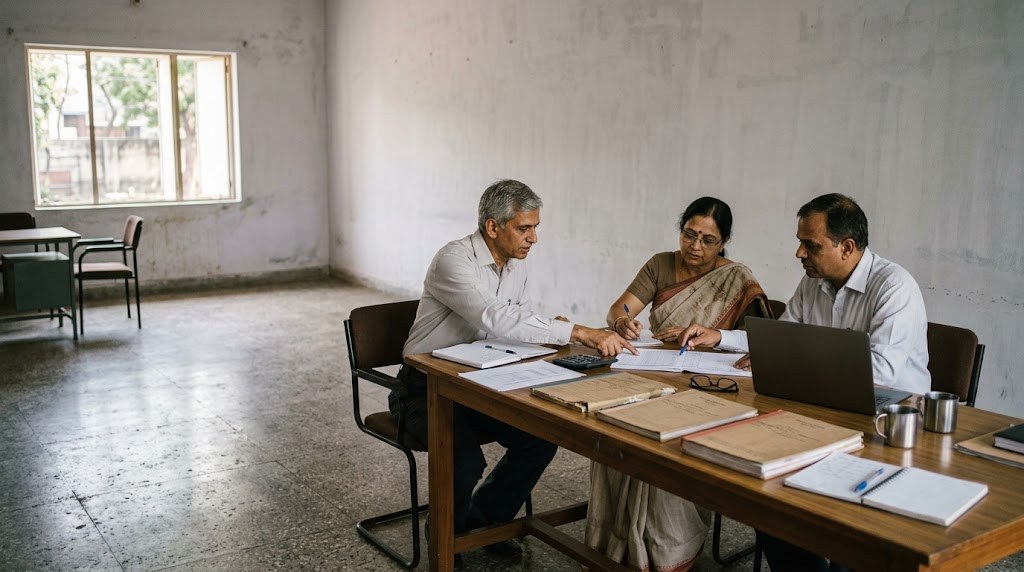
All three forms can do non-profit education work. They differ in who governs them and which law they sit under. The table does not rank them.
| Public charitable trust | Society | Section 8 company | |
|---|---|---|---|
| Law | Created by a trust deed; public trusts are governed by state laws and practice, which differ | Societies Registration Act, 1860, and state amendments or state societies laws | Section 8 of the Companies Act, 2013 |
| Who registers it | Varies by state; ask the office your state designates for public trusts | The state’s Registrar of Societies | The Central Government, through the Ministry of Corporate Affairs, which issues a licence |
| Founding document | Trust deed | Memorandum of association and rules, signed by seven or more persons (section 1) | Memorandum and articles of a company with charitable objects |
| Who decides | Trustees named in the deed | A governing body chosen under the society’s rules; members vote | A board of directors; members cannot receive dividends |
| Education named in the law | Depends on the deed’s objects | Section 20 covers societies for “instruction” and “the diffusion of useful knowledge” | Section 8(1)(a) names “education” among the permitted objects |
| Profits | Used for the trust’s objects | Used for the society’s objects | Must be applied to the objects; dividends prohibited (section 8(1)(b) and (c)) |
| Often chosen when | A small group of founders wants a simple, closely held structure | A wider group wants a member-based, democratic structure | Founders expect national reach, many funders, or company-style governance |
“Often chosen when” gives common reasons, not legal rules. Ask the registering office for its current fees and checklist.
How to register an education NGO, step by step

Each step needs a document from the one before it. Your state may add steps.
- Write the objects. Who the NGO serves, where, and how. Every later document repeats this wording.
- Choose founders and board. Seven or more signatories for a society, trustees for a trust, directors for a Section 8 company. Pick people who will attend meetings and sign accounts.
- Draft the founding document. A society’s memorandum must give its name, objects and the names, addresses and occupations of its governing body (section 2 of the 1860 Act).
- Register. With the office your state designates for a trust, the state Registrar of Societies for a society, or the Ministry of Corporate Affairs for a Section 8 licence.
- PAN, bank account and Darpan ID. Banks must ask NGOs for a Darpan ID, so these steps go together.
- Income-tax registration and donor approval. Under the Income-tax Act, 2025 (the old 12A and 80G).
- Only if needed: FCRA and CSR-1. For foreign money and company CSR money.
- Before running a school: RTE recognition. For any school teaching Classes 1 to 8.
Tax registration: what used to be called 12A and 80G
Most guides still say “12A registration” and “80G certificate”. Those were sections of the Income-tax Act, 1961. The Income-tax Act, 2025 has applied since 1 April 2026.
What the Income Tax Department’s e-filing guide says now. Certain non-profit organisations must obtain regular registration under section 332(3), or regular approval under section 354(2), of the Income-tax Act, 2025 to keep claiming tax exemption and to let donors claim a deduction. The application is Form 105, filed on the e-filing portal under Rule 181 of the Income-tax Rules, 2026. One form covers both registration and donor approval. The department issues its order in Form 107, with a 16-digit Unique Registration Number.
Form 105 is generally filed when activities have started, a provisional registration is expiring, a renewal is due, or the objects change. You need an active PAN and a valid digital signature certificate.
In plain terms: registration (the old 12A) concerns the NGO’s own income, and approval (the old 80G) lets donors claim a deduction. Under the old law a provisional registration lasted up to three years and a regular one five years (CBDT Circular 6 of 2023); check the periods under the 2025 Act. This is where a chartered accountant is most worth paying for.
NGO Darpan ID
NGO Darpan is a portal maintained by the Voluntary Action Cell of NITI Aayog. An NGO registers there to get a unique number called a Darpan ID. According to NITI Aayog, the Darpan ID is:
- mandatory for any NGO seeking grants from ministries or departments of the Government of India;
- required for FCRA registration or renewal;
- required when seeking exemptions under 80G of income tax (the old name; see above);
- to be ensured by banks for opening and operating NGO accounts, under the Prevention of Money Laundering (Maintenance of Records) Amendment Rules, 2023.
Register on ngodarpan.gov.in once your registration certificate and PAN are ready.
Want to build schools in India as a founder, not only as a volunteer?
An NGO is one strong way to serve children. If you want to start and grow a school as a business, there is another route. NIJIN Academy, an alternative school in Japan opened in September 2023, is looking for one person to start and lead NIJIN Academy India as business head and principal. Teaching experience is not required.
See the Country Head role in IndiaForeign donations and FCRA
If your NGO will receive money from a foreign source, the Foreign Contribution (Regulation) Act, 2010 applies. The Government of India’s explainer sets out two routes:
| FCRA registration | Prior permission | |
|---|---|---|
| Who it suits | Organisations that have been operational for at least three years | Newer organisations, for a specific, defined project |
| What it covers | Foreign contributions in general, within the law | One project from a named source |
| Validity | Five years, then renewal after a compliance review | As granted for the project |
Two practical points from official releases. First, all foreign contributions must first arrive in a designated “FCRA Account” at the State Bank of India, New Delhi Main Branch, 11 Sansad Marg, New Delhi. Second, a Darpan ID is required for FCRA registration and renewal. Applications are made on the FCRA portal (fcraonline.nic.in), which publishes the current rules and forms.
CSR funding from companies
Under section 135 of the Companies Act, 2013, companies above set thresholds of net worth, turnover or net profit must have a Corporate Social Responsibility committee and policy. Schedule VII lists the activities a CSR policy may include, and education is one of them.
A company can spend its CSR budget directly or through an implementing agency. According to the Ministry of Corporate Affairs, registration of implementing agencies with the Central Government became mandatory from 1 April 2021 (through Form CSR-1), 17,130 agencies had registered by 31 October 2021, and about 60% of annual CSR spending was done through implementing agencies. To receive CSR funds, plan for CSR-1 registration, audited accounts and clear project reports.
Running a school or learning centre through your NGO
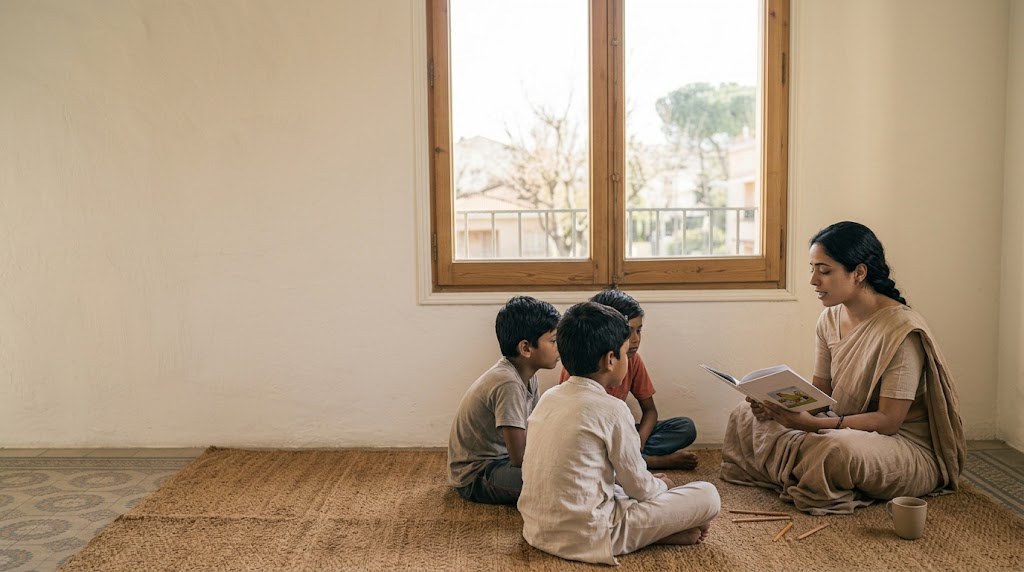
Many education NGOs begin with a learning centre and later want to run a school. The Right of Children to Free and Compulsory Education Act, 2009 (RTE Act) covers children aged six to fourteen and defines elementary education as first class to eighth class.
Section 18 of the RTE Act, in short. No school, other than one established, owned or controlled by the government or a local authority, may be established or function without a certificate of recognition. Recognition is granted only if the school meets the norms and standards in section 19 and the Schedule. Running a school without recognition, or after it is withdrawn, is punishable with a fine, plus a daily fine while it continues (section 18(5)).
The authority, form and procedure are set by each state’s RTE rules. Unaided private schools, and certain other categories defined in the Act, also have a duty under section 12(1)(c) to admit, in Class 1, at least 25% of the class strength from children of weaker sections and disadvantaged groups in the neighbourhood. Take these questions to your state education department before you plan a building:
- Is what we plan a “school” under the RTE Act and state rules, or a non-formal programme?
- Which officer issues the certificate of recognition in our district, and what form do we use?
- Which norms in the Schedule (teachers, classrooms, working days, facilities) apply to us?
- Which board (CBSE, the State Board or another) will we seek affiliation with for higher classes, and when?
For more on the school side, see how to start a school in India and how to start a CBSE school in India.
NGO or business: another route for founders
An NGO is a good way to serve children, and for many founders it is the right one. Some people searching for how to start an NGO for education are really asking how to build schools they lead as their own enterprise. For them, a business route can also fit. The two answer different goals.
| Education NGO | Your own education company | Country Head, NIJIN Academy India | |
|---|---|---|---|
| Main funding | Donations, grants, CSR | Fees from families, your own investment | Fees from families; NIJIN’s model and support |
| Who owns it | No owner; held for its objects | You and your investors | A local company you co-own (for example you 20%, NIJIN 80%), or you start on a service contract |
| Your pay | A salary set by the board, within the rules | Whatever the company can pay | As a guide, 10% of revenue (excluding tax), capped at JPY 50 million |
| Starting point | Blank page | Blank page | A working hybrid school model from Japan |
NIJIN Academy India is not a franchise: you do not pay to copy a format. Investment is optional. You can co-own a local company set up together (if you invest, the guide is JPY 1 to 2 million from you and JPY 4 to 8 million from NIJIN, decided with you), or start on a service contract, even as a side job. Either way the compensation guide is the same: 10% of revenue. JPY 100 million of revenue gives JPY 10 million; this only shows the formula, it is not a promise of income, and with no revenue it pays nothing. Anyone you ask to do part of the role is paid from that 10%. Other terms are discussed in the interview.
NIJIN Academy, one of the largest alternative schools in Japan, serves children who do not fit conventional school, many of whom had stopped going altogether.
Figures are those published by NIJIN. “Attendance recognition” means the child’s registered school counts learning at NIJIN Academy as school attendance.
Questions and answers
How do I open an NGO for child education?
Define the children you will serve, choose a trust, society or Section 8 company, register it, get a PAN and bank account, then apply for income-tax registration and a Darpan ID. A school for Classes 1 to 8 also needs RTE recognition.
Can I start an NGO in India as a student?
The sections quoted in this guide make no special rule for students. Each registering office sets its own document list and any age requirements, so ask before you file. Many students start inside an existing NGO, or with older co-founders on the board.
What is the education society registration fee, and can I register online?
Both depend on your state. Each state’s Registrar of Societies sets its own fee, forms and online process, whether in Maharashtra, Rajasthan, Telangana or elsewhere. Check your state registrar’s official website.
Which is better for an education NGO: trust, society or Section 8 company?
None is better in general. A society needs seven or more members and is member-led; a Section 8 company is licensed by the Central Government and run by a board; a trust is run by its trustees. Choose by who will govern, who will fund you and how far you plan to grow.
Do I need FCRA to receive donations from Indians living abroad?
FCRA applies to contributions from a foreign source. Whether a particular donor counts as a foreign source is defined in the Act and its rules; check with the FCRA portal or a professional before you accept the money.
Can I work in education leadership without starting an NGO?
Yes. Many people looking at NGO jobs in education want to lead. One option is the Country Head role for NIJIN Academy India, as business head and principal; no teaching experience is required, and managing and hiring experience matters most. See the Country Head role in India.
Start NIJIN Academy India, with a team behind you
If you have led people, hired people, and want to build a school for children who do not fit school, read the role. Investment is optional, and you can start on a service contract. English alone is enough to apply.
See the Country Head role in IndiaWhere to go next
NIJIN Academy Country Head pages are open for several countries, and the global page covers every other country.
Related guides for founders in India
- How to start a school in India
- How to start a CBSE school in India
- Cost to start a school in India
- Is school a profitable business in India?
- Education business ideas in India
- Alternative schools in India
Sources
Laws and forms are quoted as published on the pages below. Please check the original for later amendments.
- https://charity.maharashtra.gov.in/Portals/0/Files/S.R.Act1860.pdf
- https://www.wipo.int/wipolex/en/legislation/details/15873
- https://www.incometax.gov.in/iec/foportal/newformpage/forms/Form%20105%20&%20107-UM
- https://www.incometax.gov.in/iec/foportal/sites/default/files/2023-06/circular-6-2023.pdf
- https://www.niti.gov.in/divisions/cell/voluntary-action-cell
- https://www.pib.gov.in/newsite/research/Factsheet.aspx?Id=150789®=48&lang=2
- https://www.pib.gov.in/PressReleasePage.aspx?PRID=1719991
- https://www.pib.gov.in/PressReleseDetailm.aspx?PRID=1776197®=48&lang=2
- https://panchayatwiki.lsgkerala.gov.in/THE_RIGHT_OF_CHILDREN_TO_FREE_AND_COMPULSORY_EDUCATION_ACT,_2009
- https://static.pib.gov.in/WriteReadData/userfiles/NEP_Final_English_0.pdf
- https://nijin.co.jp/recruit/nijin-academy-india-country-head/
- https://nijin.co.jp/recruit/en/