
For teachers in Australia
Yes, Australia has a teacher shortage in 2026, and the official data show where it hurts most: one in five teachers says they plan to leave within five years, close to a third of secondary maths classes are taught by someone not trained in maths, and country schools still need incentives to fill posts. Education Ministers called it “the national issue of teacher workforce shortages” when they agreed a national action plan on 15 December 2022.
This guide sets out the teacher shortage Australia statistics from government sources only, with the year each figure refers to. It then explains why teachers are leaving, what the Commonwealth and the states are doing about it, and what the shortage means for you if you are a teacher deciding what to do next. The global picture, with causes and models from other countries, is in our separate guide to the global teacher shortage.
In this article
- Is there a teacher shortage in Australia in 2026?
- Teacher shortage Australia statistics: the official numbers
- Where the shortage is worst: maths, the country, NSW and South Australia
- Why teachers are leaving: the teacher crisis in their own words
- What the government is doing: the Action Plan, scholarships and HAT
- What the shortage means for you as a teacher
- Another option: lead NIJIN Academy Australia
- Starting on a service contract, alongside your job
- Questions and answers
Is there a teacher shortage in Australia in 2026?
Short answer: Yes. Education Ministers said so when they approved the National Teacher Workforce Action Plan in 2022, and the plan is still running in 2026. AITSL data for 2024 show about 20% of teachers intend to leave within five years, and 30–32% of secondary maths, technology and arts is taught out-of-field. NSW public-school vacancies fell from 2,460 (2022) to 962 (2025).
Governments say so themselves. When Education Ministers approved the National Teacher Workforce Action Plan in December 2022, the federal Education Minister’s release opened with a plain sentence: “We have a teacher shortage in Australia.” It added that not enough people are becoming teachers and too many are leaving, and called it “a problem 10 years in the making”.
The plan is still active. The Department of Education published a 2025 update and a 2026 update, and is still announcing actions under it, including a teaching phonics course, guidance on teaching assistants and the end of the first workload reduction pilots in January 2026.
It helps to separate two things that the word “shortage” mixes together:
- A supply gap. Too few qualified people are available for the posts that exist, so positions stay vacant or are filled by casual relief teachers.
- A fit gap. A teacher is in front of the class, but not one trained for that subject. That is out-of-field teaching, and it does not show up in vacancy counts.
Australia has both. The second one is easier to miss and is where maths comes in.
Teacher shortage Australia statistics: the official numbers
The most complete national source is the Australian Teacher Workforce Data (ATWD), run by the Australian Institute for Teaching and School Leadership (AITSL) with the states and territories. Its June 2026 report, National Trends: Teacher Workforce, covers data from 2020 to 2024.
Source: AITSL, National Trends: Teacher Workforce, June 2026. Intentions are not the same as actual departures.
| Measure | Figure | Year | Source |
|---|---|---|---|
| Registered teachers in Australia | 567,103 (about 83% working as teachers) | 2024 | AITSL ATWD |
| Teacher workforce in their first 5 years | 22% | 2024 | AITSL ATWD |
| Teacher workforce aged 65 or over | 10% | 2024 | AITSL ATWD |
| Teachers who plan to stay until retirement | 30% (34% unsure) | 2024 | AITSL ATWD |
| Secondary teachers teaching only in their field | 53% (40% partly out-of-field, 7% entirely) | 2024 | AITSL ATWD |
| Non-teaching registered teachers who would consider returning | 52% | 2024 | AITSL ATWD |
| FTE teaching staff in Australian schools | 325,190 | 2025 | ABS, Schools |
| Students and schools | 4,160,918 students in 9,673 schools | 2025 | ABS, Schools |
| Permanent teacher vacancies, NSW public schools | 962 at the start of Term 3 (2,460 in 2022) | 2025 | NSW Department of Education |
Two figures in this table point in a hopeful direction. NSW vacancies have fallen sharply since 2022, and more than half of registered teachers who are not teaching say they would consider coming back “under the right circumstances”. The shortage is real, but it is not fixed. Conditions decide a large part of it.
Where the shortage is worst: maths, the country, NSW and South Australia
Maths and other secondary subjects
The national data do not publish a single “maths teacher shortage” number. What they do publish is how often a subject is taught by someone without tertiary study in it. In 2024, AITSL found the highest out-of-field rates in technology, arts and mathematics, with 30 to 32% of these curriculum areas taught out-of-field. Biology and chemistry, by contrast, were mostly taught in-field.
AITSL also notes that early career teachers asked to teach out-of-field may become more likely to plan to leave. So a maths gap today can turn into a wider staffing gap tomorrow.
Regional, rural and remote schools
Where governments put their incentives tells you where filling jobs is hardest. The national High Achieving Teachers pilots place participants in schools experiencing workforce shortages and recruit, among others, people based in remote locations. South Australia, below, pays extra to new graduates who start in country schools. Your own state education department lists the allowances that apply where you are.
Teacher shortage in South Australia
South Australia’s Department for Education says country teachers make up about a quarter of the state’s teachers in public schools and preschools. Under its Country Education Strategy, launched in 2021, it offered 80 Teach First in Country positions for new graduates starting in 2024 and 2025, each with A$20,000 paid over two years on condition that the teacher stays in the country for that time, plus an expert teacher in the classroom for the first five weeks. Its pre-service scholarships for country placements went to 45 students for 2025, after 57 in 2024 and 37 in 2023.
New South Wales
The NSW Department of Education reported that public schools began Term 3, 2025 with 962 permanent teacher vacancies, down from 2,460 at the same point in 2022. That is a large fall, but it still means close to a thousand permanent posts were open in one state on one day.
| Where | What the official data show | What it means for a teacher |
|---|---|---|
| Secondary maths | 30–32% of maths, technology and arts taught out-of-field (2024) | Maths specialists are in demand; non-specialists are often asked to cover |
| Country South Australia | About a quarter of public teachers; extra incentives for new graduates | Allowances and support are available if you can move |
| NSW public schools | 962 permanent vacancies, Term 3 2025 | Permanent posts exist, often outside the inner city |
| Casual relief teaching | 62% of casual relief teachers who plan to leave cite student behaviour (2024) | Relief work is available but often the hardest form of the job |
Why teachers are leaving: the teacher crisis in their own words
When AITSL asks teachers who intend to leave why, the answers have been stable for years. In 2024 workload, work-life balance and work-related stress were the top three reasons, each chosen by 69 to 75% of these teachers. Parent behaviour (48%) and student behaviour (47%) both rose by 5 percentage points from 2023 to 2024. Parent behaviour was a particularly common reason for senior leaders (58%).
The hours explain a lot. Full-time classroom teachers reported a median of 50 hours a week during term in 2024. Between 37 and 40% spent ten or more hours a week on lesson planning alone, and 18 to 19% spent ten or more hours on administration. Senior leaders reported a median of 56 to 57 hours.
Support at the start is patchy too. Only 60% of early career teachers reported a formal induction in 2024, and only 36% of casual relief teachers.
A quick self-check. If you are thinking of leaving, ask which of these is the real reason. The answer points to a different next step.
- Hours and admin: a different school, a part-time load or a non-classroom role may fix it.
- Behaviour and parents: a different setting, such as small groups or online teaching, may suit you better.
- No room to change anything: you may want to build something of your own.
- Exhaustion that affects your health: talk to your GP or your school’s employee assistance programme first.
If burnout is the main issue, our guide to teacher burnout goes into it in detail, and quitting teaching mid-year covers the practical side of leaving.
What the government is doing: the Action Plan, scholarships and HAT
The National Teacher Workforce Action Plan sets out 27 actions for the Commonwealth, state and territory governments in five priority areas. According to the minister’s release, it came with A$328 million of Commonwealth investment, including 4,000 additional university places for teachers, bursaries, more mid-career people moving into teaching and a A$30 million Teacher Workload Reduction Fund.
- Improving teacher supply. Includes the Commonwealth Teaching Scholarships and the High Achieving Teachers Program.
- Strengthening initial teacher education. Includes the Recognition of Prior Learning in Initial Teacher Education Framework, released in October 2025.
- Keeping the teachers we have. Includes the Workload Reduction Fund pilots and guidelines on deploying teaching assistants.
- Elevating the profession. Work on the status of teaching, including a national campaign.
- Better understanding future teacher workforce needs. Planning ahead with better information about the teacher workforce.
| Programme | What it offers | Who it is for |
|---|---|---|
| Commonwealth Teaching Scholarships | Up to A$40,000 for new undergraduate and up to A$20,000 for new postgraduate teaching students; up to 1,000 a year over five rounds, 2024 to 2028 | New teaching students, who then commit to teach in government schools or early learning settings |
| High Achieving Teachers (HAT) Program | Employment-based pathways: you teach in a school with a shortage while completing an accredited qualification; 1,497 places in Phase 2 from 2025 | Career changers, including STEM specialists, First Nations people, teacher aides and people in remote areas |
| State country incentives (example: SA) | Country Incentive Zone Allowance, locality allowances, housing concessions, Teach First in Country payments | Teachers willing to work in regional, rural and remote schools |
Rounds, amounts and eligibility change. Check the Department of Education and your state education department before applying.
What the shortage means for you as a teacher

A shortage gives a teacher bargaining power, and choices. Most of them do not require leaving education. The table compares the main routes. None of them is right for everyone.
| Route | Why the shortage helps | What to weigh |
|---|---|---|
| Stay, and choose your school | Schools with vacancies, especially for maths, have reasons to negotiate load and support | The workload problem may follow you |
| Move to a country post | State incentives, allowances and housing help | Distance from family; conditions are tied to staying |
| Teach online | Lets one teacher reach students far from a campus | Employer, registration and pay vary; see our guide to remote teaching jobs |
| A dual career: teaching plus a business | Keeps your income while you test something of your own | Check your employer’s rules on secondary employment |
| Start or lead an education business | Families who cannot find what they need are looking elsewhere | Business risk; registration rules differ by state |
A dual career is more common than the job title “teacher” suggests: tutoring, running holiday programmes, building courses, or leading a small education venture part-time. If you are drawn to building rather than leaving, our guide on how to start a school in Australia explains state registration, and jobs for former teachers lists roles outside the classroom.
Want to build a school, not just fill a gap?
NIJIN is looking for one person to start and lead NIJIN Academy Australia, as both its business head and its principal. You do not need to have been a teacher, but if you have led a team or a faculty and hired people, much of the job will feel familiar. You can start on a service contract alongside your current work.
See the Country Head role in AustraliaAnother option: lead NIJIN Academy Australia
NIJIN Academy is an alternative school in Japan for elementary and junior high school students who do not fit conventional school; many had stopped going altogether. It opened in September 2023 and is run by NIJIN Inc., founded by Tatsuro Hoshino, who taught at a public elementary school for seven years.
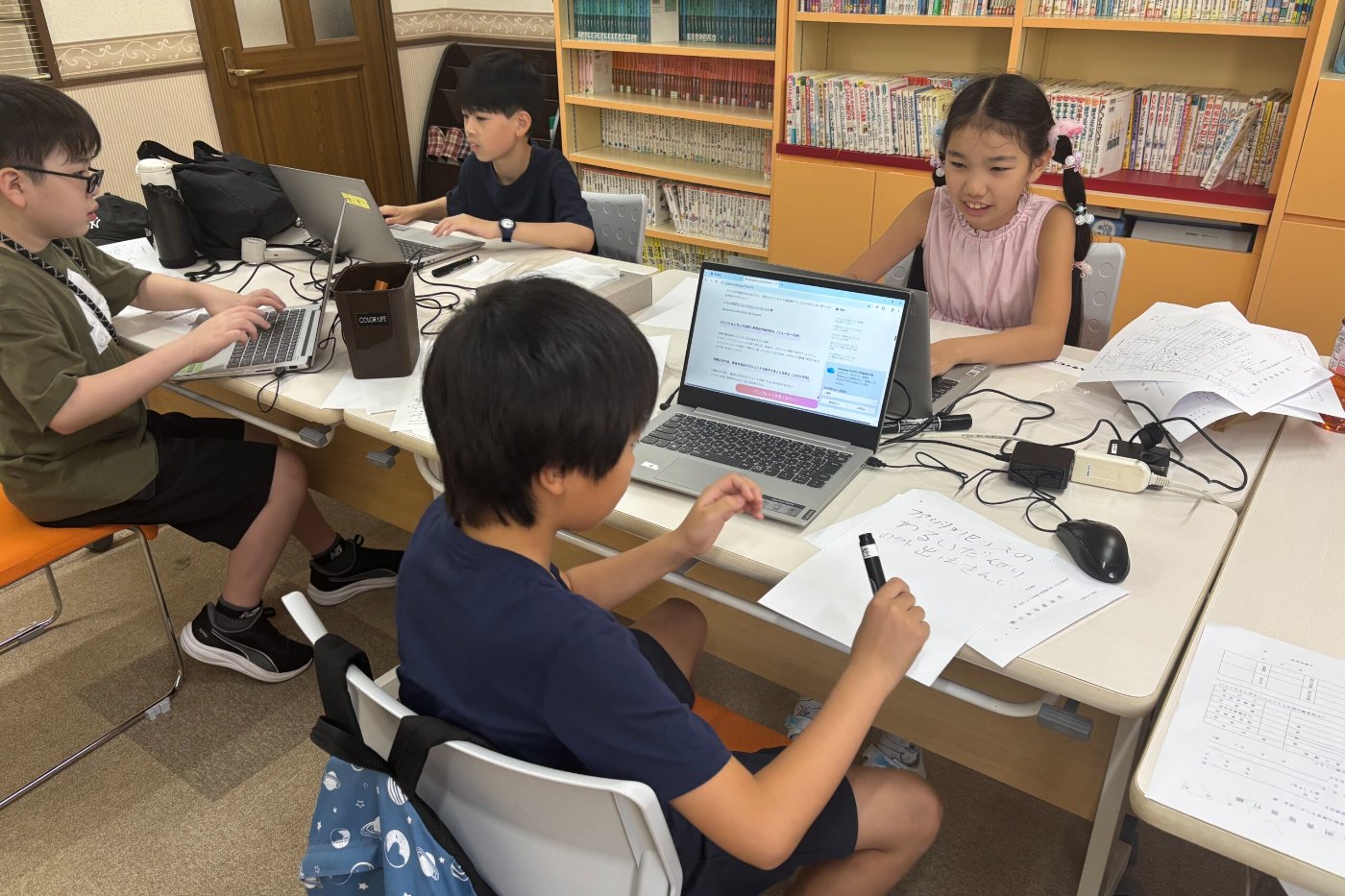
The model is relevant to a shortage because it uses teachers’ time differently. Children join from home through a metaverse campus, choose from about 100 live online classes a month, and can also attend small physical classrooms. Classes are small and built on dialogue, so one teacher’s lesson can reach children in many places.
Figures are those published on NIJIN’s official websites.
The Country Head holds two jobs: business head, responsible for families, the team and revenue, and principal, responsible for what children experience each day. Teaching experience is not required. Leadership, management, business ability and the skills of a principal are. English alone is fine for language. NIJIN Academy is not a franchise: you do not buy a format, you build the Australian school with NIJIN’s experience behind you, including working out the registration rules in your state or territory.
Starting on a service contract, alongside your job
For a teacher, this is the most important point. You can start on a service contract, even as a side job alongside your current work, and decide later whether to become a co-owner. That is the dual career in practice: you keep your current role while you test whether leading a school is for you.
The other way to start is to set up a local company together, with you as a shareholder: for example, 20% for you and 80% for NIJIN. If you invest, the guide is JPY 1 to 2 million from you and JPY 4 to 8 million from NIJIN, decided together. Investment is optional, not a requirement.
| Revenue (excluding tax) | Country Head’s compensation (10%, as a guide) |
|---|---|
| JPY 100 million | JPY 10 million |
| JPY 200 million | JPY 20 million |
| JPY 500 million or more | JPY 50 million (cap) |
| No revenue | None under this formula |
Either way of starting, the guide is the same: 10% of revenue excluding tax, capped at JPY 50 million. It is a guide, not a forecast or a promise of income. If you hand part of the work to someone else, they are paid from your 10%. Amounts are in Japanese yen only. Contract type, location, timing and every other term are discussed in the interview.
Questions and answers
Is there a teacher shortage in Australia in 2026?
Yes. Education Ministers agreed a National Teacher Workforce Action Plan on 15 December 2022 to address what they called the national issue of teacher workforce shortages, and it is still being updated, most recently with a 2026 update. AITSL’s June 2026 report shows about 20% of teachers intend to leave within five years.
What are the latest teacher shortage Australia statistics?
The national source is AITSL’s Australian Teacher Workforce Data. Its latest report (June 2026, 2024 data) counts 567,103 registered teachers, a 50-hour median working week in term for full-time classroom teachers, and 36% planning to leave before retirement. For vacancies, check your state: NSW reported 962 permanent vacancies at the start of Term 3, 2025.
Is there a maths teacher shortage in Australia?
The clearest official signal is out-of-field teaching. In 2024, 30 to 32% of secondary mathematics, technology and arts was taught by teachers without tertiary study in that subject, according to AITSL. Maths-trained teachers are therefore in demand, and the HAT Program targets STEM specialists moving into teaching.
Why is there a teacher crisis in Australia?
Teachers who plan to leave most often cite workload, work-life balance and stress (69 to 75% in 2024), followed by parent and student behaviour. The federal minister’s 2022 release also pointed to supply: not enough people becoming teachers, and too many leaving.
Is the teacher shortage worse in South Australia?
The official sources opened for this article do not rank the states. South Australia’s Department for Education describes a national shortage and runs a Country Education Strategy with extra payments for new graduates in country schools, because about a quarter of its public school and preschool teachers work in the country.
Is the Country Head role a job or a business?
It is closer to a business. The Country Head leads NIJIN Academy Australia as business head and principal, with compensation of 10% of revenue as a guide, up to JPY 50 million. You can start on a service contract or as a co-owner; investment is optional. Other terms are discussed in the interview.
Build NIJIN Academy Australia
If you have led a team, hired people, and want to build a school for children who do not fit the usual one, read the role and apply. You can start alongside your current work.
Where to go next
- School refusal in Australia: statistics and support
- Australia
- New Zealand
- Country Head (global)
- NIJIN careers in English
Related guides
- Global teacher shortage: causes, solutions and models from other countries
- How to start a school in Australia: state-by-state guide
- Teacher burnout: signs, causes and what to do next
- Remote teaching jobs
- Jobs for former teachers
- How to start a tutoring business
- Country manager in education: the role and pay models
Sources
All figures are quoted with the year they refer to. Please check the originals for later updates.
- https://www.aitsl.edu.au/research/australian-teacher-workforce-data/atwd-reports/national-trends-teacher-workforce-june-2026
- https://www.education.gov.au/national-teacher-workforce-action-plan
- https://ministers.education.gov.au/clare/national-teacher-workforce-plan
- https://www.education.gov.au/teaching-scholarships
- https://www.education.gov.au/teaching-and-school-leadership/high-achieving-teachers-hat-program
- https://www.abs.gov.au/statistics/people/education/schools/latest-release
- https://education.nsw.gov.au/news/latest-news/government-initiatives-drive-61-per-cent–drop-in-teacher-vacanc
- https://www.education.sa.gov.au/department/media-centre/our-news/teacher-first-in-country
- https://www.education.sa.gov.au/department/media-centre/our-news/scholarships-boost-regional-teaching-experience
- https://nijin.co.jp/recruit/nijin-academy-australia-country-head/
- https://academy.nijin.co.jp/