
For teachers and career changers in Canada
To become a teacher in Canada, you earn a university degree, complete an approved teacher education program (usually a Bachelor of Education, or B.Ed.), and then apply for a teaching certificate in the province or territory where you want to teach, because there is no national teaching licence. If you trained outside Canada, the same certifying body assesses your documents course by course and may ask for an English or French language test before it decides.
This guide explains how to become a teacher in Canada step by step, using only the official pages of the certifying bodies in Ontario, British Columbia, Alberta, Quebec and Manitoba. It covers the usual route, the route for internationally educated teachers, and what international students should check. For visas and work permits, the only reliable source is Immigration, Refugees and Citizenship Canada (IRCC); we do not give immigration advice.
In this article
- How to become a teacher in Canada, step by step
- Teacher certification by province: who decides
- Ontario: the Ontario College of Teachers
- British Columbia: a Certificate of Qualification
- Alberta: interim, then permanent certification
- Quebec: a teaching licence and the TECFÉE
- Manitoba and Pathways to Teach Canada
- How to become a teacher in Canada as a foreigner
- For international students
- Is Canada short of teachers?
- Working in education while you wait
- What NIJIN Academy is
- Lead NIJIN Academy Canada, alongside your job
- Questions and answers
How to become a teacher in Canada, step by step
Short answer: choose the province or territory first, because it sets the rules. Then complete a degree and a teacher education program that the province recognises, apply to its certifying body with official transcripts sent directly by your universities, pass any language test it requires, clear its character and background requirements, and only then apply to school boards. Each step below links back to a provincial rule, not to a national one.
- Pick your province or territory. Education in Canada is run by each province and territory, and each one certifies its own teachers. A certificate from one is not automatically valid in another.
- Earn a degree. Ontario asks for at least a three-year postsecondary degree; British Columbia and Alberta ask for four years of university study.
- Complete a teacher education program. In most provinces this is a B.Ed. (taken after a first degree, or as an integrated program). It must include supervised student teaching in schools.
- Apply for certification. Apply to the certifying body, pay its fees and have universities send official records directly. Keep to its deadlines: applications close if documents do not arrive in time.
- Meet language and character requirements. If your teacher education was not in English or French, expect a language test. All provinces check that you are fit to teach; Ontario and Manitoba also require a sexual abuse prevention program.
- Apply to school boards. Public school teachers are hired by school boards (in Quebec, school service centres and school boards).
Certification bodies say they cannot tell you whether you are eligible until they have evaluated a complete application, so send documents early.
Teacher certification by province: who decides
There are thirteen sets of rules, one per province and territory. Ontario certifies through the Ontario College of Teachers, Alberta and Quebec certify through the provincial government, British Columbia’s requirements are set by the BC Teachers’ Council, and nine provinces and territories, including B.C. and Manitoba, use Pathways to Teach Canada as one entry point for internationally educated teachers.
| Province | Who certifies | Education required (as stated) | Language test (if needed) |
|---|---|---|---|
| Ontario | Ontario College of Teachers (OCT) | A three-year (minimum) postsecondary degree and a four-semester teacher education program | For example IELTS Academic 6.5 overall; TOEFL iBT 95; French: DELF B1 or DALF C1 |
| British Columbia | Government of B.C.; requirements set by the BC Teachers’ Council | Four years (120 credits) and a degree; at least 18 credits of professional education if trained outside B.C.; a 10-week practicum | For example IELTS Academic 6.5 with no band below 6; French: DELF B1, DALF C1 or ECLPE |
| Alberta | Alberta Education | At least four years of university, with 48 semester hours of teacher education and 10 weeks of supervised student teaching | For example TOEFL iBT 97; IELTS Academic 6.5 (7 in speaking); DELF B1 or DALF C1 |
| Quebec | Government of Quebec | Usually a four-year Bachelor of Education; career changers can take a master’s leading to a teaching diploma | A compulsory language exam for some applicants, including those trained outside Canada (in French, the TECFÉE) |
| Manitoba | Professional Certification Unit, Manitoba Education | A five-year integrated B.Ed., or a three-year degree plus a two-year B.Ed.; 24 weeks of student teaching | LCATP only, through Pathways to Teach Canada |
Scores and requirements are taken from each body’s official page in November 2026 and are examples, not a full list. Test results usually have to be recent (often within two years). Always check the current page before you book a test.
If you are already certified in Canada, the Canadian Free Trade Agreement usually lets you be certified in another province or territory with a valid, unrestricted certificate. B.C. says such teachers may not need further coursework; Quebec issues a teaching diploma or a probationary permit depending on conditions.
Ontario: the Ontario College of Teachers
To teach in an Ontario publicly funded school, you must be certified by the Ontario College of Teachers. Its requirements are a postsecondary degree of at least three years from an acceptable institution, a four-semester teacher education program, an application with the annual membership and registration fees, and any other applicable requirements. You must also complete the College’s Sexual Abuse Prevention Program before you can be certified.
For internationally educated teachers, the College keeps a country-specific page on how to obtain records and statements of professional standing. It replies within 60 days of a complete application, and an application stays valid for one year. If your teacher education was not in English or French and you are not otherwise exempt, the test provider must send your result directly. The College also runs information sessions for internationally educated teachers.
For what the College’s surveys say about jobs for new teachers, see our guide to the teacher shortage in Canada.
British Columbia: a Certificate of Qualification
In British Columbia, the standard teaching certificate is the Certificate of Qualification (COQ). The BC Teachers’ Council sets the requirements: B.C. Grade 12 or equivalent; four years (120 credits) of postsecondary study and a degree; subject coursework that differs for elementary, secondary and trades teachers; a teacher education program (approved by the Council if taken in B.C., or from an accredited institution with at least 18 credits of professional education if taken elsewhere); and an acceptable practicum of 10 weeks in a K-12 school. Applicants must also be of “good and moral character and fit and proper to teach.”
B.C. also issues an Independent School Teaching Certificate and a Letter of Permission. Once you apply and pay the fee, you have three years to complete a COQ application, and one left inactive for over a year is closed. B.C. advises applying before you leave your home jurisdiction, and says internationally trained teachers may be eligible for Career Paths for Skilled Immigrants (Stream 2), which helps with re-credentialing costs.
Alberta: interim, then permanent certification
Alberta Education describes itself as “the only body that can assess credentials for teaching authority in Alberta.” Every teacher needs at least four years of university education, including a recognised degree and a teacher preparation program with 48 semester hours of professional coursework and 10 weeks of supervised student teaching.
Alberta certifies in two stages. The Interim Professional Certificate is valid for three years and is applied for online (TWINS). The Permanent Professional Certificate cannot be applied for yourself: your school authority recommends you after about two years (around 400 days) of full-time teaching and two successful evaluations against the Teaching Quality Standard. For teachers educated outside Canada, credentials are assessed course by course, extra courses may be required, and processing can take up to 120 business days.
Quebec: a teaching licence and the TECFÉE
In Quebec, the standard route to a teaching diploma is the four-year Bachelor of Education; career changers can take a master’s in education that leads to a teaching diploma. Vocational training teachers need a bachelor’s in vocational training and 3,000 hours of related experience.
A provisional teaching licence lets you hold a teaching contract while still studying, and a probationary teaching permit is issued, for example, to teachers from other provinces whose licence has conditions. Some applicants, including those trained outside Canada, must pass a language exam (in French, the TECFÉE); the licence is issued only after the exam is passed and your judicial record declaration is checked. Teachers working under a letter of tolerance are pointed to recognised training programs and the “J’obtiens mon brevet!” help desk (in French).
Manitoba and Pathways to Teach Canada
Manitoba’s Professional Certification Unit issues Permanent and Provisional (three-year) Professional Teaching Certificates. A permanent certificate needs a five-year integrated program, or a three-year degree plus a two-year B.Ed., including special education, Aboriginal issues and 24 weeks of student teaching.
Internationally educated teachers in Manitoba apply through Pathways to Teach Canada (PTTC), “a single entry point” that assesses credentials and language for nine provinces and territories: British Columbia, Manitoba, New Brunswick, Newfoundland and Labrador, the Northwest Territories, Nova Scotia, Nunavut, Prince Edward Island and Saskatchewan. Ontario, Alberta and Quebec run their own processes. Manitoba accepts only the LCATP language test, and may give applicants from outside Canada a Statement of Eligibility (not a certificate) to present once they have status to work in Canada.
How to become a teacher in Canada as a foreigner
Short answer: you go through the same provincial certifying body as everyone else, but as an internationally educated teacher. You send official records and proof of professional standing from your home country, the body compares your degree and teacher training with its own rules, you pass a language test if your training was not in English or French, and you may be asked to take extra courses before you are certified.
This applies whether you come from India, the Philippines, Nigeria, the UK or the US: free-trade mobility covers certificates issued in Canada, so a foreign licence is evaluated as training from outside Canada. Gather these documents first:
- Official university transcripts for every degree, sent directly by each institution
- Proof of your teacher education program, including student teaching or practicum
- Your teaching licence and a statement of professional standing from the authority that issued it
- Approved translations of any document not in English or French
- A language test result, if your teacher education was not in English or French
- Identity and name-change documents (birth or marriage certificate where relevant)
- Whatever your province asks for on character, background checks and conduct programs
Filipino teachers comparing countries can read teaching jobs abroad for Filipino teachers.
Visas and work permits: go to IRCC. Teacher certification and the right to work in Canada are two separate decisions. A certificate does not give you a visa, and a visa does not make you a certified teacher. Manitoba, for example, issues permanent certificates only to Canadian citizens and landed immigrants, while a provisional certificate also accepts a valid work visa. For work permits, study permits and permanent residence, use only the official IRCC pages on canada.ca. We do not give immigration advice.
For international students
For international students, the usual path is a Canadian teacher education program: it is designed around provincial requirements, and because it is taught in English or French it can remove the need for a separate language test in Ontario and B.C. Ask the university whether the program is approved for certification in your target province and how graduates apply. Permission to study is handled by IRCC’s study permit pages.
Is Canada short of teachers?
Short answer: in places, yes. Statistics Canada counted 424,458 educators in public elementary and secondary schools in 2024/2025, up from 381,024 in 2014/2015, so the workforce has grown. But demand has grown faster in some provinces and subjects, and Job Bank reports that Ontario certified 8,139 new teachers in 2024, below an estimated annual need of 9,600.
Statistics Canada’s “educators” include teachers, school administrators and pedagogical support staff (table 37-10-0153-01). The Ontario figures are from Job Bank’s Educational Services sector profile for Ontario, 2025.
The shortage is uneven by province, by language (French) and by community. We go through it province by province, with Job Bank’s outlook ratings, in teacher shortage in Canada, and we look at the same pattern worldwide in the global teacher shortage.
Already a teacher, or a leader in education? There is another route
NIJIN is looking for one person to start and lead NIJIN Academy Canada, as both its business head and its principal. You do not need a Canadian teaching certificate for this role, and you can start on a service contract alongside your current job.
See the Country Head role in CanadaWorking in education while you wait

Certification can take months, longer when documents travel between countries. Some people work as educational assistants, tutors or in youth programs meanwhile, which have their own hiring rules. Quebec lets some people teach under a provisional licence or letter of tolerance while they finish training.
Teaching online does not replace a provincial certificate for public schools, but it keeps your skills and income going; see remote teaching jobs. If you are coming from another career, career change to teaching (written for the US) is a useful checklist.
Some teachers also run tutoring, a learning centre or a small education business beside the classroom. That “dual career” is where the NIJIN Academy Country Head role fits.
What NIJIN Academy is
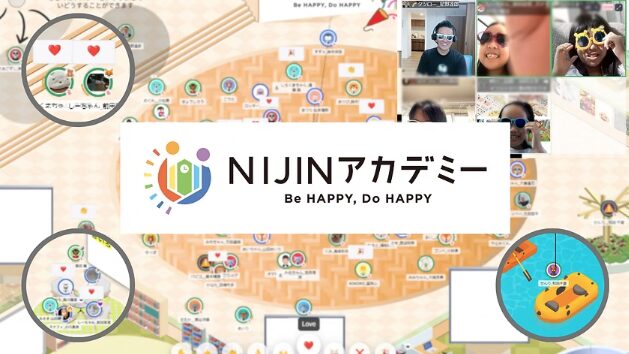
NIJIN Academy is an alternative school in Japan for elementary and junior high school students who do not fit conventional school, many of whom had stopped attending. It opened in September 2023 and is run by NIJIN Inc., founded by Tatsuro Hoshino, a former public elementary school teacher. NIJIN describes it as one of the largest alternative schools in Japan.
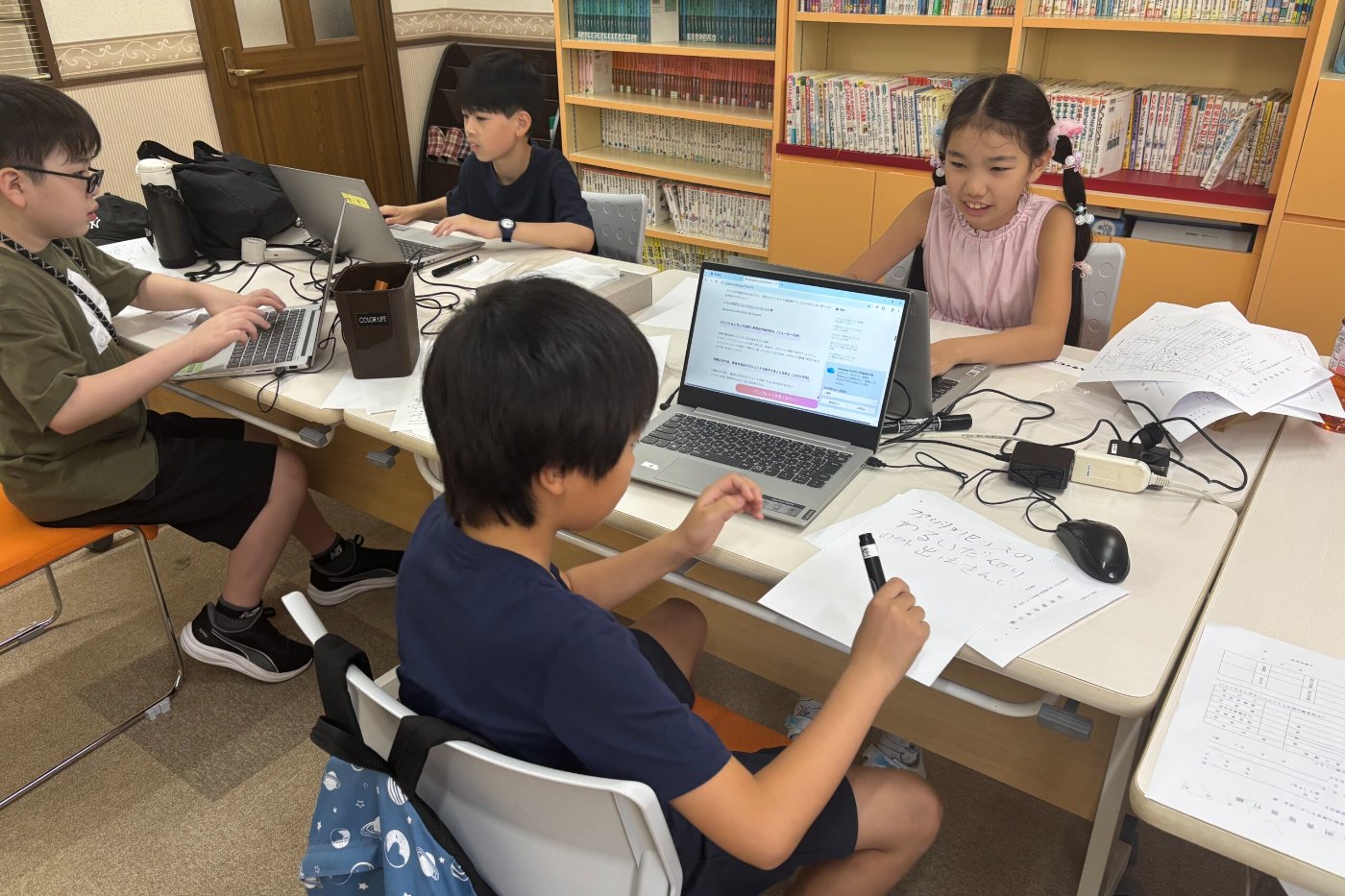
The model is hybrid. Children attend from home through a metaverse campus, choose from about 100 live online classes a month in small, conversation-based groups, and can also go to physical classrooms across Japan.
Figures are those published on NIJIN’s official websites. “Attendance recognition” means the child’s registered school counts learning at NIJIN Academy as school attendance.
Lead NIJIN Academy Canada, alongside your job
NIJIN is looking for one Country Head to start and lead NIJIN Academy Canada, as business head and principal. Teaching experience is not required, nor is a Canadian teaching certificate for the role itself. What counts is leadership, management, business ability and the skills of a principal; experience of running and hiring a team carries over directly. English alone is fine, and French and Japanese are strengths.
It is not a franchise: you do not buy into a ready-made package; you build the school with NIJIN. Investment is optional. You can start on a service contract, even as a side job alongside your current teaching or leadership work, and decide later whether to become a co-owner of a local company (for example, 20% of the shares for you and 80% for NIJIN; if you invest, the guide is JPY 1 to 2 million from you and JPY 4 to 8 million from NIJIN, decided together). Either way, compensation is, as a guide, 10% of revenue excluding tax, capped at JPY 50 million. JPY 100 million of revenue would give JPY 10 million. This is not a forecast or a guarantee of income: with no revenue, the formula pays nothing. Amounts are in Japanese yen only, and every other term is discussed in the interview.
Which form fits Canada, under which provincial rules, is worked out with the Country Head. See how to start a private school in Canada and homeschooling in Canada.
Questions and answers
How long does it take to become a teacher in Canada?
Usually a first degree plus a teacher education program (Manitoba describes five years in total), then certification: Ontario replies within 60 days of a complete application; Alberta allows up to 120 business days for teachers educated outside Canada.
Can I become a teacher in Canada without a B.Ed.?
Full certification needs a recognised teacher education program, usually a B.Ed.; Quebec also accepts a master’s leading to a teaching diploma. Temporary authorizations exist, such as Quebec’s provisional licence or B.C.’s Letter of Permission.
How do I become a teacher in Canada from India or the Philippines?
Choose a province and apply as an internationally educated teacher: directly to Ontario, Alberta or Quebec, or through Pathways to Teach Canada for nine others. Expect a course-by-course assessment and possibly a language test. For visas, use IRCC.
Can an American or UK teacher teach in Canada?
Yes, but a US state licence or UK qualification does not transfer automatically. Free-trade mobility covers certificates issued in Canada; you apply as a teacher educated outside Canada.
Which language test do I need to teach in Canada?
It depends on the province: Ontario accepts IELTS, TOEFL iBT, CELPIP, PTE Core and others; Alberta lists TOEFL iBT and IELTS Academic; Manitoba accepts only the LCATP; Quebec uses the TECFÉE for French. Usually only needed if your teacher education was not in English or French.
Is the NIJIN Academy Canada Country Head a job or a business?
It is closer to starting a business. You lead NIJIN Academy Canada as its business head and principal, either on a service contract or as a co-owner. Compensation is a guide of 10% of revenue, capped at JPY 50 million, and is not guaranteed. Details are discussed in the interview.
Teach, lead and build a school in Canada
If you want to build a place for children who do not fit the usual school, and you have led and hired a team, the Country Head role may be your next step. You can apply in English in a few minutes.
Where to go next
Related guides
Sources
- Ontario College of Teachers: Requirements
- Ontario College of Teachers: Internationally educated teachers
- Ontario College of Teachers: Language requirements
- Government of B.C.: Requirements for a Certificate of Qualification
- Government of B.C.: Applying from another province or country
- Government of B.C.: Understanding the application process
- Alberta Education: Teacher certification
- Government of Quebec: Becoming a teacher
- Government of Quebec: Language examination
- Government of Quebec: Non-legally qualified teachers
- Manitoba Education: Becoming a teacher
- Pathways to Teach Canada
- Statistics Canada, table 37-10-0153-01: Educators in public elementary and secondary schools
- Job Bank: Educational Services, Ontario, 2025
- IRCC: Work in Canada
- IRCC: Study permit
- NIJIN Academy Canada: Country Head
- NIJIN Academy (official site)