
For education founders in India
A school in India can earn more than it spends, but in most cases it cannot lawfully be run to make a profit for its owners: recognised schools are generally run by a not-for-profit trust, society or Section 8 company, any surplus is expected to go back into education, and fees are increasingly checked under state law. It can be sustainable and it can grow, but it is not a business where the owner takes the profit home.
Below: where that rule comes from (the Supreme Court, NEP 2020, the RTE Act and CBSE norms), the income and cost lines of a school, how fee regulation works, and a realistic money picture. This is not legal or tax advice. Rules differ by state, so confirm every point with your state education department and a qualified adviser.
In this article
- Surplus, yes. Profit for owners, no
- What the courts and national policy say
- Trust, society or Section 8 company
- Where a school’s money comes from, and where it goes
- Who decides the fees: state fee regulation and the RTE 25% seats
- A realistic money picture before you open
- Is opening a school profitable? School, play school, coaching and online
- A third route: co-founding instead of buying a franchise
- Questions and answers
Surplus, yes. Profit for owners, no
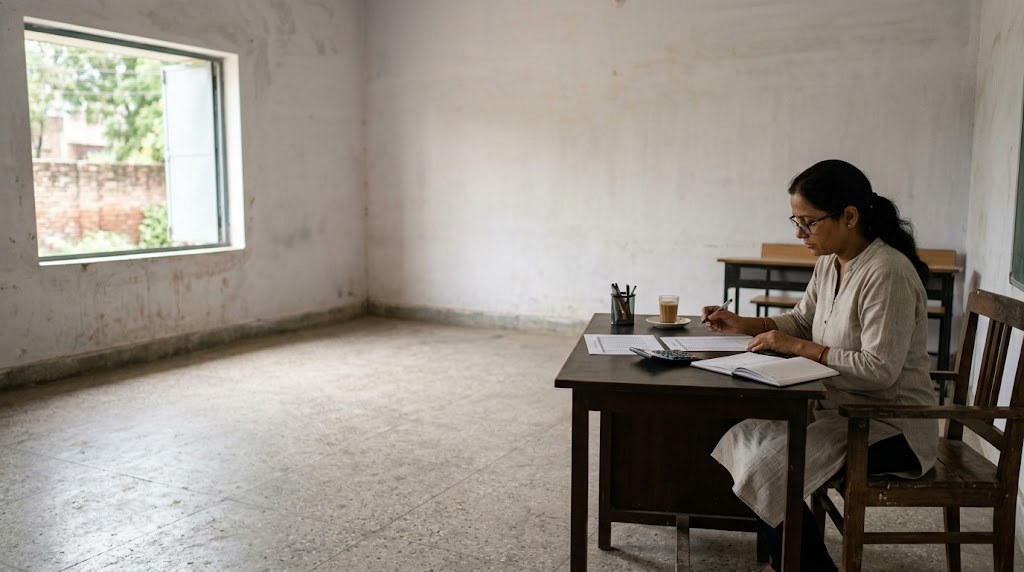
The question hides two questions: can a school cover its costs and keep going, and can its founder take money out, as a shop owner does? In India the answers point in opposite directions. Courts accept that a well-run school may earn a reasonable surplus. What they reject is profiteering: fees above what the school needs, donations or capitation fees collected at admission, and surplus taken out of education for private gain.
| Question | Short answer | Why |
|---|---|---|
| Can a school earn more than it spends? | Yes | A reasonable surplus for development and expansion is accepted by the Supreme Court |
| Can the owners take that surplus as profit or dividends? | Generally no | Schools are expected to be not-for-profit; CBSE norms say school funds go to the same school and to education |
| Can the school set its own fees? | Yes, within limits | Private unaided schools fix fees, but states can regulate them to prevent profiteering |
| Can it charge a donation or capitation fee at admission? | No | Section 13 of the RTE Act prohibits capitation fees for elementary admission |
What the courts and national policy say
The rule comes from court decisions, national policy and board norms, not one law.
The Supreme Court in T.M.A. Pai Foundation (2002). Decided by a Constitution Bench on 31 October 2002. In a separate opinion, Justices S.N. Variava and Ashok Bhan note that the Chief Justice “repeatedly emphasised” that capitation fees cannot be charged and that there must be no profiteering. The same opinion says fees should let institutions break even and also generate some surplus for future development and expansion, and for free seats.
The Supreme Court in Indian School, Jodhpur v. State of Rajasthan (2021). Summarising T.M.A. Pai and later Constitution Bench decisions, the Court said a private unaided school may fix its own fee structure, which may include a reasonable revenue surplus for the development of education and expansion of the school, “as long as it does not entail in profiteering and commercialisation.” Government may step in when fees are excessive.
The National Education Policy 2020. Paragraph 8.3 admits the regulatory regime “has not been able to curb the commercialization and economic exploitation of parents by many for-profit private schools”. Paragraph 8.7 says all institutions will be held to the audit and disclosure standards of a “not-for-profit” entity, with surpluses reinvested in education.
CBSE affiliation norms. CBSE’s note on the role of the society, trust or company (Affiliation Bye-Laws 2018) says the managing body “shall ensure that the school is run as a community service and not as a business” (9.1.3), and that school funds are spent on the same school and the cause of education (9.1.4).
In practice: for-profit schools exist, as NEP 2020 admits, but the courts, policy and boards point one way: run a surplus and reinvest it. A plan built on taking it out as profit is built against the rules.
Trust, society or Section 8 company
So a private school is usually run by one of three kinds of body; CBSE’s documents call it the “Society/Trust/Company”. Confirm in writing which forms your state and board accept before you register anything.
| Form | What it is | What to confirm locally |
|---|---|---|
| Public charitable trust | Trustees hold property for a charitable purpose such as education | Which state law applies; how trustees change |
| Registered society | A membership body registered under your state’s societies law | Registration office; how the governing body is chosen |
| Section 8 company | A company licensed under Section 8 of the Companies Act, 2013 | Licence conditions; filings with the Registrar of Companies |
Section 8’s wording answers the profit question directly. A company may be licensed under it when its objects include the promotion of education, it “intends to apply its profits, if any, or other income in promoting its objects”, and “intends to prohibit the payment of any dividend to its members.” It is a real company, with a board and filings, but members receive no dividends.
Tax treatment is not covered here; ask a chartered accountant.
Where a school’s money comes from, and where it goes
We give no rupee figures, because costs differ too much by city. Fill in the lines with local quotes.
| Income line | Notes |
|---|---|
| Tuition fee | The main income; may be regulated by your state |
| Other fees (transport, activities, meals) | Only for what you actually provide |
| Reimbursement for RTE 25% seats | For children admitted under Section 12(1)(c); see below |
| Grants and donations | Must not be a condition of admission; a capitation fee is prohibited |
| Cost line | Fixed or per child | Notes |
|---|---|---|
| Teaching and non-teaching salaries, increments | Fixed | Usually the largest line |
| Land and building: rent, loan repayment or lease | Fixed | Recognition and board norms cover land and building |
| Labs, library, sports, ICT | Mostly fixed | CBSE norms (9.1.2) refer to library, labs and sports |
| Safety, maintenance, utilities, insurance | Fixed | Ask which local safety approvals apply to your building |
| Recognition, affiliation, audit and compliance | Fixed | Recurring, not one-off |
| Books, materials, meals, transport | Per child | Only if included in the fee |
| Development reserve | Planned | The reasonable surplus courts accept |
Who decides the fees: state fee regulation and the RTE 25% seats
Fee regulation is set state by state. Take Rajasthan, whose law the Supreme Court examined in full. Under the Rajasthan Schools (Regulation of Fee) Act, 2016 and its 2017 Rules, a School Level Fee Committee considers the management’s proposed fee; disputes go to a Divisional Fee Regulatory Committee and a Revision Committee. Section 8 of that Act lists fee factors, including location, infrastructure, maintenance, qualified staff and salaries, yearly increments, and a “reasonable revenue surplus for the purpose of development of education and expansion of the school.” In 2021 the Supreme Court upheld the Act and Rules, while reading down some sections.
Other states have their own laws and committees. Do not assume Rajasthan’s model applies; ask your state education department which fee law covers your school and what you must file each year.
The RTE Act 25% seats. Under Section 12(1)(c) of the Right of Children to Free and Compulsory Education Act, 2009, unaided schools must admit in Class 1 at least 25% of the class strength from weaker sections and disadvantaged groups in the neighbourhood, and educate them free until elementary education is complete; the same applies at pre-school entry where a school has it. Section 12(2) reimburses the school at the State’s per-child expenditure or the amount charged, whichever is less. Section 13 bans capitation fees and admission screening (fines up to ten times the capitation fee). Section 18 requires a certificate of recognition before a non-government school functions.
The financial consequence. A quarter of your entry class may be paid at the state’s rate, not your fee, on the state’s timetable. Model it, and ask your state how and when it pays.
Want to build a school with a team behind you?
NIJIN Academy is an alternative school in Japan, opened in September 2023, with a metaverse campus, about 100 live online classes a month and 52 physical classrooms across Japan. NIJIN is looking for one founder to start and lead NIJIN Academy India as its business head and principal. It is not a franchise: we set up a local company together.
Two ways to start: co-found the local company and hold shares (for example, 20% for you and 80% for NIJIN), or start on a service contract, even as a side job alongside your current work. Investment is optional. Either way, the compensation guide is the same: 10% of revenue (excluding tax), not a guaranteed income.
See the Country Head role in IndiaA realistic money picture before you open
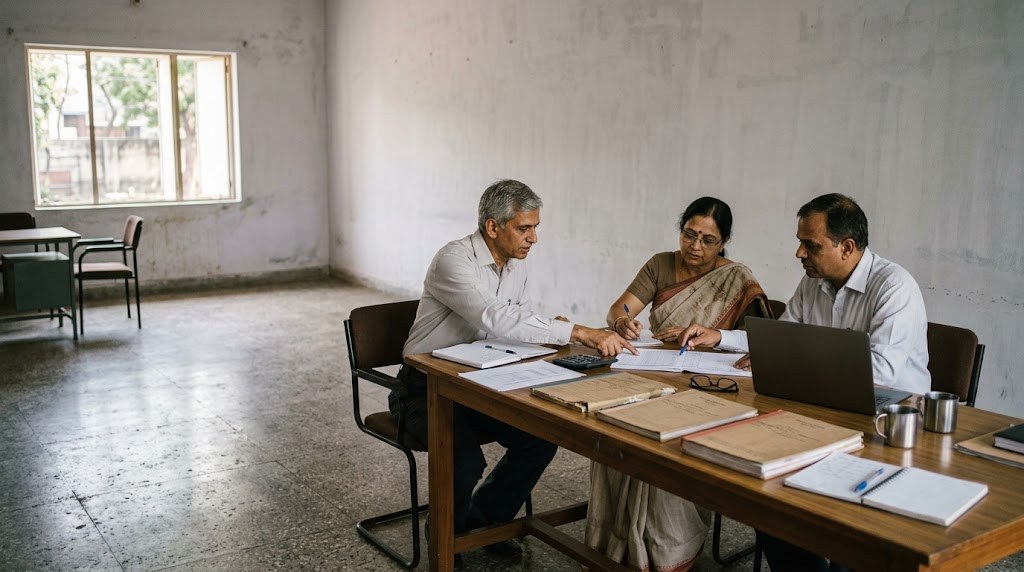
Land, building and recognition come before the first fee. These steps keep the plan honest.
- Start from the families, not the building. Who will enrol, at what fee they can sustain, from how far away.
- Confirm the legal shape in writing. Recognition, board affiliation, and the body that will run the school.
- Write the fee and its justification together. Build it from the cost lines, as a fee committee would.
- Model the RTE seats and the reimbursement delay. A quarter of the entry class at the state rate, possibly paid later.
- Find your break-even enrolment. Fixed costs ÷ (average fee − per-child costs). Test it at 60% of expected enrolment.
- Plan the surplus as reinvestment. Decide in advance what a surplus will pay for.
- Decide how the founder is paid. Whether a founder who works in the school can be paid for that work depends on your body’s rules and your state. Ask an adviser early.
- Written answers on recognition, affiliation and legal form?
- Does the plan survive a one-year fee freeze, or late RTE reimbursement?
- Can I explain every fee line to a parent and a committee?
Is opening a school profitable? School, play school, coaching and online
A recognised school sits squarely under the RTE Act and state rules. Other education models may be regulated differently. The table shows questions to ask, not answers.
| Model | First legal question | Where the money is expected to go |
|---|---|---|
| Recognised K-12 school (Class 1–12, CBSE or State Board) | Recognition under RTE rules; board affiliation | Back into the school (not-for-profit body) |
| Play school or pre-school | Is it inside a school? What does my state require of stand-alone pre-schools? | Depends on structure; confirm locally |
| Coaching or tuition centre | What state or local rules apply to coaching centres? | Confirm locally |
| Online learning or edtech | Is it a school, a service to schools, or a tutoring service? | Depends on what it is legally |
For the full set-up steps for a school, see how to start a school in India. For play schools, see how to start a play school without a franchise in India.
A third route: co-founding instead of buying a franchise
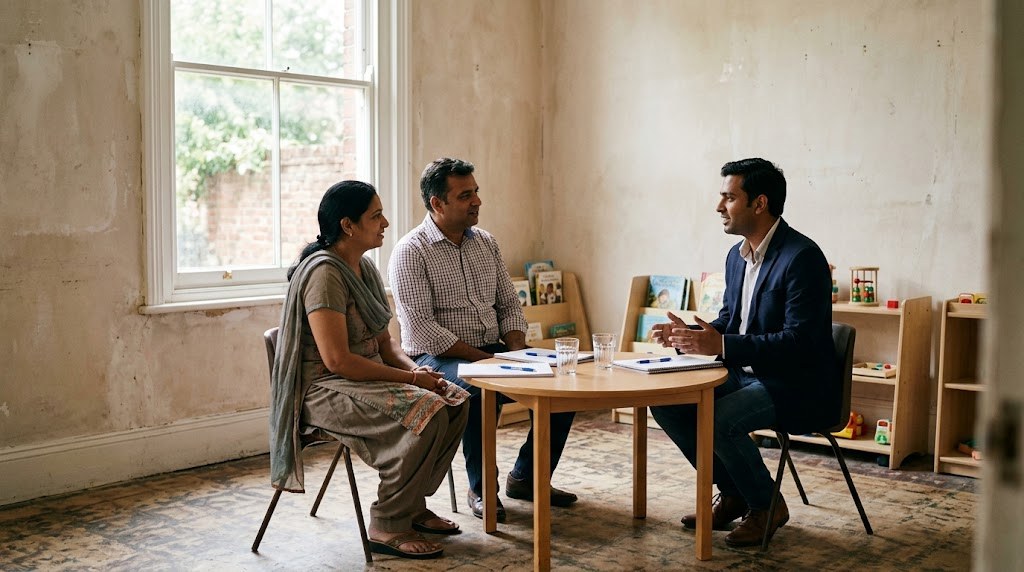
If what draws you is leading a school, not owning a profit stream, there are three broad routes.
| Buy a franchise | Start alone from zero | Co-found a local company | |
|---|---|---|---|
| Model | You pay to use an existing brand and format | You design everything yourself | You build it with an organisation that already runs one |
| Ownership | Your business, under the franchisor’s contract | Fully yours | Shared, by agreement |
| Who adapts it to local law | You, within the franchisor’s rules | You | Together |
| Main risk | Ongoing fees to the franchisor | Every problem is new | Less independence |
NIJIN Academy India is the third kind. NIJIN plans to set up a local company in India with its Country Head, who holds 20% of the shares and NIJIN holds 80%. As a guide, the Country Head invests JPY 1 to 2 million of the starting capital and NIJIN invests JPY 4 to 8 million; the exact amounts are decided together. It is not a franchise. Which legal form it takes in India, and which activities count as a school under Indian law, is worked out locally with proper advice; this page does not decide it.
Compensation is stated as a guideline: 10% of revenue (excluding tax), up to a cap of JPY 50 million. JPY 100 million of revenue gives JPY 10 million; JPY 200 million gives JPY 20 million; JPY 500 million or more, JPY 50 million. These only show how the formula works. They are not a forecast, and no income is guaranteed: with no revenue, the formula pays nothing. Anyone you hand part of the role to is paid from the 10%. Other terms are discussed in the interview.
Figures published by NIJIN. “Attendance recognition”: the child’s registered school counts learning at NIJIN Academy as attendance.
NEP 2020 cites the NSSO 75th round (2017–18): 3.22 crore children aged 6 to 17 out of school. Teaching experience is not required.
Questions and answers
Is school a profitable business in India?
It can be sustainable and run a reasonable surplus for development, which the Supreme Court accepts. But schools are generally run as not-for-profit, with surplus reinvested, so owners do not take profits out. Confirm your state’s and board’s rules.
Is education a non profitable business in India?
For recognised schools, generally yes: NEP 2020 holds institutions to “not-for-profit” audit standards. Coaching or edtech may be regulated differently, depending on what you legally run.
Is play school profitable business in India?
It depends on whether it is part of a school, your state’s rules and your legal form. We found no official profit figures. See starting a play school without a franchise.
What is the school business profit margin in India?
We found no official figure, and “margin” is the wrong lens for a not-for-profit school. Use your break-even enrolment and planned surplus instead. Be cautious with margins quoted by franchise sellers.
How much does a school owner earn in India?
There is no official figure, and the question has two parts. Profit: a recognised school in India is run by a trust, society or Section 8 company, so its surplus goes back into the school rather than to its founders as dividends (see surplus yes, profit for owners no). Pay: a founder who also works in the school, for example as principal, may be paid a salary for that work where the body’s rules and the state allow it. Be careful with “school owners earn X lakh a month” claims, which often mix fees, surplus and salary. If you want income that follows the size of what you build, the co-founding route works differently: as a guide, the Country Head’s compensation is 10% of revenue (excluding tax), up to JPY 50 million, and it is not a promise of income.
Is opening a school profitable if I count the founder’s salary?
Pay for work, for example as principal, is different from profit. Whether someone connected with the management can be paid depends on your body’s rules and your state; confirm with an adviser.
I am looking for country manager jobs in the education sector in India. Is this a job or a business?
The NIJIN Academy India Country Head role is closer to founding a business. You hold 20% of a local company, invest as a guide JPY 1 to 2 million, and compensation is a guideline of 10% of revenue, capped at JPY 50 million and not guaranteed. Contract type, location and start date are discussed in the interview.
Lead NIJIN Academy India, as its founder and principal
NIJIN is looking for one person to start and lead NIJIN Academy in India. Teaching experience is not required. If you have led an organisation, hired people, and want to build a school for children who do not fit school, read the role.
See the Country Head role in IndiaWhere to go next
Related guides for founders
- How to start a school in India
- How to start a play school without a franchise in India
- Education franchise in India: what you actually buy
- Alternative schools in India
- How to start an education business
- Country manager in education: the role and three pay models
- Cost to start a school in India: a realistic breakdown
- Education business ideas in India
- How to start an NGO for education in India
- School business plan in India: what to put in it
Sources
Quotations are from the official texts below. Rules change; check the original and your state’s current rules.
- https://api.sci.gov.in/jonew/judis/18745.pdf
- https://api.sci.gov.in/supremecourt/2019/38328/38328_2019_34_1501_27945_Judgement_03-May-2021.pdf
- https://static.pib.gov.in/WriteReadData/userfiles/NEP_Final_English_0.pdf
- https://www.cbse.gov.in/cbsenew/board//Role%20of%20Society.pdf
- https://www.wipo.int/wipolex/en/legislation/details/23147
- https://panchayatwiki.lsgkerala.gov.in/THE_RIGHT_OF_CHILDREN_TO_FREE_AND_COMPULSORY_EDUCATION_ACT,_2009
- https://nijin.co.jp/recruit/nijin-academy-india-country-head/