For education founders in India
To start an online school in India, decide first what you are legally building, because the national routes are written for schools with buildings: the RTE Act requires every non-government school to hold a state certificate of recognition, CBSE affiliates only schools that meet its land and building norms, and the open route for learners who study away from a classroom is NIOS. In practice, most founders build an online programme that works alongside NIOS or a recognised school, and treat children’s data under the DPDP Act, 2023 as a day-one requirement.
This guide covers India only; teaching models and platforms for any country are in our general guide on how to start an online school. Where we could not confirm a rule from an official source, we say so.
In this article
- Is online school legal in India?
- Can an online school be CBSE affiliated?
- The NIOS route, and what it is not
- Four models for an online school in India
- Children’s data: the DPDP Act, 2023
- What UDISE+ tells you about the market
- How to start an online school in India, step by step
- Online school fees and costs: what to budget for
- Starting alone, with a franchise, or as a co-founder
- Questions and answers
Is online school legal in India?
Online teaching itself is not banned. What matters is the word “school”. Section 18 of the Right of Children to Free and Compulsory Education Act, 2009 (the RTE Act) says that no school, other than one established, owned or controlled by the government or a local authority, may be established or function without a certificate of recognition from the authority the state prescribes. Section 19 adds that recognition is granted only to a school that meets the norms in the Act’s Schedule.
That Schedule is written for a physical school: an all-weather building with at least one classroom for every teacher, separate toilets for boys and girls, a kitchen for mid-day meals, a playground and a boundary wall or fencing. It also sets 200 working days a year for Classes 1 to 5 and 220 for Classes 6 to 8. The RTE Act covers elementary education, which it defines as the first to the eighth class.
Under Section 18(5), running a school without recognition can be punished with a fine, and a further fine for each day it continues. We did not find any national category that recognises an online-only school. If you plan to call your setting a school, ask your state education department in writing what it is, before you take a single fee.
The safe working rule. Until your state tells you otherwise in writing, describe what you sell precisely: online classes, learner support, or a programme run with a named recognised school or with NIOS.
Can an online school be CBSE affiliated?
CBSE’s Affiliation Bye-Laws, 2018 define a private school as one run by a society, a trust or a company registered under Section 8 of the Companies Act, 2013. Chapter 3 of the same bye-laws sets land requirements: the land must be one contiguous plot, with a suitable building on part of it and a proper playground on the rest. In the 2018 text, for example, a secondary school within the four metropolitan cities of Chennai, Delhi, Kolkata and Mumbai needs at least 1,600 square metres. The bye-laws have been amended since, so read the current version on CBSE’s SARAS portal.
In a public notice of 13 July 2021 (Circular No. 11/2021), CBSE said that under clause 14.2.2 of its bye-laws, non-affiliated schools may not present candidates for Board examinations, and warned against phrases such as “CBSE pattern” or “CBSE registered” being used by schools that are not affiliated.
| Question parents ask | What the official sources say | What it means for your online school |
|---|---|---|
| Is this a CBSE school? | CBSE affiliates schools that meet its bye-laws, including land and building norms. | An online programme without its own campus is not, by itself, a CBSE-affiliated school. |
| Can my child sit Class 10 and 12 Board exams through you? | Non-affiliated schools cannot present candidates for CBSE Board examinations. | Say clearly which body your learners register with, and how they will sit its exams. |
The NIOS route, and what it is not
The National Institute of Open Schooling began as a project under CBSE in 1979, was established as the National Open School in 1989 and took its present name in 2002. According to NIOS, admission to its Secondary (Class 10) and Senior Secondary (Class 12) courses is online, public examinations are held twice a year, and learners can also use an On-Demand Examination System after their first public examination.
The National Education Policy 2020 says NIOS and State Open Schools will be expanded and strengthened for young people who are not able to attend a physical school.
| NIOS programme | Level | Offered through |
|---|---|---|
| Open Basic Education, A, B and C levels | Equivalent to Class 3, 5 and 8 | Accredited Agencies (AAs) |
| Secondary | Class 10, Secondary School Certificate | Online admission, or study centres called Accredited Institutions (AIs) |
| Senior Secondary | Class 12, Senior Secondary School Certificate | Online admission, or Accredited Institutions |
| Vocational courses | Various | Accredited Vocational Institutions (AVIs) |
Two points are easy to get wrong. The learner registers with NIOS and NIOS certifies the learner; your organisation does not. And becoming an Accredited Institution or Agency is a separate application with its own conditions, so ask a NIOS regional centre what they are today. Several states also run State Open Schools, which may suit a programme in a regional language.
Four models for an online school in India
The rules above leave four realistic shapes. Each answers the question every parent asks: where is my child legally studying, and who gives the certificate?
| Model | What families get | Who certifies | Question to settle first |
|---|---|---|---|
| Online classes alongside school | Live classes, tutoring or enrichment; the child stays enrolled at a school | The child’s own school or board | How do you describe the service so it is not presented as a school? |
| NIOS learner-support programme | Daily online teaching and mentoring for learners registered with NIOS | NIOS | Will you apply to become an Accredited Institution or Agency, or support learners who register directly? |
| Hybrid with a recognised school | Online classes plus in-person days at a recognised campus | The recognised school and its board | Who holds recognition, and which duties sit with you? |
| Online programme for children out of school | A way back into learning, often leading to NIOS or re-entry to school | NIOS, or the school the child returns to | Which state rules apply, and how will you work with schools? |
This table describes models, not legal status. Recognition rules are applied state by state.
Want to build an online and in-person school in India, with a model that already runs?
NIJIN Academy is an alternative school in Japan, opened in September 2023. Children join from home through a metaverse campus, choose from about 100 live online classes a month, and can attend 52 physical classrooms across Japan. NIJIN is looking for one person to lead NIJIN Academy India as business head and principal. It is not a franchise, and investment is optional.
See the Country Head role in IndiaChildren’s data: the DPDP Act, 2023
An online school collects names, video, chat and attendance. India’s Digital Personal Data Protection Act, 2023 defines a child as anyone who has not completed the age of eighteen, so it covers your whole learner base, including Class 11 and 12 students.
Section 9 of the Act sets three duties for anyone processing a child’s personal data. You must obtain verifiable consent from a parent or lawful guardian before processing, in the manner prescribed by rules. You must not process data in a way likely to cause any detrimental effect on a child’s well-being. And you must not undertake tracking or behavioural monitoring of children, or targeted advertising directed at them. Exemptions can be prescribed, so read the rules under the Act on the Ministry of Electronics and Information Technology’s site, and check when each part applies.
- Write down every item of personal data you collect, why, and for how long you keep it.
- Design a parent consent step that you can show was really given by the parent.
- Switch off advertising trackers and behavioural analytics on pages and apps children use.
- Set up a way for parents to raise a grievance and get an answer.
What UDISE+ tells you about the market
UDISE+ is the Ministry of Education’s school data system. Its 2024-25 report counts 14,71,473 schools, of which 3,39,583 are private unaided recognised schools, and more than 1.01 crore teachers. Only 63.5% of schools had an internet facility.
Two readings follow. First, connectivity is uneven: the NEP says the benefits of online education cannot be used unless the digital divide is addressed, and that online learning not blended with experiential learning risks becoming screen-based. Plan for low bandwidth and shared phones. Second, the clearest need is often outside the system: the NEP cites 3.22 crore out-of-school children aged 6 to 17 and calls bringing them back a top priority. The Ministry’s 2020 PRAGYATA guidelines on digital education also recommend screen time for different groups of students; read them before you design a timetable.
How to start an online school in India, step by step
- Name the children you serve. Age band, language, state, and what is not working for them now.
- Choose your model from the table above. Decide who certifies the learning before you choose a platform.
- Ask in writing. Send your model to your state education department and, for open schooling, a NIOS regional centre. Keep the replies.
- Choose the legal form. If you may later want a CBSE-affiliated campus, note that its bye-laws expect a society, trust or Section 8 company. Take Indian legal advice.
- Build data protection in. Parent consent, no tracking of children, and a deletion schedule, as in the checklist above.
- Pilot with a few families. Run a few weeks of live classes. Measure who keeps attending, on what device.
- Open small and report monthly. Tell parents what their child learned. Ask every family that leaves why.
Online school fees and costs: what to budget for
We do not publish fee or cost figures: they vary by model and city, and we could not verify any from an official source. Fill this table with real quotes before you set a fee.
| Cost line | What to include | Fixed or per learner |
|---|---|---|
| Teachers and mentors | Live class hours, preparation, one-to-one check-ins, cover | Mostly fixed |
| Platform and devices | Video, learning platform, licences, loan devices if you offer them | Both |
| Certification route | NIOS or other board fees paid by or for learners; accreditation costs if you apply | Per learner |
| Compliance | Legal advice, data protection work, accounting, entity registration | Fixed |
| Family acquisition | Outreach, trial classes, counselling time with parents | Per learner |
For school-level costs in India, see our guide to the cost to start a school in India.
Starting alone, with a franchise, or as a co-founder
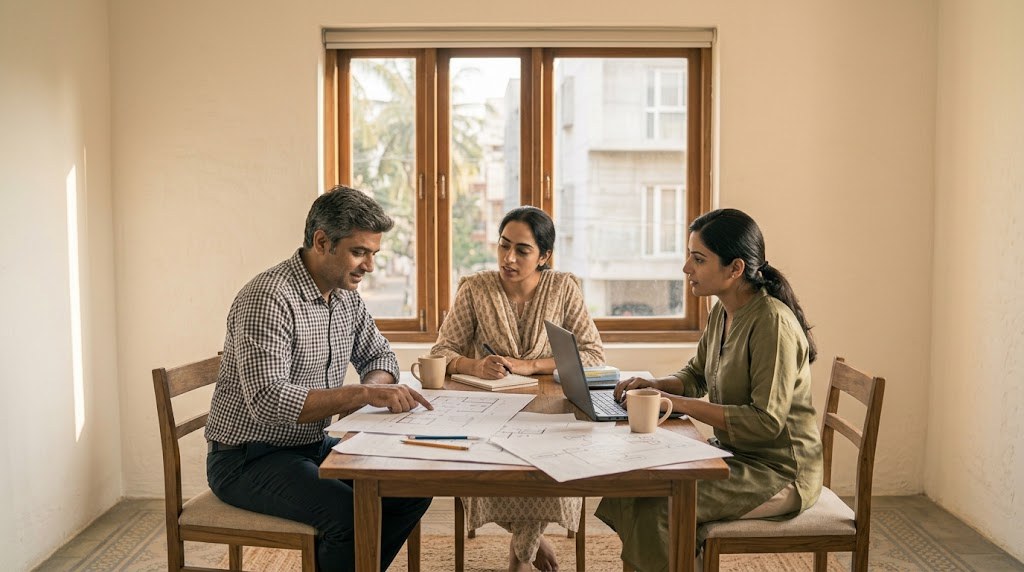
A third route, between going alone and buying a franchise, is to co-found the local company of a model that already runs.
| Alone, from zero | Education franchise | Co-founding NIJIN Academy India | |
|---|---|---|---|
| Who decides | You | Largely the franchisor’s format | You lead it as business head and principal, with NIJIN |
| Teaching model | Built by you | Supplied | A hybrid model running in Japan since 2023, adapted to India with you |
| Money in | All yours | Franchise fees | Optional. As a guide, JPY 1 to 2 million from you and JPY 4 to 8 million from NIJIN if you invest; or start on a service contract |
| Your share and pay | Whatever the business earns | Profit after fees | As a guide, 10% of revenue (excluding tax), capped at JPY 50 million; 20% of the shares if you co-own |
Figures are those published on NIJIN’s official websites. “Attendance recognition” means the child’s registered school counts learning at NIJIN Academy as school attendance. The 10% formula is a guide, not a promise of income: if there is no revenue, it pays nothing. Amounts are in Japanese yen only, and every other term is discussed in the interview.
Questions and answers
Is online school legal in India?
Online classes are not banned, but the RTE Act requires every non-government school to hold state recognition, and its norms describe a physical school. Ask your state education department in writing.
Is there any CBSE affiliated online school in India?
Check any claim on CBSE’s affiliation website. CBSE affiliates schools that meet its land and building norms, and non-affiliated schools cannot present candidates for its Board examinations.
How do students of an online school in India get a Class 10 or 12 certificate?
Through the body they are registered with. For learners outside a physical school, that is usually NIOS, with online admission and public examinations twice a year, or a State Open School.
What are online school fees in India?
We do not publish fee figures, as none could be verified from official sources. Build your fee from the cost table above.
Do I need a licence for an online school in India?
It depends on what your setting is in law. A school needs state recognition under the RTE Act; a NIOS study centre needs NIOS accreditation. Ask your state and NIOS in writing.
Is the Country Head role a job or a business?
It is closer to a business. You start and lead a company, as a co-owner or, to begin with, on a service contract, even alongside your current work. Teaching experience is not required. Other terms are discussed in the interview.
Lead NIJIN Academy India, online and in person
If you want to start a company in India and solve a problem in education, and you have led and hired people, read the role.
See the Country Head role in IndiaWhere to go next
Related guides for founders
- How to start an online school that children keep attending
- How to start a school in India: trust, RTE recognition and CBSE
- Alternative schools in India
- Education business ideas in India
- Homeschooling vs online school vs alternative school
- How to start an EdTech startup in India: the first 12 months
- How to start a coaching centre in India: rules and steps
Sources
Figures are quoted with the year they refer to. Rules change; please check the original for later updates.
- https://panchayatwiki.lsgkerala.gov.in/THE_RIGHT_OF_CHILDREN_TO_FREE_AND_COMPULSORY_EDUCATION_ACT,_2009
- https://www.education.gov.in/rte
- https://saras.cbse.gov.in/saras/ui/assets/affiliation_bye_laws/Affiliation-Bye-Laws-English.pdf
- https://www.cbse.gov.in/cbsenew/documents//Affiliation%20Circular%2011-2021.pdf
- https://www.cbse.gov.in/cbsenew/affiliation.html
- https://rcbhubaneswar.nios.ac.in/at-a-glance.html
- https://static.pib.gov.in/WriteReadData/userfiles/NEP_Final_English_0.pdf
- https://www.meity.gov.in/static/uploads/2024/06/2bf1f0e9f04e6fb4f8fef35e82c42aa5.pdf
- https://www.meity.gov.in/data-protection-framework
- https://dashboard.udiseplus.gov.in/report-new-v.6-demo2025/static/media/UDISE%2B2024_25_Booklet_existing.118ba29d4773e6372f72.pdf
- https://static.pib.gov.in/WriteReadData/userfiles/333%20-%20Copy%201.pdf
- https://nijin.co.jp/recruit/nijin-academy-india-country-head/