
For education founders in India
The school dropout rate in India is now low in the early grades and highest at the secondary stage: in the Ministry of Education’s UDISE+ 2025-26 report, the annual dropout rate was 1.8% at the preparatory stage, 3.6% at the middle stage and 7.0% at the secondary stage, and the secondary retention rate was only 51.9%. In other words, the problem is no longer mainly getting children into Class 1. It is keeping them in school after Class 8.
This guide reads the official numbers stage by stage, sets out the reasons for school dropouts in India as the government’s own household survey records them, and then asks a practical question for anyone who wants to build something: which of these reasons can a school, a learning centre or an education company actually change? Every figure comes with its year and source, and older and newer figures are kept apart.
In this article
- School dropout rate in India: the latest figures
- Retention and transition: where children actually leave
- How to read the numbers without mixing them up
- Out of school children in India: how many?
- Reasons for school dropouts in India: what the official survey says
- What people who build schools can change
- A 90-day plan to work on dropout in one area
- A model from Japan for children who leave school
- Questions and answers
School dropout rate in India: the latest figures
India’s official school statistics come from UDISE+ (Unified District Information System for Education Plus), published by the Ministry of Education. The 2025-26 report was released on 7 July 2026, and the Press Information Bureau (PIB) published its key findings the same day. The PIB release reports dropout by stage, using the stage names of the National Education Policy (NEP) 2020: preparatory, middle and secondary.
| Dropout rate (%) | 2022-23 | 2023-24 | 2024-25 | 2025-26 |
|---|---|---|---|---|
| Preparatory stage | 8.7 | 3.7 | 2.3 | 1.8 |
| Middle stage | 8.1 | 5.2 | 3.5 | 3.6 |
| Secondary stage | 13.8 | 10.9 | 8.2 | 7.0 |
Source: PIB, Ministry of Education, UDISE+ 2025-26 key findings (7 July 2026). The 2024-25 figures match the PIB release on UDISE+ 2024-25 (28 August 2025).
Three things stand out. Dropout has fallen at every stage since 2022-23. The middle stage did not improve in the latest year (3.5% to 3.6%). And the secondary rate, even after four years of decline, is still roughly four times the preparatory rate. For the stage definitions, NEP 2020 sets out a 5+3+3+4 structure: the preparatory stage is Grades 3 to 5, the middle stage Grades 6 to 8, and the secondary stage Grades 9 to 12.
Retention and transition: where children actually leave
A dropout rate is a yearly figure. Two other UDISE+ indicators show the cumulative picture better. The retention rate tells you what share of children stay through a stage. The transition rate tells you what share move up from one stage to the next.
| Transition rate (%) | 2022-23 | 2023-24 | 2024-25 | 2025-26 |
|---|---|---|---|---|
| Foundational to preparatory | 92.2 | 98.1 | 98.6 | 99.2 |
| Preparatory to middle | 87.9 | 88.8 | 92.2 | 93.8 |
| Middle to secondary | 86.7 | 83.3 | 86.6 | 88.3 |
Source: PIB, UDISE+ 2025-26 key findings (7 July 2026).
Read together, the tables point to two weak joints. The first is the move from middle to secondary school, where about one child in nine did not make the transition in 2025-26. The second is inside the secondary stage itself, where retention is just over half. The same release reports that the gross enrolment ratio (GER) at the secondary level rose from 68.5% in 2024-25 to 71.7% in 2025-26, and the ministry credits part of the retention gain to more schools offering secondary education. That is a hint about the cause: when the next school is nearer, more children stay.
How to read the numbers without mixing them up
Most confusion about the school dropout rate in India comes from comparing figures that measure different things.
Dropout rate (UDISE+): a yearly rate for a stage, calculated from school records.
Retention and transition rates (UDISE+): how many children stay through a stage, or move to the next one.
Out-of-school children (household surveys such as the NSS): children counted at home, not in school records. A different source, a different year and a different method.
Two formats: the ministry publishes the UDISE+ report in an Existing format and an NEP format. Stage groupings differ, so a “secondary” figure from one format should not be compared with one from the other.
If a headline figure does not match the table above, check its format and year. State-wise figures, which many readers search for, are published in the full UDISE+ report on the official UDISE+ publications page, not in the PIB summary.
Out of school children in India: how many?
The figure most often quoted is the one in the National Education Policy 2020 itself. Citing the National Sample Survey Office’s 75th round household survey of 2017-18, NEP 2020 puts the number of out-of-school children aged 6 to 17 at 3.22 crore. The policy calls it a top priority to bring these children back into education as early as possible and to prevent further dropout, with a goal of 100% GER from preschool to secondary level by 2030.
This figure refers to 2017-18 and should not be set next to the 2025-26 UDISE+ rates as if both described the same year. Treat it as the figure the national policy uses, not as today’s number.
For the global picture and how out-of-school counts are built internationally, see our guide to out-of-school children: causes and solutions. This article stays with India.
Reasons for school dropouts in India: what the official survey says
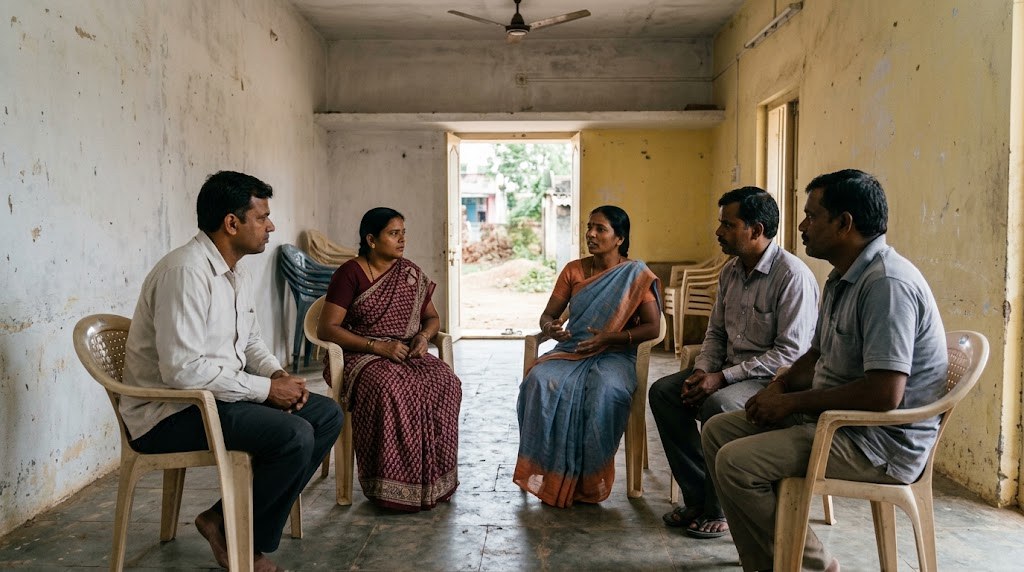
UDISE+ counts how many children leave, but its summary does not say why. The most detailed official answer comes from the same NSS 75th round (July 2017 to June 2018), published by the National Statistical Office as Key Indicators of Household Social Consumption on Education in India. It asked people aged 3 to 35 who had been enrolled at some point but were not currently attending for their major reason.
| Major reason for not attending (ever enrolled, age 3–35, all-India) | Male (%) | Female (%) |
|---|---|---|
| Engaged in economic activities | 36.9 | 5.3 |
| Financial constraints | 24.3 | 17.7 |
| Not interested in education | 18.8 | 14.8 |
| Engaged in domestic activities | 4.0 | 30.2 |
| Marriage | – | 13.2 |
| School is far off | 0.5 | 2.7 |
Source: NSS 75th round, Statement 29, rural and urban combined. Shares of ever-enrolled persons aged 3–35 currently not attending, by major reason. The age range includes young adults, so this is not a breakdown of school-age children only.
The pattern is clear even with that caution. For boys, the main pull is paid or family work, followed by money. For girls, it is work in the home, money and marriage. “Not interested in education” is the third reason for both. The same survey also shows where the leak happens: among ever-enrolled persons, the share who had dropped out was highest for those whose last enrolment was at the secondary level (19.8%) and the upper primary or middle level (17.5%), rural and urban combined.
NEP 2020 reads the problem in a similar way. It names two lines of action: infrastructure, so that every child can reach a safe school, including transport or hostels especially for girls; and tracking children and their learning, so that those who fall behind or drop out have a way to catch up and re-enter. It also says that quality is what keeps children, particularly girls and disadvantaged groups, from losing interest, and that the curriculum must become more engaging.
Want to lead a school in India for children who do not fit school?
NIJIN Academy is an alternative school in Japan, opened in September 2023, for children who do not fit conventional school. Children join from home through a metaverse campus, choose from about 100 live online classes a month, and can also go to 52 physical classrooms across Japan. NIJIN is looking for one person to start and lead NIJIN Academy India, as both its business head and its principal. Teaching experience is not required.
See the Country Head role in IndiaWhat people who build schools can change
Some reasons sit outside any school’s reach: household poverty, child labour, early marriage. But a real share of the problem is about how school itself is built. Here is how each official reason maps to something a founder can design.
| Reason or situation | What a school can design | Lever |
|---|---|---|
| Economic activities, domestic work | Timetables that fit around a working day; part of learning online, at hours the family can manage | Easier to attend |
| School is far off; route not safe | A small site closer to home; online classes for the days a child cannot travel | Easier to attend |
| Not interested in education | Choice of classes, project work, adults who know each child by name | Learning at the child’s pace |
| Unable to cope with studies | Starting from the child’s level, not the grade label; small-group catch-up | Learning at the child’s pace |
| Already out of school for a long time | A bridge back: a short, structured catch-up, then a route to a recognised certificate | A way back in |
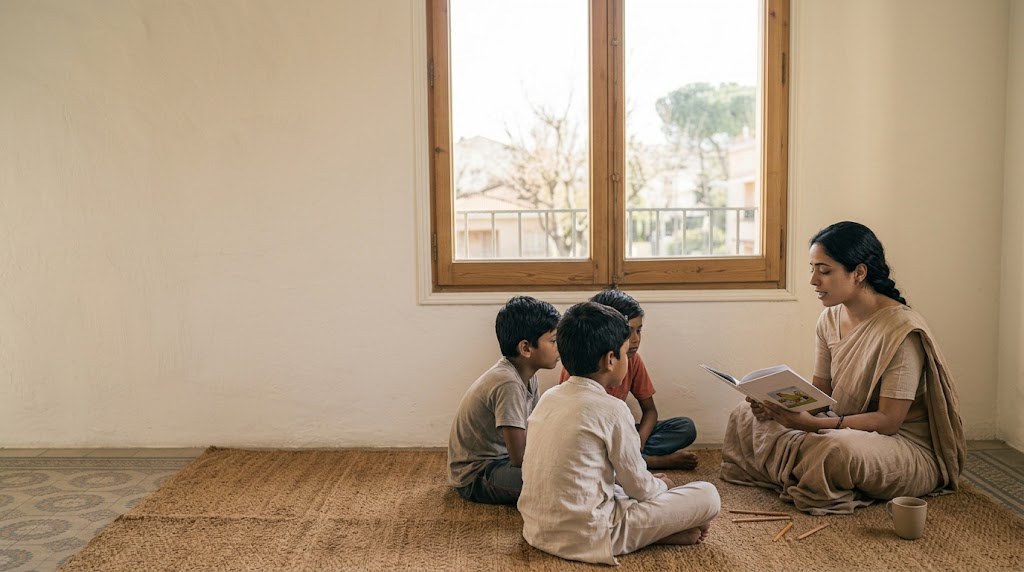
Easier to attend
Distance and time are the two costs a family pays every day. A hybrid model, with online classes and a nearby physical room, lowers both.
A way back in
NEP 2020 asks for alternative and innovative education centres, run with civil society, for children of migrant workers and others who have dropped out, and for open schooling through NIOS and State Open Schools for young people who cannot attend a physical school.
Learning at the child’s pace
A child who is behind and bored is a child who leaves. Choice, small groups and an adult who notices are cheaper than a new building, and they address the third-largest reason in the survey.
Which route fits depends on your legal form and your State’s rules for schools and learning centres. For registration as a non-profit, read how to start an education NGO in India. For a rural site, read how to open a school in a village in India. Recognition rules differ by State, so confirm them with your State education department.
A 90-day plan to work on dropout in one area
National averages hide the local picture. Before you design anything, find out who is leaving in your own district and why.
- Weeks 1–2: take the local data. Download your State’s figures from the UDISE+ report, in one format and one year. Note where retention or transition is weakest.
- Weeks 3–6: forty conversations. Talk to families of children who left after Class 8, to head teachers, and to young people themselves. Use the survey’s list of reasons as your interview guide.
- Weeks 5–8: ask the authority. Take your planned format (learning centre, open-schooling support, school) to the State education department and get its answer in writing.
- Weeks 7–10: run a pilot. Ten to fifteen children, at hours that fit their week, part online if travel is the barrier. Track attendance from day one.
- Weeks 11–13: decide. Which children came back, which stayed, and what each place cost. Then choose whether to grow, change the model, or join a network that already runs one.
A model from Japan for children who leave school
Japan’s version of the problem looks different: almost every child is enrolled, but a growing number stop attending. We describe it in school refusal (futoko) in Japan. NIJIN Academy was built for those children. It opened in September 2023 and is run by NIJIN Inc., founded by Tatsuro Hoshino, who taught at a public elementary school for seven years.
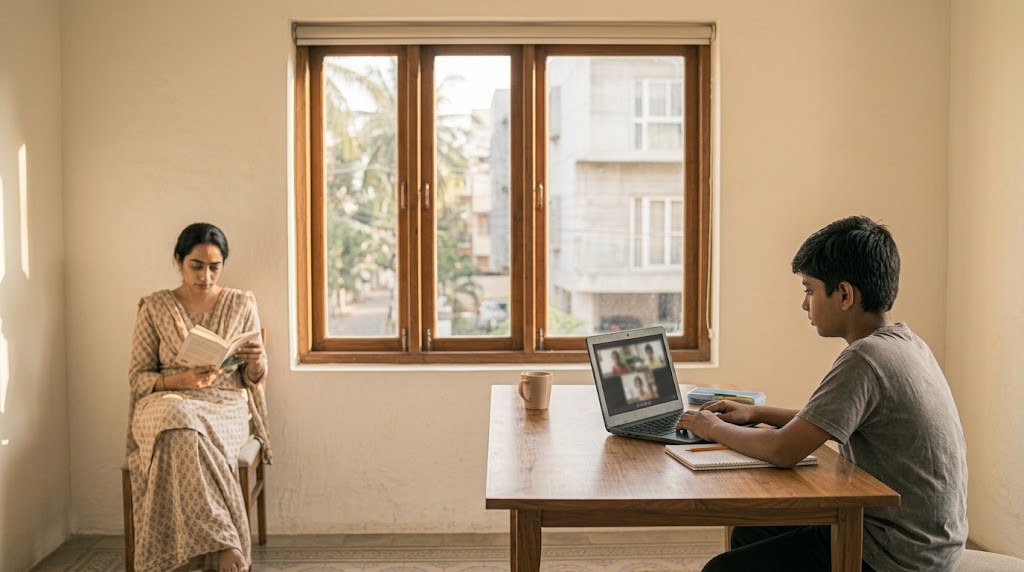
Figures are those published by NIJIN. “Attendance recognition” means the school a child is registered at counts learning at NIJIN Academy as school attendance.
We do not assume the Japanese model will work unchanged in India. The reasons a child is out of school in one Indian State can differ entirely from another, and deciding which children NIJIN Academy India should serve first, and in what form, is the first real piece of work for its head.
Is this a job or a business?
Both. The Country Head is the business head and the principal of NIJIN Academy India. It is not a franchise: you do not pay to copy a format. You can start as a co-owner of a local company set up together (for example, 20% for you and 80% for NIJIN), or on a service contract, even as a side job. Investment is optional. If you do invest, the guide is JPY 1 to 2 million from you and JPY 4 to 8 million from NIJIN, decided together. As a guide, compensation is 10% of revenue excluding tax, up to JPY 50 million: JPY 100 million of revenue would give JPY 10 million. This only illustrates the formula; it is not a forecast or a promise of income, and with no revenue the formula pays nothing. Other terms are discussed in the interview.
Questions and answers
What is the school dropout rate in India in 2025?
The latest official figures are from UDISE+ 2025-26, released in July 2026: 1.8% at the preparatory stage, 3.6% at the middle stage and 7.0% at the secondary stage. For 2024-25 the figures were 2.3%, 3.5% and 8.2%.
What is the school dropout rate in India state wise?
State-wise figures are in the full UDISE+ report on the official UDISE+ publications page, not in the PIB summary quoted here. Compare States only within one report format (Existing or NEP) and one year.
What is the primary school dropout rate in India?
The PIB summary of UDISE+ 2025-26 reports 1.8% for the preparatory stage (Grades 3 to 5) and 98.5% retention at the foundational stage. A separate “primary” figure is published in the full report.
How many children drop out of school in India?
The national policy uses the NSS 2017-18 figure of 3.22 crore out-of-school children aged 6 to 17, cited in NEP 2020. It refers to 2017-18 and should not be mixed with the 2025-26 rates.
What are the main reasons for school dropouts in India?
In the NSS 75th round (2017-18), the leading reasons among ever-enrolled persons aged 3 to 35 not attending were economic activities (36.9% of males), domestic activities (30.2% of females), financial constraints, lack of interest in education and, for females, marriage (13.2%).
Do I need teaching experience to lead NIJIN Academy India?
No. NIJIN does not require teaching experience for the Country Head. Leadership, management, business ability and the skills of a principal matter most. Experience of managing an organisation and hiring people carries over directly.
Lead a school in India for children the system misses
NIJIN is looking for one founder to start and lead NIJIN Academy India, as its business head and its principal. Investment is optional, and teaching experience is not required. If you want to start a company in India and solve a problem in education, read the role.
See the Country Head role in IndiaWhere to go next
Related guides for founders
- Out-of-school children: numbers, causes and what to build
- How to open a school in a village in India
- How to start an education NGO in India
- Alternative schools in India
- How to start an online school in India
- Homeschooling in India
- School refusal (futoko) in Japan
Sources
All figures in this article are quoted with the year they refer to. Please check the original for later updates.
- https://www.pib.gov.in/PressReleasePage.aspx?PRID=2282141
- https://www.pib.gov.in/PressReleasePage.aspx?PRID=2161543
- https://udiseplus.gov.in/#/en/page/publications
- https://mospi.gov.in/sites/default/files/publication_reports/KI_Education_75th_Final.pdf
- https://static.pib.gov.in/WriteReadData/userfiles/NEP_Final_English_0.pdf
- https://nijin.co.jp/recruit/nijin-academy-india-country-head/