About 273 million children, adolescents and youth were out of school worldwide in 2024, according to UNESCO’s 2026 Global Education Monitoring (GEM) Report. That is roughly one in six of the world’s school-age population, and the number has risen for seven years in a row. The causes UNESCO names are population growth, crises and shrinking budgets, on top of costs that families carry even where tuition is free. This article sets out the numbers on out-of-school children, what sits behind them, and where a founder, as opposed to a government or a large charity, can realistically do something.
In this article
- The global numbers, and how to read them
- Why the number is rising while more children than ever are in school
- The causes, grouped by what a founder can and cannot change
- Enrolled but not attending: the children the headline figure misses
- What founders can do: five models and their honest limits
- A worked example from Japan
- Questions and answers
The global numbers, and how to read them
The reference figure comes from UNESCO. Its 2026 GEM Report, published on 25 March 2026 and built on data from the UNESCO Institute for Statistics (UIS), counts 273 million children, adolescents and youth out of school in 2024. In the same year about 1.4 billion were studying in primary or secondary school.
Source: UNESCO, 2026 Global Education Monitoring Report and its press release of 25 March 2026. Figures refer to 2024.
The total is not spread evenly across ages. Almost half of it is young people of upper secondary age.
Out-of-school population by age group, 2024. Source: UNESCO 2026 GEM Report.
Three reading notes will save you from common mistakes when you quote these numbers in a pitch or a grant application.
- “Out of school” means not enrolled. The UIS indicator counts children in the official age range for a level who are not enrolled in school. A child who is on a school’s register but has not walked through the door for a year is not in this figure. We come back to that group below.
- The estimate is revised. You will see slightly different totals in older articles (for example 272 million for 2023, or around 250 million in earlier releases). These are not contradictions. UNESCO updates the model when new enrolment data and new United Nations population estimates arrive. Always quote the year the figure refers to and the report it came from.
- National figures use national definitions. India’s National Education Policy 2020, for example, cites a household survey (NSSO 75th round, 2017–18) that put the number of out-of-school children aged 6 to 17 at 3.22 crore, or 32.2 million. A household survey and an enrolment-based model measure different things, so do not add or compare them directly.
Why the number is rising while more children than ever are in school
The headline can hide a real achievement. The same UNESCO report records that enrolment in primary and secondary education has grown by 327 million since 2000, an increase of 30%. Completion has moved a long way too.
| Level | Completion rate in 2000 | Latest completion rate |
|---|---|---|
| Primary | 77% | 88% |
| Lower secondary | 60% | 78% |
| Upper secondary | 37% | 61% |
Source: UNESCO 2026 GEM Report. “Latest” is the most recent value given in the report.
So both statements are true at once: far more young people are in school than a generation ago, and the number left outside is growing again. UNESCO attributes the recent rise to three forces. The first is population growth, which is the main driver in sub-Saharan Africa: school systems there are adding places, yet the number of children is growing faster. The second is crises, including conflict. The third is money: national budgets under pressure and donors pulling back.
For a founder this matters because it tells you the problem is not standing still while you plan. A model that only works when a ministry has spare budget, or when a donor is in an expansive mood, is exposed to exactly the forces pushing the number up.
The causes, grouped by what a founder can and cannot change
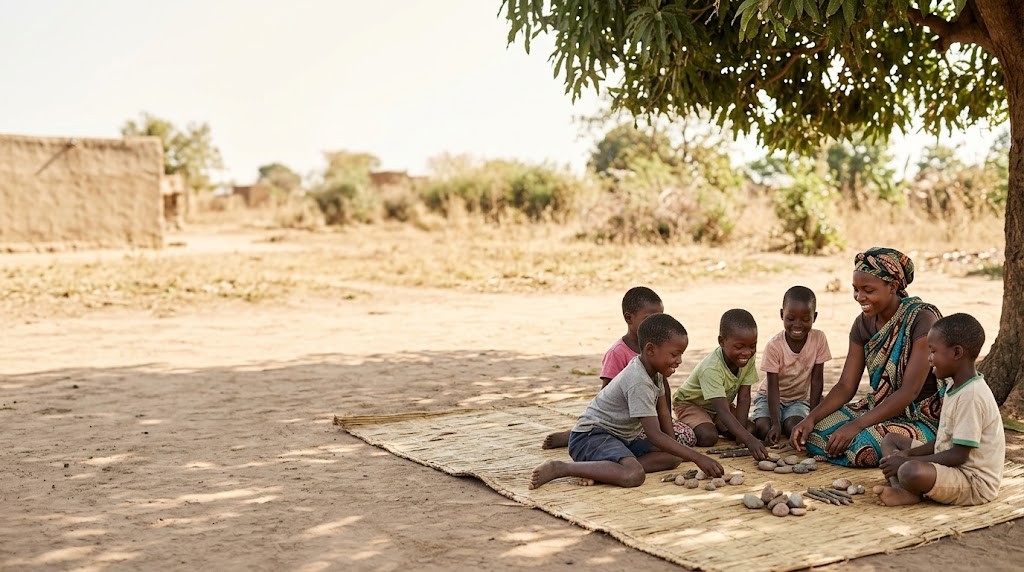
Lists of causes are easy to find. A more useful question is which of them a small organisation can touch. The table below groups the causes discussed in the GEM Report by that test.
| Cause | What it looks like for a family | Can a founder act on it? |
|---|---|---|
| Population growing faster than school places | No school within reach, or classes too full to take another child | Partly. A founder can add places in one community; the national gap needs public investment. |
| Conflict and other crises | School closed, destroyed, or unsafe to travel to; family displaced | Rarely alone. This is work for specialist agencies; a founder can partner with them. |
| Shrinking public and donor budgets | Teachers unpaid, programmes cut, support services withdrawn | Indirectly. A model that does not depend on one grant is itself an answer. |
| Costs beyond tuition | Transport, meals, uniforms, care before and after school | Yes. Location, timetable and delivery mode change these costs directly. |
| Schools that do not include every child | A child with a disability or a different way of learning is enrolled in name only, or turned away | Yes. Designing for the children the standard classroom does not fit is where small schools are strongest. |
| Missing basic infrastructure | No electricity at home or at school, no connection, no device | Partly. It decides which delivery modes are possible in your community. |
UNESCO’s evidence on what works points the same way. The 2026 report notes that school meal schemes now exist in 84% of countries, that the share of countries with laws on inclusive education has risen from 1% to 24% since 2000, and that compulsory education laws added more than a year of schooling in a group of African countries it studied. These are government tools. They show which barriers are real: hunger, exclusion, and the absence of an expectation that every child attends.
Enrolled but not attending: the children the headline figure misses
In many middle- and high-income countries almost every child is enrolled, so the UIS out-of-school rate is low. That does not mean every child is learning in a classroom. Three official series show the gap.
- England. The Department for Education reported 126,000 children in elective home education on census day in autumn 2025, and 175,900 at some point during the 2024/25 academic year. Mental health was the most common single reason local authorities recorded (16%).
- United States. The National Center for Education Statistics found that 5.2% of students aged 5 to 17 received their academic instruction at home in 2022–23, through homeschooling or full-time virtual education, up from 3.7% in 2018–19.
- Japan. The education ministry publishes an annual survey of long-term non-attendance among enrolled elementary and junior high school students. This is the group NIJIN Academy was built for.
These children have a school place. What they lack is a form of school they can actually attend. If you live in a country like this, the opportunity for a founder is rarely “build a school where there is none”. It is “build another way to belong to education, next to the school that exists”.
What founders can do: five models and their honest limits
The top search results on this topic mostly end with a call to donate. If you want to build something yourself, these are the shapes that work tends to take.
1. A small local school or learning centre
A room, a few adults, 10 to 30 children. Strong on trust and belonging. Limit: every new site needs a new leader, and quality depends on that person.
2. An online school
Live classes and recorded lessons reach children wherever they are. Limit: it assumes a device, a connection and an adult nearby, and it can be lonely.
3. A hybrid of the two
An online campus for daily contact plus physical rooms for meeting in person. Limit: you are running two operations, and you need people who are good at both.
4. A bridge back into school
Catch-up or re-entry programmes that end with a child returning to a mainstream school. Limit: families may not pay for it, so funding usually comes from elsewhere.
A fifth model is to serve the adults instead: train and support the people who teach. The world is also short of teachers, which we cover in our article on the global teacher shortage.
Whichever model you choose, four questions decide whether it survives.
- Who exactly?One age group, one reason for being out of school, one place.
- Who pays?Families, government, employers or donors. Name it before you build.
- Is it recognised?Ask the education authority what your learners’ time counts as.
- Can it repeat?Write down what you do so a second site does not depend on you.
On rules and recognition. Whether your programme counts as a school, what registration it needs, who may teach and how children are safeguarded all differ by country and often by state or district. Do not rely on an article, including this one. Ask your ministry or department of education and your local authority directly, and get the answer in writing.
If you are at the stage of turning a problem you have seen into something a family would pay for, our guide on how to start an education business walks through the first steps.
A worked example from Japan
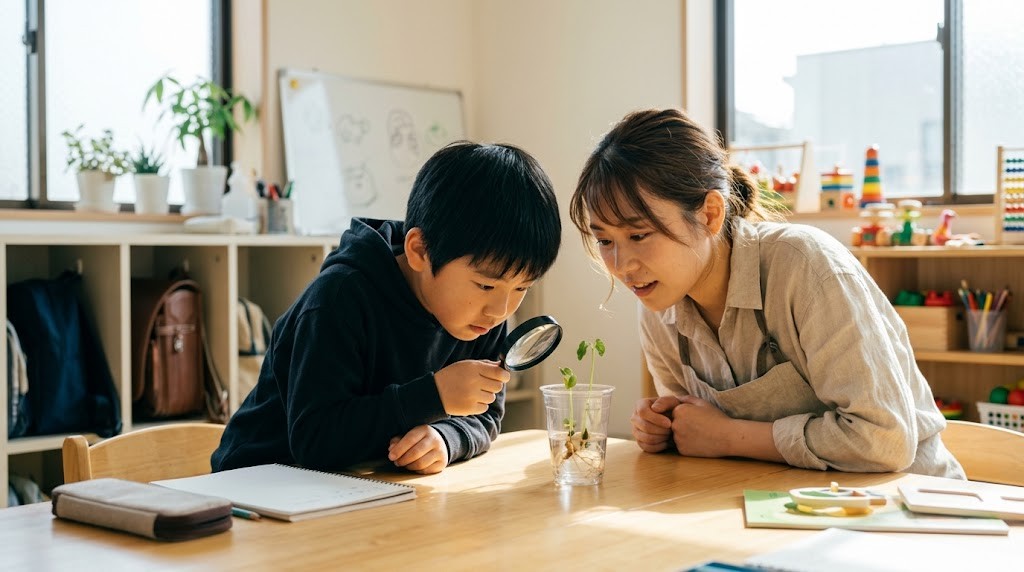
NIJIN Academy is one documented case of the hybrid model. It is an alternative school in Japan for children who do not fit conventional school, many of whom had stopped attending altogether. It opened in September 2023 and is run by NIJIN Inc., founded by Tatsuro Hoshino, a former public elementary school teacher.
Children attend from home through a metaverse campus, choose from about 100 live online classes a month, and can also go to one of 48 physical classrooms across Japan. More than 900 children have enrolled since opening (cumulative), and among families who applied for it, 97% had their child’s learning at NIJIN Academy recognised as attendance by the school where the child is registered. NIJIN describes the academy as one of the largest alternative schools in Japan. The company’s working principle is “don’t blame people, build systems”: a child who stops attending is not the problem, and neither are the parents or teachers.
None of this proves the model transfers. Japan has near-universal enrolment, reliable connectivity and a route for attendance recognition. A country where the main barrier is distance, cost or conflict needs a different design. That is why NIJIN is not exporting a format. It is looking for founders.
Now recruiting: NIJIN Academy Country Head. NIJIN wants an academy in every country and is looking for one person per country to start and lead it, as both business head and principal. The plan is to set up a local company in that country and give the Country Head shares in it. As a guide, compensation is 10% of revenue (excluding consumption tax), capped at JPY 50 million once revenue reaches JPY 500 million or more. It is a guide only: as the person leading the company, you decide it as the business grows, and no income is guaranteed. Teaching experience is not required. The country’s official language plus English and Japanese is ideal, and English alone is acceptable.
Questions and answers
How many children are out of school in the world?
273 million children, adolescents and youth in 2024, according to UNESCO’s 2026 GEM Report: 79 million of primary age, 64 million of lower secondary age and 130 million of upper secondary age. Check UNESCO for the latest release, because the estimate is updated regularly.
Why do different sources give different totals?
Because they refer to different years, or to earlier versions of the estimate. UNESCO revises the figures when new enrolment data and population estimates become available. Quote the year and the report.
Which region has the most out-of-school children?
UNESCO identifies population growth in sub-Saharan Africa as a main driver of the rising global total. For current regional and country figures, use the UIS data browser or the GEM Report’s out-of-school pages, not a secondary summary.
Is a child who is homeschooled or refuses school “out of school”?
Usually not in the UNESCO sense. The global indicator is about enrolment. Home education and long-term non-attendance are counted separately by national authorities, with national definitions. Our article on school refusal and Japan’s futoko looks at enrolled children who do not attend.
Can a for-profit company work on this problem?
Yes, where families, employers or public bodies can pay, and where the law allows it. Where the children you want to reach cannot pay, you will need public or philanthropic funding, or a cross-subsidy. The legal form that fits depends on your country, so ask the registering authority and a local adviser.
Do I need to be a teacher to start something?
Rules on who may teach are set locally, so check with your education authority. For leading the organisation, many of the skills that matter are those of a founder and manager. NIJIN, for example, does not require teaching experience for its Country Head role.
Build a school for the children your system misses
If you want to start a company in your own country and solve a problem in education, read the Country Head role and apply. We talk first; every detail is discussed in the interview.
ApplyRoles and related reading
- The global teacher shortage: how big it is, why it happens, and the models trying to fix it
- Homeschooling vs online school vs alternative school
- What is a metaverse school?
- School refusal: what Japan’s futoko teaches school founders
- How to start a microschool: a step-by-step guide for founders
- How to start an education business, from a problem to a first paying family
Sources:
- https://www.unesco.org/reports/gem-report/en/2026
- https://www.unesco.org/en/articles/more-children-out-school-7th-year-row-273-million
- https://www.unesco.org/en/education/view/outofschool
- https://static.pib.gov.in/WriteReadData/userfiles/NEP_Final_English_0.pdf
- https://explore-education-statistics.service.gov.uk/find-statistics/elective-home-education
- https://ies.ed.gov/learn/press-release/higher-percentage-k-12-students-are-receiving-academic-instruction-home
- https://academy.nijin.co.jp/
- https://nijin.co.jp/recruit/nijin-academy-country-head/