For education founders in the Philippines
The Alternative Learning System (ALS) is the Philippines’ free, government-run parallel path to basic education for out-of-school children in special cases, out-of-school youth and adults: learners study the ALS curriculum through modules, face-to-face sessions, online or blended learning, and can earn an Accreditation and Equivalency (A&E) certificate that lets them move on to the next level of schooling, technical-vocational training or college. It was institutionalized by Republic Act No. 11510, the ALS Act, in December 2020, and its current rules are DepEd Order No. 001, s. 2026.
This guide explains how ALS works from the law, the DepEd order and official statistics, then looks at the gaps the official record describes and where a private founder fits.
In this article
- ALS meaning: what the Alternative Learning System is
- The ALS programs and what they are equal to
- Who ALS is for, and who is sent back to school
- How the ALS program works, step by step
- How many Filipinos are out of school
- The gaps the official record describes
- Where private founders fit
- ALS, homeschooling, a learning center or a school?
- Building a school for children who left school
- Questions and answers
ALS meaning: what the Alternative Learning System is
In law, the Alternative Learning System is “a parallel learning system that provides a viable alternative to the existing formal education instruction”, covering both nonformal and informal sources of knowledge and skills (RA 11510, Section 4). It is not a private school category and not a homeschooling option. It is a DepEd program, delivered by ALS Teachers employed by DepEd, by Community ALS Implementors engaged by local government units, and by Learning Facilitators, whom the Act defines as teachers financed by the private sector, including NGOs, civil society organizations and individuals.
The ALS Act created the Bureau of Alternative Education (BAE) as DepEd’s focal office for ALS, required at least one ALS Community Learning Center (CLC) in every municipality and city, made all DepEd ALS programs free, and told DepEd to recognize and monitor private ALS service providers.
The ALS programs and what they are equal to
Section 8 of the Act lists five priority programs. DepEd Order No. 001, s. 2026, the Implementing Guidelines of the Enhanced Alternative Learning System, links the core programs to grade levels in the formal system. From school year 2026–2027, all Schools Division Offices (SDOs) implement the Revised ALS Curriculum for Basic Literacy, A&E Elementary and A&E Junior High School.
| ALS program | Equivalent in the formal system | What learners study |
|---|---|---|
| Basic Literacy Program (BLP) | Key Stage 1: Kinder to Grade 3 | Reading, writing, numeracy and simple comprehension (Learning Strands 1 and 3) |
| A&E Elementary | Key Stage 2: Grades 4 to 6 | All six Learning Strands |
| A&E Junior High School | Key Stage 3: Grades 7 to 10 | All six Learning Strands, at two levels |
| ALS Senior High School | Key Stage 4: Grades 11 to 12 | Learning Strands 1 to 6, clustered on the formal SHS curriculum |
| Functional Education and Literacy, Academic-Focused Bridging, Indigenous Peoples Education | No grade equivalent | Separate guidelines to be issued, according to the 2026 order |
The six Learning Strands are Communication Skills (English and Filipino), Scientific and Critical Thinking, Mathematical and Problem-Solving Skills, Life and Career Skills, Understanding the Self and Society, and Digital Citizenship.
Who ALS is for, and who is sent back to school
The Act names two groups. The first is out-of-school children in special cases: school-age children not enrolled because of economic, geographic, political, cultural or social barriers, including learners with disabilities, indigenous peoples, children in conflict with the law and learners in emergencies. The second is adults aged 18 and above.
ALS is not meant to replace school for children who could attend it. The Act says school-age children should be enrolled in formal education, and the 2026 order tells implementers to refer school-age prospective learners to the formal system. Learners above school age who dropped out of elementary or secondary school may enroll in ALS. The detailed eligibility and documents are set by DepEd Order No. 17, s. 2025, or later issuances, so ask your Schools Division Office for the current list.
How the ALS program works, step by step
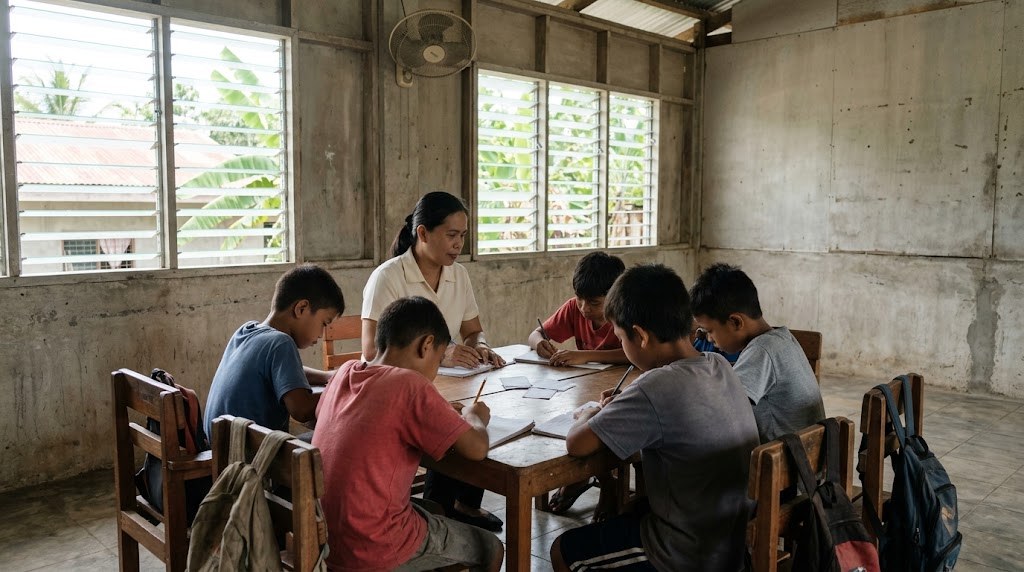
The 2026 order sets out the sequence every ALS implementer, public or private, follows.
- Literacy mapping. Before classes open, implementers map the community to find prospective learners. In Zamboanga del Norte, the 2026 mapping ran from May 4 to June 5, before ALS classes opened on June 8.
- Enrollment in the Learner Information System. Learners use the ALS Enrollment Form and are entered in DepEd’s Learner Information System. Late enrollment is accepted.
- Initial assessment and recognition of prior learning. Placement tests (the Assessment of Basic Literacy for BLP, the Functional Literacy Test for A&E) decide where each learner starts.
- Individual Learning Agreement. Learner and implementer agree a written plan of competencies, tasks and deadlines, reviewed at least once a month.
- Learning sessions. Modular, online or mobile, face-to-face, radio or TV, or blended. Completion is based on mastery, not hours attended.
- Portfolio and A&E assessment. Learners keep a portfolio. Those who pass the A&E Elementary level may enroll in Grade 7 or A&E JHS; A&E JHS passers may enroll in senior high school, formal or ALS. Under the Act, senior high school level passers qualify for higher education, subject to each school’s other requirements.
Learners who only want part of the curriculum may leave after mastering it and receive a certificate listing those competencies.
How many Filipinos are out of school
The most complete official count is the Philippine Statistics Authority’s release on the 2020 Census (Reference No. 2024-158, 13 May 2024), covering people aged 5 to 24 in school year 2019–2020.
Source: PSA, 2020 Census of Population and Housing. In this release, out-of-school children and youth means household members aged 5–24 who were not attending formal school; it is not a count of ALS-eligible people.
Most out-of-school Filipinos in this count are young adults, the group ALS was built for. But the same table shows 1,313,570 children aged 5 to 9 and 390,809 aged 10 to 14 not attending school. For school-age children, the Act’s first answer is formal education, which is where a different kind of school can matter.
The gaps the official record describes
The most detailed public assessment of ALS was carried out by the World Bank in partnership with DepEd and published as a policy note in May 2018. Its data are from 2014 to 2017, before the ALS Act, so read it as the problem the Act set out to solve.
| Gap | What the World Bank note found (data year) | What the law and 2026 order now provide |
|---|---|---|
| Reach | About 0.7 million enrollees in 2017, fewer than 10% of 15–29-year-olds who had not completed basic education | Literacy mapping before classes; at least one CLC in every municipality and city |
| Outcomes | 18% of ALS enrollees passed the A&E exam in 2014, up from 4% in 2005; under 2% in ARMM against over half in NCR | Mandatory annual review reported to Congress; mastery-based progression |
| Cost to learners | No tuition, but learners paid for transport, meals and supplies, and gave up working hours | All DepEd ALS programs free; micro-certification for shorter goals |
| Learning materials | About half of surveyed facilitators lacked one complete set of modules in 2016; only one in three learners could take modules home | Modules in English and/or Filipino, to be available through DepEd’s learning resources portal |
| Facilitator resources | Facilitators often covered gaps with their own money | Transport and teaching aid allowances in the Act |
| Who drops out of ALS | Women who left school because of early marriage or pregnancy were far less likely to enroll | Every CLC to include space for childcare for parents attending classes |
One more finding matters for anyone designing a program: the venue. The best-equipped learning centers were associated with a 19 percentage-point higher likelihood of completion, though the authors note this did not establish cause. Whether these gaps have since closed is for DepEd’s annual reviews, not this article, to say.
Where private founders fit
The ALS Act’s declaration of policy calls for “close partnership and collaboration between the government and the private sector”. The documents describe four places a private founder can stand.
Recognized ALS provider
DepEd Order No. 001, s. 2026 covers CLCs run by private schools and NGOs, and cites DepEd Order No. 007, s. 2025 on the mandatory recognition of ALS providers.
Employer of Learning Facilitators
Private-sector-funded teachers can deliver ALS, with class programs approved by the recognized provider’s head.
Partner and donor
Under Section 21, donations of cash or services for ALS are exempt from donor’s tax and deductible under the Tax Code. Ask a tax adviser how this applies.
A school that brings children back
For school-age children, the Act points toward formal education, where a school built for children who left school can work.
Before you build a business plan around ALS, take these questions to the ALS focal person at your Schools Division Office and ask for the answers in writing:
- What are the current requirements to be recognized as an ALS provider under DepEd Order No. 007, s. 2025?
- Section 20 makes DepEd ALS programs free. What does that mean for a recognized private provider’s own funding model?
- Which learners may we enroll, and how are they recorded in the Learner Information System?
This is not legal or tax advice. Rules change; the Schools Division Office, the Regional Office and a qualified lawyer are the reliable sources.
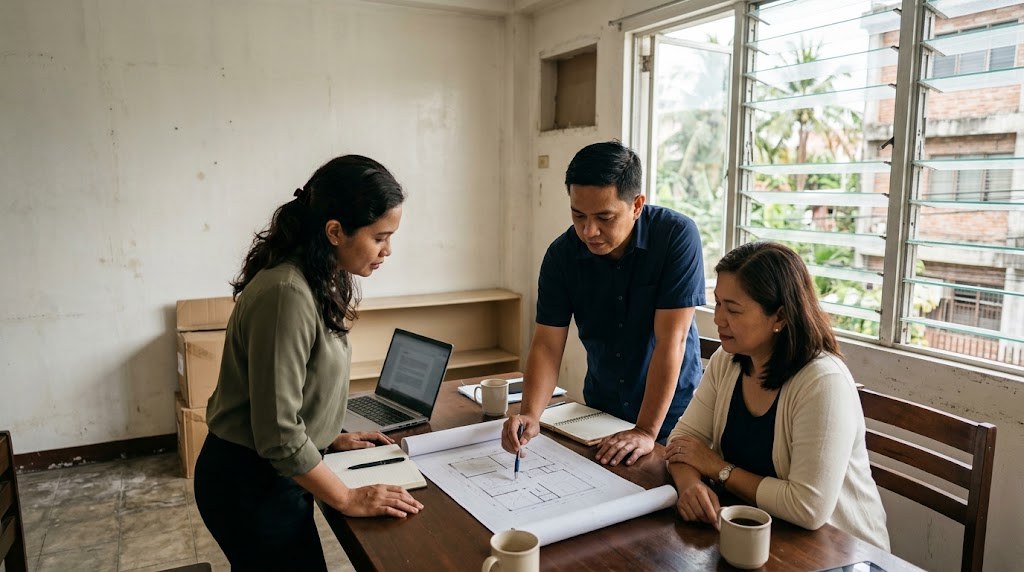
Want to build a school for children who have left school?
NIJIN Academy is an alternative school in Japan for children who do not fit conventional school. NIJIN is looking for one person to start NIJIN Academy Philippines and lead it as business head and principal. Teaching experience is not required.
See the Country Head role in the PhilippinesALS, homeschooling, a learning center or a school?
| Option | Who it serves | Who runs it | Read more |
|---|---|---|---|
| Alternative Learning System | Out-of-school children in special cases, youth and adults | DepEd, LGUs and recognized providers | This article |
| Homeschooling program | Children enrolled in a school, learning at home with parents | Public or private schools with a DepEd permit | How to be a homeschool provider |
| Learning or tutorial center | Children who attend school elsewhere | A registered business | How to start a learning center |
| Private school | Enrolled learners in the formal system | A school with a DepEd permit to operate | DepEd permit to operate |
Building a school for children who left school
ALS gives young people and adults a second route to a certificate. A school that children who drifted away from school actually want to attend is a different problem, and it is the one NIJIN works on.
NIJIN Academy opened in Japan in September 2023 for children who do not fit conventional school, and now runs through to high school age. Children join from home through a metaverse campus, choose from about 100 live online classes a month, and can also go to physical classrooms. NIJIN describes it as one of the largest alternative schools in Japan.
Figures published by NIJIN. “Attendance recognition” means the child’s registered school counts learning at NIJIN Academy as attendance.

NIJIN is looking for a Country Head to start NIJIN Academy Philippines and lead it as business head and principal. What matters is leadership, management, business ability and the skills of a principal; experience of managing an organisation and hiring people carries over directly. Ideally you work in Filipino, English and Japanese, but English alone is fine. This is not a franchise.
As a guide, compensation is 10% of revenue excluding tax: JPY 100 million of revenue gives JPY 10 million, and JPY 500 million or more gives the cap of JPY 50 million. It is a guide, not a promise of income; with no revenue, the formula pays nothing. Anyone you hand part of the work to is paid from your 10%.
How you can start. Investment is optional. You can start on a service contract, even alongside your current work, with the same 10% guide, or set up a local company together as a co-owner: for example 20% for you and 80% for NIJIN, with a guide of JPY 1 to 2 million from you and JPY 4 to 8 million from NIJIN if you invest.
For the Philippines specifically: Article XIV, Section 4(2) of the 1987 Constitution provides that educational institutions, other than those established by religious groups and mission boards, shall be owned solely by Filipino citizens or by corporations at least 60 percent of whose capital is owned by Filipino citizens, and that their control and administration are vested in Filipino citizens. The 20%/80% split is only an example. The actual structure for the Philippines is decided in the interview and with qualified legal advisers, so that it follows the law.
Questions and answers
What is the meaning of ALS in school?
In Philippine education, ALS means the Alternative Learning System, DepEd’s parallel learning system for out-of-school children in special cases, youth and adults, institutionalized by Republic Act No. 11510 in 2020.
What are the Alternative Learning System requirements in the Philippines?
Eligibility and documents are set by DepEd Order No. 17, s. 2025, or the latest issuance on enrollment, and school-age children are first referred to formal school. Ask your Schools Division Office for the current list.
How many years is the Alternative Learning System?
There is no fixed number of years. Under DepEd Order No. 001, s. 2026, the duration depends on each learner’s prior learning, and completion is based on demonstrated mastery, not on time spent.
Is there an Alternative Learning System for senior high school?
Yes. ALS Senior High School is equivalent to Grades 11 to 12. A&E Junior High School passers can enroll in it or in formal senior high school.
Can I study in the Alternative Learning System online?
Online, digital or mobile learning is one of the delivery modes the Act and the 2026 order allow. Which modes are offered depends on your local implementer.
Is ALS free, and can a private company run it?
All DepEd ALS programs are free under Section 20 of the Act. The Act also recognizes private-sector-funded Learning Facilitators and private ALS providers; ask DepEd in writing how a private provider may be funded.
Is the NIJIN Country Head a job or a business?
It is closer to founding a business: you lead NIJIN Academy Philippines as business head and principal, starting on a service contract or as a co-owner. The details are discussed in the interview.
Start NIJIN Academy Philippines, and lead it
If you want to build a place for Filipino children who have drifted away from school, and you have led and hired a team, read the role and apply.
See the Country Head role in the PhilippinesWhere to go next
Country Head pages are open for several countries, and the global page covers every other country.
Related guides for founders
- How to start a school in the Philippines
- DepEd permit to operate: requirements and timeline
- How to be a homeschool provider in the Philippines
- How to start a learning center in the Philippines
- Out-of-school children: causes and solutions
- Social entrepreneurship in education
Sources
Figures are quoted with the year they refer to. Some official pages are reached through archived copies because the original sites block automated access. Please check the originals for later updates.
- Republic Act No. 11510, Alternative Learning System Act (2020), via Lawphil
- DepEd Order No. 001, s. 2026, Implementing Guidelines of the Enhanced Alternative Learning System (archived copy of deped.gov.ph)
- DepEd Schools Division of Zamboanga del Norte, Division Memorandum No. 187, s. 2026, ALS Mapping Activity
- Philippine Statistics Authority, Reference No. 2024-158, school attendance and out-of-school children and youth, 2020 Census (archived copy of psa.gov.ph)
- World Bank, A Second Chance to Develop the Human Capital of Out-of-School Youth and Adults: The Philippines Alternative Learning System (Philippines Education Note No. 1, May 2018)
- 1987 Constitution of the Republic of the Philippines, Article XIV, via Lawphil
- NIJIN, Country Head role in the Philippines
- NIJIN Academy