
Australia guide
School refusal in Australia (often called “school can’t”) is when a child has great difficulty going to school because of strong emotional distress, usually with the parents’ knowledge and against their wishes; it is not a diagnosis and not truancy, there is no national count of it, and the first steps are the same everywhere: talk with the child, work out a support plan with the school, and involve a GP or psychologist when anxiety, autism or another need may be part of the picture.
This guide brings together what Australia’s official sources actually say: the 2023 Senate inquiry, ACARA’s attendance figures and the advice published by state education departments. It is written for parents looking for school refusal help, and for teachers and education leaders who want to build something better for these children. It is not medical advice. If you are worried about a child, start with their school and their GP.
In this article
- What school refusal means in Australia
- School refusal statistics in Australia
- What the 2023 Senate inquiry found and recommended
- Causes: anxiety, bullying, autism and more
- School refusal tips for parents
- A school refusal treatment plan: how schools work through it
- When school is not working: options outside school
- Work that supports these children
- What Japan has learned from futoko
- Leading NIJIN Academy Australia
- Questions and answers
What school refusal means in Australia
Short answer: school refusal describes a child whose emotional distress about school, such as fear, anxiety, low mood or anger, makes it very hard to go or to stay. Parents usually know their child is at home and want them at school. Australian governments use several names for it, including “school avoidance” and “school can’t”, and none of them is a medical diagnosis.
The NSW Department of Education describes school refusal, “also known as ‘school avoidance’ or ‘school can’t'”, as different from wagging or jigging because it stems from a child’s anxiety about school. Victoria’s official page calls it a mental health concern in which a student has a strong negative emotional reaction to attending school, distinct from truancy. South Australia’s Department for Education notes that it has no official diagnosis. The Senate inquiry itself was set up to look at “school refusal or ‘School Can’t'”, and many families prefer the second phrase because, as they say, the child is not choosing.
| Term | What it usually means | Do parents know? |
|---|---|---|
| School refusal / school can’t | Difficulty attending because of emotional distress about school | Yes, and they usually want the child to attend |
| Truancy (“wagging”, “jigging”) | Absence without permission, not driven by anxiety | Often not |
| School withdrawal | Parents support or encourage the child to stay home | Yes, by choice |
| School exclusion | Absence that stems from a school’s decision | Yes |
Distinctions as described in the Parliamentary Library’s 2022–23 research paper and state department pages. Real children often move between rows.
School refusal statistics in Australia
Short answer: Australia does not publish a national school refusal figure. What it publishes is attendance. In 2025, ACARA reports, only 62.1% of students in Years 1 to 10 attended 90% or more of school days. The Parliamentary Library cites research estimating school refusal at between 1% and 5% of all students, higher among autistic students and students with ADHD.
ACARA’s National Report on Schooling in Australia uses two measures. The attendance rate is the share of possible school days in Semester 1 that full-time students in Years 1 to 10 actually attended. The attendance level is the share of those students who attended at least 90% of the time.
Source: ACARA, National Report on Schooling in Australia, Student attendance (key facts for 2025). These figures count absence for any reason, not school refusal alone.
Read the other way round, more than a third of Australian students missed more than one day in ten in 2025. ACARA notes that national attendance has not returned to its pre-COVID level, and that attendance is higher in major cities than in remote areas and rises with a school’s socio-educational advantage. None of this tells you how many of those students were anxious rather than ill, on holiday or disengaged. That gap is exactly what the Senate inquiry asked governments to close. For how other countries count absence, see our guides to chronic absenteeism in schools and school attendance in New Zealand.
What the 2023 Senate inquiry found and recommended
On 27 October 2022 the Senate referred “the national trend of school refusal and related matters” to its Education and Employment References Committee. The committee received 172 submissions, held public hearings in Canberra, Melbourne and Brisbane, and reported in August 2023 with 14 recommendations. Grouped by theme, they look like this:
| Theme | Recommendations | What the committee asked for |
|---|---|---|
| Research and data | 1, 4 | Research by the Australian Education Research Organisation into the drivers and prevalence of school refusal and what works; earlier identification of at-risk students, especially at transition points; data that separates truancy, withdrawal and school refusal |
| A national plan | 2, 6 | A national action plan within 12 months, with an agreed definition, consistent recording of absences, and national resources for parents, teachers and school leaders |
| Early identification | 3 | Review child health screening to identify autism, ADHD, specific learning disorders and anxiety disorders earlier |
| Flexible schooling | 5 | More flexibility in mainstream schools; easier access to distance education and home schooling; more alternative and specialist settings |
| Training and messaging | 7, 8 | School refusal awareness in the health sector and teacher education; attendance messages that do not further alienate families |
| Support in schools | 9, 10, 11 | Trauma-informed practice; family engagement staff; reasonable adjustments under the Disability Standards for Education 2005 without waiting for a diagnosis |
| Health and families | 12, 13, 14 | Education and health working together; a peer support network and a “one-stop shop” for families; more subsidised mental health visits for students |
Two of these matter most for anyone thinking about new kinds of school. Recommendation 5 names distance education, home schooling and alternative settings as part of the answer. Recommendation 8 asks that, where attendance is not possible, tailored learning through another method of schooling be recognised as the priority.
Causes: anxiety, bullying, autism and more
There is rarely one cause. The Parliamentary Library’s research paper lists stressful life events, problems with peers or a teacher, academic difficulties, bullying, illness, and transitions such as starting or changing school. It notes that young people with school refusal are often diagnosed with anxiety disorders, and that school refusal is more common among students on the autism spectrum and students with ADHD.
South Australia’s guidance adds triggers many parents will recognise: more homework, classroom changes, an upcoming exam or presentation, a long absence through illness, illness or death in the family, family conflict and traumatic experiences. Victoria’s page lists separation anxiety, worry about performing in class and physical symptoms such as headaches and stomach aches.
About school refusal and autism. The Senate committee recommended earlier identification of autism, ADHD, learning disorders and anxiety, and also recognised that a formal diagnosis can be expensive and slow. Its answer (recommendation 11) was that schools should build the capacity to make reasonable adjustments anyway. If you think your child may be autistic or anxious, ask your GP about assessment, and ask the school what it can adjust now. Whether a particular child has a condition is a question for a health professional, not for this article.
School refusal tips for parents
Short answer: stay calm, find out what is happening from your child, and bring the school in early. Ask for a plan you build together, see your GP if anxiety or another health need may be involved, and look after yourself as well. State education departments in NSW and Victoria both put working with the school at the centre.
- Talk, and listen first. Ask your child what has been happening and how school feels to them. The NSW page suggests starting there, before any plan.
- Contact the school early. NSW suggests the class teacher, year coordinator, deputy principal or wellbeing staff; Victoria names the classroom teacher, year level coordinator, wellbeing leader or principal.
- Agree a plan together. A predictable routine, a calm morning, a person to meet the child on arrival, and a gradual increase from the attendance the child can manage today.
- Involve health professionals. The school or your GP may refer your child to a counsellor, psychologist or psychiatrist who can help with anxiety about school.
- Look after yourself. Victoria’s guidance tells parents to get support for themselves too. In NSW, the department points parents to ReachOut Parents one-on-one support to build an action plan.
Things to avoid are as useful as things to do. The Parliamentary Library notes that research does not show punitive approaches, such as fines or court orders, improving attendance for individual students, because they do not address the cause.
A school refusal treatment plan: how schools work through it
Parents searching for a “school refusal treatment plan” will find that, in Australian schools, the plan is shared between the clinician and the school. The NSW Department of Education’s School Refusal Support Guide for teachers and schools sets out the process:
| Stage | What happens | Who is involved |
|---|---|---|
| Identify | Staff notice signs, including from what parents report, and raise them | Teachers, school leaders, learning support team |
| Assess | Assessment, usually interviews with the student and parents | School counsellor or psychologist, or an external clinician |
| Plan | A treatment plan from the clinician, and a school support plan built from it | Clinician, student, parents, school support team |
| Manage | The plan is put into practice, with good communication | Teachers, parents, principal, Home School Liaison Officer, learning support team |
| Monitor and adjust | Regular reviews; setbacks are expected and planned for | All of the above |
The same guide gives teachers practical moves that cost little: let a student who struggles to leave the house arrive discreetly, waive the late note, offer a support person at the gate or a quiet place to land, and give them a job to do before the bell. South Australia’s guidance adds: treat the current level of attendance as the starting point, increase time at school gradually, and let the student help set the goals.
- Is there one named adult at school the child trusts?
- Is the arrival plan written down, and does every teacher know it?
- Has the school considered reasonable adjustments without waiting for a diagnosis?
- Are health and school professionals talking to each other, with the family’s consent?
- Is there a date to review the plan, and a plan for setbacks?
Want to build a school for children who find school this hard?
NIJIN Academy is an alternative school in Japan for children who do not fit conventional school, many of whom had stopped going altogether. Children learn through a metaverse campus, live online classes and 50+ physical classrooms. NIJIN is looking for one person to start and lead NIJIN Academy in Australia, as business head and principal. Teaching experience is not required.
See the Country Head role in AustraliaWhen school is not working: options outside school
For some children, a support plan is enough. For others, a different setting is the better route, at least for a while. In every case the rules belong to your state or territory, so ask the relevant department before you change anything.
- Home schooling or home education. Legal in every state and territory, with registration through your own state’s authority. In NSW that is now the Department of Education; in Victoria, the VRQA. Our guide to homeschooling in Australia covers each state.
- Distance education. State departments run distance education schools. Eligibility rules differ, so ask your department whether school refusal or a health need can qualify.
- Alternative and specialist settings. NSW, for example, runs hospital schools and intensive learning support schools, including settings for mental health needs.
- Online learning. An online programme may be part of home schooling or distance education. Check what status it has in your state before relying on it.
The scale of the shift is visible in NSW. The Audit Office of New South Wales reports that home schooling registrations rose from 5,906 in 2019 to 12,762 in 2024, and that 54% of children home schooled in 2024 had previously attended a NSW public school. Families are already looking beyond the usual school. Founders who want to meet that need should start with the legal side; our guide on how to start a school in Australia walks through registration by state.
Work that supports these children
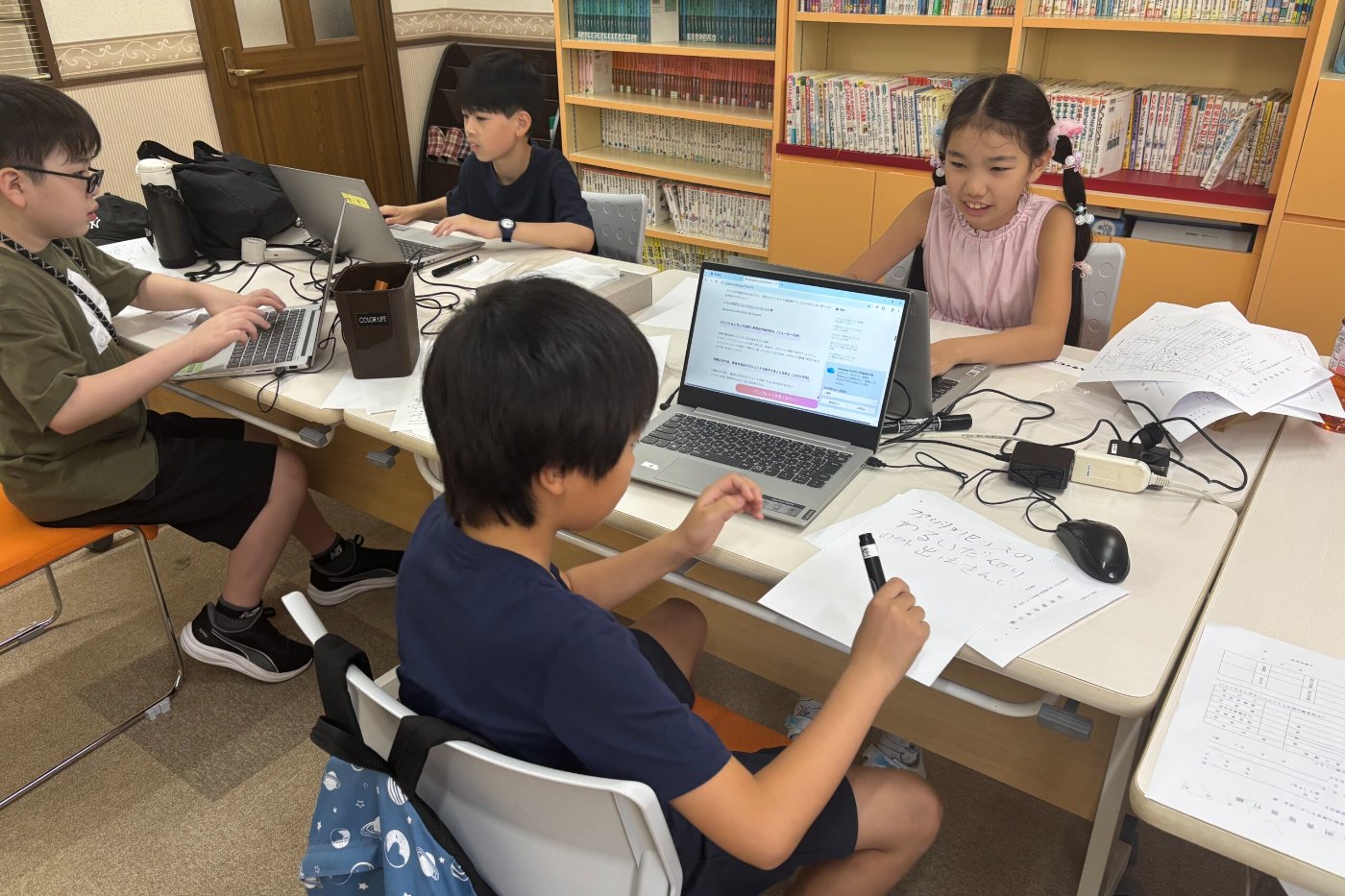
Behind every plan in the NSW guide are people: classroom teachers, wellbeing staff, school counsellors and psychologists, Home School Liaison Officers, learning support teams, and family engagement staff, whom the Senate committee wanted every school to have. Outside schools there are tutors, youth workers, and the people who run home education groups and alternative settings.
For teachers, this is often the part of the job that matters most and gets the least time. Australia’s teachers are stretched; our article on the teacher shortage in Australia sets out the official figures. Some teachers decide that the best way to help children who cannot face school is to build a setting designed around them. That takes more than teaching: leadership, hiring, budgets, and earning the trust of parents who have often had a hard few years.
What Japan has learned from futoko
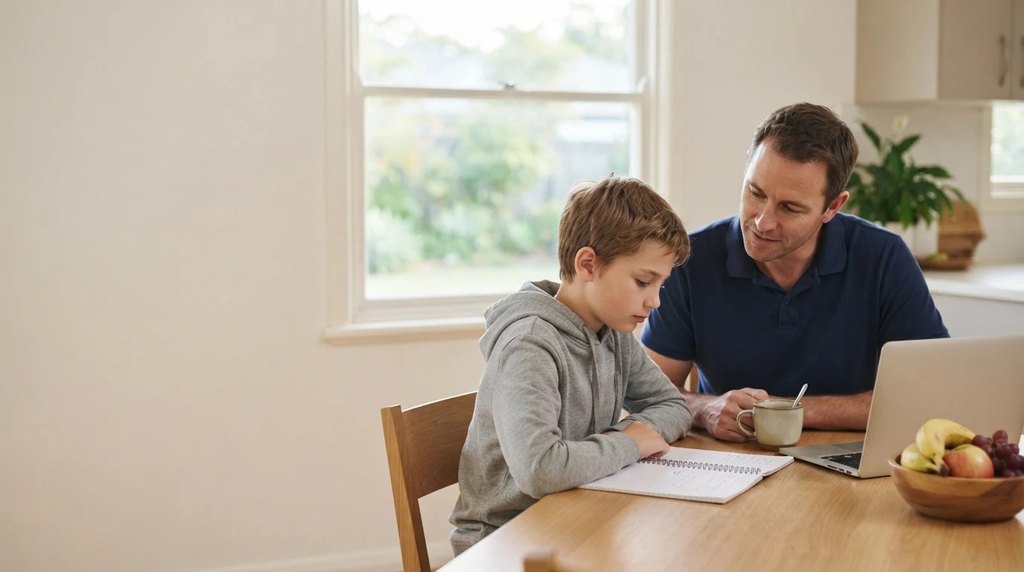
Japan has counted school non-attendance, futoko, for decades. Its education ministry (MEXT) recorded 353,970 elementary and junior high school students as futoko in fiscal year 2024, or 38.6 in every 1,000 pupils. Japan’s definition counts 30 or more days of absence for psychological, emotional, physical or social reasons, excluding illness, so the number is not directly comparable with ACARA’s. We explain the definition and the history in school refusal and futoko in Japan; England’s approach is covered in our guide to EBSA.
The lesson Japan drew is close to the Senate committee’s recommendation 8: for some children, the priority is to keep learning in another form, not to force a return. NIJIN Academy, which opened in September 2023, was built on that idea. Children join a metaverse campus from home, choose from about 100 live online classes a month, and can also attend small physical classrooms. Its motto is “Be HAPPY, Do HAPPY”, and its working principle is “don’t blame people, build systems”: a child who stops attending is not the problem, and neither are the parents or the teachers.
Figures published by NIJIN. “Attendance recognition” means the child’s registered school counts learning at NIJIN Academy as school attendance. NIJIN makes no promise about results for any child.
Leading NIJIN Academy Australia
NIJIN is looking for one person to start NIJIN Academy Australia and lead it as both business head and principal. The role suits someone who has run a team and hired for it, in a school, a tutoring or education business, a youth or disability service, or a community organisation. Teaching experience is not required. English alone is enough to apply; Japanese is welcome but not required.
It is not a franchise: you do not buy into a ready-made package; you build the school with NIJIN. Investment is optional. You can start on a service contract, even as a side job alongside your current work, or co-own a local company: for example, 20% for you and 80% for NIJIN. If you choose to invest, the guide is JPY 1 to 2 million from you and JPY 4 to 8 million from NIJIN, decided together. As a guide, compensation is 10% of revenue (excluding tax), up to a cap of JPY 50 million. That is a guide, not a guarantee: with no revenue, the formula pays nothing. Which form the school takes under your state’s rules, where it starts, and every other term are discussed in the interview.
Questions and answers
What is school refusal?
It is a pattern in which a child has great difficulty going to school, or staying there, because of emotional distress, often anxiety. Parents usually know and want the child to attend. Australian departments also call it “school avoidance” or “school can’t”. It is not a medical diagnosis.
Are there school refusal statistics for Australia?
There is no official national count. ACARA reports attendance: in 2025, 62.1% of students in Years 1 to 10 attended 90% or more of school days. Research cited by the Parliamentary Library estimates school refusal at 1% to 5% of students.
Where can parents find school refusal support and resources?
Start with your child’s school: the teacher, year coordinator or wellbeing staff. NSW and Victoria publish school refusal pages for parents, and NSW points parents to ReachOut Parents one-on-one support. Your GP can refer your child to a psychologist if needed.
Is school refusal linked to autism?
The Parliamentary Library notes that school refusal is more common among students on the autism spectrum and students with ADHD. Only a health professional can assess a child. Schools can make reasonable adjustments without waiting for a diagnosis.
Can I be fined if my child refuses school?
School attendance is compulsory, and the Parliamentary Library notes that non-attendance can lead to legal consequences for families. It also notes there is no evidence that fines or court orders improve attendance for individual students. Rules differ by state, so talk to your school and department early.
Is the NIJIN Country Head role a job or a business?
Both. You lead NIJIN Academy Australia as its business head and principal. You can start on a service contract alongside your current work, or co-own a local company. Investment is optional, and compensation is 10% of revenue as a guide, not a guaranteed salary.
Build a school for children who cannot face school
If you have led a team and want to build something in Australia for children who do not fit the usual school, read the role and apply. We read every application and reply by email.
Where to go next
Related guides
- Homeschooling in Australia: registration by state
- How to start a school in Australia
- Teacher shortage in Australia
- School refusal and futoko in Japan
- School attendance in New Zealand
Sources
Figures are quoted with the year they refer to. Please check the original for later updates.
- https://aph.gov.au/Parliamentary_Business/Committees/Senate/Education_and_Employment/SchoolRefusal/Report/List_of_recommendations
- https://aph.gov.au/Parliamentary_Business/Committees/Senate/Education_and_Employment/SchoolRefusal/Report/Chapter_1_-_Introduction
- https://aph.gov.au/About_Parliament/Parliamentary_departments/Parliamentary_Library/Research/Research_Papers/2022-23/SchoolRefusal
- https://www.acara.edu.au/reporting/national-report-on-schooling-in-australia/student-attendance
- https://education.nsw.gov.au/schooling/parents-and-carers/going-to-school/school-attendance-information-for-parents
- https://education.nsw.gov.au/content/dam/main-education/en/home/student-wellbeing/attendance-matters—resources-for-schools/School_Refusal_Support_Guide_for_teachers_and_schools.pdf
- https://www.vic.gov.au/school-refusal-and-anxiety-about-going-school
- https://www.education.sa.gov.au/docs/support-and-inclusion/practice-guidance/About-school-refusal.pdf
- https://www.audit.nsw.gov.au/our-work/reports/alternative-school-settings-and-home-schooling
- https://www.mext.go.jp/content/20260305-mxt_jidou02-100002753_3.pdf
- https://nijin.co.jp/recruit/nijin-academy-australia-country-head/
- https://academy.nijin.co.jp/