

New Zealand guide · for education founders
In Term 3 of 2026, 52.3% of students in New Zealand attended school regularly, meaning they were present for more than 90% of the term, against a government target of 80% by 2030. That is up 1.8 percentage points on Term 3 2025, but it still means that almost one student in two missed more than a tenth of the term, and 9.1% missed 30% or more.
This guide uses only official sources: Education Counts statistics, the Education and Training Act 2020 and the Ministry of Education’s rules for schools. It then looks at the options for children who are not in school, and why NIJIN, behind one of the largest alternative schools in Japan, is looking for someone to build one in New Zealand. It is not legal advice.
In this article
- School attendance in NZ: the latest figures
- What counts as regular attendance in NZ
- School attendance NZ statistics: Term 3, 2019 to 2026
- Who is missing school: region, year level and ethnicity
- School absence in NZ: justified and unjustified reasons
- School attendance requirements in NZ: what the law says
- School attendance rules for schools: STAR, plans and the Attendance Service
- When school is not working: exemption, Te Kura and alternative education
- How to read school attendance NZ news
- What NIJIN Academy is
- Building a school for these children: the Country Head role
- Questions and answers
School attendance in NZ: the latest figures
Education Counts, the Ministry of Education’s statistics site, publishes regular attendance for every term. The latest full report, released in November 2026, covers Term 3 2026. Attendance statistics come from state and state-integrated schools and kura; in Term 3 2026, 99.9% of them supplied data.
Source: Education Counts, “Students attending school regularly – Term 3 2026” and “Reasons for student absence – Term 3 2026” (Ministry of Education, November 2026).
The Ministry calculates that the gap to the 80% target was 27.7 percentage points in Term 3 2026. Term 3 is the winter term and is usually lower than Term 2: in Term 2 2026 the regular attendance rate was 64.3%, up 5.9 points on Term 2 2025 (58.4%). Comparing a Term 3 figure with a Term 2 figure therefore tells you more about the season than about the trend.
What counts as regular attendance in NZ
The Ministry’s main measure is simple: a student attends regularly if they are present for more than 90% of the term. Time is measured in half-days. A half-day of attendance is a minimum of two hours present, and two half-days (at least four hours) count as one day present. That matches the law: under section 36(3) of the Education and Training Act 2020, a student attends on a day if the school was open for instruction for four hours or more and the student was present for four hours or more.
Students who do not reach 90% fall into three further bands. This is how they compared in Term 3 of 2026 and 2025.
| Category | Share of the term attended | Term 3 2026 | Term 3 2025 |
|---|---|---|---|
| Regular attendance | More than 90% | 52.3% | 50.5% |
| Irregular absence | More than 80%, up to 90% | 27.9% | 28.0% |
| Moderate absence | More than 70%, up to 80% | 10.7% | 11.3% |
| Chronic absence | 70% or less | 9.1% | 10.2% |
Source: Education Counts, Term 3 2026 regular attendance report, Table 1.
The Ministry points to its own research: every additional half-day of absence is linked to fewer NCEA credits later, even for students who still count as “regular”.
School attendance NZ statistics: Term 3, 2019 to 2026
Attendance data have been collected every term since 2019 (before that, only Term 2). The Term 3 series shows how far rates fell after the pandemic years and how slowly they are recovering.
| Year | Regular attendance, Term 3 | Note |
|---|---|---|
| 2019 | 59.5% | Before COVID-19 |
| 2020 | 62.3% | Not directly comparable (COVID-19) |
| 2021 | 63.0% | Not directly comparable (COVID-19) |
| 2022 | 45.8% | |
| 2023 | 46.7% | |
| 2024 | 51.7% | |
| 2025 | 50.5% | Slightly revised under updated business rules |
| 2026 | 52.3% | Latest |
Source: Education Counts, Attendance page (last updated November 2026). Since Term 1 2025 there have been reporting changes and new attendance codes, so check the notes on the Education Counts page before comparing older figures.
In other words, Term 3 2026 is the best Term 3 since 2021 but still seven points below 2019. The Ministry adds that higher influenza-like illness in Term 3 of both 2025 and 2026 contributed to the fall in 2025 and the “relatively modest” rise in 2026.
Who is missing school: region, year level and ethnicity
The national rate hides large gaps. Student attendance in NZ differs by region, by age, by ethnicity and by the socioeconomic barriers a school’s students face. All figures below are for Term 3 2026.
| Group | Regular attendance, Term 3 2026 |
|---|---|
| Primary students (Years 1–8) | 55.4% |
| Secondary students (Years 9–13) | 46.9% |
| Highest region: Canterbury/Chatham Islands | 58.7% |
| Lowest region: Tai Tokerau | 39.2% |
| Ākonga Māori | 37.8% |
| Pacific students | 40.2% |
| European/Pākehā students | 53.0% |
| Asian students | 65.2% |
| Schools whose students face more socioeconomic barriers | 39.2% |
| Schools whose students face fewer socioeconomic barriers | 60.8% |
Source: Education Counts, Term 3 2026 regular attendance report (sections on region, ethnicity, equity index and year level).
Note the drop at secondary level: fewer than half of students in Years 9–13 attended regularly. And the spread is not only cities versus the rest: the three Auckland regions ranged from 48.9% (Tāmaki Herenga Waka) to 58.5% (Tāmaki Herenga Manawa).
School absence in NZ: justified and unjustified reasons
Schools record presence or absence at least twice a day, with a code that includes the reason. In Term 3 2026, absence accounted for 12.3% of all class time (12.9% a year earlier): 8.3% justified and 4.0% unjustified.
- Justified reasons include short-term illness or medical reasons, stand-downs or suspensions, being with a family member on an overseas posting, and absences justified within school policy.
- Unjustified reasons include holidays during term time, a reason that is explained but not justified under the school’s policy, no information or a trivial explanation, and unknown reasons.
- Short-term illness or medical reasons were the largest single cause: 7.3% of Term 3 2026 time, slightly up from 7.2% in 2025 and above 6.6% in 2024.
- Unjustified absence fell to 4.0% of term time, from 4.6% in Term 3 2025.
The Ministry tells parents that a child must be at school unless they are sick, and that missing one week each term adds up to a whole year of learning by age 16. Its support page also names long-term illness, bullying, learning support needs and stress as real reasons children stop coming, and tells parents to talk to the school first.
School attendance requirements in NZ: what the law says
The school attendance requirements in NZ are set by the Education and Training Act 2020. In short:
- Enrolment from 6 to 16. Section 35: every domestic student must be enrolled at a registered school from their sixth birthday to their 16th birthday. Many children start at 5, which is allowed but not required.
- Attendance whenever the school is open. Section 36: a student who must be enrolled, or a 5-year-old who is enrolled, must attend whenever the school is open. A day counts if the student is present for four hours or more.
- A duty on the school, too. Section 36(2): the board must take all reasonable steps to make sure students attend. Schools must keep an attendance register with Ministry-approved codes and follow up absences.
- Exemptions are the exception. Section 38 allows a long-term exemption from enrolment (home education) if the child will be taught at least as regularly and well as in a registered school. Section 39 covers early leaving exemptions for some 15-year-olds.
What are the penalties? The Act makes failure to enrol and irregular attendance offences for parents. The fines in the Act are:
| Offence | Section | Maximum fine on conviction |
|---|---|---|
| Failing or refusing to enrol a child who must be enrolled | 243 | NZ$3,000 (paying a fine does not bar further proceedings) |
| An enrolled student not attending as required (or not doing the work, at a distance school) | 244 | NZ$30 for every school day, up to NZ$300 for a first offence or NZ$3,000 for a second or later offence |
Source: Education and Training Act 2020, sections 35, 36, 38, 39, 243 and 244, as published on legislation.govt.nz (checked November 2026). These are the legal maximums, not typical outcomes.
Prosecution is a last resort. The Ministry’s attendance guide for schools says a case should be referred only after all reasonable actions have been taken, when the student has been chronically absent for two or more terms and the parents are clearly unwilling to comply, and decisions follow the Ministry’s Prosecution and Warnings Policy 2025.
School attendance rules for schools: STAR, plans and the Attendance Service
Regular attendance is one of the government’s published targets: by 2030, 80% of students present for more than 90% of the term. The Ministry describes an Attendance Action Plan to get there, and several pieces of it change how schools must work.
- Daily attendance data. Since Term 1 2025, attendance is reported and published daily.
- Attendance management plans. Since Term 1 2026, every state and state-integrated school must have one. It sets out the school’s attendance objectives, how it will identify absences and barriers, how it will monitor progress and what it will do.
- STAR, the Stepped Attendance Response. Schools must “have regard” to STAR when writing their plans. It sets out actions at three limits of total days absent in a term: 5, 10 and 15 days. The count resets at the end of each term.
- A reformed Attendance Service. Attendance service providers work in all parts of the country with schools and families, and staff may visit families at home. A new delivery model went live in Term 1 2026, which the Ministry says supports nearly twice as many students.
More children are now identified early as needing help. The open question is what that help looks like.
Want to build a place for children who are drifting away from school?
NIJIN is looking for one person to start and lead NIJIN Academy New Zealand, as both business head and principal. Teaching experience is not required. You can start on a service contract alongside your current work. Investment is optional.
See the Country Head role in New ZealandWhen school is not working: exemption, Te Kura and alternative education
For a child who has stopped attending, the first step the Ministry recommends is a conversation with the school, which may connect the family with other agencies or with alternative education pathways. Beyond that, the official routes are quite different from one another.
| Route | Who it is for | Who is responsible |
|---|---|---|
| Home education exemption (section 38) | Children aged 6 to 16 whose parents will teach them at least as regularly and well as a registered school | The parents; the Ministry grants and can revoke the exemption |
| Te Aho o Te Kura Pounamu (Te Kura) | Domestic students who cannot attend a face-to-face school, for example because they live far away or have been referred for engagement or wellbeing needs; also dual enrolment with a main school | Te Kura, New Zealand’s state distance school; most enrolments are free |
| Alternative Education | Secondary students at risk of disengaging or already disengaged, normally in Years 9 to 11 | A contract holder (a school, iwi or hapū, or a community organisation), with the student still linked to an enrolling school |
| Early leaving exemption (section 39) | Some 15-year-olds in Year 9 or above with a plan for training or work | Parents apply; rules are strict and many applications are not approved |
Sources: Education and Training Act 2020; Te Kura enrolment page; Ministry of Education pages on Alternative Education and leaving school before 16 (checked November 2026).
Each route has its own rules. We cover the home education exemption, the supervision allowance and NCEA in detail in homeschooling in New Zealand, so we do not repeat them here. Note one point from the Act: a student enrolled at a distance school such as Te Kura can also put a parent in breach of section 244 if they do not do the work of the course, so “learning from home” through Te Kura is not the same as being exempt.
New Zealand is not alone. England uses a 10% line too, which it calls persistent absence, and local authorities track children missing education. The United States counts chronic absenteeism as missing 10% or more of school days. Across the Tasman, parents who home-educate register (or, in the Northern Territory, get approval) with their state or territory, as explained in homeschooling in Australia.
How to read school attendance NZ news
School attendance in New Zealand makes the news each time a term’s data come out. Three checks help:
- Which term? Compare a term with the same term a year earlier, as the Ministry does. Winter terms are lower.
- Which measure? “Regular attendance” (over 90%) is not the same as the share of time absent (12.3% in Term 3 2026) or the chronic absence rate (9.1%).
- Which schools, and revised or not? The data cover state and state-integrated schools and kura, and earlier terms in 2025 and 2026 were slightly revised under updated business rules, so a number from an old report may differ from the current table.
The source behind most reports is the Education Counts attendance page.
What NIJIN Academy is

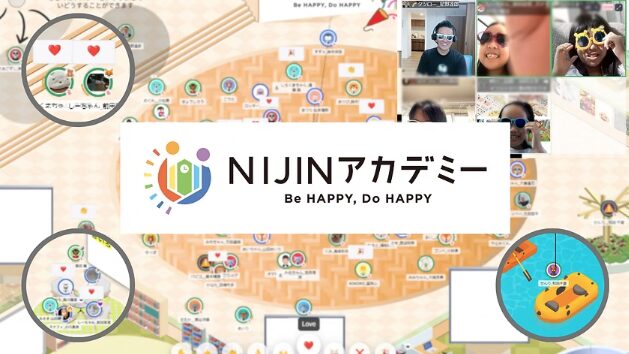
NIJIN Academy is an alternative school in Japan for elementary and junior high school students who do not fit conventional school; many had stopped going to school altogether. It opened in September 2023 and is run by NIJIN Inc., founded by Tatsuro Hoshino, who taught at a public elementary school for seven years. The model is hybrid: children attend from home through a metaverse campus, choose from about 100 live online classes a month in small, discussion-based groups, and can also go to physical classrooms across Japan. Its principle: don’t blame people, build systems.
Figures are those published on NIJIN’s official websites. “Attendance recognition” means the child’s registered school in Japan counts learning at NIJIN Academy as school attendance.
Japan has its own version of New Zealand’s attendance problem, which we describe in school refusal (futoko) in Japan. NIJIN makes no promise about results in New Zealand. In the OECD’s PISA 2022 survey, 68% of 15-year-olds in New Zealand said they felt they belong at school (OECD average 75%) and 22% felt like an outsider (OECD average 17%). For children who are often away, or who do not feel they belong, a school built around belonging may matter. How such a school could work under New Zealand’s rules is what has to be worked out locally.
Building a school for these children: the Country Head role

NIJIN is looking for one person to start NIJIN Academy New Zealand and lead it as business head and principal. You do not need to have been a teacher. What carries over is experience of managing an organisation and hiring people: perhaps in a school, an education or tutoring business, a youth service, an attendance or alternative education provider, or a community organisation. Te reo Māori alongside English would be a strength; Japanese is welcome but not required.
It is not a franchise: you do not buy into a ready-made package; you build the school with NIJIN. Investment is optional. You can start on a service contract, even as a side job alongside your current work, and decide later whether to become a co-owner of a local company (for example, 20% of the shares for you and 80% for NIJIN; if you invest, the guide is JPY 1 to 2 million from you and JPY 4 to 8 million from NIJIN, decided together). Either way, compensation is, as a guide, 10% of revenue excluding tax, capped at JPY 50 million.
| Revenue (excluding tax) | Country Head’s compensation (10%, as a guide) |
|---|---|
| JPY 100 million | JPY 10 million |
| JPY 200 million | JPY 20 million |
| JPY 500 million or more | JPY 50 million (cap) |
| No revenue | None under this formula |
These rows show how the formula works. They are not a forecast and not a promise of income. Amounts are in Japanese yen only. If you hand part of the work to someone else, that person is paid from your 10%. Contract type, location, timing and the legal form of the school in New Zealand are discussed in the interview.
Questions and answers
What is the school attendance rate in NZ?
In Term 3 2026, 52.3% of students attended school regularly (more than 90% of the term), up from 50.5% in Term 3 2025. In Term 2 2026 the rate was 64.3%. The government target is 80% by 2030.
What are the school attendance requirements in NZ?
Children must be enrolled at a registered school from age 6 to 16, and enrolled students, including enrolled 5-year-olds, must attend whenever the school is open (Education and Training Act 2020, sections 35 and 36). Parents must tell the school when a child will be away.
Can parents be fined for school absence in NZ?
Yes, on conviction. Under section 244, the fine for irregular attendance is up to NZ$30 per school day, capped at NZ$300 for a first offence and NZ$3,000 for a later one. Failing to enrol a child carries a fine of up to NZ$3,000 (section 243). The Ministry treats prosecution as a last resort.
What is the Attendance Service in NZ?
Attendance service providers work across the country with schools and families to help students who are not enrolled or not attending get back to school. Schools may refer a student, and staff may visit the family at home. A new delivery model started in Term 1 2026.
What are the school attendance rules for schools from 2026?
Since Term 1 2026, every state and state-integrated school must have an attendance management plan and must have regard to STAR, which sets actions when a student reaches 5, 10 and 15 days of absence in a term.
Is the Country Head role a job or a business?
It is closer to starting a business. You lead NIJIN Academy New Zealand as business head and principal, and compensation is, as a guide, 10% of revenue up to JPY 50 million, with no guaranteed income. You can begin on a service contract alongside your current work.
Build a place in New Zealand where children want to come
If you want to build a school for children who have drifted away from school, and you have led and hired a team, read the role and apply. We read every application and reply by email.
See the Country Head role in New Zealand Apply for the Country Head roleWhere to go next
Related guides
- Homeschooling in New Zealand
- Persistent absence from school
- Chronic absenteeism in schools
- Children missing education
- Out-of-school children: causes and solutions
- How to start a microschool
Sources
All figures are quoted with the term and year they refer to. Official pages were checked in November 2026; please check the originals for later updates.
- https://www.educationcounts.govt.nz/statistics/attendance
- https://www.educationcounts.govt.nz/__data/assets/pdf_file/0003/254208/Regular-attendance-Term-3-2026.pdf
- https://www.educationcounts.govt.nz/__data/assets/pdf_file/0004/254209/Reasons-for-student-absence-Term-3-2026.pdf
- https://www.educationcounts.govt.nz/__data/assets/pdf_file/0006/253383/Regular-Attendance-Term-2-2026.pdf
- https://www.legislation.govt.nz/act/public/2020/0038/latest/LMS171400.html
- https://www.education.govt.nz/our-work/strategies-policies-and-programmes/attendance-and-achievement/increasing-school-attendance
- https://www.education.govt.nz/suppliers-and-providers/administration/attendance-services/information-attendance-service-providers/star-and-attendance-management-plans
- https://www.education.govt.nz/education-professionals/schools-year-0-13/managing-students/student-attendance-guide-schools-and-kura
- https://www.education.govt.nz/parents-and-caregivers/schools-year-0-13/attendance/when-your-child-should-be-school
- https://www.education.govt.nz/parents-and-caregivers/schools-year-0-13/attendance/how-get-support-if-your-child-not-attending-school-regularly
- https://www.education.govt.nz/parents-and-caregivers/schools-year-0-13/attendance/leaving-school-16
- https://www.education.govt.nz/education-professionals/schools-year-0-13/learning-support/alternative-education
- https://www.tekura.school.nz/about-us/enrol
- https://www.oecd.org/content/dam/oecd/en/publications/reports/2023/11/pisa-2022-results-volume-i-and-ii-country-notes_2fca04b9/new-zealand_30baae78/33941739-en.pdf
- https://nijin.co.jp/recruit/nijin-academy-new-zealand-country-head/
- https://academy.nijin.co.jp/