
For education founders in India
The cost to start a school in India is the sum of about ten cost heads, and only a few of them have a published price: land, building, salaries and equipment depend on your city, your board and your state, while fees such as CBSE’s ₹1,50,000 application fee for fresh affiliation up to secondary level are set by the authorities. Any single figure you see online is someone else’s school. This guide lists every cost head, gives only the official fees we could check at the source, and ends with a checklist for getting real quotes.
For the steps, see how to start a school in India; for the money rules, is school a profitable business in India. This page is only about cost.
In this article
- Why there is no single honest number
- The cost heads of a school in India, line by line
- CBSE affiliation fees: the published numbers
- When the money goes out: the cost timeline
- Land, building and certificates
- State recognition and the RTE Act: costs that are not fees
- Teachers and the principal: the largest running cost
- Quote checklist before you commit
- Three ways to lower the cost of starting
- Questions and answers
Why there is no single honest number
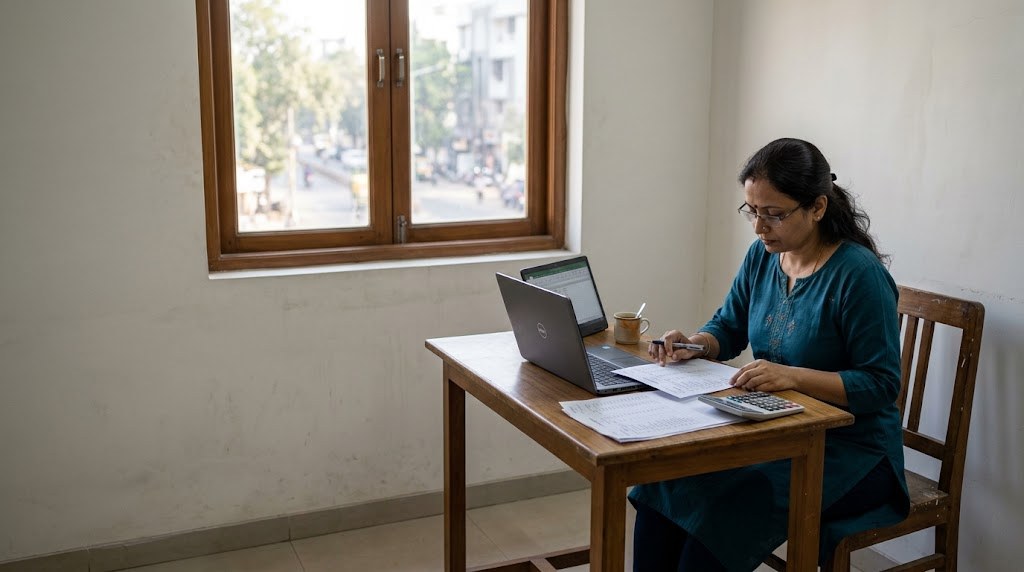
Online estimates range from a few lakh to many crore, mostly from consultants who sell set-up services, and each describes a different school. Four choices move the total most:
- Which classes you open first. A Class 1–5 school needs less space, fewer teachers and no laboratories than a Class 1–12 school.
- Which board. A CBSE school must meet CBSE’s bye-laws and fees on top of state rules.
- Where. CBSE’s land rule changes with city size, and rents and salaries differ between a metro and a district town.
- Own, lease or share. Buying land is the largest single cost; CBSE’s land certificate format also covers leased land.
The honest method: list the cost heads, get two or three quotes for each, and add them up.
The cost heads of a school in India, line by line
The third column tells you whose rule sets the requirement, which is also whom to ask.
| Cost head | What drives the amount | Whose rule | One-time or recurring |
|---|---|---|---|
| Legal entity (trust, society or Section 8 company) | Registration, drafting, stamp duty, chartered accountant | State registrar; Ministry of Corporate Affairs for companies | One-time, then yearly audit |
| Land | Area required by board and state, city, ownership or lease | State; CBSE clause 3.4 for CBSE schools | One-time (buy) or recurring (lease) |
| Building and safety works | Classrooms, toilets, drinking water, fire safety, access | Municipal and state building and fire rules; National Building Code | One-time, with periodic renewals |
| State recognition | Application and inspection fees, compliance with state RTE rules | State education department | One-time, renewed periodically |
| Board affiliation | Board, level of classes, inspections, extensions | CBSE, CISCE or the State Board | Application fee, then extension fees |
| Teachers, principal and other staff | Number of sections, qualifications, state pay rules | State rules; NCTE qualifications; board conditions | Recurring, usually the largest line |
| Furniture, library, labs, ICT | Classes offered, science streams, computer labs | Board and state norms | One-time, then replacement |
| RTE seats for weaker sections | At least 25% of Class I or entry-level seats, reimbursed by the state | RTE Act, Section 12(1)(c), and state rules | Recurring; affects cash flow |
| Website and public disclosure | CBSE requires a website with a mandatory public disclosure page | CBSE Circular 03/2021 | Small, recurring |
| Working capital | Salaries and rent before fee income covers them | Your own plan | Recurring until enrolment builds |
The legal-entity choice is explained in our guide on how to start a school in India. This table names cost heads only; it is not legal or tax advice.
CBSE affiliation fees: the published numbers
CBSE is one of the few authorities that publishes its fees in one table. The table below is taken from the revised Appendix I in CBSE’s SARAS affiliation manual (chapter 11), revised in view of CBSE Circular 03 of 5 March 2021. Amounts are in Indian rupees, for schools in India, under “general affiliation”. CBSE’s table also has a separate “regular affiliation” column with lower amounts; ask CBSE which category applies to your school.
| Application to CBSE | Fee (general affiliation, in India) |
|---|---|
| Approval for Middle School syllabus | ₹50,000 |
| Fresh affiliation up to Secondary level (Class 10) | ₹1,50,000 |
| Fresh affiliation up to Senior Secondary level (Class 12) | ₹2,50,000 |
| Upgradation to Secondary or to Senior Secondary level | ₹1,00,000 each |
| Permission for Classes I–V | ₹25,000 |
| Re-inspection, periodical inspection or surprise inspection | ₹50,000 each |
| Permission for section increase (excluding re-inspection fee) | ₹75,000 |
| Additional science subject (excluding re-inspection fee) | ₹10,000 per subject |
| Extension of affiliation for the next 5 years (applied 1 March to 31 May) | ₹50,000 |
Two rules matter for your budget. Circular 03/2021 made the initial affiliation period five years instead of three, so the extension fee is a five-yearly cost. And CBSE’s Appendix VI ties each application to classes already running: for example, you apply for the Middle School syllabus when Classes 1 to 5 are all running. You pay for staff and premises under state recognition before you can apply.
Fees are revised from time to time. Before paying, check the current schedule on CBSE’s SARAS portal (saras.cbse.gov.in).
When the money goes out: the cost timeline
The order of spending decides how much cash you need before the first fee is paid.
- Entity and plan. Register the trust, society or Section 8 company.
- Land or lease, then building works. The largest outflow, before any child is enrolled.
- Certificates and state recognition. Safety and sanitation certificates, then state recognition.
- Hiring before opening. Teachers and a principal are paid before the first term.
- Running classes on state recognition. Fee income starts at low enrolment; working capital covers the gap.
- Board affiliation. Application fee, inspection and any works it asks for.
- Every five years. Extension of affiliation and renewals.
Land, building and certificates
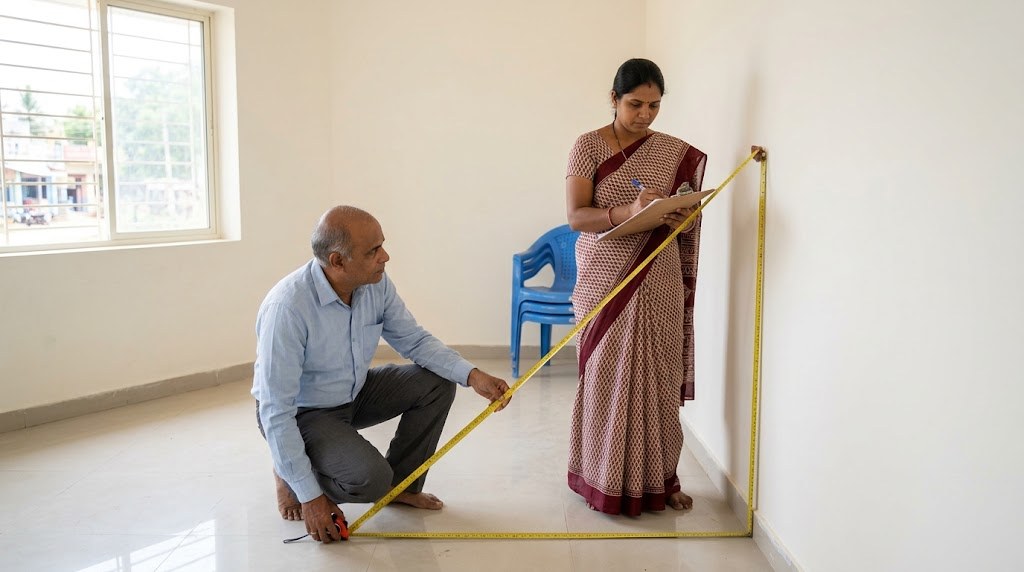
For CBSE schools, Notification 17/2021 amended clause 3.4 of the Affiliation Bye-Laws 2018. It sets a minimum of 4,000 square metres of land for schools within municipal limits of cities with a population above 10 lakh, hilly areas, state capital cities, the North Eastern States, the UTs of Jammu & Kashmir and Ladakh, and named cities of the National Capital Region and around Chandigarh. Other locations follow the other provisions of chapter 3 of the bye-laws, so read that chapter for your town before you price land.
CBSE also asks for documents that each cost time, fees or works:
- A land certificate from the revenue authority, with lease details if leased.
- A building safety certificate under the National Building Code, from a government engineer.
- A fire safety certificate under the State or UT Fire Service rules.
- A safe drinking water and sanitary condition certificate.
- A state No Objection Certificate and RTE recognition for Classes I–VIII.
State Boards have their own norms; ask your district education office for the written list.
State recognition and the RTE Act: costs that are not fees
Classes I to VIII need recognition under Section 18 of the Right of Children to Free and Compulsory Education (RTE) Act, 2009, granted under your state’s RTE rules. CBSE’s model recognition certificate shows typical conditions, several of which are costs:
- Run by a registered society or public trust, not for profit, with accounts audited by a chartered accountant.
- Teachers with the minimum qualifications set under state rules.
- No capitation fee and no screening of the child or parents.
- Admission of children from weaker sections and disadvantaged groups at the entry class, with a separate bank account for reimbursement.
The Ministry of Education has stated, in a 2019 reply recorded by PIB, that Section 12(1)(c) requires specified-category and unaided schools to admit at least 25% children from weaker sections and disadvantaged groups in the neighbourhood in Class I and to educate them free until elementary education is complete. The state reimburses the school, with central support through Samagra Shiksha. Ask your state how the per-child amount is fixed and how long payment takes, and plan cash for the gap.
NEP 2020 (paragraph 8.7) adds that all education institutions will be held to not-for-profit standards of audit and disclosure, with surpluses reinvested in education.
Teachers and the principal: the largest running cost
Salaries usually decide whether the budget works. We do not quote figures, because they depend on state rules and the local market, but you can price the structure exactly:
- Headcount. CBSE’s mandatory disclosure asks for PGTs, TGTs, PRTs and the teacher-section ratio; budget in those categories.
- Qualifications. The NCTE lays down teacher qualifications, and states run Teacher Eligibility Tests.
- Roles beyond class teachers. CBSE’s format also lists a special educator and a counsellor and wellness teacher.
- The principal. A qualified principal is usually one of the first hires; check the qualifications your state and board require for the post.
- Pay rules. Ask your state department and board whether a minimum pay scale applies to your category of school. Get the answer in writing.
Rather build a school than buy a format?
NIJIN Academy is an alternative school in Japan, online and in person, with 1,000+ children enrolled since September 2023 (cumulative). NIJIN is looking for one person to start and lead NIJIN Academy India as its business head and principal. It is not a franchise, and investment is optional.
See the Country Head role in IndiaQuote checklist before you commit
Take this list to your district education office, the board, an architect, a chartered accountant and two or three landlords. Write each answer in rupees, with the date.
- Which board, which classes in year one, and how many sections per class?
- Minimum land and classroom size for that board, state and city size, in writing.
- Price to buy or lease a site that meets that minimum, and the lease period the board accepts.
- Construction or refit cost per classroom, toilets, drinking water, ramps and fire safety, from two contractors.
- Fees and expected time for the land, building safety, fire safety and sanitation certificates.
- State recognition application fee, inspection process and renewal period.
- Board fees: application, inspection, extension (for CBSE, from the current SARAS schedule).
- Number of teachers, principal and other staff, with the pay rule that applies.
- RTE reimbursement amount per child in your state, and the usual payment delay.
- Months of salaries and rent you can carry before fees cover them.
A simple test before you sign anything. Add every one-time cost, then add every recurring cost for the months until your projected fee income covers them. If you cannot fund that total, change the plan (fewer classes, a leased building, a later board affiliation) before you change the numbers.
Three ways to lower the cost of starting
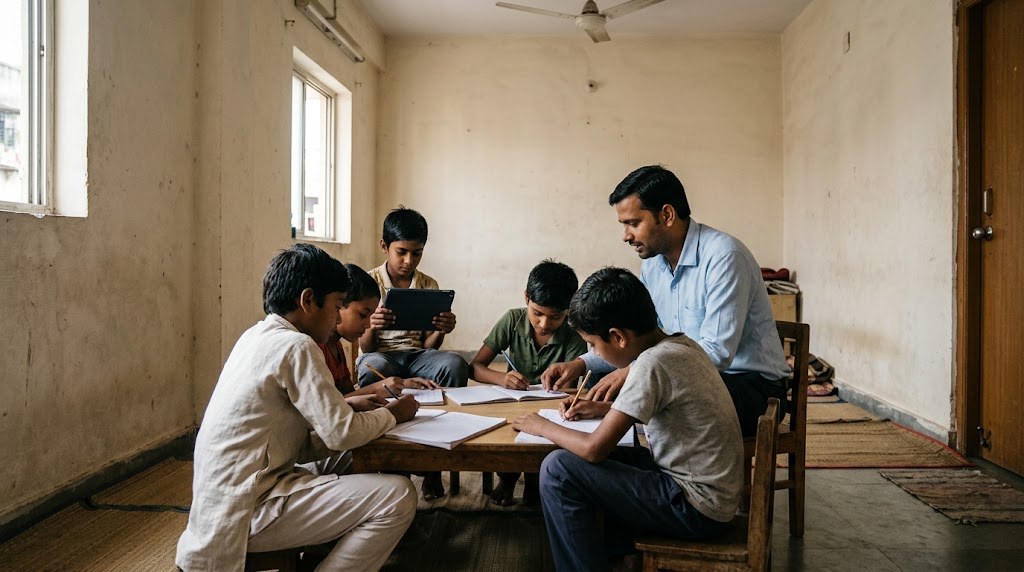
Open schooling
NEP 2020 says NIOS and State Open Schools will be expanded for young people who cannot attend a physical school. Ask your state whether a centre supporting their learners needs registration.
Start small
Open lower classes in leased space under state recognition, and add classes and a board later.
Share what you can
NEP 2020 asks for school requirements to be made less restrictive for alternative models, and lets states adopt school complexes for resource sharing. Ask whether shared labs, grounds or teachers are possible where you are.
Co-found instead of going alone
An organisation that already runs a model spreads the cost of curriculum, training and systems.
NIOS also accredits study centres. Its 2022 e-accreditation document lists, for centres in India, an application fee of ₹10,000, a registration fee of ₹20,000 and a renewal fee of ₹15,000 every five years. Its checklist asks for an affiliation letter from a recognised board and three years of audited accounts, so this suits an existing school more than a new one.
| Start alone | Buy a franchise | Co-found with NIJIN | |
|---|---|---|---|
| Up-front payment | Everything is yours to fund | Franchise fee plus set-up | Investment is optional; if you invest, the guide is JPY 1 to 2 million from you and JPY 4 to 8 million from NIJIN |
| Your role | Owner and manager | Operator of a brand | Business head and principal of NIJIN Academy India |
| Your income | Whatever the school can pay | Margin after royalties | As a guide, 10% of revenue (excluding tax), up to JPY 50 million; not guaranteed |
NIJIN Academy runs online and in person: children join a metaverse campus from home, choose from about 100 live online classes a month, and can also go to 52 physical classrooms across Japan. How NIJIN Academy India is structured under Indian rules is worked out with the Country Head. On franchises, see education franchise in India.
Figures are those published by NIJIN. Compensation figures are a guide only and are stated in Japanese yen; the details are discussed in the interview.
Questions and answers
How much does it cost to set up a school in India?
There is no reliable national figure: land, building and salaries depend on your city, board, state and classes. Add up the cost heads above with local quotes; only board and state fees are published.
What is the cost of opening a CBSE school in India?
The CBSE fee itself is published: under general affiliation in India, ₹1,50,000 for fresh affiliation up to secondary level and ₹2,50,000 up to senior secondary level, per the revised SARAS appendix. Land, building and staff cost far more.
How much does it cost to run a school in India?
Mostly salaries, rent or loan payments, maintenance, audits and renewals. Budget for the months before fee income catches up, including any delay in RTE reimbursement.
How much does it cost to build a school in India?
Construction is priced per square metre or square foot by local contractors, so the honest number is your built-up area multiplied by two or three local quotes. The area itself is driven by the rules: CBSE’s land minimum (4,000 square metres in large cities under Notification 17/2021), its room norms and the certificates listed above. Consultants publish wide ranges online; treat them as a starting point, not a budget.
How much land is required to open a school in India?
For CBSE affiliation, Notification 17/2021 sets 4,000 square metres for schools in cities with a population above 10 lakh, hilly areas, state capitals, the North Eastern States, Jammu & Kashmir, Ladakh and the named NCR and Chandigarh-area cities. Elsewhere chapter 3 of the Affiliation Bye-Laws applies, and State Boards set their own norms.
Can I start a school in India without buying land?
CBSE’s land certificate format covers land held on lease, and state rules set their own conditions. Check the lease period your board and state accept before you sign.
Is it cheaper to start with primary classes only?
Usually yes: fewer rooms, fewer teachers, no laboratories. CBSE also expects lower classes to be running before you apply.
Is the NIJIN Country Head role a job or a business?
It is closer to founding a business than to a country manager job. You lead NIJIN Academy India as its business head and principal, on a service contract or as a co-owner of a local company. As a guide, compensation is 10% of revenue, so there is no income without revenue.
Start a school in India with a team behind you
NIJIN is looking for one founder to start and lead NIJIN Academy India, as its business head and its principal. Teaching experience is not required. Investment is optional; you can also start on a service contract, even as a side job. If you have led people and hired people, and want to build a school for children who do not fit school, read the role.
See the Country Head role in IndiaWhere to go next
Country Head pages are open for several countries, and the global page covers every other country.
Related guides for founders in India
- How to start a school in India: steps, rules and cost
- Is school a profitable business in India? An honest look
- How to start a play school without a franchise in India
- Education franchise in India: what you actually buy
- Alternative schools in India
- How to become a school principal in India
- How to start a CBSE school in India: affiliation steps
- School business plan in India: what to put in it
Sources
Fees are quoted as published in the documents below. Authorities revise fees and rules; check the original for later updates.
- https://saras.cbse.gov.in/SARAS/Manuals/CHAPTER_11_REVISED_APPENDIX_PROFORMA.pdf
- https://saras.cbse.gov.in/saras/Circulars/Circular3.pdf
- https://saras.cbse.gov.in/SARAS/Circulars/Circular17.pdf
- https://www.pib.gov.in/PressReleasePage.aspx?PRID=1594531
- https://pib.gov.in/PressReleasePage.aspx?PRID=1578389
- https://www.pib.gov.in/PressReleasePage.aspx?PRID=2114376
- https://www.pib.gov.in/newsite/PrintRelease.aspx?relid=89569
- https://static.pib.gov.in/WriteReadData/userfiles/NEP_Final_English_0.pdf
- https://cdn.nios.ac.in/cms/documents/2023/May/18/Accreditation_Revamp2022.pdf
- https://nijin.co.jp/recruit/nijin-academy-india-country-head/