Ireland guide
How you start a school in Ireland depends on the kind of school: a new State-funded (recognised) school opens only where the Department of Education and Youth decides one is needed, through a patronage process; an independent school can be opened privately, but each child must be registered with Tusla; a pre-school must be registered with Tusla before any child attends; and an English language school for international students needs QQI’s TrustEd Ireland authorisation.
This guide is for teachers, principals, founders of tutoring or youth organisations, and parent groups who want to build something new. It is not legal advice: use each section as a map to the official office, and confirm the current rules there.
In this article
- Four routes: which kind of school are you starting?
- How to set up a school in Ireland with State recognition: the patronage process
- How to set up a private school in Ireland: fee-charging and independent schools
- Opening an independent school, step by step
- How to open a pre-school in Ireland: Tusla registration and ECCE
- Home education, learning groups and the Section 14 register
- How to start a school in Ireland for international students
- Why Ireland needs new kinds of school: the numbers
- How to start your own school: alone, by franchise, or as a co-founder
- What NIJIN Academy is
- Questions and answers
Four routes: which kind of school are you starting?
Different bodies regulate different kinds of “school”. Decide which one you are building first: it decides who you apply to, what you teach and how you are funded.
| Route | Who decides or regulates | Curriculum | Money |
|---|---|---|---|
| New recognised school (primary or post-primary) | Department of Education and Youth decides where a school is needed; a patron is chosen through the patronage process; the Minister recognises the school under Section 10 of the Education Act 1998 | The national curriculum, with inspection by the Inspectorate | State-funded |
| Fee-charging (private) post-primary school | A recognised school outside the Free Education Scheme | NCCA curriculum; Junior and Leaving Certificate | Fees plus reduced State support towards staffing |
| Independent (non-recognised) school | Tusla’s Alternative Education Assessment and Registration Service (AEARS) assesses the education and registers each child | Not required to follow the national curriculum, but each child must receive “a certain minimum education” | Privately funded |
| Pre-school or early years service | Tusla Early Years Inspectorate (registration); Department of Children, Disability and Equality funds ECCE | Early years setting, not a school | Fees, with free ECCE hours for eligible children |
| English language school for international students | QQI (TrustEd Ireland mark); immigration rules from Immigration Service Delivery | English language programmes under QQI’s ELE Code | Fees |
Summary based on gov.ie, the Education Act 1998, Tusla, Eurydice (European Commission) and QQI pages listed under Sources. Always confirm with the office concerned.
How to set up a school in Ireland with State recognition: the patronage process
In Ireland, a school is founded and run under a patron, the body that establishes the school and sets its ethos. According to gov.ie, “the School Patron is responsible for the management and control of the School”, and in most cases the Minister is not the owner of the school property.
The Department plans school places first. gov.ie explains that the country is divided into 314 school planning areas, analysed with enrolments, Child Benefit records and housing data. Where places are short, it may use spare capacity, extend existing schools, or provide a new school.
- The Department identifies needand decides that a new school is the answer for a planning area.
- Parents express a preferenceParents and guardians of children living in the area can state their preferred model of patronage through the Online Patronage Process System (OPPS).
- Patron bodies applyEach round has a published invitation, application form and patron code of conduct.
- Independent assessmentThe New Schools Establishment Group (NSEG), an external advisory group, oversees the process; reports are published on gov.ie.
- The Minister decides and recognisesThe school is recognised under Section 10 of the Education Act 1998.
Under Section 10, the Minister must be satisfied, among other things, that the school is likely to be viable, that (for a proposed school) existing schools cannot reasonably meet the students’ needs, that the patron will provide the national curriculum and cooperate with inspection, and that health, safety and building standards are met.
For a founder, the realistic path to a new recognised school is usually through an existing patron body, in an area where the Department has already decided a school is needed. Watch the Department’s press releases for patronage invitations.
How to set up a private school in Ireland: fee-charging and independent schools
Fee-charging recognised schools
Eurydice (the European Commission’s description of Ireland’s system) explains that post-primary schools in the Free Education Scheme may not charge fees, while a limited number of private schools outside it charge fees and receive reduced State funding towards staffing. They teach the national curriculum and offer the Junior and Leaving Certificate. Eurydice counts 56 such schools with about 25,000 pupils (6.7% of post-primary enrolment). The published new-school process does not describe a separate route for opening a new one.
Independent (non-recognised) schools
An independent school is, in Tusla’s words, “a school that is not recognised by the Department of Education and Youth”. This is the route most new founders mean. Independent schools “are not required to follow the national curriculum”, but each child must receive a certain minimum education appropriate to their age, aptitude and ability, assessed by Tusla’s AEARS. Eurydice reports 61 assessed independent schools on the Section 14 register at the end of Q3 2024, and Tusla publishes their assessment reports.
Opening an independent school, step by step
Tusla’s guidance for providers sets out the official steps:
- Contact AEARS firstEmail the Independent Schools Section (independent.schools@tusla.ie) before submitting anything.
- Put safeguarding in placeAll staff and volunteers must be Garda vetted and trained in Children First and the school’s Child Safeguarding Statement, which must be in place under the Children First Act 2015.
- Submit the R2 Initial Information FormBefore opening or as soon as practicable afterwards; it covers provision, premises, governance and safeguarding.
- Preliminary assessmentAEARS assesses the school so it can decide on registering the children.
- Parents submit R1 applicationsThe school should make sure every family applies for Section 14 registration.
- Keep the register currentAn annual update each academic year, plus forms when buildings, governance, staff or enrolments change.
Planning, fire safety and building questions are separate: ask your local authority and a qualified professional.
Want to build a school in Ireland without starting from zero?
NIJIN Academy, an alternative school in Japan with more than 1,000 children enrolled since 2023, is looking for one person to start and lead NIJIN Academy Ireland as Country Head: business head and principal. Teaching experience is not required. You can start on a service contract, even alongside your current job.
See the Country Head role in IrelandHow to open a pre-school in Ireland: Tusla registration and ECCE
A playschool, naíonra or Montessori pre-school is an early years service, regulated by Tusla’s Early Years Inspectorate.
- Register before opening. Tusla states that “you must complete the registration process before any children can attend”.
- Apply at least three months ahead. Under Section 58D(2) of the Child and Family Agency Act 2013, a proposed service must apply at least three months before it plans to begin operating (21 days for a temporary pre-school).
- Use the online portal. All new applications go through submissions.tusla.ie; applications sent through older channels are no longer accepted.
- Have every document ready. Applications incomplete for more than 10 working days are closed automatically, without refund.
- Get local help from Tusla’s New Applications helpdesk or your City and County Childcare Committee.
ECCE. The Early Childhood Care and Education programme gives eligible children free pre-school hours, funded by the Department of Children, Disability and Equality. According to Citizens Information, providers deliver ECCE for 3 hours a day, 5 days a week, for 38 weeks a year, and those 15 hours a week are free to the family. Children qualify from 2 years and 8 months (by 31 August) until they are 5 years and 6 months (on or before 30 June of the programme year). To offer ECCE, read the programme rules on gov.ie and ask your Childcare Committee.
Home education, learning groups and the Section 14 register
Some founders start with a group for home-educated children. Section 14 of the Education (Welfare) Act 2000 requires a register of “all children in receipt of education in a place other than a recognised school”, and an authorised person assesses the education, materials and time spent. Parents send AEARS the R1 form with a certified birth certificate or passport, and may begin only once AEARS confirms in writing that the application is complete; an assessment follows within six months. There is “no requirement to follow the national curriculum”. Tusla reported 2,325 children on the home education register at the end of December 2024.
If your group becomes the place where children get their main education, it may look like an independent school. Ask AEARS before taking enrolments.
How to start a school in Ireland for international students
Immigration Service Delivery states that non-EEA, non-Swiss nationals can be recruited only to programmes on the Interim List of Eligible Programmes (ILEP) or to eligible programmes of providers authorised to use the TrustEd Ireland mark. The ILEP is closed: its final update was published on 20 June 2025, and providers without listed programmes must gain TrustEd Ireland authorisation before recruiting non-EEA students.
QQI says that to achieve the mark, an English language education provider must meet due diligence criteria in the regulations, the Code of Practice for Provision of Programmes of English Language Education (ELE Code) and the statutory Quality Assurance Guidelines for English language education providers, and must contribute to the statutory Learner Protection Fund. Check QQI for the current application window.
Why Ireland needs new kinds of school: the numbers
Tusla’s attendance analysis counted 94,501 primary and 67,612 post-primary students who lost 20 or more days in 2023/24; the primary rate is 8.41 points above the 2003-2023 average of 13.64%. No single school answers every reason behind those numbers, but many families are looking for something that fits better.
How to start your own school: alone, by franchise, or as a co-founder
Whatever the legal route, you still choose how to build the organisation:
| Start alone from zero | Buy a franchise | Co-found with an existing school operator | |
|---|---|---|---|
| Model | You design everything | You buy a ready-made format | You adapt a working model to your country |
| Who decides | You | Mostly the franchisor | You lead locally, with the operator’s experience behind you |
| Up-front cost | Everything is yours to fund | Usually a fee to join | Depends on the agreement |
| Main risk | Long time to a proven model | Little room to adapt | Choosing the right operator |
For other countries, see setting up an independent school in the UK, starting a school in Australia and starting a private school in Canada.
What NIJIN Academy is
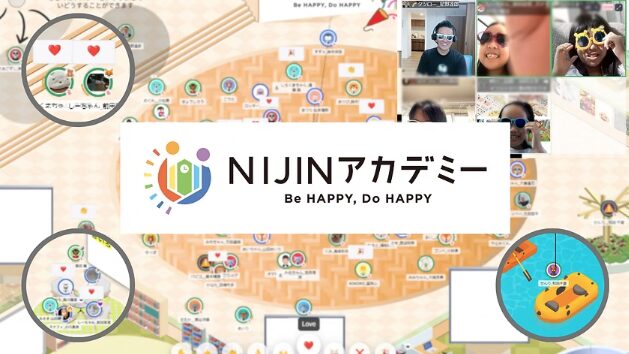
NIJIN Academy is an alternative school in Japan for elementary and junior high school students who do not fit conventional school; many had stopped attending. It opened in September 2023, run by NIJIN Inc., founded by Tatsuro Hoshino after seven years as a public elementary school teacher. Children join a metaverse campus from home, choose from about 100 small, discussion-based live classes a month, and can also attend physical classrooms. NIJIN describes it as one of the largest alternative schools in Japan.
Figures published on NIJIN’s official websites.
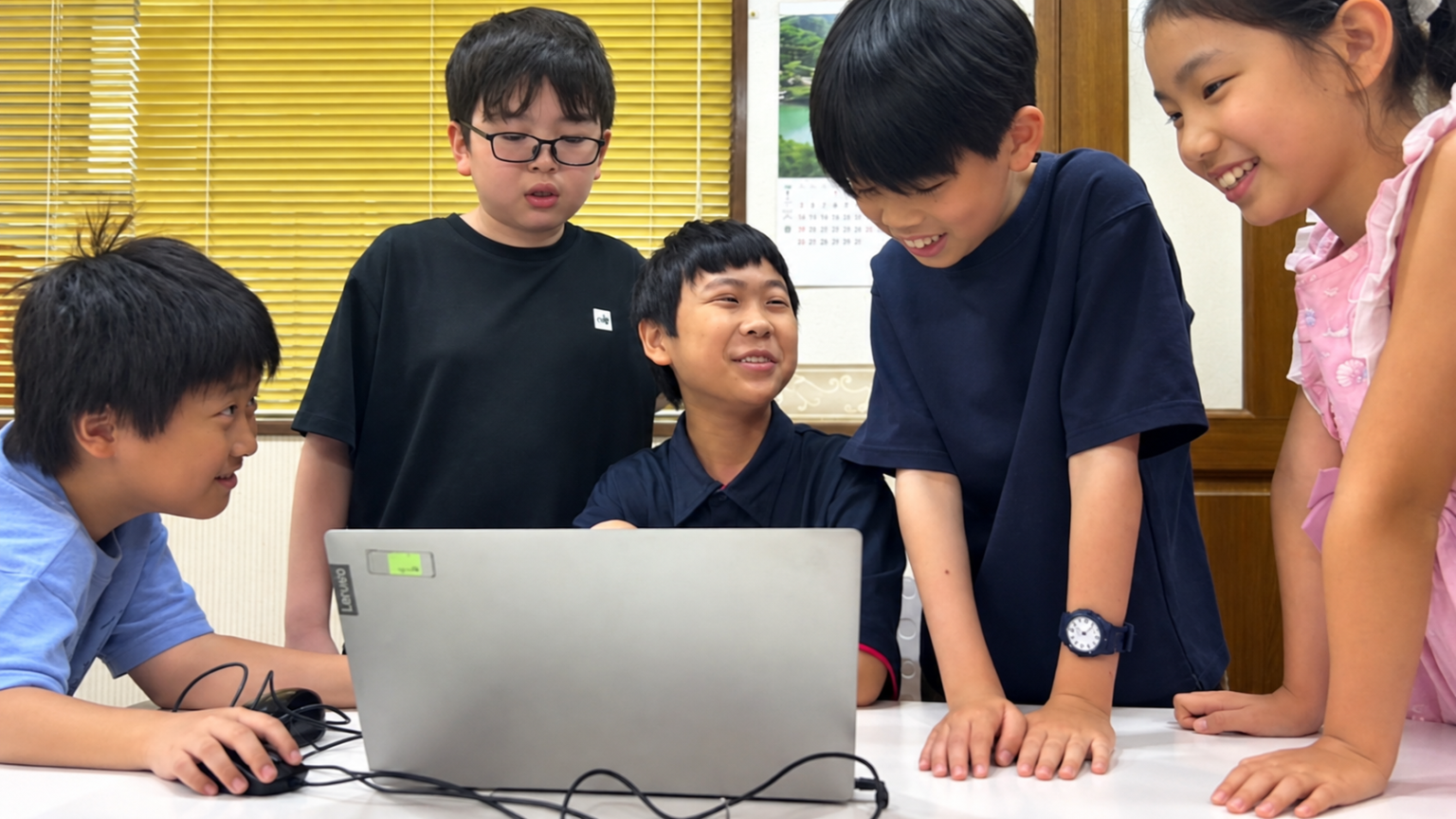
NIJIN is looking for one person to start and lead NIJIN Academy Ireland as Country Head: business head and principal. It is not a franchise. You can be a co-owner of a local company (for example 20% for you, 80% for NIJIN; if you invest, the guide is JPY 1 to 2 million from you and JPY 4 to 8 million from NIJIN). Investment is optional: you can also start on a service contract, even as a side job alongside your current work.
Either way, compensation is, as a guide, 10% of revenue (excluding tax), capped at JPY 50 million; JPY 100 million of revenue gives JPY 10 million. This illustrates the formula only, not a promise of income; anyone you bring in to do part of the role is paid from that 10%. Teaching experience is not required; leadership, management, business ability and a principal’s skills are. English alone is fine. How the academy fits Ireland’s rules is worked out together; other terms are to be discussed in the interview.
Questions and answers
How do you start a school in Ireland?
Choose the route first. New recognised schools open where the Department identifies need, through the patronage process. Independent schools open privately, with each child registered with Tusla under Section 14. Pre-schools register with Tusla’s Early Years Inspectorate.
How do you set up a private school in Ireland?
Most new private schools are independent schools. Contact AEARS at independent.schools@tusla.ie before submitting an R2 Initial Form, and put Garda vetting, Children First training and a Child Safeguarding Statement in place. Take legal advice on structure and premises.
Do independent schools in Ireland have to follow the national curriculum?
No, according to Tusla, but each child must receive a certain minimum education, assessed by AEARS.
How do you open a pre-school in Ireland?
Apply to Tusla through submissions.tusla.ie at least three months before opening; no child may attend until registration is complete.
Can a home education group become a school?
Possibly. If it is becoming children’s main place of education, ask Tusla’s AEARS how it would be treated first.
How do you start a school in Ireland for international students?
To recruit non-EEA students, an English language provider needs QQI’s TrustEd Ireland authorisation; the ILEP is closed.
Is the NIJIN Country Head role a job or a business?
Closer to founding a business: you lead NIJIN Academy Ireland as co-owner or on a service contract. Pay is a guide of 10% of revenue, not a fixed salary, and no income is guaranteed.
Start NIJIN Academy Ireland
If you want to start a company in Ireland and solve a problem in education, and you have led and hired a team, read the role and apply. Teaching experience is not required, and investment is optional.
Where to go next
Related guides
- How to set up an independent school in the UK
- How to start a school in Australia
- How to start a private school in Canada
- How to start a microschool
- How to start a homeschool co-op
- Franchise vs your own business
Sources
Checked on 19 November 2026. Rules change; please check the originals and the offices named above.
- https://www.gov.ie/en/department-of-education/policy-information/establishment-of-a-new-school/
- https://www.irishstatutebook.ie/eli/1998/act/51/section/10/enacted/en/html
- https://www.irishstatutebook.ie/eli/2000/act/22/section/14/enacted/en/html
- https://eurydice.eacea.ec.europa.eu/eurypedia/ireland/organisation-private-education
- https://www.tusla.ie/services/family-community-support/alternative-education-assessment-and-registration-service/
- https://www.tusla.ie/services/family-community-support/alternative-education-assessment-and-registration-service/independent-schools/
- https://www.tusla.ie/services/family-community-support/alternative-education-assessment-and-registration-service/independent-schools/information-for-independent-school-providers/
- https://www.tusla.ie/services/family-community-support/alternative-education-assessment-and-registration-service/home-education/
- https://www.tusla.ie/services/family-community-support/alternative-education-assessment-and-registration-service/home-education/step-4-receive-confirmation/
- https://www.tusla.ie/services/preschool-services/new-providers/
- https://www.citizensinformation.ie/en/education/pre-school-education-and-childcare/early-childhood-care-and-education-scheme/
- https://www.irishimmigration.ie/coming-to-study-in-ireland/what-are-my-study-options/interim-list-of-eligible-programmes-ilep/
- https://www.qqi.ie/what-we-do/quality-assurance-of-education-and-training/what-is-trusted-ireland/ele
- https://www.tusla.ie/uploads/content/Analysis_of_School_Attendance_Data_2023-24.pdf
- https://www.tusla.ie/uploads/content/Monthly_Service_Performance_and_Activity_Report_Dec_2024_V1,0.pdf
- https://nijin.co.jp/recruit/nijin-academy-ireland-country-head/
- https://academy.nijin.co.jp/