For education founders in India
Franchise vs own business in education comes down to one trade: a franchise sells you a ready-made brand and system in exchange for fees and limits on what you can change, while your own business gives you full control and full ownership of the brand, but you build every system yourself. If your strength is running a centre to a proven format, a franchise can fit. If you want to design and own the school, start your own. If you want to lead and own part of a school company without buying a format or starting from a blank page, there is a third route: co-founding a company with an existing operator.
Most comparisons of a franchise and your own business are written about food or retail. Education is different: a school in India answers to education authorities and boards whatever brand is on the gate, and parents choose the people as much as the logo. This guide compares the routes from that angle, then gives you a self-check and a way to decide.
In this article
- Three routes, not two
- What a franchise gives you in education, and what it does not
- What starting your own education business involves
- The rules in India are the same for both
- How the money differs: franchise vs own business expense
- Which fits you? A self-check
- A third way: co-found, not franchise
- How to decide in six steps
- Questions and answers
Three routes, not two
The question is usually put as “franchise or start own business”, but in education there are three ways in. They differ in who owns what, who decides what, and who carries the risk.
| Question | Franchise | Your own business | Co-found with an operator |
|---|---|---|---|
| Who owns the brand? | The franchisor. You have a licence for the term of the agreement. | You, once you register and protect it. | The operator’s brand, used by a company you part-own. |
| Who owns the business? | You own your unit, within the agreement’s limits. | You, fully. | You and the operator, in agreed shares. |
| Who designs the programme? | Mostly the franchisor. | You. | Shared: a working model, adapted locally by you. |
| How you usually pay or get paid | You pay fees and often a royalty; you keep what is left. | You keep the margin, after every cost. | Depends on the agreement (for example, a share of revenue and of the company). |
| Who gets local approvals? | Usually you. | You. | Worked out together. |
| Main risk | Fees and limits that do not fit your site | Building everything alone, slowly | Partner fit: you must agree on direction |
This is a general comparison. Every franchise agreement and every partnership is different; the written agreement decides the details.
What a franchise gives you in education, and what it does not

In an education franchise, a brand owner lets you run a preschool, school, coaching centre or training centre under its name and methods. What you get is real and can be valuable: a name that some parents already know, a curriculum and materials, staff training, software, an operating manual, and people who have opened centres before you.
What a franchise usually does not give you is the business itself. You typically still provide the premises, hire the staff, collect fees and answer to the authorities. When the term ends, the name goes back to its owner, and part of the goodwill you built belongs to someone else’s brand.
A franchise fits best when the brand is strong in your city and your talent is operations. It fits worst when you already have a clear idea of the school you want. Our separate guide to education franchise in India lists every fee line and the questions to ask a franchisor before you sign.
What starting your own education business involves
An independent business gives you what a franchise cannot: your own name, your own programme, your own fees and your own pace. Everything you build is yours to keep, to grow or one day to sell. It also means you build everything a franchisor would otherwise hand you.
- A programme you can explain to a parent in two minutes, and records that show it works.
- A brand you own. In India, trade marks are registered through the Office of the Controller General of Patents, Designs and Trade Marks (IP India). Search before you choose a name.
- Systems and a first team for admissions, fees, attendance and safeguarding, recruited without a known name behind you.
- Every approval your format needs, worked out from the start with the authorities.
If you have a specific idea of what children need and want to own the result outright, our guides on how to start a school in India and how to start a play school without a franchise go step by step.
The rules in India are the same for both
One point is often missed in franchise vs independent business comparisons: in education, the regulator does not care which route you chose. The approvals belong to the school or centre at its address, not to the brand.
No franchise act. The U.S. International Trade Administration’s India Country Commercial Guide states that India does not have specific laws on franchising, and that franchising is governed by national and regional statutes rather than one comprehensive statute. There is no franchise law telling a franchisor what it must disclose before you sign.
A contract like any other. A franchise agreement is a contract, so the Indian Contract Act, 1872 is the starting point. Section 27 says that every agreement restraining anyone from exercising a lawful profession, trade or business is, to that extent, void, with an exception for someone who sells the goodwill of a business. How that applies to a non-compete clause in your agreement is a question for an Indian advocate.
Approvals stay local. Recognition of schools and board affiliation are decided by the state and the board, whoever owns the brand. CBSE, for example, runs its own affiliation process and says more than 24,000 schools are affiliated to it.
The National Education Policy 2020 points in two directions that matter for founders. It says the requirements for schools will be made less restrictive, to make it easier to build schools and to allow alternative models of education. It also says all education institutions will be held to similar standards of audit and disclosure as a not-for-profit entity, with surpluses reinvested in education. So the legal form of your school, and how money flows to you, needs advice from a chartered accountant and an advocate on any route. Requirements differ by state; check with your state education department and read our guide to school recognition under the RTE Act.
How the money differs: franchise vs own business expense
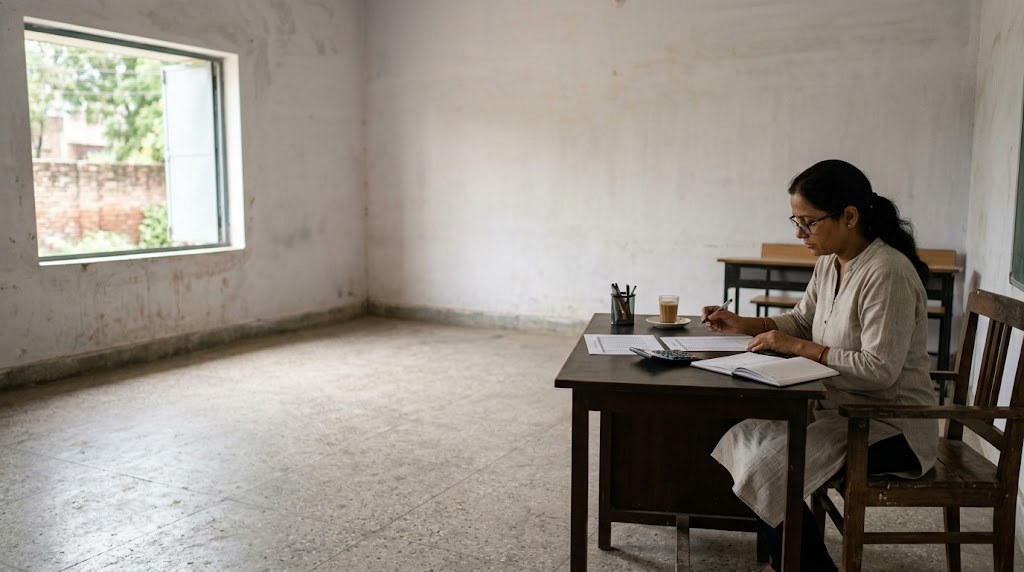
No honest single figure answers “franchise vs own business expense”: costs depend on format, city and the agreement. The shape of the costs does not change. A franchise adds fees and usually removes some design and marketing cost. Your own business removes the fees and adds the work of building everything.
| Cost line | Franchise | Your own business |
|---|---|---|
| Right to the brand | One-time franchise fee | Trade mark search and registration, design of your own identity |
| Ongoing use of the system | Royalty, often a share of fees or a fixed amount per student | None, but you pay for your own curriculum work, training and software |
| Premises and fit-out | Yours, often to the franchisor’s specification and vendors | Yours, to your own specification |
| Marketing | Brand or marketing fund, plus your local spend | All local, all yours, starting with no known name |
| Materials | Often bought from the franchisor | Bought or made where you choose |
| Staff and approvals | Yours | Yours |
| Leaving | Exit, transfer or renewal terms in the agreement | Your decision; what you built stays yours |
To compare them fairly, work out the break-even number for each: fixed monthly costs (rent, salaries, any minimum royalty, loan repayment) divided by what each student leaves you after per-student costs. Do it in your own currency with real quotes. If either route only works at close to full capacity, it does not work at that site.
Want to build a school company in India without buying a franchise?
NIJIN Academy is a hybrid alternative school in Japan, opened in September 2023, with a metaverse campus and 52 physical classrooms. NIJIN is looking for one Country Head to start and lead NIJIN Academy India as business head and principal. It is not a franchise, and investment is optional.
See the Country Head role in IndiaWhich fits you? A self-check
“Which is better, franchise or own business?” has no general answer. It has an answer for you. Tick the statements that are true, then count which column has more.
| A franchise may fit if… | Your own business may fit if… | Co-founding may fit if… |
|---|---|---|
| You want a format that is already designed, and you are happy to follow it. | You have a clear idea of a school that does not exist yet in your area. | You want to lead and build, but not to design every system from zero. |
| The brand is already known and trusted by parents in your city. | You want to own the name and everything it is worth later. | You want to own part of the company, not just a licence. |
| Your strength is operations: staffing, admissions, safety. | You can accept slower early growth to keep control. | Your strength is leadership, management and hiring, more than curriculum design. |
| You have checked the fees, and the site works at a realistic enrolment. | You are ready to handle every approval and system yourself. | You are comfortable sharing decisions with a partner you trust. |
If the third column wins, you are not looking for a franchise. You are looking for a partner. The next section describes one.
A third way: co-found, not franchise

In a franchise, you pay to copy a format. In a co-founded company, you and an existing operator build a new company together, and you own part of it. NIJIN offers this route for NIJIN Academy India, along with a lighter way to begin. The terms below are those on NIJIN’s recruitment page; everything else is discussed in the interview.
- Co-found the local company. You hold shares in a local company set up together, for example 20% for you and 80% for NIJIN. If you invest, the guide is JPY 1 to 2 million from you and JPY 4 to 8 million from NIJIN, decided with you.
- Or start on a service contract. Begin alongside your current work, even as a side job, and decide later whether to become a co-owner. Investment is optional, not a requirement.
- Either way, the same compensation guide. As a guide, 10% of revenue (excluding tax), capped at JPY 50 million. JPY 100 million of revenue would give JPY 10 million, JPY 200 million would give JPY 20 million, and JPY 500 million or more reaches the cap. It is a guide, not a guarantee: with no revenue, the formula pays nothing. If you hand part of the job to others, they are paid from your 10%.
The role is both business head and principal: finding the families the school serves, hiring and leading the team, growing revenue, and answering for what children experience every day. Teaching experience is not required. Experience of managing an organisation and of hiring people is what carries over. Ideally you work in three languages: an official language of India, English and Japanese. English alone is fine.
Figures are those published by NIJIN. The compensation figures illustrate a formula and are not a forecast or a promise of income. Amounts are in Japanese yen only.
How to decide in six steps
- Name the children you want to serve. Age, place, and what is not working for them now.
- Ask the authorities first. Get in writing what your format needs at your address. The answer is the same on every route.
- Name your strengths honestly. Designing, operating and leading point to different routes.
- Put the routes on one page. Fill the cost table above with real quotes and work out each break-even number.
- Read every agreement with advisers. An advocate and a chartered accountant should read it before you pay anything.
Questions and answers
Which is better, franchise or own business?
Neither is better in general. A franchise trades fees and limits for a ready-made brand and system. Your own business trades speed for control and full ownership. Use the self-check above.
Is it better to buy a franchise or start your own business in education?
Buying a franchise suits someone who wants to run a proven format well. Starting your own suits someone with a specific idea of a school and the patience to build it. Co-founding suits someone who wants to lead and part-own a school company without either.
Franchise vs independent business: who owns the brand?
In a franchise, the franchisor owns the brand and you use it under licence for the term of the agreement. In an independent business, you own the brand you create. In India, trade marks are registered through IP India.
Is there a franchise law in India?
According to the U.S. International Trade Administration’s India Country Commercial Guide, India does not have specific laws on franchising; it is governed by national and regional statutes. Your agreement, read under the Indian Contract Act, 1872, does most of the work, so have it reviewed by an advocate.
Franchise vs own business expense: which costs more?
It depends on the format, the city and the agreement. A franchise adds a fee and often a royalty; your own business has no fees but you pay for building everything. Compare both with the cost table and break-even calculation above.
Is NIJIN Academy India a franchise?
No. You do not pay to copy a format. You lead NIJIN Academy India as its business head and principal, either as a shareholder in a local company set up with NIJIN or, to begin with, on a service contract. Investment is optional. Other terms are discussed in the interview.
Lead a school company in India as a co-founder, not a franchisee
NIJIN is looking for one person to start and lead NIJIN Academy India. Teaching experience is not required. If you want to start a company in India and solve a problem in education, read the role.
See the Country Head role in IndiaWhere to go next
NIJIN Academy Country Head pages are open for several countries, and the global page covers every other country.
Related guides for founders
- Education franchise in India: every fee line and the checklist before you sign
- How to start a play school without a franchise in India
- Microschool franchise: what you buy and what you do not
- Is a school a profitable business in India?
- How to start an education business
- How to start a school without money
Sources
Laws and guidance change. Please check the originals for later updates.
- https://www.trade.gov/country-commercial-guides/india-distribution-and-sales-channels-0
- https://www.indiacode.nic.in/bitstream/123456789/2187/2/A187209.pdf
- https://static.pib.gov.in/WriteReadData/userfiles/NEP_Final_English_0.pdf
- https://www.cbse.gov.in/cbsenew/affiliation.html
- https://ipindia.gov.in/
- https://nijin.co.jp/recruit/nijin-academy-india-country-head/
- https://nijin.co.jp/recruit/nijin-academy-country-head/