
Thailand guide
An online school in Thailand can mean four legally different things: a Thai school plus online classes, a licensed private or international school in Thailand, family-based education (home school) approved by the local Educational Service Area Office, or an online school based abroad, so first decide where your child is officially learning, then choose the school.
This guide draws on Thai official documents, including the guideline of the Office of the Basic Education Commission (OBEC). It is general information, not legal advice; confirm your case with the office named in each section.
In this article
- Online school in Thailand: the four routes
- What Thai law says about learning outside school
- Homeschooling in Thailand: how family-based education is approved
- Online school and homeschooling in Thailand for foreigners
- How to choose an online international school in Thailand
- If you want to build an online school in Thailand
- NIJIN Academy Thailand: a school you could lead
- Questions and answers
Online school in Thailand: the four routes
Searches for “online school Thailand” mix tutoring apps, foreign online schools and Thai families looking for a legal way to learn at home. The table separates them by who is responsible for the child’s education.
| Route | Who oversees it | Where the child is officially learning | Main thing to check |
|---|---|---|---|
| Thai school plus online classes | OBEC (public) or OPEC (private) | The Thai school | Online classes are extra; exams stay with the school |
| Licensed private or international school in Thailand (with online or hybrid parts) | Office of the Private Education Commission (OPEC) | That school | Is the school on OPEC’s list of licensed schools? |
| Family-based basic education (home school) | Educational Service Area Office; approval by the Provincial Education Committee | The family, under an approved education plan | Approval, an annual assessment report, and the records that lead to a Thai transcript |
| Online school based outside Thailand | The authority or accreditor in the school’s home country | Not a Thai school; status in Thailand depends on the family’s situation | Accreditation, the diploma it awards, and whether the next school or university accepts it |
For the general differences between the models, see homeschooling vs online school vs alternative school.
What Thai law says about learning outside school
The National Education Act. Section 12 of the National Education Act B.E. 2542 (1999), as amended, gives individuals, families, community organisations, private organisations, religious institutions, businesses and others, besides the state, private schools and local government, the right to provide basic education, as set out in ministerial regulations. Section 15 sets out three forms of education: formal, non-formal and informal.
The 2004 Ministerial Regulation. Using Section 12, the Ministry of Education issued the Ministerial Regulation on the Right of the Family to Provide Basic Education B.E. 2547 (2004). This is the legal basis for home schooling in Thailand. OBEC’s guideline defines it as basic education provided by the family in a non-formal or informal form; “family” means the parents or the guardian holding parental authority.
The Constitution. Section 54 of the 2017 Constitution requires the state to give every child twelve years of free education, from pre-school to the end of compulsory education, and to enable cooperation with local government and the private sector.
Who does what. According to UNESCO’s profile of Thailand, OBEC manages basic education, the Office of the Private Education Commission (OPEC) is responsible for private education under the Private School Act B.E. 2550 (2007), and compulsory education covers nine years, ages 7 to 16.
School counts: UNESCO PEER profile of Thailand (data as of 2 May 2022). The 30-day period is from OBEC’s guideline on family-based basic education and runs from the date the office stamps the application as received.
Homeschooling in Thailand: how family-based education is approved
OBEC’s guideline has two stages: the family and the Educational Service Area Office agree a plan, then the family applies. Since NCPO Order 19/2560 (3 April 2017), the Provincial Education Committee decides. Where to apply depends on the level:
- Pre-primary and primary: the Primary Educational Service Area Office for the family’s home address.
- Lower secondary: the Primary or the Secondary Educational Service Area Office.
- Upper secondary: the Secondary Educational Service Area Office.
- Tell the office you intend to home school. In writing (form Kor Ror 1), in person, by post or by email. A child already at school brings a status letter from that school.
- Write the education plan with the office. It adapts the Basic Education Core Curriculum B.E. 2551 (2008) to the child’s interests and strengths.
- Submit the application (Kor Ror 2). The office checks the documents and stamps the date of receipt.
- Provincial decision. The Provincial Education Committee decides. The family is told the result within 30 days of the stamped date.
- Teach and keep evidence. The family follows the plan, assesses learning and reports results and evidence at least once a year. A child who does not pass gets remedial learning and a new assessment.
- Certification. The office certifies the results and issues a certificate or record of completion, such as a Thai transcript for specific target groups (Por Por 1/Chor). The guideline also covers transferring credits into a school.
The application itself must include:
- Names of the family and of the learner
- A copy of the house registration of the family and the learner
- The address and a plan of the place where learning happens
- Proof that the person providing the education has at least upper secondary education or equivalent, or an assessment by the office of their knowledge and experience
- The level and type of education
- The education plan agreed with the office
Two facts many guides miss. First, a person the family assigns to provide the education may do so without Thai nationality. Second, family-based education is funded: under a Cabinet resolution of 9 January 2007, the Ministry pays a per-head subsidy at the private-school rate, adjusted by a Cabinet resolution of 26 July 2022, into the family’s bank account. Ask your office for the current amount.
Online school and homeschooling in Thailand for foreigners
Many guides go beyond what can be confirmed here. This is what the official sources opened for this article say.
| Question | What is confirmed | Ask |
|---|---|---|
| Can a non-Thai person teach a home-schooled child? | Yes, if assigned by the family, according to OBEC’s guideline | Educational Service Area Office |
| Can a foreign family register for family-based education? | The regulation speaks of “the family”; the application asks for a copy of the house registration. Eligibility of foreign families is not stated in the pages opened | Educational Service Area Office, in writing |
| Can a foreign child go to a Thai public school? | UNICEF Thailand, citing the 2005 Cabinet resolution, says every child is entitled to 15 years of free education regardless of legal status or nationality | The school and the Educational Service Area Office |
| Is an international school in Thailand licensed? | OPEC licenses private schools and publishes a public list | OPEC’s licensed school search |
| Is an online school based abroad recognised in Thailand? | No Thai official page opened for this article answers this | The school or university the child will apply to next |
UNICEF Thailand estimated in 2019 that about 150,000 migrant children were in Thai public schools and about 200,000 were not in school. For families staying a few years, decide where the child will study next, ask what that school accepts, then choose the route here.
How to choose an online international school in Thailand
Price and curriculum matter, but these questions decide whether the choice still works two years later.
- Legal status first. Which route is this? If based in Thailand, is it on OPEC’s list? If abroad, who accredits it?
- The exit document. A transcript, IGCSE or A Level results, a diploma? Who has accepted it before?
- Re-entry to the Thai system. Ask the receiving Thai school how it will assess or transfer credits.
- Live teaching in Thai time. How many live lessons fall between 8:00 and 17:00 in Bangkok (UTC+7)?
- A class, not only content. Is there a homeroom, a teacher who knows the child, and other children every week?
- Safety and total cost. Who can contact the child, and how are recordings stored? Compare tuition, exam fees, devices and in-person days in writing.
For Thai families, the line is clearer: an online school based abroad does not replace Thai compulsory education by itself. Family-based education is the Thai legal route for learning at home. OBEC’s guideline expects the plan to draw on varied learning resources and media, so an online course may fit inside it, but only the office can confirm that for your plan. Ask before you enrol.
Want to build the school these families are looking for?
NIJIN Academy, opened in Japan in September 2023, combines a metaverse campus, about 100 live online classes a month and 50+ physical classrooms. NIJIN is looking for one founder to start and lead NIJIN Academy Thailand as business head and principal. Teaching experience is not required.
See the Country Head role in ThailandIf you want to build an online school in Thailand
The need is real. SEAMEO, citing Thailand’s Ministry of Education and Ministry of Interior, reports that out-of-school children aged 3 to 18 fell from 1.02 million in 2023 to 982,304 in 2024, with 391,747 new cases in 2024.
A founder must answer the legal question for the school, as parents do for the child. Take this list to OPEC (or the Provincial Education Office outside Bangkok) and the Educational Service Area Office, and ask for written answers:
- Is our plan a private school needing a licence, a non-formal programme, or a service supporting families’ approved plans?
- Can online classes count towards a licensed school’s teaching hours?
- Who may hold the licence? (UNESCO’s profile notes the Act sets applicant qualifications in Sections 21 and 22.)
- What rules apply to foreign teachers and foreign shareholders?
UNESCO’s profile says a licence is required to establish a private school; applicants in Bangkok apply to OPEC, others to the Provincial Education Office or Provincial Private Education Office. The business side of an online school (model, teachers, platform, first year) is covered in how to start an online school, and a neighbouring country’s home-school rules in homeschooling in Indonesia.
NIJIN Academy Thailand: a school you could lead
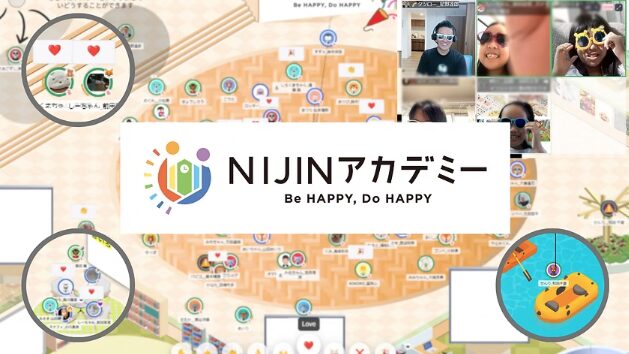
NIJIN Academy, run by NIJIN Inc., is an alternative school in Japan for elementary and junior high school students who do not fit conventional school. Children attend from home through a metaverse campus, choose from about 100 live online classes a month in small, discussion-based groups, and can also go to physical classrooms. NIJIN describes it as one of the largest alternative schools in Japan.
Figures are those published on NIJIN’s official websites. “Attendance recognition” means the child’s registered school counts learning at NIJIN Academy as school attendance.
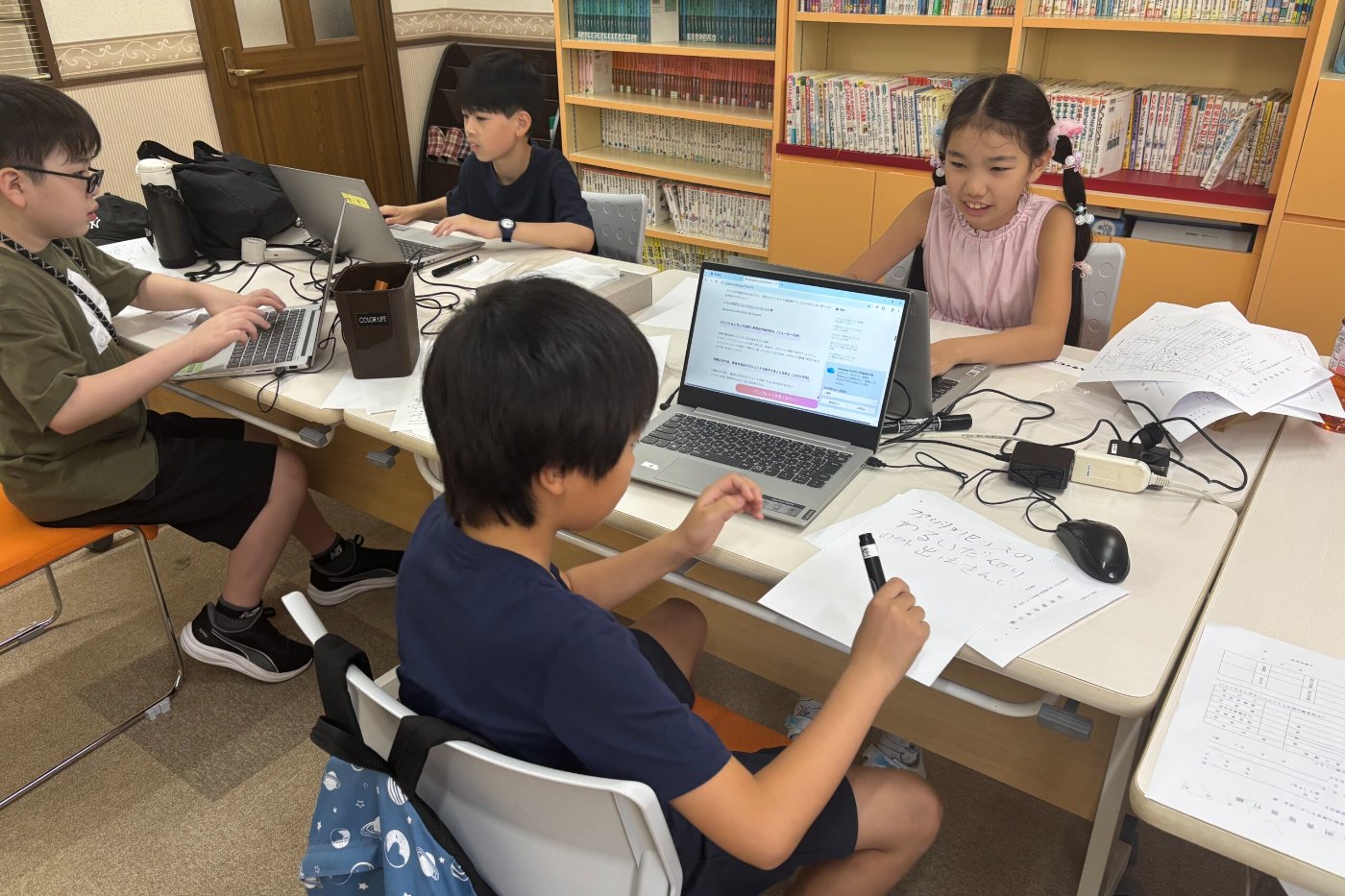
NIJIN is looking for a Country Head: one person who starts NIJIN Academy Thailand and leads it as business head and principal. Which of the routes above it uses is not decided; working that out is part of the role. It is not a franchise. NIJIN brings a model that already runs in Japan.
| Start on a service contract | Start as a co-owner | |
|---|---|---|
| How it works | You lead the work under a service contract, even as a side job alongside your current work | A local company set up together, for example 20% of the shares for you and 80% for NIJIN |
| Investment | Not required | Optional. If you invest, the guide is JPY 1 to 2 million from you and JPY 4 to 8 million from NIJIN, decided together |
| Compensation (a guideline) | 10% of revenue excluding tax, capped at JPY 50 million (JPY 100 million of revenue gives JPY 10 million). Not a promise of income: no revenue, no payment under this formula. If you hand part of the role to others, they are paid from your 10% | |
NIJIN looks for leadership, management, business ability and the skills of a principal; experience of managing an organisation and hiring people carries over directly. Thai, English and Japanese are ideal, but English alone is enough. Other terms are discussed in the interview.
Questions and answers
Is homeschooling legal in Thailand?
Yes. Section 12 of the National Education Act gives families the right to provide basic education, and the 2004 Ministerial Regulation sets out how. Families apply to their Educational Service Area Office; the Provincial Education Committee decides.
What are the homeschooling laws in Thailand for foreigners?
The official sources opened here do not say whether foreign families can register. A non-Thai person assigned by the family may teach, and the application asks for a house registration copy. Ask your Educational Service Area Office in writing.
Is an online international school recognised in Thailand?
A school based abroad is accredited, if at all, in its own country; what matters is whether the next school or university accepts its records. For schools operating in Thailand, check OPEC’s public list.
Is there an online high school in Thailand?
Family-based education covers upper secondary level through the Secondary Educational Service Area Office, and an online course may be used within an approved plan if the office agrees. Online high schools based abroad award their own diplomas. Check with the university your child is aiming for before enrolling.
Do I need a licence to run an online school in Thailand?
A private school needs a licence under the Private School Act. Whether an online programme counts as a school depends on what it does, so ask OPEC in writing first.
Is the Country Head role a job or a business?
It is closer to founding a business. You lead NIJIN Academy Thailand as a co-owner or on a service contract; compensation is a guideline of 10% of revenue, not a salary.
Build a school in Thailand for children who learn outside school
If you have led and hired a team and want to solve a problem in education in Thailand, apply. You can start on a service contract, even as a side job.
Where to go next
- Homeschooling in Thailand: Is It Legal and How to Apply
- Thailand
- Country Head (global)
- Indonesia
- Vietnam
- Malaysia
- NIJIN careers in English
Related guides
- Homeschooling vs online school vs alternative school
- How to start an online school that children attend
- Homeschooling in Indonesia: sekolahrumah rules, PKBM and Paket
- Homeschooling in Singapore
- How to start a hybrid school
Sources
Figures are quoted with the year they refer to. Thai legal texts are summarised from official Thai documents; the Thai original is authoritative. Please check the originals for later changes.
- OBEC, Guideline on family-based basic education (Home School), published by the Rayong Primary Educational Service Area Office 2 (Thai)
- https://education-profiles.org/node/786 (UNESCO PEER, Thailand: non-state actors in education)
- https://school.opec.go.th/ (OPEC, search for licensed private schools)
- https://opec.go.th/
- https://www.obec.go.th/
- https://www.unicef.org/thailand/press-releases/removing-barriers-migrant-childrens-education-thailand
- https://www.seameo.org/search/497
- https://nijin.co.jp/recruit/nijin-academy-thailand-country-head/
- https://academy.nijin.co.jp/