Singapore · For education founders
Homeschooling in Singapore is allowed, but for a Singapore Citizen of compulsory school age it is an exemption that MOE must approve: the family submits learning plans for English, Mother Tongue, Mathematics and Science plus Character and Citizenship Education, and the child must sit the PSLE in those four subjects at standard level, reach a benchmark pegged at the 33rd percentile, and take a National Education quiz before the PSLE. Children who are not citizens are not named in the law’s duty, and secondary education falls outside it.
This guide sets out only what the Ministry of Education (MOE) and the Compulsory Education Act 2000 say, and marks where the official sources are silent. The last part is for anyone thinking of building something for children who learn outside mainstream school.
In this article
- Compulsory education in Singapore: who must attend
- Homeschooling Singapore requirements: what MOE asks for
- How to apply for a homeschooling exemption, in order
- Homeschooling in Singapore for foreigners and international families
- Homeschooling Singapore secondary: after the PSLE
- Home school Singapore fees: what is published and what is not
- Alternative schools in Singapore: the official categories
- What a homeschooling family alone finds hard
- Building the missing piece: NIJIN Academy Singapore
- Questions and answers
Compulsory education in Singapore: who must attend
Singapore’s compulsory education (CE) is narrower than many parents expect. Under section 3 of the Compulsory Education Act 2000, a child of compulsory school age who was born after 1 January 1996, is a citizen of Singapore and is residing in Singapore “must attend regularly as a pupil at a national primary school”. MOE’s overview page describes compulsory school age as above 6 years old and under 15 years old.
A “national primary school” means a government or government-aided school, or another school named or prescribed under the law; MOE adds government and community-funded special education (SPED) schools offering primary education.
The duty sits with parents: if a child does not attend regularly, each parent may be guilty of an offence, unless the child is exempted or a prescribed reason is accepted. Section 4 lets the Minister exempt a child “subject to such terms or conditions as the Minister may impose”, and an exemption can be revoked at any time. Homeschooling is one of those exemptions.
CE also applies to children with moderate to severe special educational needs born after 1 January 2012, who can meet it through a government and community-funded SPED school.
Homeschooling Singapore requirements: what MOE asks for
MOE’s page on exemptions lists three routes out of CE: approval to be home-schooled; attending a designated school, NorthLight School or Assumption Pathway School; or being unsuitable for any national primary school because of a disability. For homeschooling, MOE says parents of children without or with mild special educational needs “will have to meet certain conditions such as”:
- Satisfy MOE’s objectives for compulsory education: common knowledge as a foundation for further education, and common school experiences that build national identity and social cohesion.
- Provide an academic learning plan for four subjects: English Language, Mother Tongue Language, Mathematics and Science.
- Provide a teaching plan for Character and Citizenship Education.
- Possess the necessary qualifications.
“Such as” means these are examples, not a complete list, and the page does not define “the necessary qualifications”. Ask the Compulsory Education Unit (MOE_CEU@moe.gov.sg) rather than forum threads.
What the child must do once homeschooled is stated more precisely:
| Requirement | What MOE’s page says | What it means in practice |
|---|---|---|
| Sit the PSLE | In 4 subjects (English Language, Mother Tongue Language, Mathematics and Science) at standard level | A home curriculum has to prepare the child for the national exam, not only for its own goals |
| Meet the PSLE benchmark | Pegged at the 33rd percentile of all national primary school students taking 4 standard level subjects in the same year | The bar is relative: it moves with each year’s cohort |
| National Education quiz | Must be taken before the PSLE | Citizenship content belongs in the plan from the start |
| Children with moderate to severe SEN | An Individualised Education Plan with curriculum and desired outcomes, and suitable qualifications, skills and competencies to deliver it | A different, needs-based route, also through MOE |
Source: MOE, “Exemption from compulsory education” (last updated 8 January 2026). MOE’s pages do not state what happens if the benchmark is not met; check with the Compulsory Education Unit.
How to apply for a homeschooling exemption, in order
MOE’s page does not publish an application window, form or processing time, and articles online disagree on these. The order below follows only what MOE states.
- Confirm the duty applies. Check the three tests in the Act: Singapore Citizen, born after 1 January 1996, residing in Singapore, and of compulsory school age.
- Read MOE’s exemption page in full. Note which route fits: homeschooling, a designated school, or the SEN routes.
- Contact the Compulsory Education Unit. Ask for the current application process, timing, and what “necessary qualifications” means for your family.
- Write the plans. An academic learning plan for the four PSLE subjects and a teaching plan for Character and Citizenship Education (or an IEP for a child with moderate to severe SEN).
- Plan backwards from the PSLE. Build in the National Education quiz and the four standard level papers, using MOE’s published primary syllabuses as the reference.
- Keep records. The exemption can be revoked, so keep evidence of what was taught and learned.
For a general comparison, see homeschooling vs online school vs alternative school.
Homeschooling in Singapore for foreigners and international families
Section 3 of the Act names Singapore citizens only. Read literally, a child who is a permanent resident or a foreign national is not within the CE duty, and so is not asking MOE for an exemption from it. MOE’s CE pages likewise speak of “all Singapore Citizens”. That is the extent of what the official sources say; they do not say anything further about homeschooling for non-citizens, and immigration passes have their own conditions. A family in that position should confirm their own situation with MOE and with the authority that issued their pass.
For foreign children who want a place in a mainstream school, MOE describes a separate route:
- International students seek admission to primary and secondary schools through the AEIS or S-AEIS tests, which are held in Singapore and conducted in English.
- A Student’s Pass is needed unless the child holds a valid Long-Term Visit Pass, Dependant’s Pass or Immigration Exemption Order.
- International students admitted to MOE primary schools must complete the PSLE to proceed to MOE secondary schools.
Families who cannot get or do not want a mainstream place look instead at privately run schools (see the categories below) or at learning at home.
Homeschooling Singapore secondary: after the PSLE
The Act defines primary education as a six-year course and sets the duty only in terms of a national primary school. It sets no attendance duty for secondary school.
How a child who has learned at home later enters an MOE course or a national exam depends on each programme’s own admission rules. Check the specific course on moe.gov.sg before planning around it.
Home school Singapore fees: what is published and what is not
People search for “home school Singapore fee” expecting one number. The official picture is this:
| Cost | Official source | Published? |
|---|---|---|
| A fee for applying for a homeschooling exemption | MOE exemption page | No fee is mentioned on the page |
| Monthly fees at MOE primary and secondary schools | MOE fees checker | Yes. Fees differ by nationality and school type; for international students they include GST |
| Fees of independent, specialised and SPED schools | Each school’s own website | Varies |
| Fees of private schools, tuition and enrichment centres | Set by each operator | Not by MOE |
| The cost of homeschooling itself | None | No official figure exists |
The main cost of homeschooling is the family’s own: a parent’s time, materials, and any classes bought in.
Alternative schools in Singapore: the official categories
Singapore does not use “alternative school” as a legal term. What MOE’s pages do describe is a set of categories, each with its own rules:
| Option | Who it is for | How it relates to CE |
|---|---|---|
| Homeschooling with MOE approval | Citizen children whose families meet MOE’s conditions | Exemption from CE |
| Designated schools | Five schools providing full-time primary education: San Yu Adventist School and four madrasahs (Irsyad Zuhri Al-Islamiah, Al-Ma’arif Al-Islamiah, Alsagoff Al-Arabiah, Wak Tanjong Al-Islamiah) | Exemption, applied for through the school |
| NorthLight School, Assumption Pathway School | Named on MOE’s exemption page | Exemption |
| Government and community-funded SPED schools | Children with moderate to severe SEN | Count as national primary schools |
| Private schools registered with MOE | Tuition and enrichment centres and other private schools teaching 10 or more persons | Not a substitute for CE; registration gives the right to operate, not accreditation |
| Full-time schools following a foreign or international curriculum | Often chosen by international families | Registered with SkillsFuture Singapore (SSG), according to MOE |
MOE notes that registration of a private school “does not mean we endorse or provide accreditation”, and that Singapore has no central authority recognising certificates issued by private schools.
For the wider picture of alternatives in another system, see alternatives to public school (US) and homeschooling in India, which explains how a very different law treats the same question.
Want to build a place for children who learn outside mainstream school?
NIJIN Academy is an alternative school in Japan, opened in September 2023, for children who do not fit conventional school. It combines a metaverse campus, about 100 live online classes a month and 50+ physical classrooms across Japan. NIJIN is looking for one founder to start and lead NIJIN Academy Singapore, as both its business head and its principal. Teaching experience is not required.
See the Country Head role in SingaporeWhat a homeschooling family alone finds hard
MOE’s conditions describe outcomes. They leave the family to supply everything else, and that is where most of the strain falls:
- Peers. MOE’s own CE objectives include “common school experiences”, which a parent cannot create alone.
- Four subjects to a national standard. Including a Mother Tongue Language, which may not be the language spoken at home.
- A relative benchmark. The PSLE bar moves with each year’s cohort.
- The parent’s own time and work. Usually the largest cost, and the one that ends homeschooling most often.
An education business can meet these needs inside the legal framework: small-group and online classes, learning communities, and adults who know each child. Anyone building this should first confirm with MOE which category the service falls into.
Building the missing piece: NIJIN Academy Singapore
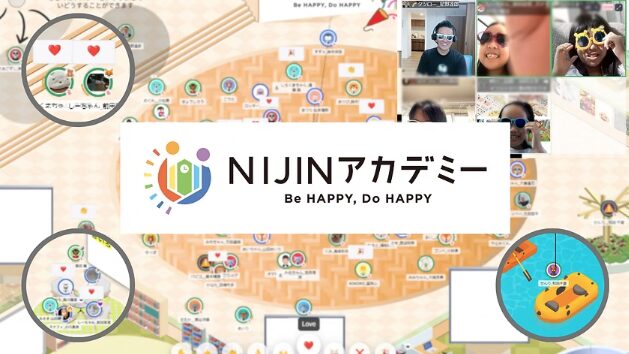
NIJIN Academy, run by NIJIN Inc. and founded by former public school teacher Tatsuro Hoshino, is for children in Japan who do not fit conventional school; many had stopped attending altogether. Children join a metaverse campus from home, choose from about 100 small, discussion-based live classes a month, and can attend physical classrooms. NIJIN describes it as one of the largest alternative schools in Japan.
Figures are those published on NIJIN’s official websites. “Attendance recognition” means the child’s registered school in Japan counts learning at NIJIN Academy as school attendance. Japan’s rules differ from Singapore’s; nothing here suggests the same arrangement exists in Singapore.
NIJIN is now looking for a Country Head for Singapore: one person who starts NIJIN Academy Singapore and leads it as both business head and principal. How it fits Singapore’s compulsory education rules, which children it serves and in what form are not decided in advance. Working that out properly, with MOE’s categories as the starting point, is part of the role.
You can start on a service contract, even as a side job alongside your current work. You can also set up a local company with NIJIN as a co-owner, for example with 20% of the shares for you and 80% for NIJIN. Investment is optional: if you choose to invest, the guide is JPY 1 to 2 million from you and JPY 4 to 8 million from NIJIN, decided together. This is not a franchise; you are not buying a package. Either way the compensation guide is the same.
| Revenue (excluding tax) | Country Head’s compensation, as a guide (10%) |
|---|---|
| JPY 100 million | JPY 10 million |
| JPY 200 million | JPY 20 million |
| JPY 500 million or more | JPY 50 million (cap) |
| No revenue | None under this formula |
A guide, not a forecast or a promise of income. Amounts are in Japanese yen only. If you hand part of the work to someone else, they are paid out of your 10%. All other terms are to be discussed in the interview.
We look for leadership, management, business ability and the skills of a principal. Experience of running an organisation and hiring people carries over directly. English alone is enough to apply.
Questions and answers
Is homeschooling legal in Singapore?
Yes, with conditions. For a Singapore Citizen of compulsory school age living in Singapore, homeschooling requires an exemption from compulsory education approved by MOE, and the child must sit the PSLE and meet MOE’s benchmark. The legal basis is section 4 of the Compulsory Education Act 2000.
What are the homeschooling Singapore requirements from MOE?
Learning plans for the four PSLE subjects and Character and Citizenship Education, the necessary qualifications, and a PSLE result at or above the 33rd-percentile benchmark, after a National Education quiz. See the table above.
Can foreigners homeschool in Singapore?
The CE duty in the Act applies to Singapore citizens residing in Singapore, so a foreign child is not named in it. The official pages do not go further than that, and pass conditions are separate. Confirm your own case with MOE and your pass-issuing authority.
What about homeschooling Singapore secondary?
The Act sets a duty for primary education only. Entry into later MOE courses or exams depends on each course’s own admission rules, so check the specific course on moe.gov.sg.
Is there a Singapore homeschool curriculum from MOE?
No separate homeschool curriculum appears on MOE’s exemption page. MOE’s published primary syllabuses are the natural reference for PSLE preparation.
Is the Country Head role a job or a business?
A business you lead. The Country Head is the founder, business head and principal of NIJIN Academy Singapore. You can begin on a service contract, even as a side job, or as a co-owner of a local company. Compensation is 10% of revenue as a guide, with no guaranteed income.
Build a place in Singapore for children who learn outside school
If you want to start a company in Singapore and solve a problem in education, and you have led and hired a team, read the role and apply. Teaching experience is not required.
Where to go next
Related guides
- Homeschooling vs online school vs alternative school
- Homeschooling in India: is it legal?
- Alternatives to public school: seven options compared
- How to start a homeschool co-op
- How to start a microschool
- How to start a tutoring business
Sources
Checked on 16 November 2026. Rules change; please check the original pages.
- https://sso.agc.gov.sg/Act/CEA2000
- https://www.moe.gov.sg/primary/compulsory-education
- https://www.moe.gov.sg/primary/compulsory-education/overview
- https://www.moe.gov.sg/primary/compulsory-education/exemptions
- https://www.moe.gov.sg/international-students
- https://www.moe.gov.sg/international-students/studying-in-singapore
- https://www.moe.gov.sg/financial-matters/fees
- https://www.moe.gov.sg/private-education/register-school
- https://www.moe.gov.sg/primary/curriculum
- https://nijin.co.jp/recruit/nijin-academy-singapore-country-head/