
For education founders in India
To open a primary school in India as a private founder, you set up a trust, society or not-for-profit company, decide whether the school will stop at Class 5 or run to Class 8, build premises that meet the Schedule of the RTE Act, and obtain a certificate of recognition from the authority your state has named before a single child attends. After that, the rules that make a primary school different from any other school take over: who you must admit in Class 1, what you may not charge or test, how Class 5 is examined, and what you report to UDISE+ every year.
This guide covers only primary schools: Class 1 to 5, and the Class 1 to 8 span governed by the Right of Children to Free and Compulsory Education Act, 2009 (the RTE Act). The wider route, including CBSE affiliation, is in how to start a school in India. Each rule below was checked against the Act, NEP 2020 or UDISE+ 2024-25. State rules differ, so your state education department has the final word.
In this article
- What counts as a primary school in India
- Primary schools in UDISE+ numbers
- How to open a primary school, step by step
- RTE norms for Class 1 to 5
- Land requirement for a primary school
- Class 1 admission rules
- Teaching Class 1 to 5: language, exams and teachers
- Primary school rules differ by state
- Penalties to know before you open
- Opening alone or co-founding
- Questions and answers
What counts as a primary school in India
The RTE Act does not use the word “primary school” as its main unit. It defines elementary education as “the education from first class to eighth class” and gives every child aged six to fourteen the right to it. In practice, and in the government’s own statistics, that span is split in two: primary (Class 1 to 5) and upper primary (Class 6 to 8).
So the first decision is the span. A Class 1 to 5 school needs fewer teachers and rooms, but pupils must move elsewhere for Class 6. A Class 1 to 8 school keeps them through the whole elementary stage, with heavier staffing norms for Class 6 to 8.
| Span you choose | UDISE+ category | Working days and hours (RTE Schedule) | What changes for you |
|---|---|---|---|
| Class 1 to 5 only | Primary (1 to 5) | 200 days, 800 instructional hours a year | Smallest staff; children leave after Class 5 |
| Class 1 to 8 | Upper primary (1 to 8) | 200 days / 800 hours for Class 1 to 5; 220 days / 1,000 hours for Class 6 to 8 | Subject teachers for Class 6 to 8; whole elementary stage in one place |
| Class 1 to 10 or 1 to 12 | Secondary or higher secondary | As above, plus board requirements for older classes | Board affiliation becomes the main project; see our CBSE guide |
Primary schools in UDISE+ numbers
UDISE+ is the Ministry of Education’s school-by-school data system. Schools upload their own data, which is then checked at block, district and state level. Its 2024-25 report gives a clear picture of where a new primary school would sit.
Source: UDISE+ 2024-25, Ministry of Education (Tables 2.2, 3.1 and 5.1). Primary enrolment is 10,43,81,347; elementary (Class 1 to 8) enrolment is 16,80,76,447.
Private unaided recognised schools, the category a new private founder joins, look different from the national picture. Most primary-only schools are government schools (6,18,398 of 7,30,518). Among private unaided schools, the most common shape is not Class 1 to 5 but Class 1 to 8.
| Private unaided recognised schools, 2024-25 | Number |
|---|---|
| All private unaided recognised schools | 3,39,583 |
| Class 1 to 5 only | 77,148 |
| Class 1 to 8 | 1,12,756 |
| Class 1 to 10 | 45,861 |
| Class 1 to 12 | 45,779 |
Many private founders start with the primary classes and add a class each year; if you plan to, ask your state at the start how recognition is extended to Class 6.
How to open a primary school, step by step
- Form the body that will own the school. Usually a trust, a society or a not-for-profit company, as your state allows.
- Choose the span and the medium. Class 1 to 5 or 1 to 8, and the language of teaching.
- Secure premises that meet the Schedule. One classroom per teacher, an office-cum-store-cum-head teacher’s room, barrier-free access, separate toilets for boys and girls, drinking water, a playground and a boundary wall or fencing. Ask your state for its own building and fire norms too.
- Plan teachers against enrolment. Use the staffing table below.
- Apply for the certificate of recognition. Section 18 says no private school may be established or function without it. The form, the authority and the time limit are set in your state’s RTE rules.
- Run Class 1 admissions under Sections 12 to 15. The 25% seats for children from weaker and disadvantaged groups, no capitation fee, no screening.
- Report every year. Section 12(3) requires every school to provide information the government asks for. In practice this includes the UDISE+ data return.
RTE norms for Class 1 to 5
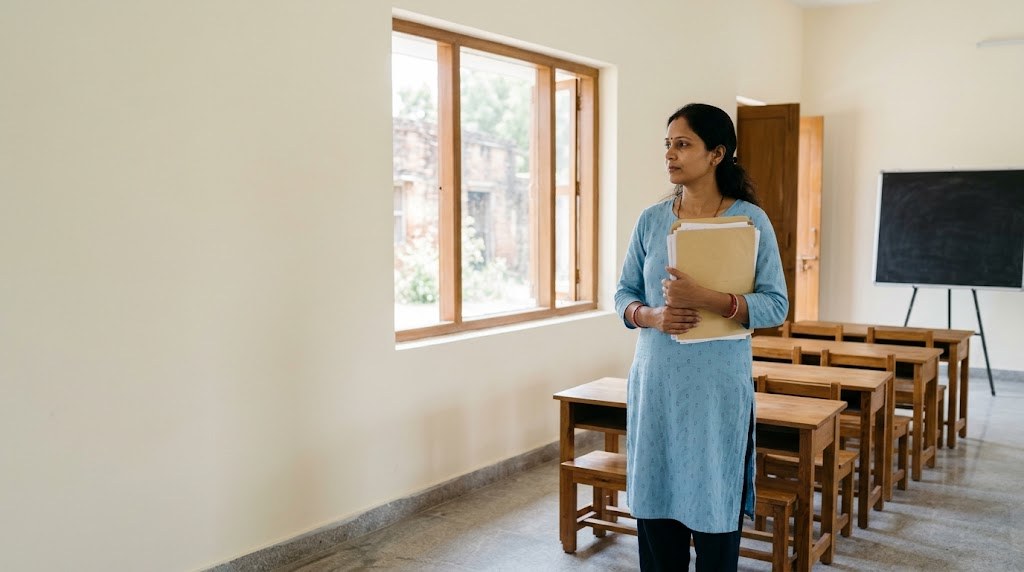
Section 19 says no school may be established or recognised unless it meets the norms in the Schedule of the Act. For the primary classes, the staffing norm depends on how many children are admitted.
| Children admitted in Class 1 to 5 | Teachers required |
|---|---|
| Up to 60 | 2 |
| 61 to 90 | 3 |
| 91 to 120 | 4 |
| 121 to 200 | 5 |
| Above 150 | 5 plus one head teacher |
| Above 200 | Pupil-teacher ratio (excluding the head teacher) not above 40 |
So even a school of 30 children needs two teachers and, with one classroom per teacher, two classrooms plus the office. The Schedule also sets 45 working hours a week per teacher, including preparation, and requires teaching-learning equipment, play material and a library with newspapers, magazines and story books.
The Schedule also lists a kitchen where the mid-day meal is cooked. Ask your state how this item is applied to an unaided private school; the full list of items and how states check them is in our guide to school recognition under the RTE Act.
Land requirement for a primary school
“How much land is required to open a primary school” is a common search, and the honest answer is that the central Act gives no figure. The Schedule lists what the building must contain, not a land area.
Minimum land areas, where they exist, come from your state’s recognition rules, and from a board’s affiliation rules if you later add secondary classes. Figures online are often a board’s figure for a secondary school, or one state’s figure applied to another. Ask your state for the norms for your exact span, in writing, before you buy or lease. Land and building costs are covered in the cost to start a school in India.
Want to build a school for children, without starting from zero?
NIJIN Academy is an alternative school in Japan, opened in September 2023, for children who do not fit conventional school. Children join from home through a metaverse campus, choose from about 100 live online classes a month, and can also go to 52 physical classrooms across Japan. NIJIN is looking for one person to start and lead NIJIN Academy India, as both its business head and its principal. Teaching experience is not required, and it is not a franchise.
See the Country Head role in IndiaClass 1 admission rules
Class 1 is where most of the RTE Act’s duties for a private school apply. For a primary school, admissions are not just marketing; they are regulated.
- 25% of Class 1 seats. Under Section 12(1)(c), an unaided private school must admit in Class 1, to at least 25% of the class strength, children from weaker sections and disadvantaged groups in the neighbourhood, and give them free education until Class 8. If your school also runs pre-school classes, the Act applies the same rule to admission to the pre-school.
- Reimbursement. Section 12(2): the state pays the lower of its per-child expenditure and the fee actually charged.
- No capitation fee, no screening. Section 13 bans any donation or payment beyond the notified fee, and any selection test of the child or parents.
- No denial for lack of age proof. Section 14 allows age to be shown by birth certificate or another prescribed document, but no child may be refused for lacking one.
- Age at entry. NEP 2020 notes that “Class 1 begins at age 6” and places Grades 1 and 2 inside a foundational stage for ages 3 to 8. Your state sets the exact cut-off date.
Teaching Class 1 to 5: language, exams and teachers
Language of teaching
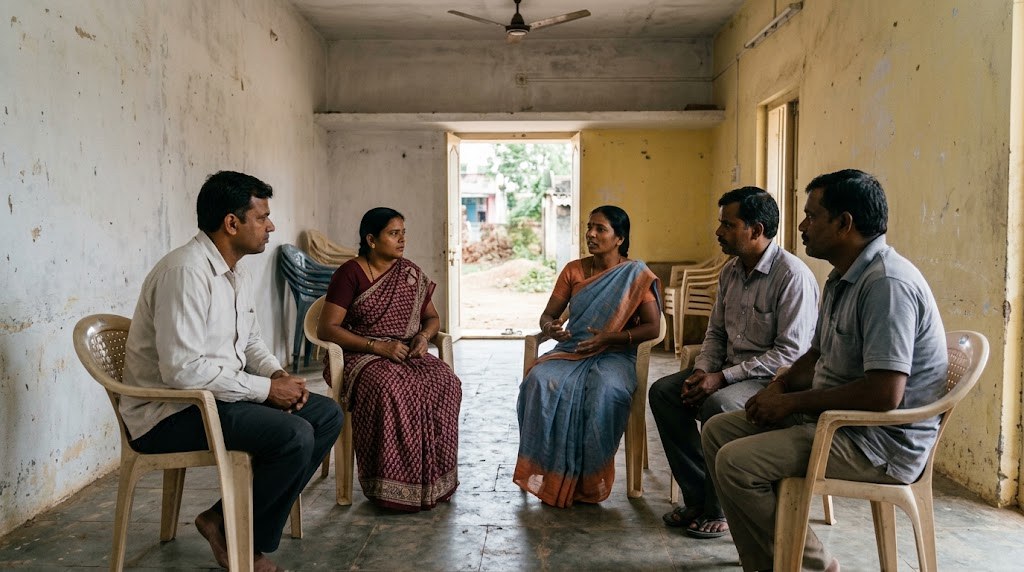
Section 29 of the Act says the medium of instruction shall, as far as practicable, be the child’s mother tongue. NEP 2020 goes further: wherever possible, the medium of instruction until at least Grade 5, and preferably until Grade 8, should be the home language, mother tongue, local or regional language, and it says this applies to both public and private schools. If you plan an English-medium primary school, ask your state how it applies this.
Exams in Class 5 and holding back
Since a 2019 amendment, Section 16 requires a year-end examination in Class 5 and Class 8, with extra teaching and a re-examination within two months for a child who fails. The state may then allow holding back, or not. No child may be expelled before completing Class 8, and Section 30 says no child has to pass a board examination before then. Section 17 bans physical punishment and mental harassment.
Teachers
Section 23 says a teacher must hold the minimum qualifications laid down by the academic authority the central government has notified. Section 28 bars teachers from private tuition. Qualification rules for Class 1 to 5 teachers have changed over the years, so check the current rule with your state before you hire.
Primary school rules differ by state
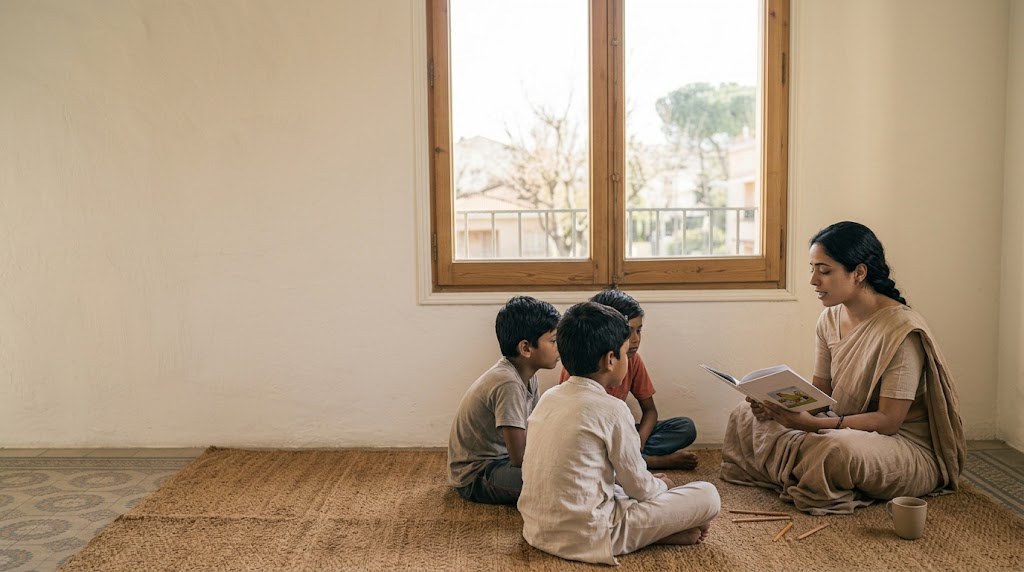
Searches such as “how to open a primary school in Uttar Pradesh” or “how to open a pre-primary school in Maharashtra” exist because the details really are state matters. Section 18 leaves the recognition authority, the form and the time limit to rules each state makes. States can also amend the Act itself for their territory.
One example of how far states can differ. Rajasthan amended Section 16 in 2017 so that a child who has not reached the “class appropriate learning level” may be held back, and amended Section 29 to add that level to the curriculum. A founder moving a plan from one state to another should expect differences like this.
Take these questions to your state school education department and ask for written answers:
- Which office issues the certificate of recognition for a Class 1 to 5 school, and for Class 1 to 8?
- What land, building and fire-safety norms apply to the span we plan?
- How are the 25% seats allotted (lottery, online portal) and when is reimbursement paid?
- Which teacher qualifications and eligibility tests are required for Class 1 to 5?
- Does the state hold children back in Class 5 under Section 16?
- How do we add Class 6 later: a new application or an extension?
Penalties to know before you open
| What happens | Section | Penalty in the Act |
|---|---|---|
| Running a school without a certificate of recognition, or after it is withdrawn | 18(5) | A fine set in the Act, plus a further fine for each day it continues (check the current text) |
| Collecting a capitation fee | 13(2)(a) | Fine up to ten times the fee charged |
| Screening a child or parents for admission | 13(2)(b) | A fine set in the Act, higher for each repeat offence (check the current text) |
| Breaking the conditions of recognition | 18(3) | Recognition withdrawn after a hearing; children moved to a neighbourhood school |
This table summarises the Act. It is not legal advice. Your state rules may add further conditions.
Opening alone or co-founding
All of this is done before the first child arrives. There are three common ways to carry it.
| Route | What you get | What you give up |
|---|---|---|
| Alone, from scratch | Full control of model, span and fees | Every decision and every file is yours |
| Franchise | A brand and a ready format | Fees to the brand; you follow its format (see education franchise in India) |
| Co-founding with an operator | A tested model and people who have run a school | Shared ownership and shared decisions |
NIJIN’s role for India is the third kind, and it is not a franchise. The Country Head is the business head and the principal of NIJIN Academy India. You can start as a co-owner of a local company set up together (for example, 20% for you and 80% for NIJIN) or on a service contract, even as a side job. Investment is optional. As a guide, the Country Head’s compensation is 10% of revenue excluding tax, up to JPY 50 million; it is not a promise of income, and other terms are discussed in the interview. What kind of school NIJIN Academy India becomes, and for which children, is the head’s first decision.
Figures are those published by NIJIN. “Attendance recognition” means that the school a child is registered at counts learning at NIJIN Academy as school attendance.
Questions and answers
How to open a primary school in India?
Form an owning body, choose the span, prepare premises that meet the RTE Schedule, get a certificate of recognition from your state under Section 18, then admit Class 1 under Sections 12 to 15.
What are the requirements to open a primary school?
Under the RTE Schedule: at least two teachers for up to 60 children, a classroom per teacher plus an office, separate toilets, drinking water, a playground, a boundary, a library, and 800 instructional hours a year. States add their own conditions.
How much land is required to open a primary school?
The RTE Act does not set a land area. Minimum areas come from state recognition rules, and from board rules if you later add secondary classes. Ask your state education department for the figure for your exact span, in writing.
How to open a primary school in Uttar Pradesh or another state?
The steps are the same; the authority, forms, land norms and timelines come from each state’s RTE rules. Use the question list above.
Do I need CBSE affiliation for a primary school?
For a school up to Class 8, the permission the RTE Act requires is the state certificate of recognition, and Section 30 says no child has to pass a board exam before completing Class 8. Board affiliation becomes the main question when you add secondary classes; see how to start a CBSE school in India.
Lead a school in India, with a team behind you
NIJIN is looking for the first head of NIJIN Academy India: a founder who will start and lead it as business head and principal. Teaching experience is not required. Investment is optional.
See the Country Head role in IndiaWhere to go next
NIJIN Academy Country Head pages are open for several countries, and the global page covers every other country.
Related guides for founders in India
- How to start a school in India: approvals, CBSE and land
- School recognition under the RTE Act
- Cost to start a school in India
- How to start a preschool in India
- How to open a school in a village in India
- How to start a school without money
Sources
Figures are quoted with the year they refer to. Please check the original for later updates.
- https://www.dsel-education.gov.in/static/uploads/2025/09/ee3cf9ae4ddbc3d0582e98f050290edc.pdf (RTE Act, 2009, text updated to 26 July 2021)
- https://dashboard.udiseplus.gov.in/report-new-v.6-demo2025/static/media/UDISE%2B2024_25_Booklet_existing.118ba29d4773e6372f72.pdf (UDISE+ 2024-25)
- https://static.pib.gov.in/WriteReadData/userfiles/NEP_Final_English_0.pdf (National Education Policy 2020)
- https://www.education.gov.in/rte
- https://udiseplus.gov.in/
- https://nijin.co.jp/recruit/nijin-academy-india-country-head/
- https://nijin.co.jp/recruit/en/