For education founders in the Philippines
You cannot open a full private school in the Philippines with no money at all, because a school needs government authority before it operates and needs a safe site and paid teachers; what you can do without much money is start the thing that grows into a school: a small learning center for children who are enrolled elsewhere, built with co-founders, borrowed space and committed families, or a role inside an existing model where someone else brings the capital. The skill is knowing which costs cannot be avoided and replacing the rest with people, time and the right legal form.
This guide follows Philippine law and names the offices you will deal with. It is not legal or tax advice: confirm each point in writing with the office named.
In this article
- What “no money” can and cannot mean
- Five low-cost routes in the Philippines
- Start as a learning center, not a school
- The legal form decides how much money you need
- The 60 percent Filipino ownership rule
- A low-cost sequence, from idea to school
- What to spend instead of money
- Leading a school without funding it alone
- Questions and answers
What “no money” can and cannot mean
Starting a school with no money never means spending nothing. The useful question is which costs can only be paid in cash, and which can be paid in time, people or shared resources. Sort your plan into these two columns first.
| Usually needs cash | Can often be replaced by people, time or sharing |
|---|---|
| Government registration and permit fees (DTI or SEC, barangay clearance, mayor’s permit) | Office work, filing and follow-up, done by a founder instead of a paid agent |
| Rent and utilities for a space children use regularly | A room borrowed or shared on weekdays: a parish hall, a barangay hall, an existing tutorial center |
| Fire safety, sanitary and building requirements for that space | Furniture and books donated by families and local businesses |
| Pay for adults who teach every day | Curriculum design and lesson materials, built by co-founders |
| Insurance for children on the premises, if you take it | Marketing: word of mouth from ten committed families |
A pattern, not a fee schedule. Ask each office for its current fees.
Five low-cost routes in the Philippines
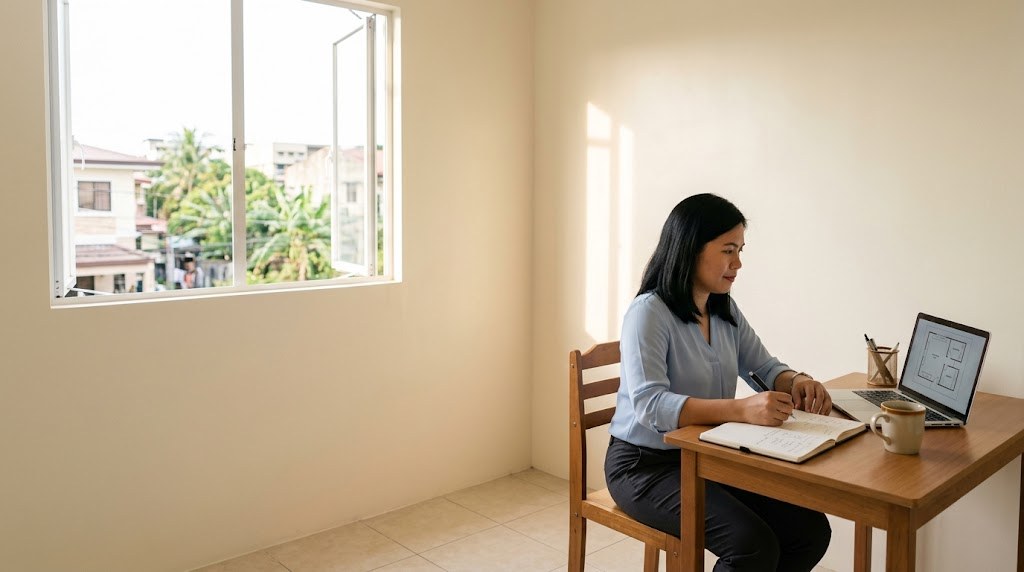
Five realistic routes differ in cash needed, whether you may charge fees, and whether they can become a school.
| Route | What you run | Can you charge fees? | Cash needed at the start | Path to a school |
|---|---|---|---|---|
| 1. Tutorial or learning center | Sessions for children enrolled in a school; no grades or diplomas | Yes, as a registered business | Low: registrations and a shared room | Can apply to DepEd later for one level |
| 2. Support for homeschooled children | Study space or coaching for children in a homeschooling program run by a permitted school | Yes, for your own service | Low | Builds a group of families who already want an alternative |
| 3. Volunteer facilitator in the Alternative Learning System (ALS) | Helping out-of-school youth and adults in a DepEd ALS program | No: DepEd ALS programs are free | Very low | Experience and community trust, not a business |
| 4. Non-stock, non-profit school | A school funded by donations and fees, with surplus kept for education | Yes, but no profit is distributed | Depends on donors | Full DepEd permit process |
| 5. Co-founding or joining an existing model | A local school or academy with co-owners who bring capital and a tested program | Yes | Your share is negotiated; it can be zero | Built in from the start |
A caution on route 3. The ALS Act (Republic Act No. 11510) defines “learning facilitators” as teachers financed by the private sector, including NGOs and individuals. But Section 20 says all DepEd ALS programs are free of charge and bans every kind of fee. It is a way to serve and learn, not to earn.
Start as a learning center, not a school
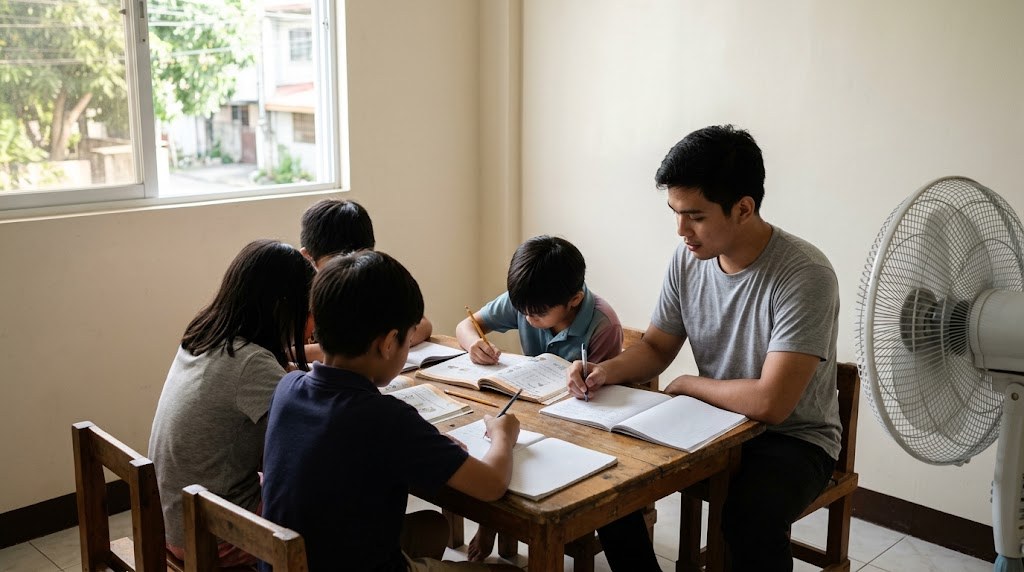
The cheapest legal way to begin is usually to run something that is not yet a school. The line matters. Under the Education Act of 1982 (Batas Pambansa Blg. 232), Section 27, the educational operations of schools are subject to prior authorization of the government. Section 28 says only recognition entitles a school to give a certificate, title or diploma, and it makes the operation of schools and educational programs without authorization a punishable violation.
So a low-cost start supports children enrolled in a school or a homeschooling program, and promises no grades, credits or diplomas. Ask your Schools Division Office in writing whether your plan needs DepEd authority. Full registration steps are in our guide on how to start a learning center in the Philippines; here is what matters for cost:
- Business name. According to the DTI’s Business Name Registration System FAQ, you register a business name if you trade under a name other than your own true name. The fee rises with the territorial scope you choose (barangay, city or municipality, regional, national), so the smallest scope that fits costs least. A business name alone does not let you operate; you still need a mayor’s permit.
- Barangay clearance. The Local Government Code (Republic Act No. 7160, Section 152) says no city or municipality may issue a business permit unless a clearance is first obtained from the barangay where the business is located.
- Homeschool support. DepEd’s National Capital Region office publishes a list of schools that hold a homeschooling permit, naming each school’s program levels. Supporting those children does not require you to become a school.
Teaching children in place of school is a different process. DepEd NCR’s list of private schools with government authority shows permits issued per program (Kindergarten, Elementary, Junior High School), including to small operators with “learning center” in their names. So one level first, not a whole school, is a realistic way to save money. See our guide to the DepEd permit to operate.
The legal form decides how much money you need
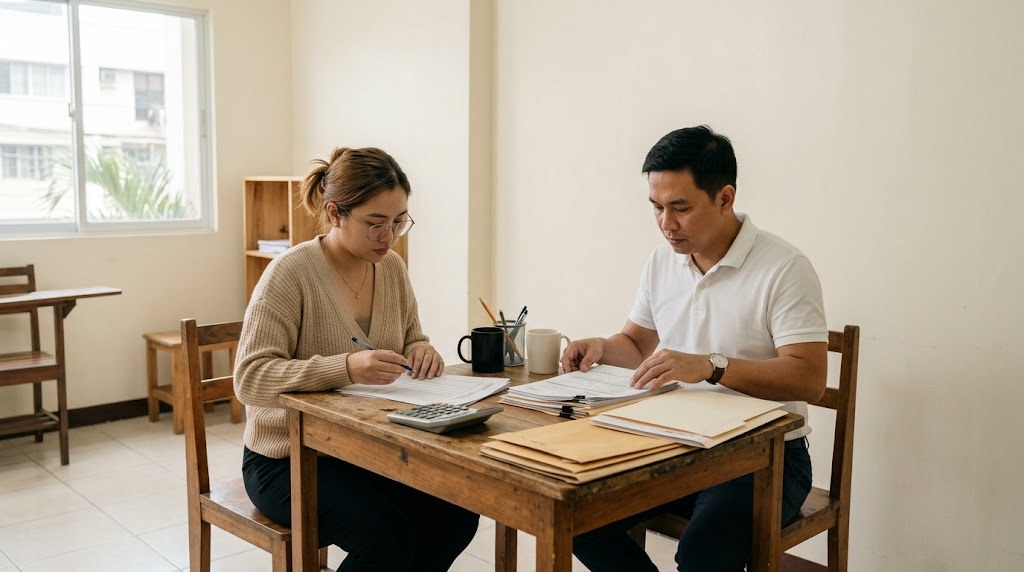
The legal form changes how much cash you put in, who can join you, and whether donors can help. Here is what the Revised Corporation Code (Republic Act No. 11232) and the 1987 Constitution say:
| Form | What the law says | Why it matters with little money |
|---|---|---|
| Sole proprietorship (DTI business name) | A business name gives legal identity; a mayor’s permit is still needed | Fast and cheap for a tutorial business; you alone carry the risk |
| Stock corporation (SEC) | Section 10: up to 15 incorporators. Section 12: no minimum capital stock, except where a special law provides otherwise | Co-founders can each bring a small share, or work instead of cash, under a written agreement |
| One Person Corporation (SEC) | Sections 116 and 117: one natural person may form it; no minimum capital stock except as provided by special law | One founder with limited capital can still have a corporation |
| Non-stock, non-profit educational corporation | Section 106: trustees of educational institutions organized as non-stock corporations number from 5 to 15, in multiples of five. Constitution, Article XIV, Section 4(3): revenues and assets used actually, directly and exclusively for educational purposes are exempt from taxes and duties | Suits a founder who will raise donations and does not want profit; you need at least five trustees |
Watch the words “special law”. The Code says educational corporations are governed by special laws as well as by the Code. “No minimum capital” does not tell you what DepEd expects of a school. Ask DepEd and the SEC before you incorporate one.
The 60 percent Filipino ownership rule
If an investor from abroad offers to fund your school, read Article XIV, Section 4(2) of the 1987 Constitution first. It says that educational institutions, other than those established by religious groups and mission boards, shall be owned solely by citizens of the Philippines or by corporations or associations at least 60 percent of whose capital is owned by such citizens. It also says the control and administration of educational institutions shall be vested in citizens of the Philippines.
For a founder with little money this cuts both ways. A foreign investor cannot simply own your school, but a Filipino founder who will run it is exactly what such a venture needs. How any structure works, and which activities count as an “educational institution”, are questions for a Philippine lawyer.
Want to start a school in the Philippines without funding it alone?
NIJIN Academy is an alternative school in Japan, opened in September 2023 and run by NIJIN Inc. Children join from home through a metaverse campus, choose from about 100 live online classes a month, and can also attend 52 physical classrooms across Japan. NIJIN is looking for one person to start NIJIN Academy Philippines and lead it as both business head and principal. Investment is optional: you can start on a service contract.
See the Country Head role in the PhilippinesA low-cost sequence, from idea to school
Each step costs little and tells you whether the next, dearer step is worth taking.
- Name the children and the problem. Talk to at least thirty families before you spend anything.
- Find co-founders, not only funders. Someone who teaches, someone who runs numbers. Write down who brings cash and who brings work.
- Ask the Schools Division Office in writing. Ask whether your plan needs DepEd authority. A letter costs little and saves the most.
- Run trial sessions in a borrowed room. Watch which children come back before any lease.
- Register the smallest form that fits. DTI name and local permits, or an SEC corporation if co-founders share ownership.
- Open small and keep records. Keep attendance, progress notes and receipts from day one.
- Apply for one program level. When families, staff and a site are ready, apply to DepEd for one level.
What to spend instead of money
Before you ask anyone for money, check that you can tick most of these:
- Ten families who have told you, in writing, that they will enrol when you open.
- A room you can use on weekdays without a long lease, and a written answer from the city on whether a learning center is a permitted use there.
- A written agreement among co-founders on who owns what, who decides, and what happens if someone leaves.
- A break-even number: fixed monthly costs divided by (fee per child minus cost per child). If it is higher than the families you have, change the model.
- A plan for the Data Privacy Act of 2012 (Republic Act No. 10173) duties that come with collecting children’s information.
For funding options see how to raise funds for a school; for buying a model, the education franchise in the Philippines.
Leading a school without funding it alone
One more answer: let capital and a tested program come from an organization that has them, and bring what it cannot, which is local leadership. This is how NIJIN is starting NIJIN Academy in other countries. It is not a franchise; you do not pay to join a brand. You lead the school as Country Head, both business head and principal.
You can start in the way that suits you. One way is to set up a local company together, with you as a shareholder: for example, you hold 20% of the shares and NIJIN holds 80%. If you invest, the guide is JPY 1 to 2 million from you and JPY 4 to 8 million from NIJIN, decided with you. Investment is optional. You can also start on a service contract, even as a side job, and decide later whether to become a co-owner. In the Philippines, because of the 60 percent rule, the 20/80 split is only an example; the structure would be set to fit Philippine law, through the interview and with professional advice.
As a guide, compensation is 10% of revenue excluding tax, on either path: JPY 100 million of revenue gives JPY 10 million, capped at JPY 50 million from JPY 500 million. It is not a promise of income; with no revenue it pays nothing. Anyone you hand work to is paid from your 10%. Other terms are discussed in the interview.
Figures are those published by NIJIN. “Attendance recognition” means the school a child is registered at counts learning at NIJIN Academy as school attendance.
Teaching experience is not required. NIJIN looks for leadership, management, business ability and a principal’s skills. English alone is enough to apply.
Questions and answers
How do I start a school with no money?
Start with something that is not yet a school: a learning center for children enrolled elsewhere, in a borrowed room, with co-founders and committed families. Apply to DepEd for one level when ready, or lead inside a model where someone else brings the capital.
Can I start a private school in the Philippines with no money?
Not a full private school. Under Batas Pambansa Blg. 232 a school needs authorization before it operates, and site, staff and permits cost money. With very little you can build the families, team and track record, in a legal form that spreads the cost.
How do I start a small school business?
Use the smallest form that fits: a DTI business name with barangay and mayor’s permits, or an SEC corporation with co-founders. Ask your Schools Division Office whether you need DepEd authority.
Is running a school profitable?
It can be, but there is no honest average, and a non-stock school distributes no profit. Work out your break-even number before you set a fee, and test it at lower enrolment than you expect.
Can a foreigner fund my school in the Philippines?
Only within limits. Article XIV, Section 4(2) of the Constitution requires most educational institutions to be owned by Filipinos or by entities at least 60 percent Filipino-owned. Ask a Philippine lawyer.
Is the NIJIN Country Head role a job or a business?
Closer to founding a business. You can start on a service contract or as a co-owner; investment is optional. As a guide, compensation is 10% of revenue, with no guaranteed income. Details are discussed in the interview.
Start NIJIN Academy Philippines, without starting alone
NIJIN is looking for one person to start and lead NIJIN Academy in the Philippines, as head and principal. You do not need to have been a teacher, and you do not have to invest. If you want to build a school for children who do not fit school, read the role and apply.
See the Country Head role in the PhilippinesWhere to go next
NIJIN Academy Country Head pages are open for several countries, and the global page covers every other country.
Related guides for founders
- How to start a school in the Philippines
- How to start a learning center in the Philippines
- DepEd permit to operate: requirements and steps
- How to raise funds for a school
- Education franchise in the Philippines
- How to start a microschool
- Franchise vs your own business
Sources
Laws are quoted as published on the Lawphil Project and agency pages, checked in October 2026. Please check the original for later amendments.
- https://lawphil.net/consti/cons1987.html
- https://lawphil.net/statutes/bataspam/bp1982/bp_232_1982.html
- https://lawphil.net/statutes/repacts/ra2019/ra_11232_2019.html
- https://lawphil.net/statutes/repacts/ra2020/ra_11510_2020.html
- https://lawphil.net/statutes/repacts/ra1991/ra_7160_1991.html
- https://lawphil.net/statutes/repacts/ra2012/ra_10173_2012.html
- https://bnrs.dti.gov.ph/faq
- https://www.depedncr.com.ph/homeschooling/
- https://www.depedncr.com.ph/private-schools-permit-recognition-issuances/
- https://nijin.co.jp/recruit/nijin-academy-philippines-country-head/
- https://nijin.co.jp/recruit/en/