
Canada guide · for education founders
Homeschooling is legal in every province and territory in Canada, but there is no single national law: each province or territory sets its own rules, and in most of them the core requirement is to notify or register with an education authority every year, by a fixed date. What happens after that differs a great deal. In Ontario, a letter to the school board is normally enough. In Quebec and Manitoba, parents also submit a learning plan and progress reports.
This guide sets out the homeschooling rules in Canada province by province, using only the education ministries’ own pages, and gives the latest Statistics Canada numbers with their years. It does not give legal advice. Rules change, so always confirm with the official contact listed for your province before you act. At the end, we explain why NIJIN, the company behind one of the largest alternative schools in Japan, is looking for someone to build a school for these families in Canada.
In this article
- Is homeschooling legal in Canada?
- Homeschooling laws in Canada by province and territory
- Homeschooling in Ontario: the Education Act and PPM 131
- Homeschooling in BC: registration under the School Act
- Homeschooling in Alberta: two programs, one regulation
- Quebec and Manitoba: plans and progress reports
- Homeschooling statistics in Canada
- Homeschooling requirements: a first-month checklist
- What homeschooling families still look for
- What NIJIN Academy is
- Building a school for these families: the Country Head role
- Questions and answers
Is homeschooling legal in Canada?
Yes. But the question “is homeschooling legal in Canada” has thirteen answers, not one. According to the Council of Ministers of Education, Canada (CMEC), the departments or ministries of education in the 10 provinces and 3 territories are responsible for organizing, delivering and assessing elementary and secondary education. There is no federal homeschooling law. Each province or territory decides whether parents notify, register or apply, who receives the paperwork, what has to be reported, and whether any funding follows the child.
Three words are worth separating before you read the table. Notify means you tell the authority you are homeschooling, and it accepts that. Register means the child is placed on a school’s or the ministry’s list as a home-schooled student. Supervised means a school authority checks progress, sometimes with funding attached. A family moving from Alberta to Quebec, for example, goes from a choice between a funded, supervised program and a notification-only one, to a system with a learning project, two progress reports and a monitoring meeting every year.
Homeschooling laws in Canada by province and territory
The table summarizes what each province’s own education ministry says, as checked in November 2026. Where we could not open an official homeschooling page, we say so and give the official contact instead of guessing.
| Province or territory | Legal basis named by the ministry | What parents do | Key date |
|---|---|---|---|
| Ontario | Education Act, clause 21(2)(a); Policy/Program Memorandum 131 (2002) | Notify the school board in writing; the board should accept the letter as evidence of satisfactory instruction | Each year before September 1, if continuing |
| British Columbia | School Act, sections 12 to 14 | Register the child with a public school (which must accept) or a willing independent school | By September 30 each year |
| Alberta | Education Act; Home Education Regulation | Notify a supervising school authority (funded) or the Minister (not supervised, not funded) | Before September 30 for funding |
| Quebec | Education Act; Homeschooling Regulation | Annual notice of intent, learning project, status report, two progress reports, monitoring meeting | Notice by July 1; learning project by September 30 |
| Manitoba | The Public Schools Act, section 260.1 | Notify the Minister with a program outline; January and June progress reports | By September 1 each year |
| Nova Scotia | Education Reform (2018) Act, sections 83 to 84; regulations, sections 31 to 34 | Advise the department and file a registration form each year; send a progress report in June | Annual registration; report in June |
| Newfoundland and Labrador | NLSchools homeschooling policy and regulations | Apply to the school district; regional homeschooling consultants handle it | See the official page |
| Saskatchewan | Official homeschooling page could not be opened. Check with the Ministry of Education. | ||
| Prince Edward Island | Official page could not be opened. Check with the Department of Education and Early Years. | ||
| Northwest Territories | Check with Education, Culture and Employment. | ||
| New Brunswick, Yukon, Nunavut | Official pages could not be opened. CMEC lists each department responsible for education. | ||
This table is a summary, not legal advice. Wording is paraphrased from the official pages listed in the sources. Confirm current rules with your province or territory before you withdraw a child from school.
Homeschooling in Ontario: the Education Act and PPM 131
Homeschooling in Ontario is one of the lightest systems in Canada on paper. Policy/Program Memorandum 131, issued on June 17, 2002, tells school boards how to handle it. Parents who decide to homeschool should notify the school board in writing, with each child’s name, gender and date of birth, plus the home address and telephone number, signed by the parent. To continue the next year, they write again before September 1 to the board where the child last attended.
Once the board has the letter, it should consider the child excused from attendance under clause 21(2)(a) of the Education Act, and accept the notification each year as evidence of satisfactory instruction. The memo says that, normally, the board should not investigate. It may do so only on reasonable grounds, such as a parent refusing to notify, a credible report from a third party, or a history of absenteeism before the letter. Even then, officials are told that a family may not follow the Ontario curriculum or keep school hours, and that this is not in itself a problem.
PPM 131 also lists what homeschoolers can use: EQAO assessments in Grades 3, 6 and 9 and the Ontario Secondary School Literacy Test, free of charge if the parent contacts the board by September 30 (or the board’s date); courses from the Independent Learning Centre with a letter from the board; and ministry curriculum documents online.
Homeschooling in BC: registration under the School Act
For homeschooling in BC, the government’s policy page says the School Act (section 12) gives parents the statutory right to educate their children at home. The duty is registration: parents must register the child by September 30 each year, either with a public school, whose principal must register the child, or with an independent school that chooses to do so and may charge a fee.
The province is clear about what homeschooling is not. Programs are not supervised by a B.C.-certified teacher, not required to meet provincial standards and not inspected by the Ministry of Education and Child Care. The registering school must offer free evaluation services and the loan of learning resources, which the family may refuse. A small per-child grant goes to the registering school; no funding is sent to parents. Homeschoolers are not eligible for the Dogwood graduation certificate, and the province suggests comparing homeschooling with online learning, which is part of the school system and offers options that lead to graduation. Students in Grades 10 to 12 can take an online course and stay registered as homeschoolers.
Homeschooling in Alberta: two programs, one regulation
Homeschooling in Alberta, Canada, is called home education, and it covers Grades 1 to 12. Under the Home Education Regulation, parents choose one of two programs each year.
| Supervised by a school authority | Not supervised (notification only) | |
|---|---|---|
| Who you notify | A willing public, separate or francophone school board, or an accredited funded independent school (the “associate board” or “associate private school”) | The Minister of Education, by form or online through PASI in myPass |
| Evaluation | At least two formal evaluations each school year by certificated teachers, including a portfolio review | Program plan not submitted to the Minister |
| Funding | Eligible; parents can receive their portion (50%) of the home education grant if accepted before September 30 | Not eligible for any Alberta Education funding |
Alberta has also extended a home education Kindergarten pilot to the end of the 2026/27 school year. Families can read the province’s Home Education Handbook before choosing.
Quebec and Manitoba: plans and progress reports
Quebec
In Quebec, homeschooling replaces school attendance and comes with a full annual cycle, filed through a secure government site with the Direction de l’enseignement à la maison. The obligation runs from the school year after a child turns 6 until the school year in which the child turns 16. Parents submit a notice of intent by July 1 (or within 10 days of the child’s last day at school), a learning project by September 30 covering language of instruction, second language, mathematics, science and technology, and social sciences, a status report, and mid-term and completion reports. The family also attends a monitoring meeting, chooses an evaluation method, and the child takes ministerial examinations.
Manitoba
Manitoba’s Public Schools Act requires parents to notify the Minister when a home school is set up and by September 1 each year, with each child’s name, birth date, the school they would otherwise attend, and an outline of the education program and grade level. The four required subjects are language arts, mathematics, science and social studies. Progress reports are due by January 31 and June 30. Since September 2025, compulsory school age in Manitoba is 6 to 18.
Homeschooling statistics in Canada
Statistics Canada’s table 37-10-0178-01 counts home-schooled students in regular programs at the start of each school year. The latest release, dated November 4, 2026, covers 2024/2025.
| Province or territory | 2019/2020 | 2020/2021 | 2024/2025 |
|---|---|---|---|
| Alberta | 14,730 | 25,305 | 25,980 |
| Ontario | 9,888 | 23,673 | 13,272 |
| Quebec | 4,308 | 10,197 | 7,851 |
| Manitoba | 3,690 | 8,028 | 5,199 |
| Saskatchewan | 2,778 | 4,662 | 4,821 |
| British Columbia | 2,454 | 5,547 | 4,458 |
| Nova Scotia | 1,137 | 2,442 | 1,860 |
| New Brunswick | 939 | 2,634 | 1,734 |
| Yukon | 189 | 225 | 306 |
| Newfoundland and Labrador | 150 | 546 | 297 |
| Prince Edward Island | 192 | 555 | 288 |
| Northwest Territories | 153 | 180 | 147 |
| Nunavut | not reported | not reported | 21 |
| Canada | 40,608 | 83,988 | 66,228 |
Source: Statistics Canada, table 37-10-0178-01. Counts are randomly rounded to a multiple of 3 and are subject to revision. Nunavut has generally reported home-schooled students under public schools. From 2010/2011, British Columbia’s enrolment counts include students in distributed (online) learning.
Two things stand out. First, the number fell after the 2020/2021 peak but did not return to where it was: in 2024/2025 it was about 63% higher than in 2019/2020. Second, Alberta holds about 39% of all home-schooled students in Canada, more than Ontario, which has a much larger population. The rules in the table above are part of the reason families choose so differently.
The wider school picture matters too. In the OECD’s PISA 2022 results, 72% of 15-year-olds in Canada said they felt they belong at school (OECD average 75%), and 21% said they felt like an outsider or left out of things at school (OECD average 17%).
Want to build a school for children who do not fit the usual one?
NIJIN is looking for one person to start and lead NIJIN Academy Canada, as both business head and principal. Teaching experience is not required. You can start on a service contract alongside your current work. Investment is optional.
See the Country Head role in CanadaHomeschooling requirements: a first-month checklist
Whatever your province, the homeschooling requirements in Canada start with the same handful of questions. Work through them in this order.
- Find your province or territory’s official homeschooling page (or the ministry contact in the table above) and read it in full.
- Check whether you notify, register or apply, and to whom: a school board, a school, a district or the ministry.
- Write down the deadline: July 1 in Quebec, September 1 in Manitoba and for continuing families in Ontario, September 30 in BC and for Alberta funding.
- Check whether you must submit a program outline or learning plan, and which subjects it must cover.
- Check what reports are due and when (for example January and June in Manitoba, June in Nova Scotia).
- Ask what the school or board offers for free: assessments, loaned resources, courses, provincial tests.
- Think about the end point: in BC, homeschoolers do not receive the Dogwood certificate; in Quebec, the diploma follows the same certification rules as school.
- Keep copies of every letter, form and acknowledgement.
What homeschooling families still look for
The law covers paperwork. It does not supply the rest of a school: other children, adults outside the family, and a rhythm to the week. Families who want those things often look at co-ops, online courses or hybrid programs. If you are thinking of organizing one, our guide on how to start a homeschool co-op covers roles, money and space. If you are not sure which category your idea falls into, read homeschooling vs online school vs alternative school. The legal line matters: in BC, online learning inside the school system can lead to graduation, while homeschoolers are not eligible for the Dogwood certificate.
Other Commonwealth countries handle the same question very differently. In Australia, a child who is not enrolled at a school must be registered or approved for home education by the state or territory, as we explain in homeschooling in Australia, while New Zealand uses an exemption under section 38, covered in homeschooling in New Zealand. And if what you want to build is a full-time school rather than support for homeschoolers, the rules are different again: see how to start a private school in Canada.
What NIJIN Academy is
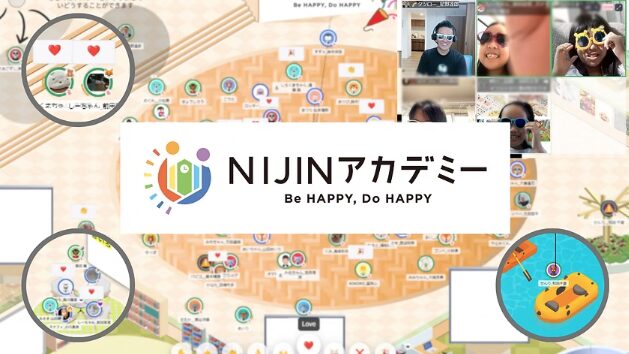
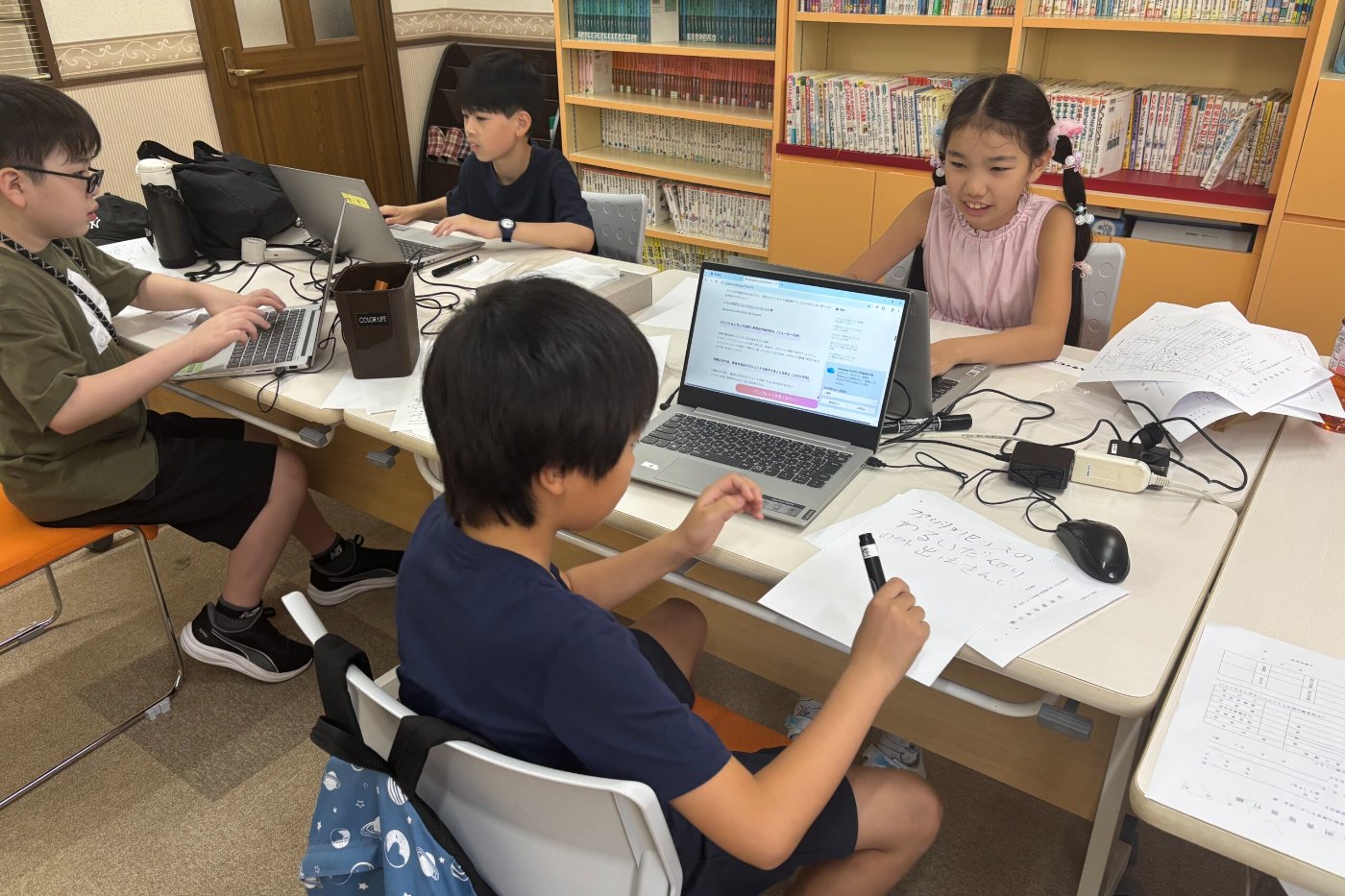
NIJIN Academy is an alternative school in Japan for elementary and junior high school students who do not fit conventional school; many had stopped going to school altogether. It opened in September 2023 and is run by NIJIN Inc., founded by Tatsuro Hoshino, who taught at a public elementary school for seven years. The model is hybrid: children attend from home through a metaverse campus, choose from about 100 live online classes a month in small, discussion-based groups, and can also go to physical classrooms across Japan.
Figures are those published on NIJIN’s official websites. “Attendance recognition” means the child’s registered school counts learning at NIJIN Academy as school attendance.
That combination, learning from home without learning alone, is close to what many Canadian homeschooling families are trying to put together for themselves. NIJIN makes no promise about results in Canada. How such a school could work under each province’s rules is exactly what has to be worked out locally.
Building a school for these families: the Country Head role
NIJIN is looking for one person to start NIJIN Academy Canada and lead it as business head and principal. You do not need to have been a teacher. What carries over is experience of managing an organization and hiring people: perhaps in a school, a tutoring business, a youth service or a community organization. French as well as English would be a strength in Canada; Japanese is welcome but not required.
It is not a franchise: you do not buy into a ready-made package; you build the school with NIJIN. Investment is optional. You can start on a service contract, even as a side job alongside your current work, and decide later whether to become a co-owner of a local company (for example, 20% of the shares for you and 80% for NIJIN; if you invest, the guide is JPY 1 to 2 million from you and JPY 4 to 8 million from NIJIN, decided together). Either way, compensation is, as a guide, 10% of revenue excluding tax, capped at JPY 50 million.
| Revenue (excluding tax) | Country Head’s compensation (10%, as a guide) |
|---|---|
| JPY 100 million | JPY 10 million |
| JPY 200 million | JPY 20 million |
| JPY 500 million or more | JPY 50 million (cap) |
| No revenue | None under this formula |
These rows show how the formula works. They are not a forecast and not a promise of income. Amounts are in Japanese yen only. If you hand part of the work to someone else, that person is paid from your 10%. Contract type, location and timing are discussed in the interview.
Questions and answers
Is homeschooling legal in Canada?
Yes, in every province and territory. The rules are set provincially, so the requirement to notify, register or apply, and the deadlines, depend on where you live. Check your province’s official page or ministry contact.
What are the homeschooling rules in Canada?
There is no national rulebook. Most provinces require an annual notification or registration by a set date. Some, such as Quebec and Manitoba, also require a learning plan or program outline and progress reports. The table in this article summarizes what each ministry says.
Do I need to follow the Ontario curriculum to homeschool in Ontario?
PPM 131 tells boards that parents may not follow the Ontario curriculum, keep standard school hours or use classroom practices, and that boards should focus on whether instruction is satisfactory. Normally the board accepts the annual letter and does not investigate.
Do homeschoolers get funding in Canada?
It depends on the province. In Alberta, parents in a supervised program can receive their portion (50%) of the home education grant. In BC, a grant goes to the registering school, not to parents. Ask your ministry what applies to you.
How many children are homeschooled in Canada?
Statistics Canada counts 66,228 home-schooled students in regular programs in 2024/2025, up from 40,608 in 2019/2020, after a peak of 83,988 in 2020/2021. Alberta had the most, with 25,980.
Is the Country Head role a job or a business?
It is closer to starting a business. You lead NIJIN Academy Canada as business head and principal, and compensation is, as a guide, 10% of revenue up to JPY 50 million, with no guaranteed income. You can begin on a service contract alongside your current work.
Lead a school for Canadian families who want something different
If you want to build a school for children who do not fit the usual one, and you have led and hired a team, read the role and apply. We read every application and reply by email.
See the Country Head role in Canada Apply for the Country Head roleWhere to go next
Related guides
- How to start a private school in Canada
- How to start a homeschool co-op
- Homeschooling vs online school vs alternative school
- Homeschooling in Australia
- Homeschooling in New Zealand
- How to start a microschool
Sources
All figures are quoted with the year they refer to. Official pages were checked in November 2026; please check the originals for later updates.
- https://www.cmec.ca/299/education-in-canada-an-overview/index.html
- https://www.cmec.ca/151/Ministries_and_Departments_Responsible_for_Education.html
- https://www.ontario.ca/document/education-ontario-policy-and-program-direction/policyprogram-memorandum-131
- https://www2.gov.bc.ca/gov/content/education-training/k-12/support/classroom-alternatives/homeschooling
- https://www2.gov.bc.ca/gov/content/education-training/k-12/administration/legislation-policy/independent-schools/homeschooling
- https://www.alberta.ca/home-education
- https://www.quebec.ca/en/education/preschool-elementary-and-secondary-schools/programs-training-evaluation/homeschooling/process-steps
- https://www.edu.gov.mb.ca/k12/schools/ind/homeschool/index.html
- https://www.edu.gov.mb.ca/k12/schools/ind/homeschool/legislation.html
- https://www.edu.gov.mb.ca/k12/schools/ind/homeschool/planning.html
- https://www.ednet.ns.ca/homeschooling/roles-responsibilities
- https://www.ednet.ns.ca/homeschooling/legislation-and-regulations
- https://www.gov.nl.ca/education/k12/homeschooling/
- https://www150.statcan.gc.ca/t1/tbl1/en/tv.action?pid=3710017801
- https://www.oecd.org/content/dam/oecd/en/publications/reports/2023/11/pisa-2022-results-volume-i-and-ii-country-notes_2fca04b9/canada_f9f44aed/901942bb-en.pdf
- https://nijin.co.jp/recruit/nijin-academy-canada-country-head/
- https://academy.nijin.co.jp/