New Zealand guide
Homeschooling in New Zealand is legal, but a child aged 6 to 16 can only be taught at home once the Ministry of Education has granted a Certificate of Exemption under section 38 of the Education and Training Act 2020, and to get one, parents must show the child will be taught “at least as regularly and well as in a registered school”. Applying is free and normally takes 4 to 6 weeks. Families who hold an exemption can claim the Home Education Supervision Allowance, and there is no requirement to follow the New Zealand Curriculum.
This guide uses only official sources: the Act, the Ministry’s pages and application guidance, NZQA rules and Education Counts data. It covers what did and did not change in 2026, the choices at NCEA age, and, at the end, what educators could build. It is not legal advice; confirm your case with your regional Ministry office.
In this article
- Is homeschooling legal in New Zealand? The section 38 exemption
- Homeschooling NZ application: who applies, and when
- What the Ministry of Education asks for: “as well as” and “as regularly as”
- Homeschooling NZ curriculum and resources
- The Home Education Supervision Allowance
- Reviews, revocation and appeals
- Homeschooling NZ changes in 2026: what passed and what did not
- Homeschooling NZ high school: NCEA and what replaces it
- How many children are homeschooled in New Zealand
- When a home-education group becomes a school
- Building for children who learn outside school: NIJIN Academy New Zealand
- Questions and answers
Is homeschooling legal in New Zealand? The section 38 exemption
Yes. The law works through enrolment. Section 35 of the Education and Training Act 2020 requires domestic students aged 6 to 16 to be enrolled at a registered school. Section 38 lets a Ministry officer designated by the Secretary for Education grant a parent a certificate exempting the child from that duty.
| Section of the Act | What it does | Why it matters at home |
|---|---|---|
| Section 35 | Domestic students aged 6 to 16 must be enrolled at a registered school | Without an exemption, a child of this age must be on a school roll |
| Section 38 | Long-term exemption from enrolment, if the child will be taught “at least as regularly and well as in a registered school” | This is the home education exemption |
| Section 40 | While an exemption is in force, no one has to enrol the child | No attendance duty during the exemption |
The test is about the teaching, not the parent: section 38 does not require a parent to be a registered teacher. For a child likely to need special education, the comparison is a specialist school or special service.
Homeschooling NZ application: who applies, and when
The Ministry of Education’s “Apply to home educate your child” page sets out the practical rules:
- You apply to your regional Ministry office, by email or post, using the Home Education application form (or your own document, as long as it covers everything the form asks).
- You must be the child’s parent or legal guardian, and all legal guardians need to agree to home education.
- Each child needs a separate application, with its own supporting material.
- You can apply at any age between 6 and 16. If your child is 5 when the exemption is granted, it takes effect on their sixth birthday.
- A child older than 6 must stay enrolled at school while the application is being considered.
- Applying is free and normally takes 4 to 6 weeks.
- You need the birth certificate, plus passport and visa if born overseas, or a court order if relevant.
The regional office will contact the child’s current or last school. You may start from the date on your certificate, not before.
What the Ministry of Education asks for: “as well as” and “as regularly as”
The form has four sections; sections two and three answer the two halves of the legal test.
- Section one: contact details and declaration. The child, the guardians, the last school and the start date.
- Section two: “as well as”. Your approach, curriculum, resources, any delegated teaching, and your 12-month and long-term goals with how you will measure them.
- Section three: “as regularly as”. How often and how long you teach: a timetable, a typical week or a calendar.
- Section four: other information. Optional.
The Ministry’s guidance says a curriculum must be broad, age-appropriate and strong in literacy and numeracy, with enough detail to show what is taught in each area, and must explain how any special education needs will be met. For “as regularly as”, it notes that primary and intermediate schools are open 384 half-days a year and secondary schools 380, though the test is not just hours. It also notes that around 20% of new home educators return their children to school within a year, so plan learning that would let a child rejoin peers of the same age.
Homeschooling NZ curriculum and resources
You do not have to follow the New Zealand Curriculum, though the Ministry recommends teaching the skills children learn at school so a later move is easier. The guidance lists approaches such as classical, school-at-home, Montessori, Charlotte Mason, unschooling and Waldorf, and notes many families choose a philosophy aligned with a Māori world view. Official resources include the curriculum pages on Tāhūrangi and Down the Back of the Chair, the Ministry’s online catalogue of teaching resources.
Home education is not the same as Te Kura. Te Aho o Te Kura Pounamu is New Zealand’s distance school, which provides the teaching. In home education, you are responsible and set the programme. If you plan to delegate some teaching, to Te Kura or a tutor, say so on the form.
The Home Education Supervision Allowance
Short answer: Yes. Once your child has a section 38 exemption, New Zealand pays the Home Education Supervision Allowance twice a year in arrears, in late June and late November. A full half-year is NZ$398 for the first child and less for each further child, and you must return a statutory declaration before each payment.
The allowance is a contribution towards some of the cost of home educating. It is paid in arrears in late June (for January to June) and late November (for July to December). Official rates for a full half-year:
| Child in the family | Payment for a full half-year (NZ$) |
|---|---|
| First child | $398 |
| Second child | $338.50 |
| Third child | $278.50 |
| Subsequent children | $199 |
Ministry of Education rates, page updated 4 September 2026.
You must return a statutory declaration for every period before payment. A part payment applies if the exemption began mid-period. Overseas trips of 29 days or more mean payment only for time in New Zealand. The allowance can continue until the end of the year the young person turns 19 while you are still home educating.
Reviews, revocation and appeals
Reviews are not routine. The Ministry may ask the Education Review Office (ERO) to review a programme if it has concerns, and will tell you why. Under section 38, the Secretary may revoke an exemption only after seeking the relevant information and considering a report from the Chief Review Officer.
A refused applicant can appeal to the Secretary, whose decision is final, and can later apply again. An exemption expires when the child turns 16 or enrols at a registered school, whichever comes first.
Want to build a place in New Zealand for children who learn outside school?
NIJIN Academy, an alternative school in Japan with a metaverse campus and 50+ physical classrooms, is looking for one founder to start and lead NIJIN Academy New Zealand as business head and principal. Teaching experience is not required.
See the Country Head role in New ZealandHomeschooling NZ changes in 2026: what passed and what did not
A change was proposed in 2026 but not enacted. On 19 May 2026, Amendment Paper No 583 to the Education and Training (System Reform) Amendment Bill proposed that home educators meet requirements set in regulations to keep an exemption, by amending section 38.
The Act that passed, the Education and Training (System Reform) Amendment Act 2026 (2026 No 32), changes sections 44 to 46 but not section 38. Section 38 as published at 1 October 2026 has no such requirement, so the test above still applies.
Rules can change again. Before you apply, check section 38 on legislation.govt.nz and the Ministry’s home education pages.
Homeschooling NZ high school: NCEA and what replaces it
The exemption ends at 16, but home education can continue without one. The harder question is qualifications. The Ministry lists these routes:
| Route | How it works for a home-educated student |
|---|---|
| NCEA through a link school | A secondary school can agree to be a “link school”. NZQA says no school is obliged to; the school moderates work, handles entries and may charge for administration. |
| NCEA through a tertiary provider or workplace | Some assessments can be completed at a tertiary provider or through a vocational pathway. |
| Te Aho o Te Kura Pounamu | Students aged 16 to 19 can enrol free of charge to work towards NCEA. |
| Cambridge International | Exams at approved schools in October to November as a private candidate; not all syllabuses are open, and a fee applies. |
| University entry pathways | The Ministry names the University of Canterbury and Massey University as having published entry information for home-schooled students. Requirements vary, so ask each provider. |
NCEA is also being replaced in stages: a foundational award in 2028, the New Zealand Certificate of Education (NZCE) for Year 12 in 2029, and the New Zealand Advanced Certificate of Education (NZACE) for Year 13 in 2030. Families of a 13- or 14-year-old should check with NZQA how home-educated students will enter.
How many children are homeschooled in New Zealand
Education Counts, the Ministry’s statistics site, publishes the figures each year. As at 1 July 2025:
In that year 2,025 students started and 1,772 finished; the most common starting age was 6 and finishing age 15. Of all homeschoolers, 75.1% had been homeschooled for less than five years, so for most families it is a stage. Meanwhile, against a Government target of 80%, only 50.3% of students attended school regularly (present for more than 90% of the term) in Term 3 of 2025.
When a home-education group becomes a school
For educators, one official threshold matters. The Ministry says that if you usually provide tuition for 9 or more students aged 5 to 16, you must register as a private school under section 214 of the Act. ERO registers private schools: provisional registration first, inspection within 12 months, then a decision on full registration, under the criteria in Schedule 7.
How a given group or online programme is classified depends on its facts, so ask the Ministry or ERO first. See how to start a homeschool co-op, how to start a school in Australia, and other countries’ rules in homeschooling in Singapore and homeschooling in South Africa.
Building for children who learn outside school: NIJIN Academy New Zealand
What one home-educating family cannot easily provide is a community of other children and several adults who know the child. That gap is where new kinds of schools are built.
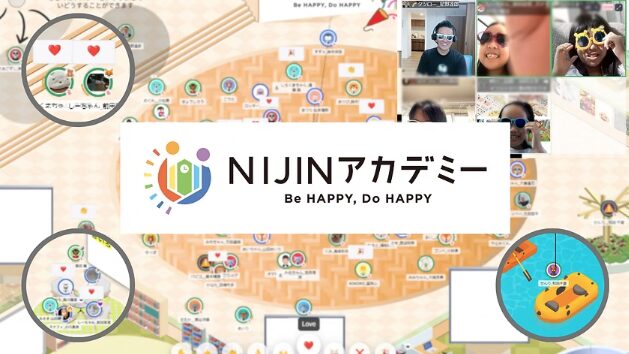
NIJIN Academy is one example from Japan: an alternative school for children who do not fit conventional school, opened in September 2023 by NIJIN Inc. Children join from home through a metaverse campus, choose from about 100 small, conversation-based live online classes a month, and can attend physical classrooms. NIJIN describes it as one of the largest alternative schools in Japan.
Figures published by NIJIN. “Attendance recognition” means the child’s school in Japan counts NIJIN Academy learning as attendance.
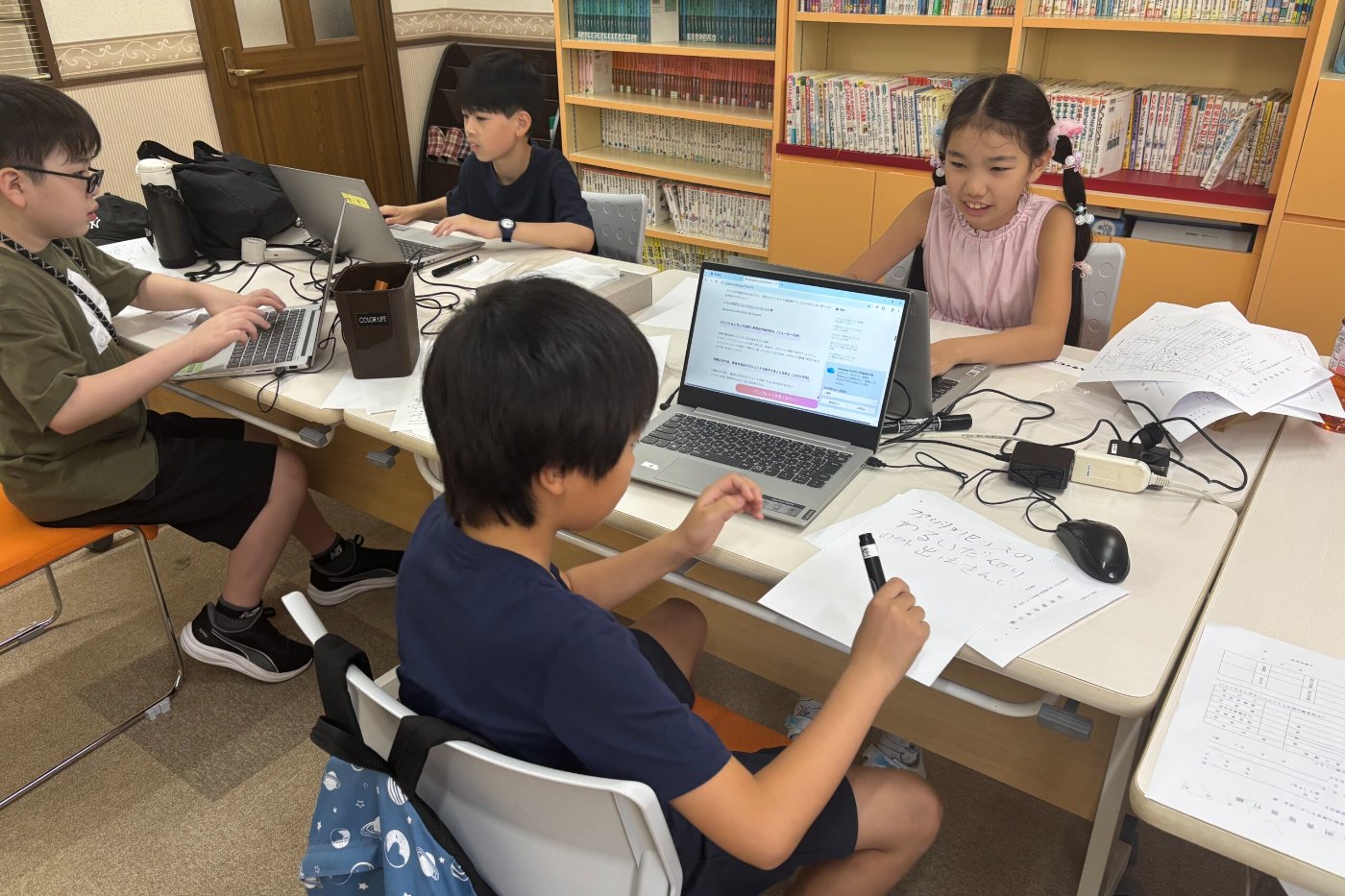
NIJIN is looking for a Country Head to start NIJIN Academy New Zealand and lead it as business head and principal. It is not a franchise. Whether it becomes a school, an online programme or something else, and under which rules, is worked out with NIJIN as part of the role.
| Question | What NIJIN’s recruitment page says |
|---|---|
| How do I start? | On a service contract, even as a side job alongside your current work, or as a co-owner of a local company (for example 20% for you, 80% for NIJIN; if you invest, a guide of JPY 1 to 2 million). Investment is optional. |
| Compensation? | As a guide, 10% of revenue excluding tax, capped at JPY 50 million (JPY 100 million of revenue gives JPY 10 million). No revenue means no pay under this formula; income is not guaranteed. |
| Teaching experience? | Not required. Leadership, management, business ability and a principal’s skills matter. |
| Languages? | English alone is enough; te reo Māori and Japanese are strengths. |
| Contract, location, start date? | To be discussed in the interview. |
Questions and answers
How do I home school in New Zealand?
Apply to your regional Ministry office for a Certificate of Exemption, one per child, showing teaching at least as regularly and well as a registered school. Keep the child enrolled until it arrives.
Do I have to follow the NZ curriculum when homeschooling?
No, but your plan must be broad, age-appropriate and strong in literacy and numeracy.
How much is the homeschooling allowance in NZ?
Per full half-year: $398 for the first child, $338.50 for the second, $278.50 for the third and $199 for each further child, after a statutory declaration.
Can a homeschooled teenager get NCEA?
Yes: through a willing link school, a tertiary or workplace pathway, or free through Te Kura from 16 to 19. New qualifications replace NCEA from 2028.
Did the homeschooling rules change in 2026?
A May 2026 proposal to add regulation-based conditions was not enacted; section 38 is unchanged.
Is the NIJIN Country Head role a job or a business?
A founder’s role in a business, with compensation guided at 10% of revenue. You can start on a service contract alongside your current work.
Build a place in New Zealand for children who learn outside school
If you want to start a company in New Zealand and solve a problem in education, and you have led and hired a team, read the role and apply. Teaching experience is not required.
Where to go next
- School Attendance NZ: 2026 Statistics, Rules and Fines
- New Zealand
- Australia
- Ireland
- United Kingdom
- Country Head (global)
- NIJIN careers in English
Related guides
- Homeschooling in Singapore: MOE rules and options
- Homeschooling in South Africa: BELA Act rules
- How to start a school in Australia
- How to start a homeschool co-op
- Homeschooling vs online school vs alternative school
Sources
Legal summaries are from the Education and Training Act 2020 as published on legislation.govt.nz (version as at 1 October 2026) and Ministry of Education pages updated in September and October 2026. Please check the originals for later changes.
- https://www.legislation.govt.nz/act/public/2020/0038/latest/LMS176208.html
- https://www.legislation.govt.nz/act/public/2026/32/en/latest/
- https://www.legislation.govt.nz/amendment-paper/government/2026/583/en/latest/
- https://www.education.govt.nz/parents-and-caregivers/schools-year-0-13/home-education/apply-home-educate-your-child
- https://web-assets.education.govt.nz/s3fs-public/2024-03/Home-education-application-form.pdf
- https://web-assets.education.govt.nz/s3fs-public/2024-03/Home-education-application-guidance-2020.pdf
- https://www.education.govt.nz/parents-and-caregivers/schools-year-0-13/home-education/teaching-your-child-home
- https://www.education.govt.nz/parents-and-caregivers/schools-year-0-13/home-education/allowances-families-who-homeschool
- https://www.education.govt.nz/parents-and-caregivers/schools-year-0-13/home-education/qualifications-and-university-entry-home-educated-students
- https://www2.nzqa.govt.nz/about-us/rules-fees-policies/nzqa-rules/administrative-guidelines/internal-and-external-assessment-of-home-school-students/
- https://www.education.govt.nz/parents-and-caregivers/schools-year-0-13/parent-portal/new-qualification-years-11-13
- https://www.educationcounts.govt.nz/statistics/homeschooling
- https://www.dpmc.govt.nz/sites/default/files/2026-03/gt-factsheet-target-6-dec25.pdf
- https://www.education.govt.nz/education-professionals/schools-year-0-13/administration-and-management/private-school-registration
- https://nijin.co.jp/recruit/nijin-academy-new-zealand-country-head/
- https://academy.nijin.co.jp/