
Ireland guide
Homeschooling in Ireland is legal: Article 42 of the Constitution lets parents educate their children at home, and Section 14 of the Education (Welfare) Act 2000 requires them to register each child with Tusla’s Alternative Education Assessment and Registration Service (AEARS), which then assesses whether the child is receiving “a certain minimum education”. You may begin once AEARS confirms in writing that your application is valid. There is no requirement to follow the national curriculum, and a home-educated teenager can sit the Junior Cycle and Leaving Certificate as an external candidate.
This guide goes further than the usual overview. It walks through the R1 application, the three kinds of assessment and their six possible outcomes, what the latest Tusla figures (Q1 2026) say about waiting times and growth, what happens at secondary school age, and which State supports continue or stop when a child leaves school. Every rule below is taken from Tusla, the Department of Education and Youth or the Irish Statute Book, and linked at the end.
In this article
- Is homeschooling legal in Ireland? Article 42 and Section 14
- How to register for home education with Tusla
- What the Tusla assessment looks at
- How many children are homeschooled in Ireland
- Homeschooling at primary and secondary school age
- Junior Cycle and Leaving Cert for homeschoolers
- Homeschooling grants and supports: what continues, what stops
- Homeschooling resources, online programmes and groups
- Building for home-educating families: NIJIN Academy Ireland
- Questions and answers
Is homeschooling legal in Ireland? Article 42 and Section 14
Short answer: Yes. The Constitution names the family as the child’s “primary and natural educator” and says parents are free to educate children in their homes. In return, the State requires a certain minimum education. Since the Education (Welfare) Act 2000, that requirement works through one mechanism: a statutory register kept by Tusla, the Child and Family Agency, and an assessment before a child is entered on it.
Ireland’s approach rests on two texts that are worth reading in the original, because many guides paraphrase them loosely.
| Text | What it says | What it means for a family |
|---|---|---|
| Constitution, Article 42.1–42.2 | The family is the primary and natural educator; parents are free to provide education “in their homes or in private schools or in schools recognised or established by the State”. | Home education is a constitutional choice, not a concession. |
| Constitution, Article 42.3.2° | The State shall require that children receive “a certain minimum education, moral, intellectual and social”. | The State can check, but only against a minimum, not against the school curriculum. |
| Education (Welfare) Act 2000, s.14(1)–(2) | A register of all children educated in a place other than a recognised school; a parent who chooses this must apply to have the child registered. | Registration is a legal duty and is not automatic. |
| s.14(5) | An authorised person assesses the education provided, the materials used and the time spent; if that is not enough to decide, and with the parent’s consent, a fuller assessment in the place of learning. | The assessment is about provision first, the child second. |
| s.14(10) | The child is registered, registered subject to a written undertaking, or refused. | Registration can come with conditions. |
The Department of Education and Youth summarises the purpose in one line: the requirement exists “to support parents in their right to home educate” and to safeguard the child’s right to a minimum education. The same Section 14 register covers children at non-recognised (independent) schools, which is why the route for starting an independent school in Ireland also runs through AEARS.
How to register for home education with Tusla
Short answer: Get a certified copy of your child’s birth certificate or passport, complete the R1 form (one per child, signed by every legal guardian), and send both to AEARS by email or post. You may start home educating once AEARS confirms in writing that the application is complete and valid. An assessment follows; Tusla says it can come within a few weeks or take up to 12 months.
- Check eligibility. Tusla’s FAQ says parents or guardians of a child aged 6 up to their 16th birthday apply. The child must be resident in the State.
- Certify the identity document. A photocopy of the birth certificate (or passport if there is none) must be marked as original sighted by a practising solicitor or commissioner for oaths, a member of An Garda Síochána, a notary public or a peace commissioner.
- Complete the R1 form. One form per child. Describe where the education takes place; if you use an online programme, the R1 guidance asks for the programme, the grade, the platform’s web address and any link person. All legal guardians sign the declaration (Tusla cites S.I. No. 758 of 2024), unless a court order or an exceptional case applies.
- Submit and wait for validation. Send the R1 and certified document to AEARS. Incomplete forms cannot be validated and are delayed.
- Start once confirmed. When AEARS confirms a valid application, it informs your child’s previous school. The school keeps the child on its roll until Tusla says the child is on the Section 14 register.
- Prepare for the assessment. An assessor contacts you to arrange a date. Not facilitating it may lead to refusal and a referral to the Tusla Education Support Service (TESS).
Tusla’s Home Education Support Team can be reached at home.education@tusla.ie or 01 771 8635 / 01 771 8854 (as listed on Tusla’s home education page in November 2026).
What the Tusla assessment looks at
Most families meet a preliminary assessment: a structured interview of about two hours with the parent and whoever provides the education, during which the assessor also meets the child. It looks at the education being provided, the equipment and materials, and the time spent. Tusla assesses against the Department of Education’s 2003 Guidelines on the Assessment of Education in Places Other Than Recognised Schools, and its FAQ lists the areas covered: intellectual development (literacy, numeracy and other learning areas), social, emotional and moral development, and physical development.
| Type | When it happens | What it involves |
|---|---|---|
| Preliminary | After a valid application | Structured interview, about 2 hours; the assessor meets the child |
| Review | At intervals while the child is registered; within 6 months where conditions were attached | Looks at the child’s progress since the last assessment |
| Comprehensive | Only when a preliminary or review assessment cannot decide | Observation in the place of learning, inspection of materials, assessment of the child; may take most of a day or more. Tusla reports two such assessments in 2025. |
A draft report is sent to you with a factual accuracy form, to be returned within 10 working days. The possible outcomes, in Tusla’s words, are: entered on the register; entered with conditions; retained on the register after a review; retained with conditions; not entered; or removed. Conditions require a signed written agreement, are reviewed within six months, and can be appealed.
Keep a simple learning diary. The 2003 guidelines say some parents find it useful to keep a diary of learning and progress, and that such evidence “can be useful” at assessment. They also say the absence of formal records is not, on its own, proof that a parent is unaware of the child’s progress. A diary costs nothing and makes the conversation easier.
How many children are homeschooled in Ireland
Tusla publishes AEARS figures every quarter in its Service Performance and Activity Report. The latest one available when this article was written covers the first quarter of 2026.
Source: Tusla, Q1 2026 Service Performance & Activity Report, pages 44–46. 452 children on the register (17%) had special educational needs. 460 assessments were carried out in the quarter and 193 children were registered.
Two further numbers explain why applications are rising. In Q1 2026, 148 children left the register, mostly because they turned 16 (82) or returned to school (46). And Tusla’s analysis of school attendance for 2023/24 found that 94,501 primary pupils (22.1%) and 67,612 post-primary students (21.2%) missed 20 or more days of the school year. Not every family that struggles with attendance chooses home education, but the register is one of the places that pressure shows. If you work with families facing school refusal, our article on school refusal and futoko in Japan describes how the same pattern grew there.
Homeschooling at primary and secondary school age
The registration process is the same at primary and post-primary age. What differs is what parents need to plan for. Three rules from Tusla’s FAQ catch families out most often:
- One register only. A child cannot be home educated for part of the week and attend school for the rest. The Act does not support dual registration.
- No automatic Irish exemption. Home education does not entitle a child to an exemption from Irish if they later return to school. Tusla suggests checking the exam and career implications with the Department and the State Examinations Commission.
- The register ends at 16. A child stays on the Section 14 register until their 16th birthday. Tusla publishes a separate 16+ Pathways guide covering adult guidance through Education and Training Boards, apprenticeships, alternative entry to third level, and external candidacy.
At secondary age, many families combine parent-led learning with tutors or an online programme, which Tusla’s home education page explicitly allows: parents “may use tutors, online programmes or other resources”. The responsibility for the education stays with the parent.
Junior Cycle and Leaving Cert for homeschoolers
Short answer: A home-educated student sits the Junior Cycle or Leaving Certificate as an external candidate, registering with the State Examinations Commission (SEC). Tusla’s FAQ says it is up to the parent to approach a post-primary school or programme to ask about sitting the exams there. Rules for coursework, fees and dates are set by the SEC each year, so check its external candidates page before you plan.
The Department of Education’s guidance from 2021 defined “out-of-school learners” as students entered as external candidates who are not attending full-time tuition at any school or private college recognised by the SEC, and said this “includes students who are being home schooled”. That guidance was written for the 2021 accredited-grades year and is no longer current, but the definition shows how the system classifies home-educated students.
In practice, three things are worth settling early: which subjects have coursework or practical components that need a school to supervise them; which school or centre near you will host the written exams; and whether the courses your child is aiming for need Irish or another language. The SEC (examinations.ie) and the CAO are the official sources; we could not open the SEC site from our checking tools, so we have not quoted its fees or deadlines.
Want to build a place in Ireland for children who learn outside school?
Many home-educating families are looking for the same things: other children, live classes, and an adult who knows their child. NIJIN Academy, an alternative school in Japan, has built exactly that with live online classes, a metaverse campus and 50+ physical classrooms. NIJIN is looking for one founder to start and lead NIJIN Academy Ireland, as its business head and principal.
See the Country Head role in IrelandHomeschooling grants and supports: what continues, what stops
Search for “homeschooling Ireland grants” and you will find a lot of guesswork. Here is what Tusla’s own FAQ says. We did not find a dedicated State grant for home education on the Tusla or Department pages we checked, and we have not assumed one exists.
| Support | Continues or stops? | What Tusla says |
|---|---|---|
| Child Benefit, vision and hearing screening, immunisation | Continues | Children on the Section 14 register have the same status as children in recognised schools for these entitlements. |
| HSE school health screening | Continues, but you may need to ask | Home-educated families “do not routinely receive” screening information; Tusla points to the HSE School Health Programme page and local health offices. |
| Free book scheme | Stops | It applies only to children attending a Department of Education school. |
| Special needs support through the previous school (including summer provision) | Stops | All support provided through the previous school ceases once the home education application is made. |
| Home Tuition Scheme | Not the same thing | A Department scheme for children who cannot attend school (for example through chronic illness) or are awaiting a special education placement. It is separate from home education. |
For children with special educational needs, Tusla’s Summer 2026 newsletter describes a referral form, devised by the National Council for Special Education, that AEARS assessors complete with parents when an Assessment of Need has been applied for through the HSE. For third-level grants later on, the 16+ guide points to SUSI.
Homeschooling resources, online programmes and groups
Irish law leaves the choice of resources to parents. The 2003 guidelines say selection of resources and curriculum materials “is a matter for parents”. Most families build their week from a mix of the following, and Tusla’s R1 form asks about each one:
- A parent-led plan covering literacy, numeracy, other learning areas, physical activity and time with other children.
- Tutors for specific subjects, especially at secondary age.
- An online education programme, described on the R1 with its grade, web address and link person.
- Local groups and co-ops, where families share teaching and children meet peers. Our guide on how to start a homeschool co-op covers the organising side.
- A learning diary or portfolio to bring to the assessment.
If you are weighing home education against an online school or an alternative school, our comparison of homeschooling vs online school vs alternative school sets out the trade-offs. For how another country handles the same question through an exemption system and an allowance, see homeschooling in New Zealand.
One boundary matters for anyone who organises learning for several families. If a group becomes the place where children receive their main education, it may look like a non-recognised school, which has its own registration route through AEARS. Ask AEARS before taking enrolments.
Building for home-educating families: NIJIN Academy Ireland
The figures above describe a growing group of Irish families who have chosen, or been pushed towards, learning outside school, and who still want their children to have friends, live teaching and an adult who knows them. That is the gap NIJIN Academy was built for in Japan.
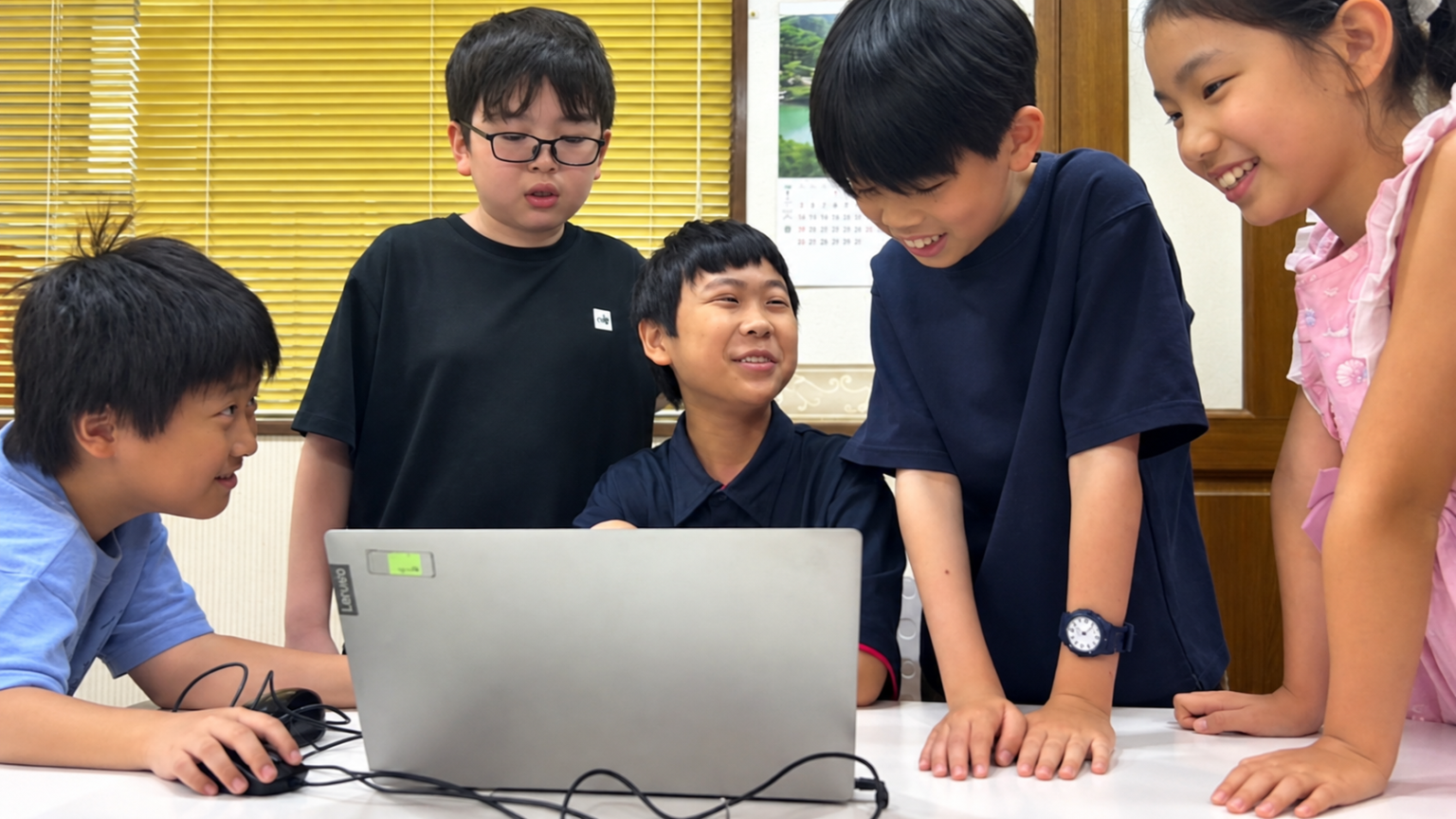
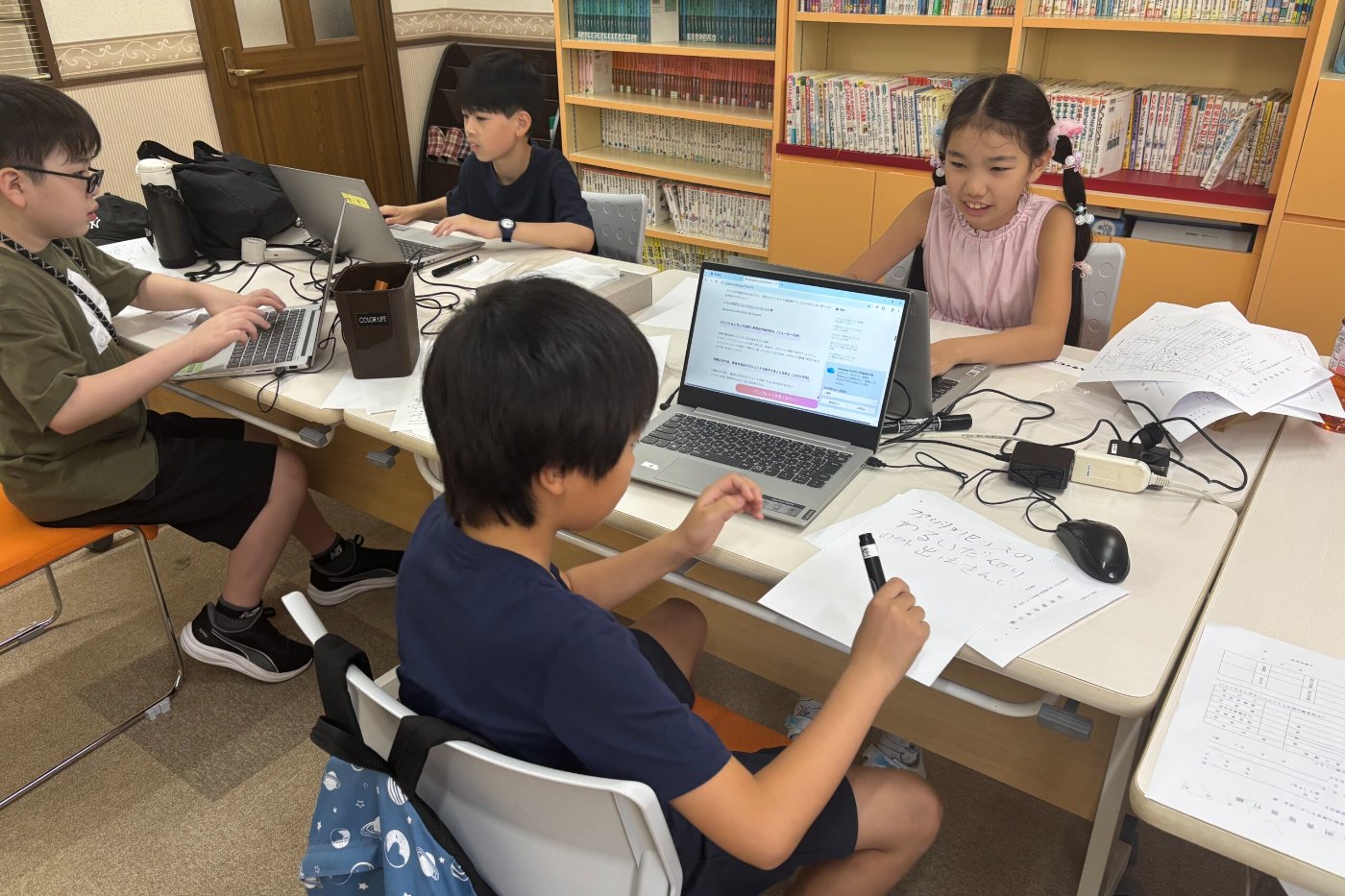
NIJIN Academy is an alternative school in Japan for elementary and junior high school students who do not fit conventional school; many had stopped attending altogether. It opened in September 2023 and is run by NIJIN Inc., founded by Tatsuro Hoshino, who taught at a public elementary school for seven years. Children join from home through a metaverse campus, choose from about 100 live online classes a month, and can also go to physical classrooms across Japan. NIJIN describes it as one of the largest alternative schools in Japan.
Figures are those published on NIJIN’s official websites.
NIJIN is looking for one person to start NIJIN Academy Ireland and lead it as Country Head: business head and principal in one role. You do not need to have been a teacher. What carries over is experience of managing an organisation and hiring people, perhaps in a school, a tutoring business, a youth service or a community organisation. How the academy would work alongside Ireland’s rules for schools and home education is something we work out with you.
It is not a franchise: you do not buy into a ready-made package; you build the school with NIJIN. Investment is optional. You can set up a local company with NIJIN as a co-owner (for example, 20% of the shares for you and 80% for NIJIN; if you invest, the guide is JPY 1 to 2 million from you and JPY 4 to 8 million from NIJIN, decided together). Or you can start on a service contract, even as a side job alongside your current work, and decide later. Either way, compensation is, as a guide, 10% of revenue excluding tax: JPY 100 million in revenue gives JPY 10 million, JPY 200 million gives JPY 20 million, with a cap of JPY 50 million from JPY 500 million. This is a guide, not a promise of income; with no revenue, the formula pays nothing. Every other term is discussed in the interview.
Questions and answers
What are the homeschooling laws in Ireland?
Article 42 of the Constitution allows parents to educate their children at home, and Section 14 of the Education (Welfare) Act 2000 requires them to register the child with Tusla’s AEARS. AEARS assesses whether the child receives a certain minimum education and then registers the child, registers with conditions, or refuses.
Do I have to follow the Irish curriculum when homeschooling?
No. Tusla states there is no requirement to follow the national curriculum. The assessment covers intellectual, social, emotional, moral and physical development, judged against the 2003 guidelines.
Can I homeschool my child in Ireland for primary school and then send them to secondary school?
Yes. Tell AEARS when your child returns to school so they can be removed from the Section 14 register; a child can be on only one register at a time. In Q1 2026, 46 children left the register because they returned to school.
How can a homeschooled child sit the Leaving Cert or Junior Cert in Ireland?
As an external candidate with the State Examinations Commission. Tusla advises parents to approach a post-primary school or programme about sitting the exams there, and to check SEC rules for coursework, fees and dates each year.
Are there homeschooling grants in Ireland?
We found no dedicated State grant for home education on the official pages we checked. Child Benefit and health screening entitlements continue; the free book scheme and supports through the previous school stop. The Home Tuition Scheme is a separate Department scheme.
Is the NIJIN Country Head role a job or a business?
It is closer to running a business. You lead NIJIN Academy Ireland as business head and principal, either as a co-owner or on a service contract, with compensation as a guide of 10% of revenue. Details are discussed in the interview.
Start NIJIN Academy Ireland
If you want to build a school for children who learn outside school, and you have led and hired a team, read the role and apply. Teaching experience is not required, and you can start alongside your current work.
Where to go next
NIJIN Academy Country Head pages are open for many countries, and the global page covers the rest.
Related guides
- How to start a school in Ireland: routes, rules and Tusla
- Homeschooling in New Zealand
- Homeschooling vs online school vs alternative school
- How to start a homeschool co-op
- School refusal and futoko in Japan
Sources
All figures are quoted with the period they refer to. Please check the original for later updates.
- https://www.irishstatutebook.ie/eli/cons/en/html
- https://www.irishstatutebook.ie/eli/2000/act/22/section/14/enacted/en/html
- https://www.gov.ie/en/department-of-education/policy-information/home-schooling-or-attendance-at-non-recognised-schools/
- https://www.tusla.ie/services/family-community-support/alternative-education-assessment-and-registration-service/home-education/
- https://www.tusla.ie/uploads/content/AEARS-GDE01.2_Home_Education_Frequently_Asked_Questions__1.pdf
- https://www.tusla.ie/uploads/content/AEARS-GDE01.1_R1_Guidance_.pdf
- https://www.tusla.ie/uploads/content/guidelines_assessment_education_outside_schools.pdf
- https://www.tusla.ie/uploads/content/Q1_2026_Service_Performance___Activity_Report.pdf
- https://www.tusla.ie/uploads/content/Tusla_AEARS_Newsletter_Summer_2026.pdf
- https://www.tusla.ie/uploads/content/AEARS-GDI99.1._16_%2B_Pathways__.pdf
- https://www.tusla.ie/uploads/content/Analysis_of_School_Attendance_Data_2023-24.pdf
- https://www.gov.ie/en/department-of-education/publications/out-of-school-learners-and-students-studying-subjects-entirely-outside-of-school-your-questions-answered/
- https://nijin.co.jp/recruit/nijin-academy-ireland-country-head/
- https://academy.nijin.co.jp/