
For future teachers in the Philippines
To become a teacher in the Philippines, you finish a degree PRC accepts (an education degree such as BEEd for elementary; BSEd, or another bachelor’s degree plus at least 18 units of professional education, for secondary), pass PRC’s Licensure Examination for Professional Teachers (LET), register for your licence, and apply to a school: a DepEd Schools Division Office for Teacher I, or a private school directly. In 2026 the LET was held on March 15 and September 20.
Below: each step from PRC’s own lists and 2026 schedule, the DepEd hiring rules for School Year 2026-2027, and where the path splits for private schools, preschool, daycare and SPED.
In this article
How to become a teacher in the Philippines: the four steps
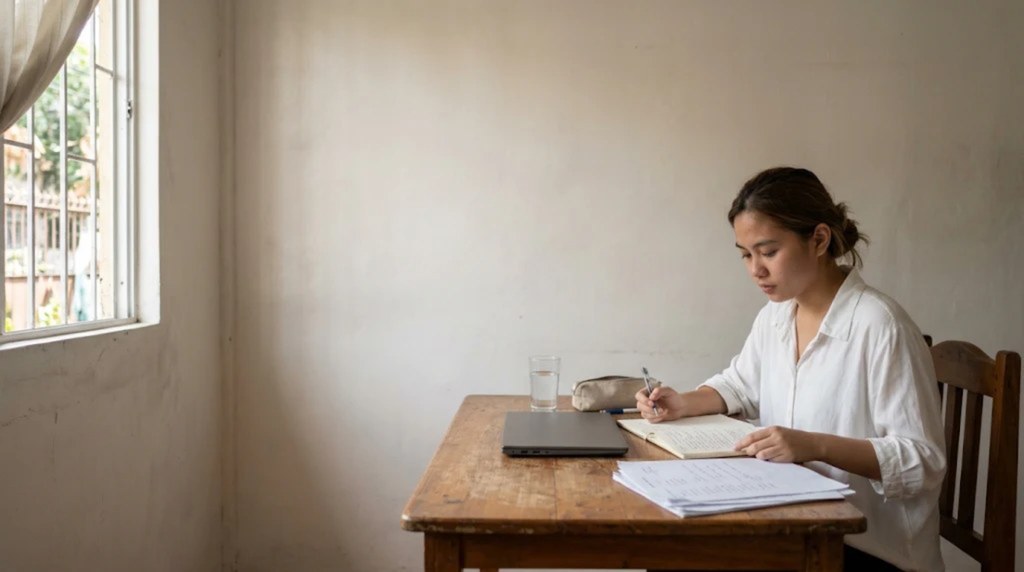
Under the Philippine Teachers Professionalization Act (RA 7836, amended by RA 9293), no one may teach at the preschool, elementary or secondary level without a valid PRC licence or a special or temporary permit (Section 26). The law covers private and public schools alike.
- Finish a qualifying degree. An education degree, or for secondary, another bachelor’s degree with 18 units of professional education.
- Pass the LET. Apply online with PRC within the application period, then sit the exam.
- Register. Passers are entered in PRC’s roster and receive a certificate of registration and a professional licence.
- Apply for a post. Public school: through your Schools Division Office (SDO) when it opens Teacher I hiring. Private school: directly.
Two rules in Section 26 matter later. If you have not taught for five years, you must take 12 units of education courses (6 in pedagogy, 6 in content) or equivalent training before teaching again. If you fail the LET by no more than five percentage points, the Board may issue a two-year para-teacher permit for an area DepEd names as short of teachers.
Step 1: The degree, or another degree plus 18 units
Section 15 of RA 7836 requires LET applicants to be Filipino citizens (or from a country with reciprocity), at least 18, of good reputation, and graduates of a government-recognised school with the right degree. PRC’s current list puts the degree rule like this:
| You want to teach | Degrees PRC lists | Another degree? |
|---|---|---|
| Elementary | BSEEd / BEEd, BSNEd (special needs education), BECEd / BECE / BSECEd (early childhood) | Not named on PRC’s elementary list |
| Secondary (Junior and Senior High) | BSEd with a major and minor, or its equivalent | Yes: a bachelor’s degree in arts and sciences or an equivalent degree, with at least 18 units in professional education |
| Vocational and two-year technical courses (in the law) | A bachelor’s degree in the field | With at least 18 units in professional education |
So the “unit earner” route, for example a nurse or engineer who adds 18 units of professional education, is written for the secondary level. If you hold a non-education degree and want to teach elementary, ask PRC before you file. Make sure the 18 units appear on your Transcript of Records, since the TOR is the document on PRC’s list. PRC adds that the Board may ask for more, such as a CHED certificate of equivalency.
LET requirements 2026: what PRC asks for
- PSA Birth Certificate
- PSA Marriage Contract, for married female applicants
- Transcript of Records with a scanned picture and the remark “For Board Examination Purposes” (first timers and repeaters)
- A degree on the TOR that matches your level; for unit earners, the 18 units on record
- Any other requirement the Board prescribes
- Payment: ₱900 for the complete examination
You apply through PRC’s online application system (online.prc.gov.ph), linked from the PRC home page.
| Applicant | What PRC’s list says | Check yourself |
|---|---|---|
| LET requirements for first timers | PSA documents and TOR as above | That your degree title is one PRC lists for your level |
| LET requirements for retakers | The TOR line applies to “First Timers and Repeaters” alike; no separate list | Your PRC online account and any notice from your last attempt |
| LET requirements for unit earners | Secondary only: a bachelor’s degree plus at least 18 units in professional education | That the units show on the TOR |
LET 2026 dates and how the exam is weighted
Short answer: the September 2026 LET is on Sunday, September 20, 2026 (applications ran May 22 to July 23, 2026), and PRC’s target release of results is November 27, 2026. You apply through PRC’s online application system, online.prc.gov.ph, linked from the PRC home page; the complete examination costs ₱900. For 2027 dates, check PRC’s Examination Schedule page.
| Exam | Date | Application period | Target release of results |
|---|---|---|---|
| LET, March 2026 | Sunday, March 15, 2026 | December 3, 2025 to February 3, 2026 | May 15, 2026 |
| LET abroad (SPLE) | Sunday, May 31, 2026: Hong Kong, Singapore, Taiwan | See PRC’s schedule page | |
| LET, September 2026 | Sunday, September 20, 2026 | May 22 to July 23, 2026 | November 27, 2026 |
Source: PRC 2026 Schedule of Examination (Resolution No. 2113, s. 2025). For 2027 dates, check PRC’s Examination Schedule page, not social media.
Elementary examinees take General and Professional Education; secondary examinees also take their field of specialization (RA 7836, Section 14). PRC’s program for September 20, 2026 set the weights: elementary, General Education 40% and Professional Education 60%; elementary with specialization, and secondary, General Education 20%, Professional Education 40% and Specialization 40%.
Already licensed, and wondering what else a teacher can build?
NIJIN is looking for one person to start and lead NIJIN Academy Philippines as business head and principal. You can start on a service contract, even as a side job alongside your current work.
See the Country Head role in the PhilippinesHow to become a Teacher 1 in DepEd
Teacher I is the entry rank in public schools. Each SDO hires under DepEd Order No. 7, s. 2023, as amended by DepEd Order No. 21, s. 2024. SDO Muntinlupa City’s 2026 evaluation sheet lists the standards:
Teacher I, Salary Grade 11 (₱31,705 a month in 2026)
- Education: bachelor’s degree in Education, or in the relevant subject with at least 18 professional units in Education
- Experience and training: none required
- Eligibility: RA 1080, as amended (Teacher); the sheet records applicants as “LET qualified”
Qualified applicants are then ranked on 100 points (Enclosure No. 2 of DO 7, s. 2023, covering Kindergarten to Senior High):
| Criterion | Points | Measured by |
|---|---|---|
| Education | 10 | Units or degrees beyond the minimum |
| Training | 10 | Relevant hours beyond the minimum, last five years |
| Experience | 10 | Teaching beyond the minimum |
| PBET / LET / LEPT rating | 10 | Your board rating |
| PPST classroom observable indicators | 35 | Demonstration teaching or classroom observation |
| PPST non-classroom observable indicators | 25 | Teacher Reflection Form |
Source: Enclosure No. 2 to DO 7, s. 2023, attached to SDO Batangas Province’s Division Memorandum No. 165, s. 2023.
Sixty points come from how you teach and reflect, and only ten from your LET rating, so a new passer can rank well.
A 2026 example. SDO Bulacan’s Memorandum No. 17, s. 2026 took applications from January 21 to February 13, held demonstration teaching from March 2 to 13, and posted the Registry of Qualified Applicants on April 24, 2026. The DO 7 checklist asks for a letter of intent, the Personal Data Sheet (CS Form No. 212), your PRC licence, report of rating, TOR and diploma, training and employment certificates, and a sworn statement with data privacy consent. DO 21, s. 2024 dropped notarization of that statement and lets unappointed applicants carry their scores to the next year. Some rules are local: in 2023 SDO Batangas set a 50-point cut-off and kept separate registries for Kindergarten, Elementary, SPED, each JHS subject and each SHS track. Read your own division’s memo.
Teacher I, II and III: what changes
DepEd-DBM Joint Circular No. 01, s. 2025 sets the classroom line from Teacher I to VII, then Master Teacher I to V. Teacher II and above are “higher teaching positions”, filled under DepEd Order No. 20, s. 2024 through a natural vacancy or reclassification of your own post.
| Rank | Salary grade | Filled under | Performance requirement |
|---|---|---|---|
| Teacher I | SG 11 | DO 7, s. 2023 | Scored in the 100-point ranking |
| Teacher II | SG 12 | DO 20, s. 2024 | At least 6 Proficient COIs and 4 Proficient NCOIs at Very Satisfactory |
| Teacher III | SG 13 | DO 20, s. 2024 | At least 12 Proficient COIs and 8 Proficient NCOIs at Very Satisfactory |
| Teacher IV to Master Teacher V | SG 14 to SG 22 | DO 20, s. 2024 | Higher standards |
COI and NCOI are classroom and non-classroom observable indicators of the Philippine Professional Standards for Teachers. Pesos by step: teacher salaries in the Philippines. Upper ranks: how to become a Master Teacher.
Private school, preschool, daycare and SPED: how the paths differ
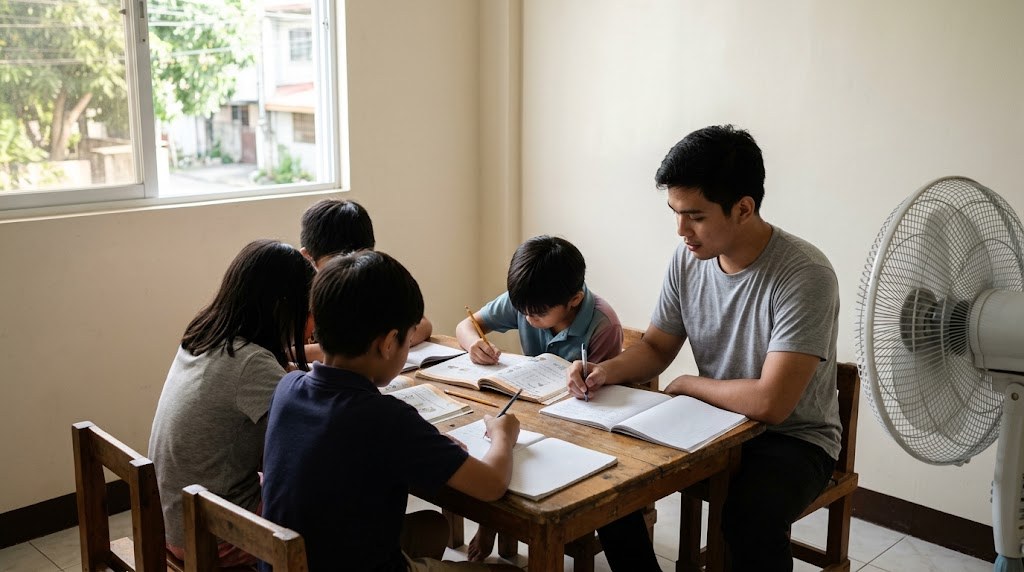
| Path | Employer | Degree and licence | Note |
|---|---|---|---|
| Private school teacher | The school | Same PRC licence | The school sets pay and hiring; no DepEd ranking |
| Kindergarten (preschool) teacher | DepEd SDO or a private school | Early childhood or elementary education degree; LET | Kindergarten is one year for children at least five (RA 10157); DO 7 covers Kinder Teacher I hiring |
| Daycare: Child Development Teacher | City or municipality | Any bachelor’s degree, preferably with early childhood units; passed the LET | RA 12199 (2025): at least one CDT and one CDW per Child Development Center; CDT not lower than SG 11 |
| Daycare: Child Development Worker | City or municipality | No LET; an associate degree in early childhood education, or a route with TESDA’s competency assessment | Not lower than SG 10 with an associate degree, SG 8 otherwise |
| SPED (Special Needs Education Teacher) | DepEd or a private school | BSNEd is on PRC’s elementary list; LET | RA 11650 (2022) replaced “SPED” with “Special Needs Education”; SNET posts fall under DO 20 |
Daycare is often described wrongly online: since 2025, RA 12199 has replaced the Early Years Act and treats the CDT as a licensed teacher. To open your own preschool instead, see how to open a preschool in the Philippines; to teach out-of-school youth and adults, see ALS teacher.
Another way to work in education: NIJIN Academy Philippines
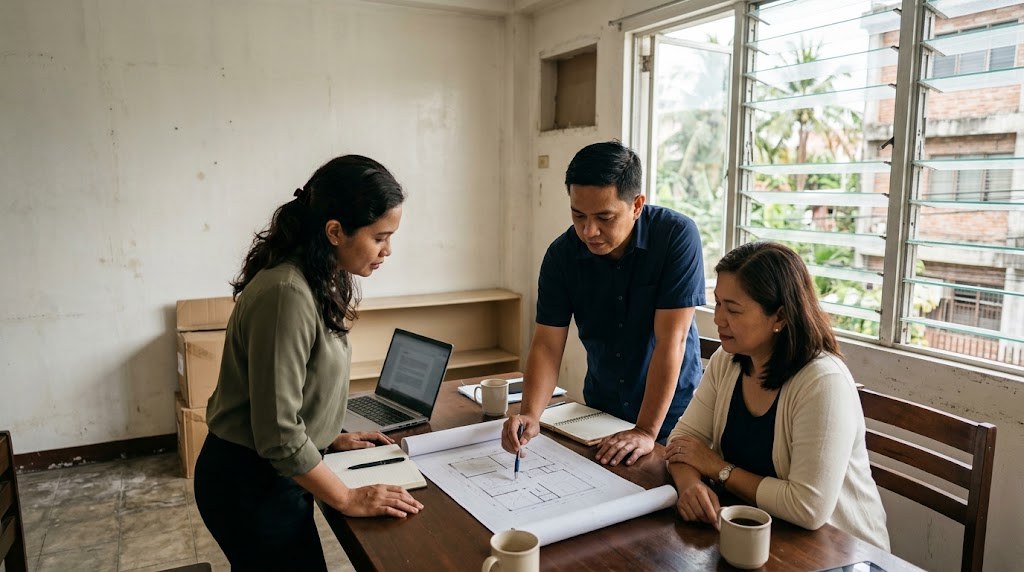
Many teachers later want to work differently (see teacher workload and the teacher shortage). One option is to build a school.
NIJIN Academy is an alternative school in Japan, opened in September 2023, for elementary and junior high students who do not fit conventional school. Children attend from home through a metaverse campus, choose from about 100 small, interactive live online classes a month, and can also go to physical classrooms.
Figures published by NIJIN. “Attendance recognition” means the child’s registered school counts learning at NIJIN Academy as attendance.
NIJIN’s only open role in the Philippines is the Country Head, who starts NIJIN Academy Philippines and leads it as business head and principal.
- Start on a service contract, even as a side job alongside your teaching. DepEd teachers should first check the civil service rules on outside work (see DepEd teacher resignation if you are thinking further ahead).
- Investment is optional. You can also co-own a local company; 20% for you and 80% for NIJIN is only an example. Article XIV, Section 4(2) of the 1987 Constitution generally requires schools to be owned by Filipinos or by corporations at least 60% Filipino-owned, so the structure is decided in the interview and with legal professionals. It is not a franchise.
- Compensation, as a guide, is 10% of revenue (excluding tax), up to JPY 50 million, either way you start. No income is promised: with no revenue, the formula pays nothing. Other terms are to be discussed in the interview.
- A teaching licence is not required. Leadership, management and business ability matter. English alone is enough to apply.
Questions and answers
What are the LET requirements for first timers?
A PSA birth certificate, a PSA marriage contract for married female applicants, and a TOR with a scanned picture and “For Board Examination Purposes”, showing a degree PRC accepts for your level. The fee is ₱900.
What are the LET requirements for retakers?
PRC’s list applies the same TOR requirement to “First Timers and Repeaters” and has no separate checklist. Check the current list on prc.gov.ph before you file.
Can a non-education graduate take the LET?
Yes, for secondary: a bachelor’s degree with at least 18 units in professional education. PRC’s elementary list names education degrees only.
How do I become a Teacher 1 in the Philippines?
Pass the LET, then apply when your SDO opens Teacher I hiring. No experience is required; you are ranked on 100 points, 60 of them from demonstration teaching and the Teacher Reflection Form.
How do I become a preschool or daycare teacher in the Philippines?
For kindergarten, take an early childhood or elementary education degree and pass the LET. For a public daycare centre, RA 12199 requires a Child Development Teacher to hold a bachelor’s degree and to have passed the LET.
How do I become a SPED teacher in the Philippines?
Take the Bachelor of Special Needs Education (BSNEd), which PRC accepts for the elementary LET, then apply for Special Needs Education Teacher posts in DepEd or a private school.
Is the NIJIN Country Head role a job or a business?
A business you lead, as business head and principal. As a guide, compensation is 10% of revenue, up to JPY 50 million, with no guaranteed income, and you can begin on a service contract.
Build a school in the Philippines for children who do not fit school
You studied to teach children. If you also want to build the place they learn in, and lead the team behind it, read the role and apply.
Where to go next
- DepEd Hiring 2026: Guidelines, Steps, Points and 2027
- Country Head, Philippines
- Country Head (global)
- NIJIN careers in English
Related guides for teachers in the Philippines
- How to become a Master Teacher
- Private school teacher salary
- Teacher workload
- Teacher shortage
- DepEd teacher resignation
- How to become a school principal
- Online teaching jobs
Sources
- RA 7836 (lawphil.net)
- RA 9293 (lawphil.net)
- PRC, List of Requirements: Professional Teachers
- PRC, 2026 Schedule of Examination
- PRC, Program of the LEPT, September 20, 2026
- SDO Muntinlupa City, Initial Evaluation Result, Teacher I Elementary (2026)
- SDO Batangas Province, DM No. 165, s. 2023, with Enclosure No. 2 to DO 7, s. 2023
- SDO Bulacan, DM No. 17, s. 2026
- SDO Tangub City, DM No. 5, s. 2025, with DO 20, s. 2024
- DepEd-DBM Joint Circular No. 01, s. 2025
- RA 10157, Kindergarten Education Act
- RA 12199, Early Childhood Care and Development System Act
- RA 11650, inclusive education for learners with disabilities
- 1987 Constitution, Article XIV
- NIJIN Academy Philippines Country Head
- NIJIN Academy