
For teachers in the Philippines
There is no official private school teacher salary in the Philippines: each private school sets its own pay, and the law sets only floors and earmarks around it, such as the regional minimum wage, the rule that 70% of tuition fee increases goes to staff pay, and a ₱24,000 yearly Teacher Salary Subsidy for qualified teachers in ESC schools. Public school pay is the opposite. It is fixed by law: in 2026 a Teacher I earns ₱31,705 a month at Step 1, under the third tranche of Executive Order No. 64, s. 2024.
So compare your actual offer, line by line, against a public scale you can look up to the peso. Below: that scale, the rules that do apply to private schools, a checklist, and the next steps if you want to move.
We do not quote “average” private school salaries: no government body publishes one.
In this article
- Private school teacher salary in the Philippines: who sets it
- Public school teacher salary Philippines 2026, per month
- The rules that do apply to private school pay
- Private elementary teacher salary: what is different
- How to compare a private and a public offer
- Moving from a private to a public school, step by step
- Other next steps: online, abroad, or leading a school
- Leading a school: NIJIN Academy Philippines
- Questions and answers
Private school teacher salary in the Philippines: who sets it
Short answer: there is no national pay scale for private school teachers in the Philippines. Each school sets the salary as the employer, and the law sets only floors around it: the regional minimum wage, the rule that 70% of tuition fee increases goes to staff pay, and a ₱24,000 a year Teacher Salary Subsidy for qualified teachers in ESC schools. For comparison, a public school Teacher I earns ₱31,705 a month at Step 1 in 2026.
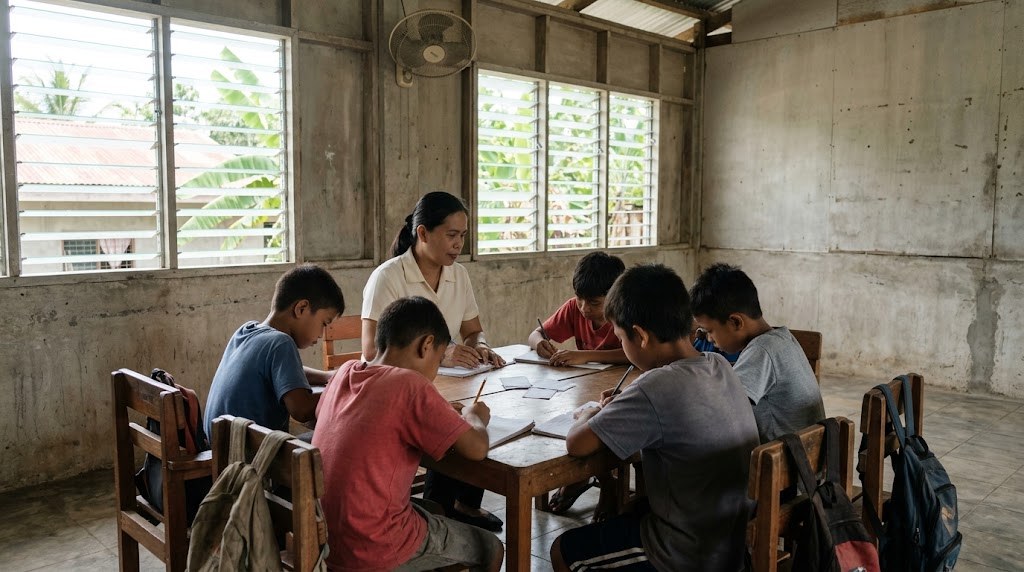
Public school teachers are government employees paid under the Salary Standardization Law, so a Teacher I in Quezon City and one in Davao start on the same basic salary.
Teachers in private schools are private-sector employees, and the school sets the salary within labor law. The Constitution gives the State “reasonable supervision” over all schools, but no law sets a national pay scale for private school teachers. That is why two private schools in the same city can pay very differently.
| Public school (DepEd) | Private school | |
|---|---|---|
| Who sets the salary | National law: salary grades and the EO No. 64 schedule | The school, as employer |
| Can you look it up? | Yes, to the peso (DBM salary schedule) | Only in your own contract or offer |
| Legal floor | The salary grade of the position | The regional minimum wage set by the Wage Board |
| Raises | Tranches set by executive order; step increments | School policy; 70% of tuition increases goes to personnel pay (RA 6728) |
| Extra government support | Teaching Allowance of ₱10,000 a year (RA 11997); ₱7,000 Medical Allowance (EO No. 64) | ₱24,000 a year Teacher Salary Subsidy, only for qualified teachers in ESC schools |
| Licence | Required (RA 7836) | Required (RA 7836) |
Public school teacher salary Philippines 2026, per month
Under the DepEd-DBM Joint Circular No. 01, s. 2025, Teacher I is Salary Grade 11, Teacher II is SG 12, Teacher III is SG 13, and Master Teacher I is SG 18. Executive Order No. 64, s. 2024 raises the salary schedule in four tranches: January 2024, 2025, 2026 and a final one on 1 January 2027. The 2026 figures below are from Annex A of DBM National Budget Circular No. 601, effective 1 January 2026.
| Position | Salary Grade | 2026 per month, Step 1 | 2026 per month, Step 8 | From 1 Jan 2027, Step 1 |
|---|---|---|---|---|
| Teacher I | SG 11 | ₱31,705 | ₱33,611 | ₱33,387 |
| Teacher II | SG 12 | ₱33,947 | ₱35,850 | ₱35,650 |
| Teacher III | SG 13 | ₱36,125 | ₱38,241 | ₱37,828 |
| Master Teacher I | SG 18 | ₱53,818 | ₱57,842 | ₱56,332 |
Basic monthly salary for national government personnel only, before deductions. Steps rise with length of service in the same position. Sources: DBM NBC No. 601 (Annex A); EO No. 64, s. 2024, Section 3 (fourth tranche).
Two allowances are set in law on top of basic pay: a tax-free Teaching Allowance of ₱10,000 per school year from SY 2025-2026 under RA 11997, and a Medical Allowance of up to ₱7,000 a year from FY 2025 under EO No. 64, subject to DBM guidelines.
Read the table the right way. It shows what a plantilla position pays, not how fast you will reach it. Getting a Teacher I item means applying when your division has openings, and promotion depends on vacancies, reclassification and standards.
The rules that do apply to private school pay
Four official anchors shape private school pay. You can check each one yourself.
1. Regional minimum wage
Each Regional Tripartite Wages and Productivity Board sets daily minimum wages for private-sector workers. In the National Capital Region, NWPC lists ₱755 a day for non-agriculture workers under Wage Order No. NCR-28, effective 26 September 2026.
2. The 70% tuition rule
Republic Act No. 6728 (GASTPE Act) requires that 70% of tuition fee increases go to the salaries, wages, allowances and benefits of teaching and non-teaching staff, excluding administrators who are principal stockholders.
3. Teacher Salary Subsidy
Under GASTPE, the State Assistance Council approved raising the TSS from ₱18,000 to ₱24,000 a year per qualified teacher (announced in 2025). Eligible teachers are licensed, full-time in an ESC participating private school, and teach ESC grantees at least three hours a week.
4. The same licence
Republic Act No. 7836 says no one may be appointed to a teaching position without a valid certificate of registration and professional licence from the PRC, in public and private preschool, elementary and secondary schools alike.
The 70% rule is worth knowing in detail. It means that when your school raises tuition, most of the increase is earmarked for personnel. It applies to increases, not to the whole tuition, and does not say how the money is divided among staff.
Private elementary teacher salary: what is different
For a teacher in a private elementary school, the picture has one gap. The Educational Service Contracting (ESC) scheme in RA 6728 (Section 7) is a high school program: the government pays the fees of students who enrol in private high schools under it. The Teacher Salary Subsidy is tied to teaching ESC grantees. A teacher who teaches only elementary grades therefore does not teach ESC grantees, and the TSS does not reach them under the current rules. Coverage could change, so check with your school or PEAC, which administers the subsidy.
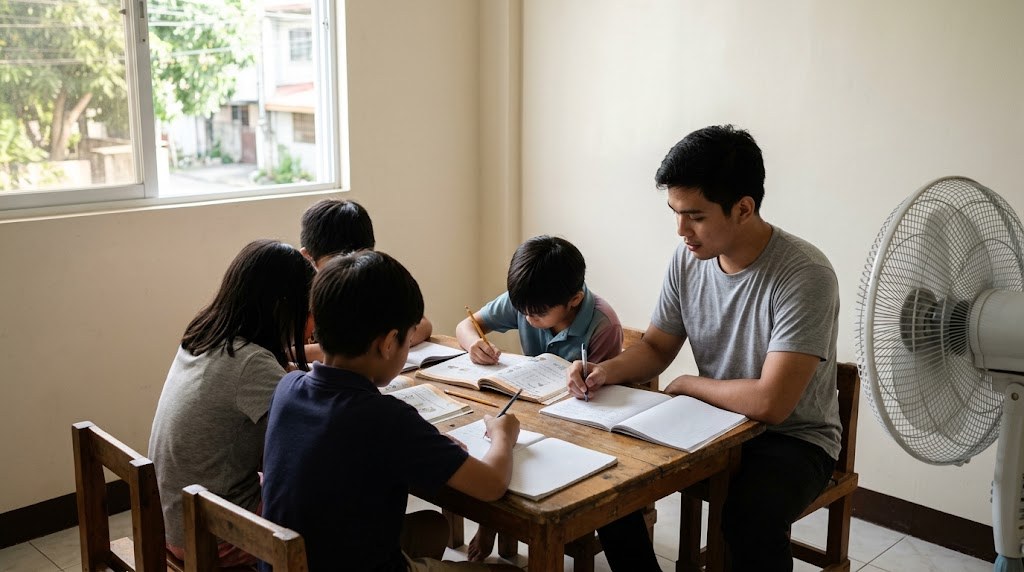
In practice, a private elementary salary depends mostly on the school’s tuition, enrolment and policy. Ask how salaries are set and when the last adjustment was made.
How to compare a private and a public offer
A monthly figure hides most of the difference. Get these answers in writing for each offer.
- Basic monthly salary, and how many months a year it is paid
- Employment status: probationary, contractual or regular, and how long until regular status
- Whether you are paid during summer break and other non-teaching periods
- Allowances: Teaching Allowance, Medical Allowance (public), TSS eligibility (private ESC schools)
- How raises happen: tranches and steps (public) or school policy and tuition increases (private)
- Workload: teaching hours, advisory class, extra duties
- Which government contributions are deducted from your pay, and which benefits come with them
- Rules on outside work: public school teachers need permission for part-time work, explained in our guide to side hustles for teachers in the Philippines
Moving from a private to a public school, step by step
Applications are run by each Schools Division Office (SDO), so dates and forms differ. This is the usual order.
- Hold a valid PRC licence. RA 7836 requires a certificate of registration and a professional licence for any teaching position. Check the eligibility listed in the qualification standards of the post.
- Watch your SDO’s call for applications. Divisions post memoranda when Teacher I items open, with the qualification standards attached.
- Prepare the documents. As one example, SDO Imus City’s 2026 call for teaching positions asked for a letter of intent to the Schools Division Superintendent, the Personal Data Sheet (CSC Form No. 212, Revised 2017) with work experience sheet, a copy of the PRC licence and the rating or eligibility.
- Go through the assessment. Divisions evaluate and rank applicants under DepEd’s hiring and promotion guidelines (DepEd Order No. 20, s. 2024 in the Imus call).
- Accept the appointment and the salary step. A new Teacher I normally starts at Step 1 of SG 11.
If you later decide to leave government service, the rules and paperwork are covered in our guide to DepEd teacher resignation.
Other next steps: online, abroad, or leading a school
Salary is often the starting point; the real question is what work you want for the next ten years.
| Path | What changes | What to check first | Read more |
|---|---|---|---|
| Public school (DepEd) | A salary you can look up; a national career ladder | Open items in your division; licence and eligibility | Steps above |
| Online teaching, home-based | Hours and income depend on the platform and your contract | Employee or contractor; BIR registration; scams | Online teaching jobs |
| Side income alongside teaching | Extra income without leaving your post | Permission rules for public school teachers | Side hustles for teachers |
| Teaching abroad | A different country’s pay and rules | DMW-licensed agencies; visas; recognition of your licence | Teaching jobs abroad |
| Leading a school | You run the organisation; pay is tied to its results | Your experience leading and hiring a team | School principal guide |
Thinking about leading a school instead of comparing payslips?
NIJIN is looking for one person to start and lead NIJIN Academy Philippines, as both its business head and its principal. Teaching experience is not required. You can start on a service contract, alongside your current job, and decide later whether to become a co-owner.
See the Country Head role in the PhilippinesLeading a school: NIJIN Academy Philippines
NIJIN Academy is an alternative school in Japan for elementary and junior high school students who do not fit conventional school, many of whom had stopped attending. It opened in September 2023 and is run by NIJIN Inc., founded by Tatsuro Hoshino, a former public elementary school teacher of seven years. Children join from home through a metaverse campus, choose from about 100 live online classes a month in small, discussion-based groups, and can also attend physical classrooms across Japan.
Figures published by NIJIN. “Attendance recognition” means the child’s registered school counts learning at NIJIN Academy as school attendance.
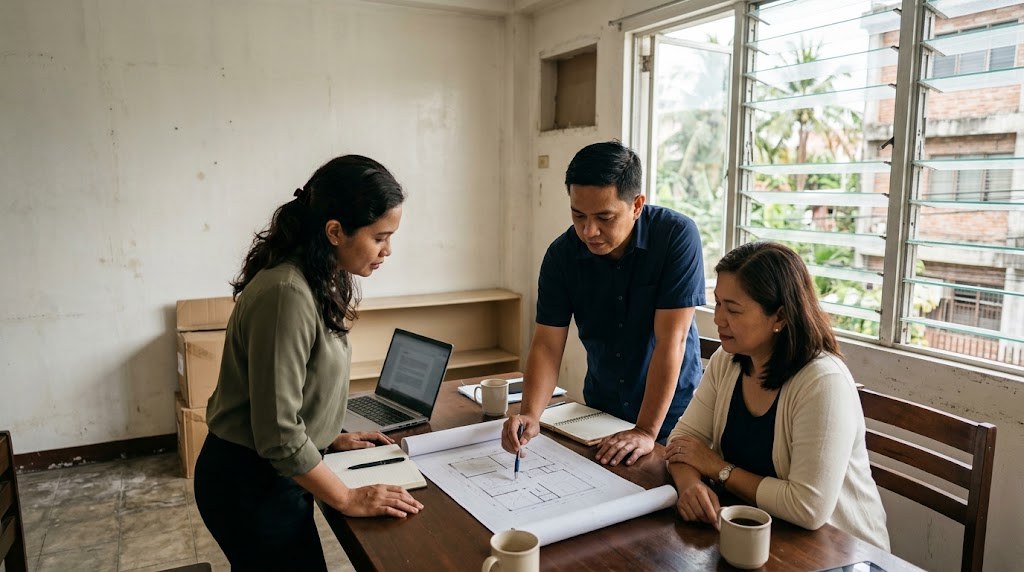
The Country Head finds families, hires and leads a team, grows revenue, and answers for what children experience each day. As a guide, the Country Head receives 10% of revenue (excluding tax). For example, JPY 100 million of revenue would mean JPY 10 million, JPY 200 million would mean JPY 20 million, and the cap is JPY 50 million at JPY 500 million or more. It is a guide, not a promise: with no revenue, it pays nothing. Amounts are in Japanese yen only. If you hand part of the work to someone else, they are paid from your 10%.
You can start on a service contract. You do not have to leave your school or invest money to begin. You can start NIJIN Academy Philippines on a service contract, as a side job alongside your current work, and decide later whether to become a co-owner. The compensation guide is the same either way: 10% of revenue. Investment is optional.
If you choose to become a co-owner, the usual example is a local company in which you hold 20% and NIJIN holds 80%, with a guide of JPY 1 to 2 million from you and JPY 4 to 8 million from NIJIN. In the Philippines, though, Article XIV, Section 4(2) of the Constitution says educational institutions, other than those established by religious groups and mission boards, must be owned by Filipino citizens or by corporations at least 60% Filipino-owned. So the 20/80 split is only an example. The actual structure would be decided to fit Philippine law, in the interview and with professional advisers. NIJIN Academy is not a franchise.
The role asks for leadership, management, business ability and a principal’s skills. Ideally you work in three languages: an official language of the Philippines, English and Japanese. English alone is fine. Contract type, location and timing are to be discussed in the interview.
Questions and answers
How much is the private school teacher salary in the Philippines per month?
There is no official figure. Each school sets its own salary, at or above the regional minimum wage. Compare your written offer with the public scale (₱31,705 a month for Teacher I, Step 1, in 2026).
What is the public school teacher salary in the Philippines in 2026?
Teacher I (SG 11) earns ₱31,705 to ₱33,611 a month, Teacher II (SG 12) ₱33,947 to ₱35,850, and Teacher III (SG 13) ₱36,125 to ₱38,241, under the third tranche of EO No. 64, effective 1 January 2026. The fourth tranche takes effect on 1 January 2027.
Do private school teachers get the same salary increase as public school teachers?
Not automatically. EO No. 64 covers government personnel. Private school pay changes through school policy, minimum wage orders and the RA 6728 70% rule on tuition increases.
What is the Teacher Salary Subsidy for private school teachers?
A GASTPE subsidy, raised from ₱18,000 to ₱24,000 a year, for licensed, full-time teachers in ESC participating private schools who teach ESC grantees at least three hours a week.
Is a private elementary teacher salary lower than in high school?
There is no official data comparing them. One structural difference is real, though: the Teacher Salary Subsidy is linked to ESC, a high school program, so teachers who teach only elementary grades do not receive it under the current rules.
Can I apply to be a Country Head while still teaching?
Yes. You can start on a service contract, as a side job alongside your current work. Public school teachers should also follow the rules on outside work. Compensation is, as a guide, 10% of revenue; no income is guaranteed.
Build a school in the Philippines for children who do not fit school
If you have led a team, hired people, and want to build something of your own in education, read the role and apply. You can start on a service contract, alongside your current work.
Where to go next
- LET passing rate through the years
- Country Head: Philippines
- Country Head (global)
- NIJIN careers in English
Related guides for teachers in the Philippines
- Side hustle for teachers in the Philippines: DepEd rules
- Online teaching jobs in the Philippines: home-based guide
- DepEd teacher resignation: requirements, process and letter
- Teaching jobs abroad for Filipino teachers
- How to become a school principal in the Philippines
- How to become a teacher in the Philippines: LET to Teacher I
- DepEd teacher salary 2026: salary grades, steps and 2027
Related reading
 How to Open a Preschool in the Philippines: LGU vs DepEdOpening a preschool in the Philippines means two different…
 ALS Meaning in School: Alternative Learning System Philippines ExplainedHow the Alternative Learning System (ALS) works under the …
 Alternative School: Meaning and 5 Differences vs TraditionalWhat actually differs between alternative and traditional …
 How to Start a School Without Money: What Is PossibleWhat you can and cannot do without money when starting a s…
Sources
Salary figures are basic monthly rates for the year stated. Please check the original documents for later updates.
- https://www.dbm.gov.ph/wp-content/uploads/Issuances/2026/National-Budget-Circular/NATIONAL-BUDGET-CIRCULAR-NO.-601_NEW.pdf
- https://www.dbm.gov.ph/wp-content/uploads/Issuances/2025/Joint-Circular/DEPED-DBM-JOINT-CIRCULAR-NO-1-s2025-DATED-FEBRUARY-19-2025.pdf
- https://lawphil.net/executive/execord/eo2024/eo_64_2024.html
- https://lawphil.net/statutes/repacts/ra2024/ra_11997_2024.html
- https://lawphil.net/statutes/repacts/ra1989/ra_6728_1989.html
- https://lawphil.net/statutes/repacts/ra1994/ra_7836_1994.html
- https://lawphil.net/consti/cons1987.html
- https://nwpc.dole.gov.ph/ncr/
- https://ptvnews.ph/deped-oks-subsidy-hike-for-private-school-teachers/
- https://www.depedimuscity.com/portal/uploads/DM_014_s_2026_v.2_.pdf
- https://nijin.co.jp/recruit/nijin-academy-philippines-country-head/
- https://academy.nijin.co.jp/