
For early childhood founders in the Philippines
To open a preschool in the Philippines, first decide the age of the children you will take: a centre for children below five is a Child Development Center or Learning Center that registers with your city or municipal hall and gets its permit to operate from the Mayor under ECCD Council standards, while a Kindergarten for five-year-olds is part of basic education and needs a Government Permit from the Department of Education (DepEd). Many founders need both: two files, two offices.
This guide explains that split, which most guides on how to open a preschool in the Philippines skip, then walks through each route. It is not legal advice: confirm every point in writing with the office named.
In this article
- Daycare or preschool? The age decides who licenses you
- The laws behind the split
- Route 1: a centre for children below five (LGU permit)
- Route 2: a private Kindergarten (DepEd permit)
- Checklist before you sign a lease
- Play school, online or franchise?
- Can you open a preschool for free?
- Leading a school, not only opening one
- Questions and answers
Daycare or preschool? The age decides who licenses you
Short answer: In the Philippines the licence follows the child’s age, not the name on the sign. A daycare, nursery or play school for children below five is permitted by your city or municipal hall under the ECCD Council’s standards. A preschool that offers Kindergarten (age five, required for Grade 1) needs a Government Permit from your DepEd Schools Division Office.
In everyday usage, “daycare”, “nursery”, “play school” and “preschool” overlap. The law draws one line: age five. Since the Early Childhood Care and Development System Act (Republic Act No. 12199) took effect in 2025, the ECCD Council is responsible for children below five years of age, and DepEd is responsible for children from five to eight, which includes Kindergarten. The same law says local government units (LGUs) administer the recognition and accreditation of private ECCD programmes.
| Daycare / Child Development Center or Learning Center | Preschool that offers Kindergarten | |
|---|---|---|
| Children | Below five years old (the ECCD Council’s 2015 standards cover 0 to 4) | Kindergarten: one year for children at least five years old, required for entry to Grade 1 |
| National rule-maker | ECCD Council (national standards and policies) | DepEd (authority over private kindergarten institutions) |
| Where you apply | City or municipal hall: the Mayor’s office through the social welfare and development office or the ECCD office | Your DepEd Schools Division Office, for a Government Permit; new schools get a joint inspection by the Regional Office and the division |
| Main document | Permit to operate signed by the Mayor (three years under the 2015 guidelines) | Government Permit (temporary permit to operate, per school year), later Government Recognition |
| Business registration asked for | SEC or DTI registration, plus the Mayor’s business permit | An educational corporation registered with the SEC; the incorporation rule may be waived for family-administered pre-schools |
| Quality step after opening | Recognition at three levels, sought after about three years | Government Recognition after the permit years |
Sources: RA 12199 (2025), RA 10157 (2012), Batas Pambansa Blg. 232 (1982), and the ECCD Council’s 2015 Standards and Guidelines and Guidelines on Registration and Granting of Permit and Recognition. The 2015 guidelines predate RA 12199; ask your LGU which rules it applies today.
The laws behind the split
Four texts do most of the work.
- Republic Act No. 10157, the Kindergarten Education Act (2012). Kindergarten is one year for children at least five years old, compulsory for entrance to Grade 1, and DepEd has authority over the operation of private kindergarten institutions.
- Republic Act No. 12199, the Early Childhood Care and Development System Act (approved 8 May 2025). It repealed the Early Years Act of 2013 (RA 10410). It requires at least one Child Development Center (CDC) in every barangay and makes LGUs, through an ECCD Office in every province, city and municipality, primarily responsible for implementation.
- Batas Pambansa Blg. 232, the Education Act of 1982. Section 25 says any private school proposed to be established must incorporate as a non-stock educational corporation, and adds that this “may be waived in the case of family-administered pre-school institutions”.
- The 1987 Constitution, Article XIV, Section 4(2). Educational institutions (except those of religious groups and mission boards) must be owned by Filipino citizens or by corporations at least 60% Filipino-owned, under Filipino control and administration.
On the DepEd side, the base text for private schools is still DepEd Order No. 88, s. 2010, the Revised Manual of Regulations for Private Schools in Basic Education, read with later amendments. A Schools Division Office circular explains that DepEd Order No. 26, s. 2023 gave some schools two extra years to meet permit requirements, but not the SEC requirements or the occupancy permit from the LGU.
Route 1: a centre for children below five (LGU permit)
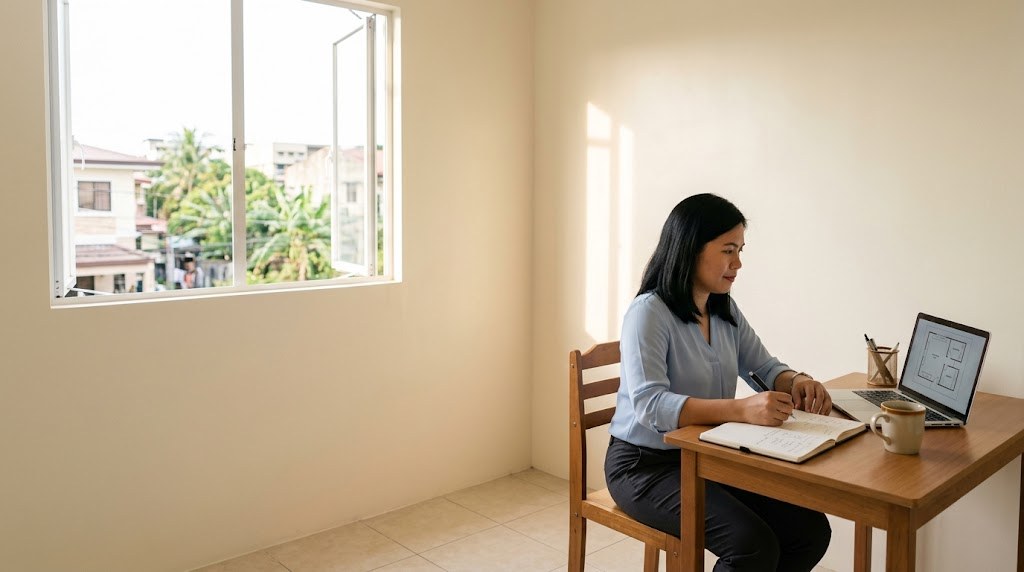
If you want to open a daycare or a toddler programme, this is your route. The ECCD Council’s 2015 Guidelines on Registration and Granting of Permit and Recognition, still posted on its standards page, set out these steps for private Learning Centers. Your LGU may use its own forms.
- Register six months or more before you open. At the Mayor’s office, through the city or municipal social welfare and development officer or ECCD officer. The centre’s administrator or director registers it.
- Apply for the permit to operate at the same time. Pay the application and inspection fee at the treasurer’s office.
- Submit five sets of documents. SEC or DTI registration; a centre profile (location, ownership, goals, programmes); pictures and descriptions of the lot, rooms, facilities and materials; numbers of children and the staff list; other information about the centre.
- Inspection about a month later. The social welfare or ECCD office visits, then reports to the Mayor within a week with a recommendation.
- Permit to operate for three years. A qualified centre gets a permit signed by the Mayor. A centre that falls short may get a one-time temporary permit for one year, with five months to a year to fix what is missing.
- Seek recognition after about three years. A letter of intent, an internal assessment of at least three months, then an external assessment. Recognition has three levels, valid for three, four or five years.
The 2015 standards also say what inspectors look for: SEC registration and a Mayor’s business permit, a teacher-child ratio of at least 1:10 (with a teacher aide or trained volunteer if a group reaches the maximum of 1:25), at least two adults trained in health care, nutrition and emergencies, and a barangay certificate or NBI clearance with three character references for teacher aides.
Route 2: a private Kindergarten (DepEd permit)
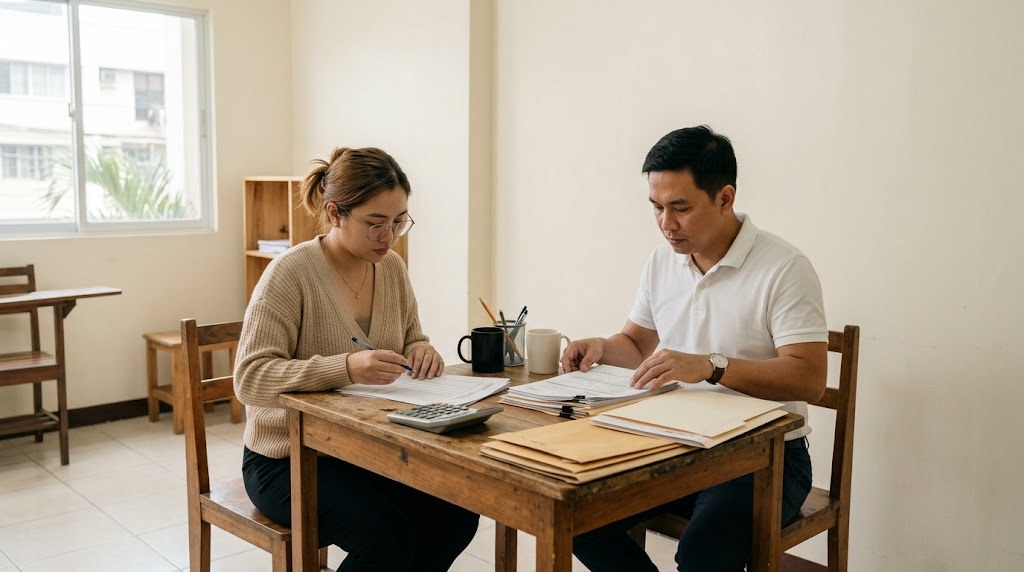
If you will enrol five-year-olds in Kindergarten, you are opening a private school, even if it has one classroom. In short:
- The operator. BP 232 expects a non-stock educational corporation registered with the SEC, with the waiver for family-administered pre-schools noted above. Ownership must meet the 60% Filipino rule in the Constitution.
- The file. You apply through your Schools Division Office for a permit to operate covering Kindergarten. A 2026 Dasmariñas City division memorandum describes a division pre-ocular inspection before the joint onsite inspection by the Regional Office and the division.
- The permit. It covers the named grade levels for one school year, and is renewed until you qualify for Government Recognition.
The full document list, timeline and renewal are in our guide to the DepEd permit to operate; how to start a school in the Philippines covers Kindergarten to senior high school.
The common mistake. A founder gets an LGU permit for a daycare, then starts a “Kinder” class for five-year-olds in the same room. That class is part of basic education. Ask your Schools Division Office before you take a single five-year-old, so that the children’s Kindergarten year counts when they move to Grade 1.
Checklist before you sign a lease
Most of the money is committed when you sign for a building. Get these answers in writing first.
- Which ages will we serve in year one: below five, Kindergarten, or both?
- Which operator fits each route: SEC corporation, DTI business or family-administered pre-school?
- Does our ownership meet the 60% Filipino rule if we offer Kindergarten?
- Will the building get an occupancy permit for educational use, and a Mayor’s business permit at this address?
- Can we keep a 1:10 teacher-child ratio, with a second adult when groups grow?
- Do our staff have clearances, references and training in first aid and emergencies?
- Do we have six months before opening for LGU registration, and the DepEd deadline for a Kindergarten application?
Want to build a school, with a team that has already built one?
NIJIN Academy is an alternative school in Japan, opened in September 2023 by NIJIN Inc. Children join from home through a metaverse campus, choose from about 100 live online classes a month, and can also go to 50+ physical classrooms across Japan. NIJIN is looking for one person to start NIJIN Academy Philippines and lead it as both business head and principal. Teaching experience is not required.
See the Country Head role in the PhilippinesPlay school, online or franchise?
How to open a play school in the Philippines
“Play school” is a marketing name, not a legal category. If the children are below five, you follow Route 1; if you run Kindergarten, Route 2. A play-based curriculum is fully in line with the law: RA 12199 says the ECCD curriculum should use developmentally appropriate practice, “such as play, as its core component”.
How to open a preschool in the Philippines online
The ECCD Council’s 2015 standards are centre-based. RA 12199 mentions home-based and other alternative modalities, but we found no published rules for a private online preschool, so ask the ECCD Council and your LGU before you take fees. For Kindergarten, DepEd’s National Capital Region lists private schools holding homeschooling permits for SY 2025-2026 and SY 2026-2027, several of them offering Kindergarten: home learning runs inside a permitted school, not as a stand-alone online business. Our guide on becoming a homeschool provider in the Philippines goes further.
How to start a preschool franchise
A franchise gives you a brand, a curriculum and training, not a permit: the franchisee still registers with the LGU or applies to DepEd. Costs and contract checks are in our guide to the education franchise in the Philippines.
Can you open a preschool for free?
Honestly, no. Even the smallest centre pays for space, permits and trained adults, and it competes with free options: free public kindergarten under RA 10157 and a CDC in every barangay under RA 12199. You can lower the cost and risk legally:
| Way to lower the cost | What the official texts say | What to ask |
|---|---|---|
| Start with one age group | Children below five and Kindergarten are licensed by different offices | Which route can we complete first, with the least building work? |
| Family-administered pre-school | BP 232 says the incorporation requirement may be waived for these | Does our division accept this, and what proof does it want? |
| Work with the LGU | RA 12199 asks LGUs to develop partnerships with private ECCD providers, and sets up a fund for an ECCD Program Contracting Scheme with accredited private providers | Does our city or municipality contract private centres yet, and how do we get accredited? |
| Open small, then grow | A one-year temporary LGU permit exists for centres that fall short; DepEd permits are per school year and grade level | What is the smallest programme we can open properly? |
For more on money, see how to start a school without money and how to raise funds for a school.
Leading a school, not only opening one
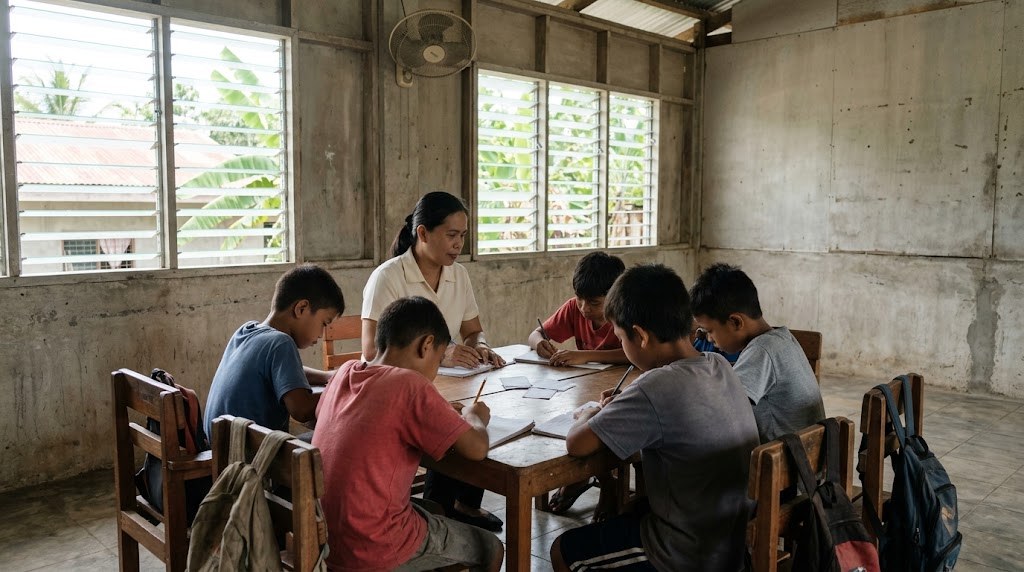
Many people searching this are teachers or managers who want to build something of their own. If leading a school draws you more than running one preschool, there is another route. NIJIN Academy in Japan serves elementary and junior high school students who do not fit conventional school, and now runs through to high school age. It is not a preschool and not a way around the steps above. It is a different project: building NIJIN Academy Philippines, with you as its Country Head.
Figures are those published by NIJIN. “Attendance recognition” means the child’s registered school counts learning at NIJIN Academy as school attendance.
- You can start on a service contract, even as a side job alongside your current work. Investment is optional.
- Compensation, as a guide, is 10% of revenue (excluding tax), with a cap of JPY 50 million: JPY 100 million of revenue gives JPY 10 million. This is not a forecast or a promise of income; with no revenue the formula pays nothing.
- If you co-own a local company, an example is 20% for you and 80% for NIJIN, with a guide of JPY 1 to 2 million from you and JPY 4 to 8 million from NIJIN. In the Philippines the structure must fit the 60% Filipino rule, so it is decided in the interview and with legal professionals.
- It is not a franchise. You lead the school.
Questions and answers
What are the requirements to open a preschool in the Philippines?
It depends on age. For children below five, register with your city or municipal hall at least six months ahead and get the Mayor’s permit to operate. For Kindergarten, apply to your DepEd Schools Division Office for a Government Permit.
How do I open a daycare in the Philippines?
Follow Route 1: register a business, then register the centre and apply for the permit to operate at your LGU. A Kindergarten class for five-year-olds needs a DepEd permit as well, because RA 10157 gives DepEd authority over private kindergarten institutions.
Can a foreigner open a preschool in the Philippines?
Not alone. The Constitution requires educational institutions (except those of religious groups and mission boards) to be at least 60% Filipino-owned and Filipino-run. How this applies to your centre is a legal question for a Philippine lawyer and the SEC.
How to open a preschool in the Philippines for free?
There is no free route, but you can lower costs: start with one age group, rent instead of building, check whether a family-administered pre-school fits you, and ask your LGU about partnerships with accredited private providers under RA 12199.
Is the Country Head role a job or a business?
It is a business you lead. You can start on a service contract alongside your current work or as a co-owner of a local company. Compensation is a guide of 10% of revenue, and every other term is discussed in the interview.
Start NIJIN Academy Philippines, and lead it
NIJIN is looking for one founder to start and lead NIJIN Academy Philippines as business head and principal. If you have led and hired a team, read the role.
Where to go next
Related guides for founders
- DepEd permit to operate: requirements for a new school
- How to start a school in the Philippines
- How to start a learning center in the Philippines
- Education franchise in the Philippines
- How to become a school principal in the Philippines
Sources
Laws and guidelines are cited as published. Please check the original and your local office for later changes.
- https://lawphil.net/statutes/repacts/ra2025/ra_12199_2025.html
- https://lawphil.net/statutes/repacts/ra2012/ra_10157_2012.html
- https://lawphil.net/statutes/repacts/ra2013/ra_10410_2013.html
- https://lawphil.net/statutes/bataspam/bp1982/bp_232_1982.html
- https://lawphil.net/consti/cons1987.html
- https://eccdcouncil.gov.ph/center-based-standards-guidelines/
- https://eccdcouncil.gov.ph/wp-content/uploads/2024/10/STANDARDS-AND-GUIDELINES-for-CENTER-BASED-FOR-ECCD-PROGRAMS-1.pdf
- https://eccdcouncil.gov.ph/wp-content/uploads/2025/02/Edited-Score-Interpretation-on-page-89-and-Final-GUIDELINES-ON-THE-REG.-AND-GRANTING-OF-PERMIT-AND-RECOGNITION-TO-PUBLIC-AND-PRIVATE-CDCs-LCs-with-Scoresheet.pdf
- https://www.depeddasma.edu.ph/?p=8419
- https://www.depeddasma.edu.ph/?p=22978
- https://www.depedncr.com.ph/homeschooling/
- https://nijin.co.jp/recruit/nijin-academy-philippines-country-head/