
For teachers in Vietnam
To teach English in Vietnam legally as a foreigner, you need a job offer from an employer in Vietnam and a work permit issued under Decree 219/2025/ND-CP, which replaced Decree 152/2020 on 7 August 2025: in practice that means a bachelor’s degree or higher, proof of relevant experience or teaching qualifications, a health certificate, a criminal record check issued no more than six months before you apply, and a passport, with foreign documents legalised and translated into Vietnamese. The permit is valid for up to two years, and your employer files the application.
Many of the guides that rank for “teaching English in Vietnam” were written under the old decree. This one is built from the text of the 2025 decree itself, published by the Government of Viet Nam. It does not give salary figures, because we could not confirm any from an official source.
In this article
- What changed in 2025: Decree 219 replaces Decree 152
- Teaching English in Vietnam: requirements and documents
- Degree, TEFL and the “expert” category
- The work permit, step by step
- Where English teachers work: centres, public schools, international schools, online
- Teaching English in Vietnam salary: what to check in an offer
- Beyond the classroom: the children Vietnam’s system still misses
- From teaching to leading: NIJIN Academy Vietnam
- Other routes: teaching online, Thailand and abroad
- Questions and answers
What changed in 2025: Decree 219 replaces Decree 152
For five years, the rules for foreign workers in Vietnam sat in Decree 152/2020/ND-CP, later amended by Decree 70/2023/ND-CP. On 7 August 2025 the Government issued Decree 219/2025/ND-CP on foreign workers working in Vietnam. It has 5 chapters and 36 articles and took effect on the day it was issued. The provisions on foreign workers in Decrees 152 and 70 stopped applying from that date.
The points that matter most for an English teacher:
| Topic | What Decree 219/2025 says | Article |
|---|---|---|
| Who issues the permit | The provincial People’s Committee where the employer has its head office, branch or place of business and where you will work. It may delegate this to another agency. | Art. 4 |
| Who counts as an “expert” | A bachelor’s degree or higher (or equivalent) and at least 2 years of experience suited to the job; or a degree in the field plus 1 year of experience in listed priority fields such as finance, science and technology. | Art. 3(3) |
| How long a permit lasts | The length of the contract or assignment, but never more than 2 years. | Art. 21 |
| How fast it is decided | Within 10 working days of a complete file. A refusal must be given in writing, with reasons, within 3 working days. | Art. 22 |
| Foreign documents | Must be consularly legalised (unless a treaty exempts them), translated into Vietnamese and certified. | Art. 5 |
The decree may be amended again. Before you rely on any single point, ask your employer which version its application follows, or check with the provincial public administration service centre that receives the file.
Teaching English in Vietnam: requirements and documents
The work permit file is set out in Article 18. Your employer submits it, but most of the documents come from you, and several have to be obtained in your home country before you fly. Start with the ones that take longest: the criminal record check and the legalisation of your degree.
| Document | What the decree requires | Practical note |
|---|---|---|
| Employer’s request | A written report explaining the need to employ a foreign worker and requesting the permit (Form No. 03) | Prepared by the school or centre, not by you |
| Health certificate | Issued by a qualified medical facility. A certificate from abroad is accepted only where Vietnam and that country recognise each other’s certificates, and only within 12 months of issue | Ask your employer whether a check in Vietnam or one from abroad will be accepted |
| Passport | Valid passport | Check how long it has left before you apply |
| Criminal record check | A criminal record certificate, or a document confirming you are not serving a sentence, do not have an unexpunged conviction and are not being prosecuted, issued by your country or by Vietnam no more than 6 months before the file is submitted | Order it close to your application date, not months ahead |
| Photos | 2 colour photos, 4 cm x 6 cm, white background, facing forward, head uncovered, no glasses | Easy to forget |
| Proof of job category | Documents showing you are a manager, executive, expert or technical worker (Art. 19). For an expert: degree certificate and a letter from a previous employer confirming years of experience | See the next section for education jobs |
Every foreign document in the list has to be legalised and translated (Article 5). If you have already worked in Vietnam, Article 19 lets a previous work permit stand in for the proof of experience.
Degree, TEFL and the “expert” category
Most English teachers apply as experts. Under Article 3(3), that means a bachelor’s degree or higher and at least two years of experience that fits the job. Article 19(3)(đ) adds a line written for education: experts working in education and training must show qualifications that meet the standards of the Law on Education, the Law on Higher Education or the Law on Vocational Education, and experts working in a foreign language or IT centre must meet the centre’s own rules of organisation and operation.
What does this mean for TEFL, TESOL or CELTA? The decree itself does not name any of them. Whether you need one, and which, depends on the kind of institution and the education rules behind it. Do not pay for a course until the employer has told you, in writing, which documents it will put in your file for Article 19.
- Is my degree in a subject the employer will present as relevant, or will it rely on experience?
- Which teaching certificate does the institution need for its own rules: TEFL, TESOL, CELTA or a national teaching licence?
- Who pays for legalisation, translation and the health check?
- Will the employer file the work permit before I start, and what happens if it is refused?
- What visa or residence document follows the permit, and who handles it?
The work permit, step by step
- Accept an offer from a Vietnamese employer. The permit is tied to an employer, a job position and a form of work. No employer, no permit.
- Gather documents at home. Criminal record check (no older than 6 months at submission), degree, letters confirming experience, teaching certificate.
- Legalise and translate. Consular legalisation unless exempt, then translation into Vietnamese with certification (Art. 5).
- Health check. In Vietnam, or abroad only where mutual recognition applies, valid 12 months.
- Employer files the application. Between 60 and 10 days before your planned start date, to the provincial public administration service centre, in person, by post or online through the National Public Service Portal (Art. 6, Art. 22).
- Decision within 10 working days. The permit is issued on Form No. 04, for up to 2 years (Art. 21, Art. 22).
If you later change employer, job position or form of work, Article 20 says a new permit is needed. A permit that has been extended once cannot simply be extended again; the employer applies for a new one.
Already teaching in Vietnam, and thinking bigger?
If you have taught in Vietnam for a while, you may already see what the system does not offer some children. NIJIN, an education company in Japan, is looking for one person to start and lead NIJIN Academy Vietnam, as both business head and principal. Teaching experience is not required; experience of leading and hiring a team is what matters. You can start on a service contract alongside your current work.
See the Country Head role in VietnamWhere English teachers work: centres, public schools, international schools, online
“Teaching English in Vietnam jobs” covers very different workplaces. The legal basis is the same work permit, but the education rules behind Article 19(3)(đ), the hours and what the employer expects differ.
| Where | What the job usually is | Rules that sit behind it | Ask before signing |
|---|---|---|---|
| Foreign language centre | Evening and weekend classes for children and adults | The centre’s own rules of organisation and operation (Art. 19(3)(đ)) | Contracted hours vs. teaching hours; who files the permit |
| Public school (through a centre or agency) | Weekday lessons in state schools, often placed by a third party | The Law on Education; the school’s and the agency’s arrangements | Who is legally your employer on the permit? |
| International school vietnam | A full curriculum taught in English, often for subject teachers rather than English only | The Law on Education and the school’s licence and curriculum | Which teaching licence it needs; contract length vs. the 2-year permit |
| Online, from Vietnam | Lessons for students in Vietnam or abroad | Depends on who employs you and where | Whether working online from Vietnam still needs a permit in your case |
For international school jobs, hiring, salary and fees are set school by school; we found no official figures to quote.
Teaching English in Vietnam salary: what to check in an offer
Search results for “teaching English in Vietnam salary” are full of numbers, mostly from recruiters, forums and Reddit threads. We could not find an official Vietnamese source that publishes pay for foreign English teachers, so we do not repeat any. What you can control is how you read an offer.
Five lines that matter more than the headline rate.
- Is pay hourly or monthly, and how many hours are guaranteed?
- Are preparation time, travel between sites and cancelled classes paid?
- Who pays for the work permit, legalisation, translation and health check?
- Is the contract length the same as the permit length (no more than 2 years)?
- Is pay shown before or after Vietnamese personal income tax?
Beyond the classroom: the children Vietnam’s system still misses
Vietnam’s schools have a strong reputation, and many foreign teachers see it in the motivation of their students. The averages do not reach every child. UNICEF Viet Nam reports that just under half of children from rural areas, and one third of those from the poorest households, complete upper secondary education; only one in ten children with disabilities attends secondary school; and just one in five ethnic minority students reach upper secondary school or higher.
Families who want something different usually look at international schools, tutoring, online schools and, more and more, learning at home. We looked at that last option, including what the law says about it, in homeschooling in Vietnam. What is scarce is a place in between: a real school community for children who do not fit the usual school, which families can reach from Hanoi, Ho Chi Minh City or a province far from both.
From teaching to leading: NIJIN Academy Vietnam

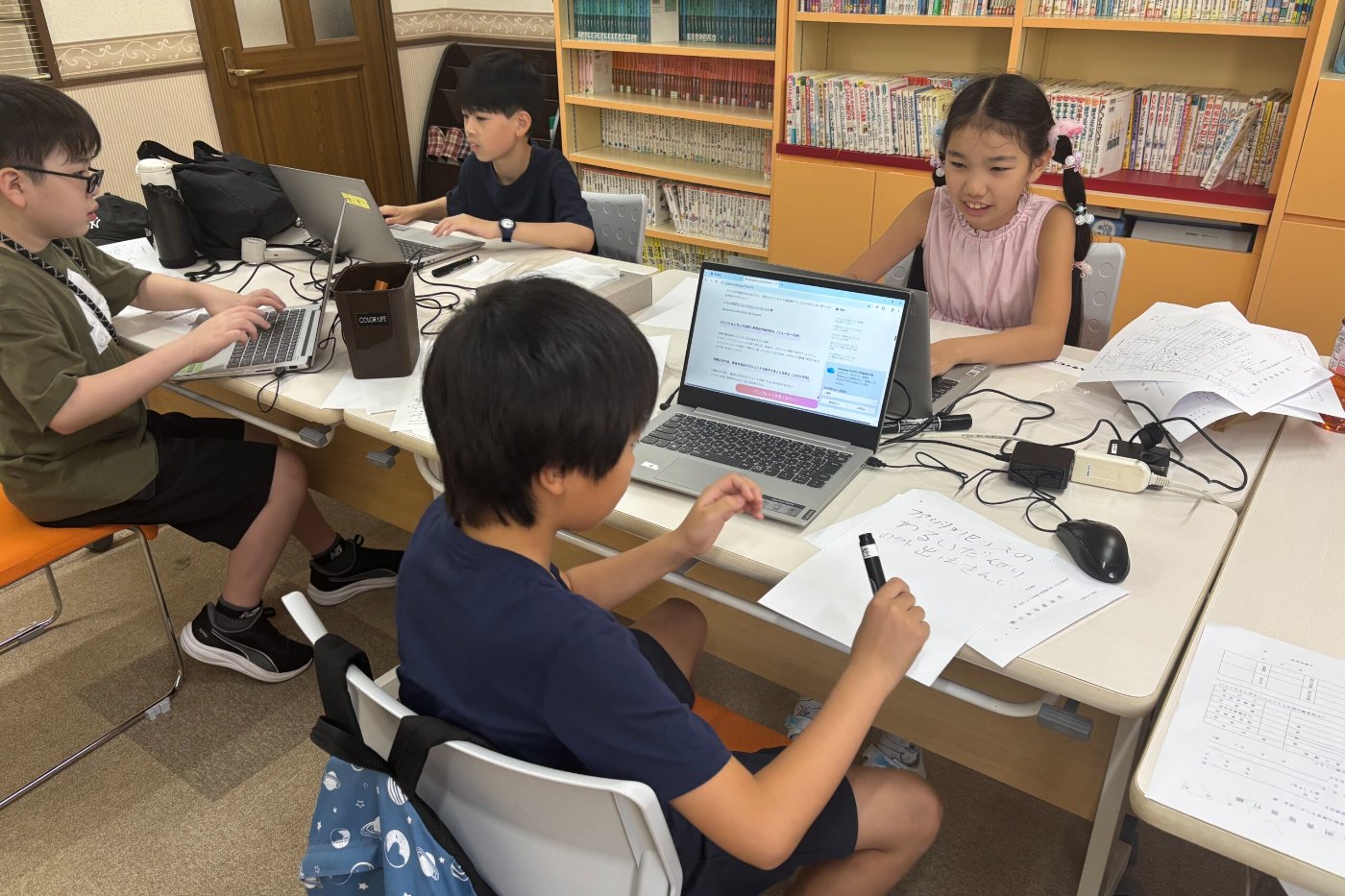
NIJIN Academy is an alternative school in Japan for children who do not fit conventional school; many of them had stopped going altogether. It opened in September 2023 and is run by NIJIN Inc., founded by Tatsuro Hoshino, who taught at a public elementary school for seven years. Children join from home through a metaverse campus, choose from about 100 live online classes a month, and can also go to physical classrooms across Japan.
Figures are those published on NIJIN’s official websites.
NIJIN now wants a NIJIN Academy in Vietnam, and is looking for one Country Head to start it and lead it: business head and principal in one role. For an English teacher, this is a different question from “which centre should I work for next?” It is: could I build the school I wish my students had?
| Teaching English in Vietnam | Country Head, NIJIN Academy Vietnam | |
|---|---|---|
| What you do | Teach classes set by an employer | Build and run the school: families, team, revenue, and what children experience each day |
| Teaching experience | Usually expected | Not required; leading and hiring a team is what counts |
| How you start | Employment contract and work permit | A service contract, even alongside your current work, or co-owner of a local company. Investment is optional |
| Pay | Set by the employer | As a guide, 10% of revenue (excluding tax), capped at JPY 50 million; not guaranteed |
| Languages | English | Ideally Vietnamese, English and Japanese; English alone is fine |
It is not a franchise: you do not buy into a ready-made package; you build the school with NIJIN. You can start on a service contract, even as a side job alongside your current teaching, and decide later whether to become a co-owner of a local company (for example 20% of the shares for you and 80% for NIJIN). Investment is optional; if you do invest, the guide is JPY 1 to 2 million from you and JPY 4 to 8 million from NIJIN, decided together. Either way, the compensation guide is the same: 10% of revenue excluding tax. JPY 100 million of revenue gives JPY 10 million, JPY 200 million gives JPY 20 million, and the cap of JPY 50 million is reached at JPY 500 million. This is a guide, not a promise of income: with no revenue, the formula pays nothing. If you ask someone else to do part of the work, they are paid from your 10%. Contract type, location and timing are discussed in the interview.
Whether NIJIN Academy Vietnam becomes a school, an education centre or an online programme, and under which Vietnamese rules, is not decided yet. Working that out is part of the role.
Other routes: teaching online, Thailand and abroad

Not everyone wants a work permit and a classroom. Some teachers in Vietnam add online lessons for learners in other countries; if that is you, our guide to teaching Japanese students online covers what Japanese learners and parents expect, and remote teaching jobs compares the main kinds of online work. Check your own legal position before you take paid online work while living in Vietnam.
“Teaching English in Vietnam vs Thailand” is a common search. We do not compare pay, for the same reason as above. The bigger difference for a long-term plan is how each country’s education system works for families; for Thailand, see online school in Thailand. And if you are a Filipino teacher weighing Vietnam against other countries, start with the safety checks in teaching jobs abroad for Filipino teachers.
Questions and answers
What are the teaching English in Vietnam requirements in 2026?
Under Decree 219/2025/ND-CP: a job offer from an employer in Vietnam, a bachelor’s degree or higher with at least 2 years of relevant experience (the “expert” category) or qualifications meeting Vietnam’s education laws, a health certificate, a criminal record check issued within 6 months of the application, a valid passport and two photos. Foreign documents must be legalised and translated.
Is there an age limit for teaching English in Vietnam?
The work permit documents listed in Article 18 of Decree 219/2025 do not include an age requirement. Age limits you read about online come from employers’ own policies or from other rules; ask the employer directly rather than relying on forum posts.
Can a non native speaker teach English in Vietnam?
The decree’s tests are about degrees, experience and qualifications, not nationality or first language. Whether an employer hires non-native speakers is its own decision. If you are a non-native speaker, a recognised teaching certificate and proof of experience make your Article 19 documents stronger.
Do I need a TEFL to teach English in Vietnam?
Decree 219/2025 does not name TEFL. It requires experts in education to meet the standards of Vietnam’s education laws, and those working in a foreign language centre to meet the centre’s rules. Employers set their own requirements; confirm which certificate, if any, before you pay for a course.
Is teaching English in Vietnam Reddit advice still reliable?
Use it with care. Threads written before 7 August 2025 describe Decree 152/2020, which no longer applies to foreign workers. Check any rule you read there against the 2025 decree or your provincial authority.
How long is a work permit for English teachers in Vietnam?
No more than 2 years, matched to your contract or assignment (Article 21). Changing employer or job position needs a new permit (Article 20).
Is the Country Head role a teaching job in Vietnam?
No. It is a business: you start and lead NIJIN Academy Vietnam as business head and principal. Teaching experience is not required. You can start on a service contract alongside your current work, investment is optional, and pay is 10% of revenue as a guide, not a salary.
Teach for a while, or build a school in Vietnam
If you have led a team in Vietnam, in a school, a language centre or any organisation, and you want to build a place for children who do not fit school, read the role and apply. Applications are in English and every one is read.
Where to go next
Related guides
- Homeschooling in Vietnam: what the law says and five formats
- The global teacher shortage: causes and solutions
- Jobs for former teachers
- How to start an education business
- How to start an online school
Sources
Legal points are taken from the signed text of Decree 219/2025/ND-CP (Articles 3 to 6 and 18 to 22) published by the Government of Viet Nam. Check the original and any later amendment before you rely on it.
- https://xdcs.cdnchinhphu.vn/446259493575335936/2025/8/9/219-cp-signed-1754711183671769495610.pdf
- https://hcc.nghean.gov.vn/tin-tong-hop/nghi-dinh-so-219-2025-nd-cp-quy-dinh-ve-nguoi-lao-dong-nuoc-ngoai-lam-viec-tai-viet-nam-2410.html
- https://www.unicef.org/vietnam/education
- https://academy.nijin.co.jp/
- https://nijin.co.jp/recruit/nijin-academy-vietnam-country-head/