For education founders
Vietnam’s Law on Education does not mention homeschooling by name: it makes primary and lower secondary education compulsory, and the recognised route for learning outside a regular school is continuing education (giáo dục thường xuyên), which is delivered through registered institutions. For Vietnamese families, that means planning how a child will be confirmed as having completed each level. For foreign families, the bigger question is usually whether a foreign curriculum and its certificates will be accepted where the child goes next.
This guide reads the official consolidated law, as amended from 1 January 2026. It is not legal advice. Details are set by the Ministry of Education and Training (MOET) and applied by each province’s Department of Education and Training (Sở Giáo dục và Đào tạo), so confirm your case with them in writing.
In this article
- Is homeschooling legal in Vietnam? What the law says
- Compulsory education in Vietnam from 2026
- Continuing education (giáo dục thường xuyên)
- Home schooling in Vietnam: Vietnamese and foreign families
- Ways of homeschooling in Vietnam: five formats
- Certificates and the next step: check before you start
- Homeschooling costs in Vietnam: the items to compare
- What families find hard to do alone
- Building the missing piece: NIJIN Academy Vietnam
- How a founder could start
- Questions and answers
Is homeschooling legal in Vietnam? What the law says
The main law is the Law on Education No. 43/2019/QH14, in force since 1 July 2020 and amended by Law No. 123/2025/QH15, mostly from 1 January 2026. We searched the 2026 consolidated text from the Office of the National Assembly: it has no term for homeschooling and no procedure for registering education at home in place of school.
Singapore, by contrast, runs a formal exemption process (see homeschooling in Singapore). In Vietnam, the law sets duties and recognised forms of education. These are the articles to read first.
| Article (consolidated text) | What it says, in short | Why it matters for learning at home |
|---|---|---|
| Article 5(1), 5(2) | Defines formal education (giáo dục chính quy) and continuing education, organised flexibly in form, time, method and place | The flexible part of the national system |
| Article 14 | Primary and lower secondary education are compulsory; citizens of the set age must study to complete them; families must create the conditions for this | Parents carry a legal duty for completion, whatever the format |
| Article 43(2) | Continuing education can be delivered as work-and-study, distance learning, self-study and guided self-study, and other forms | Self-study and distance learning are named forms, inside continuing education programmes |
| Article 44 | Continuing education is delivered through continuing education centres, community learning centres, schools and other institutions | The programme sits with an institution, not with the family alone |
| Articles 34 and 45 | How completion is confirmed and how the upper secondary diploma is awarded, in schools and in continuing education | This decides what the child can show at the next step |
Our summaries of consolidated text 72/VBHN-VPQH. Some amended clauses apply from 1 July 2026. Check the original before relying on any point.
Compulsory education in Vietnam from 2026
Article 14, as amended, states that primary and lower secondary education are compulsory, and that the State provides universal preschool education for children aged 3 to 6. Article 28 sets the levels and entry ages of general education.
| Level | Grades and length | Entry age (Article 28) | Compulsory? | How completion is shown |
|---|---|---|---|---|
| Primary (tiểu học) | Grades 1 to 5, five years | 6 | Yes | The school principal confirms completion in the school record (học bạ) |
| Lower secondary (trung học cơ sở) | Grades 6 to 9, four years | 11 | Yes | The school principal confirms completion in the school record |
| Upper secondary (trung học phổ thông) | Grades 10 to 12, three years | 15 | No | Exam, then the upper secondary diploma; without it, a certificate of completion |
Note the change in Article 34: since 1 January 2026, finishing lower secondary is confirmed in the school record, and the diploma comes at the end of upper secondary. Article 28(4) leaves to MOET the cases where a student studies ahead or at a non-standard age, which can include a child joining a school after learning at home. Ask the school and the Department before planning such a move.
Continuing education (giáo dục thường xuyên)
Continuing education comes closest to what other countries call home education, but it is not the same thing: Article 41 describes it as lifelong learning that lets people work and study at the same time. Its programmes include literacy, programmes that meet learners’ needs, professional training, and, under Article 43(1)(d), the lower secondary programme and programmes leading to diplomas of the national system.
- Forms (Article 43(2)): work-and-study, distance learning, self-study and guided self-study, and other forms that suit the learner.
- Where (Article 44): continuing education centres, vocational and continuing education centres, community learning centres, and general, vocational and higher education institutions that run continuing education programmes.
- Recognition (Article 45): a learner who finishes the lower secondary programme is confirmed in the school record by the head of the institution. A learner who finishes the upper secondary programme may sit the exam; if they pass, they receive the upper secondary diploma, and if not, a certificate of completion.
The law itself does not settle who may enrol in each programme, from what age, or how a younger child’s learning is assessed. Those details sit in MOET regulations, so ask your provincial Department and the centre before counting on this route.
Home schooling in Vietnam: Vietnamese and foreign families
Searches for “home schooling in Vietnam” come from two different groups, and their questions differ.
| Question | Vietnamese family | Foreign family in Vietnam |
|---|---|---|
| Which curriculum? | Usually the national general education programme | Often a foreign curriculum or an online school from abroad |
| Main legal question | How will completion of primary and lower secondary be confirmed? | Is the child’s status as a learner clear in Vietnam and in the home country? |
| Next step to plan for | Rejoining a school, continuing education, the upper secondary exam | A school abroad, an international school in Vietnam, or a foreign exam |
| Certificate risk | A gap year with no record in the national system | A foreign certificate that must later be recognised in Vietnam |
Ways of homeschooling in Vietnam: five formats
People searching “ways of homeschooling” or “homeschooling by country” are usually choosing among these formats. In Vietnam, each leads to a different answer about records and certificates.
Parent-led at home
Parents teach with their own materials. Most freedom, least formal record.
Continuing education
A programme through a registered centre, including distance and guided self-study.
Foreign online school
Classes from a school abroad. Check its accreditation and what it issues.
Foreign curriculum, private exams
A foreign syllabus, with exams taken as a private candidate at an exam centre.
Tutors and learning groups
Shared tutors or small groups. Ask whether a regular group needs a licence.
Hybrid
Online classes plus in-person days with other children, as at NIJIN Academy in Japan.
The differences between home education, online school and alternative schools are explained in homeschooling vs online school vs alternative school; this article stays with Vietnam.
Want to build a place in Vietnam for children who do not fit school?
NIJIN Academy is an alternative school in Japan, opened in September 2023, for children who do not fit conventional school. It combines a metaverse campus, about 100 live online classes a month and 50+ physical classrooms across Japan. NIJIN is looking for one founder to start and lead NIJIN Academy Vietnam, as both its business head and its principal. Teaching experience is not required.
See the Country Head role in VietnamCertificates and the next step: check before you start
Do not choose a programme first and think about certificates later. Work backwards from where the child should be in three to five years.
- Name the next step. A Vietnamese lower or upper secondary school, the national upper secondary exam, a university in Vietnam, or a school or exam abroad.
- Ask what that step accepts. Ask the school or university, in writing, which record or certificate it needs for admission.
- Check the Vietnamese route. For the national path, ask the Department of Education and Training how completion will be confirmed (school record, continuing education programme, exam) and at which age the child can enter.
- Check recognition of foreign certificates. Diplomas issued by foreign institutions can be recognised for use in Vietnam under MOET Circular 13/2021/TT-BGDĐT, amended by Circular 07/2024/TT-BGDĐT. The application is made online to MOET or the provincial Department, with a copy of the diploma, a transcript and notarised Vietnamese translations.
- Check the provider. Is it accredited in its own country, and does it issue a report, a transcript, a diploma or exam board results?
- Keep records every term. Work samples, test results and reports make every later step easier.
Homeschooling costs in Vietnam: the items to compare
There is no official figure for homeschooling costs in Vietnam. Compare options line by line, with real quotes from your own city.
| Cost item | What to include | Who it applies to |
|---|---|---|
| Programme or school fees | Online school tuition, continuing education fees, curriculum packages | Most families |
| Exams and registration | Exam entry, private candidate fees at an exam centre, registration | Families using foreign exams or the national exam |
| Materials and devices | Books, a laptop or tablet, a reliable internet connection, software | All |
| Tutors | Subject tutors, language tutors, test preparation | Many families |
| Recognition and translation | Notarised translations, recognition fees for foreign diplomas | Families using foreign certificates |
| A parent’s time | Reduced working hours or income for the parent who teaches | Parent-led homeschooling |
What families find hard to do alone
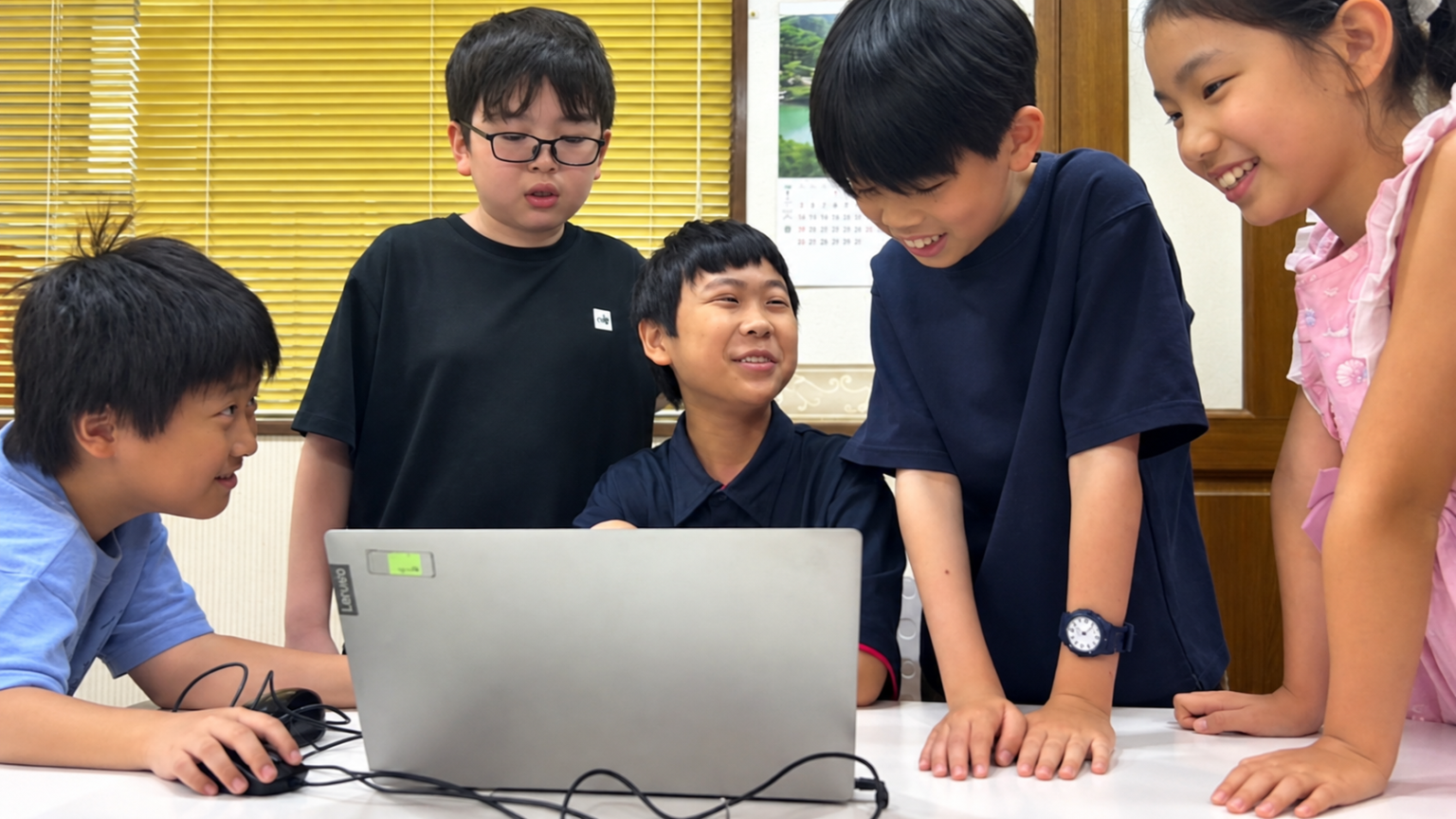
Most families who look into homeschooling in Vietnam do not reject school; they want something that works for one particular child. What they find hard to provide alone is consistent:
- Other children. A child at home with one parent misses classmates, friendships and group work.
- Range of teaching. No parent can teach every subject well up to Grade 12.
- A clear record. A family alone has no principal to confirm progress and no school record that the national system reads.
The need is real. UNICEF Viet Nam reports that just under half of children from rural areas complete upper secondary education, and that only one in ten children with disabilities attends secondary school.
Building the missing piece: NIJIN Academy Vietnam
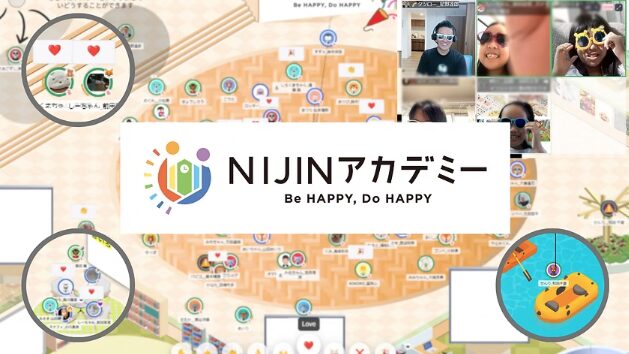
NIJIN Academy, founded by former public elementary school teacher Tatsuro Hoshino, is a school in Japan for children who do not fit conventional school; many had stopped attending. Children join a metaverse campus from home, choose from about 100 small, interactive live online classes a month, and can go to physical classrooms. With homerooms and a principal, it offers what families struggle to build alone: peers, teachers and a record.
Figures are those published on NIJIN’s official websites. “Attendance recognition” means the child’s registered school counts learning at NIJIN Academy as school attendance; this is a Japanese system.
NIJIN wants a NIJIN Academy in every country, led by a local founder. Whether it is set up in Vietnam as a school, an education centre, an online programme or something else is not decided; working that out under Vietnamese rules is part of the Country Head’s role.
How a founder could start
The Country Head is the business head and the principal of NIJIN Academy Vietnam. NIJIN Academy is not a franchise: you do not buy a brand and a manual. You can start on a service contract, even as a side job alongside your current work. You can also set up a local company together with NIJIN as a co-owner, for example 20% of the shares for you and 80% for NIJIN; the actual structure is decided in the interview, with professional advice under Vietnamese law. Investment is optional. If you choose to invest, the guide is JPY 1 to 2 million from you and JPY 4 to 8 million from NIJIN, decided together.
Either way, compensation is, as a guide, 10% of revenue excluding tax: JPY 10 million at JPY 100 million of revenue, JPY 20 million at JPY 200 million, capped at JPY 50 million. It is not a promise of income; with no revenue, the formula pays nothing. Anyone you ask to do part of the role is paid from your 10%. Other terms are to be discussed in the interview.
Teaching experience is not required. NIJIN looks for leadership, management, business ability and the skills of a principal; experience of managing an organisation and hiring people carries over directly. Ideally you work in Vietnamese, English and Japanese, but English alone is fine.
Questions and answers
Is homeschooling legal in Vietnam?
The Law on Education does not mention homeschooling by name, and it has no registration procedure for education at home. It makes primary and lower secondary education compulsory and recognises continuing education, including distance learning and guided self-study, through registered institutions. Ask your provincial Department of Education and Training how your plan fits.
Can foreigners homeschool in Vietnam?
Many foreign families use a foreign curriculum or online school. Check with the provider, your home country’s education authority and the provincial Department, and plan how a foreign certificate would be recognised if the child later studies in Vietnam.
How does a homeschooled child in Vietnam get a recognised certificate?
Inside the national system, completion of primary and lower secondary is confirmed in the school record, and the upper secondary diploma follows the exam, in schools and in continuing education programmes (Articles 34 and 45). Foreign diplomas can be recognised through MOET or the provincial Department under Circular 13/2021/TT-BGDĐT.
Can Vietnamese families homeschool and still go to university?
Ask each university, in writing, which certificates it accepts for admission. Inside the national system, the upper secondary diploma is awarded after the exam both in schools and in continuing education programmes (Articles 34 and 45), so a continuing education programme is one route to plan for. Confirm the details with the Department of Education and Training before you start.
Is advice from homeschooling Vietnam Reddit threads reliable?
Forums help with practical tips, but rules change: the law was amended from 1 January 2026. For legality, enrolment or certificates, rely on the official text and written answers from MOET or your provincial Department.
Is the Country Head role a job or a business?
It is closer to a business: you lead NIJIN Academy Vietnam as business head and principal, on a service contract (even as a side job) or as a co-owner. As a guide, compensation is 10% of revenue, capped at JPY 50 million; nothing is guaranteed.
Build a place in Vietnam for children who learn outside school
If you want to start a company in Vietnam and solve a problem in education, and you have led and hired a team, read the role and apply. Teaching experience is not required.
Where to go next
- Teaching English in Vietnam: 2026 Requirements, Work Permit
- Vietnam
- Thailand
- Indonesia
- Malaysia
- Philippines
- Country Head (global)
- NIJIN careers in English
Related guides
- Homeschooling in Singapore: MOE rules and options
- Homeschooling in Indonesia
- Homeschooling in India: is it legal?
- Homeschooling vs online school vs alternative school
- How to start a homeschool co-op
- How to start an online school
- Alternatives to public school
Sources
Legal summaries are from the official Vietnamese consolidated text as published in 2026. Please check the originals for later changes.
- https://datafiles.chinhphu.vn/cpp/files/vbpq/2026/3/72-vbhn-vpqh.pdf
- https://moet.gov.vn/
- https://hcc.nghean.gov.vn/tin-tong-hop/quy-dinh-ho-so-trinh-tu-ket-qua-cong-nhan-van-bang-do-nuoc-ngoai-cap-tu-2-11-2024-997.html
- https://www.unicef.org/vietnam/education
- https://nijin.co.jp/recruit/nijin-academy-vietnam-country-head/
- https://academy.nijin.co.jp/