
South Africa · For education founders
Homeschooling in South Africa is legal, but for a child of compulsory school age (from Grade R in the year the child turns six, until the end of the year the child turns 15 or completes Grade 9) the parent must apply to the provincial Head of Department to register the learner for home education, follow a programme comparable to the national curriculum, and submit a competent assessor’s report at the end of each phase. From Grade 10, no registration is needed, but a learner who wants the National Senior Certificate (NSC) must meet separate rules before starting Grade 10.
The rules changed with the Basic Education Laws Amendment Act 32 of 2024 (the BELA Act). This guide uses only the Act and the Department of Basic Education (DBE)’s own documents. The last part is for anyone who wants to build something for children who learn outside school.
In this article
- Is homeschooling legal in South Africa? Who must register
- What the BELA Act changed for home education
- Homeschooling and the Department of Education: how to register
- Homeschooling South Africa curriculum: do you have to follow CAPS?
- Assessment: the competent assessor and phase reports
- Home schooling in high school: Grade 10, Grade 11 and the NSC
- Online school, cottage school, learning centre: what counts as home education
- Homeschooling South Africa fees: what is official
- Building for children who learn outside school: NIJIN Academy South Africa
- Questions and answers
Is homeschooling legal in South Africa? Who must register
Yes. The South African Schools Act 84 of 1996 (SASA) defines “home education” as a purposeful programme of education, alternative to school attendance, provided under the direction of the parent, primarily at the learner’s home. It may include tutoring or other support secured by the parent for specific areas of the curriculum.
Registration is tied to compulsory attendance. Section 3(1), as amended, requires attendance “starting from grade R” in the year the learner turns six, until the end of the year the learner turns 15 or will complete Grade 9, whichever comes first. A learner registered for home education is exempted from school attendance (section 51(7)).
A parent who, without just cause and after a written notice, fails to comply with section 3(1) commits an offence punishable by a fine, up to 12 months’ imprisonment, or both. For context, the DBE’s report on the 2022 General Household Survey counts around 407,832 children aged 7 to 18 out of school (children in no education at all, not home-educated learners).
What the BELA Act changed for home education
The BELA Act (Government Gazette 51258, 16 September 2024) substituted section 51, with effect from 24 December 2024 according to the DBE’s consolidated text of SASA and the Minister’s implementation guidelines. The table compares the old section 51, as quoted in the DBE’s 2018 Policy on Home Education, with the current one.
| Topic | Before the BELA Act | After the BELA Act (current section 51) |
|---|---|---|
| Applying | A parent “may apply” to the Head of Department | A parent of a learner subject to compulsory attendance “must apply” for registration |
| Test for approval | Best interests; education meets the minimum curriculum requirements of public schools and is of a standard not inferior to them; other reasonable conditions set by the Head of Department | Best interests; the parent understands home education and accepts full responsibility; the programme suits the learner’s age, grade level and ability and predominantly covers content and skills at least comparable to the national curriculum |
| Parent’s undertakings | Not spelled out in the section | Provide resources, monitor progress, arrange assessment by a competent assessor at the end of each phase, and submit the signed report |
| Decision time | No time limit in the section | No response within 60 days: the application is deemed approved (proof of submission must be produced on request) |
| Grade 10 to 12 | Not in the section | No registration or notification needed after age 15 or Grade 9; NSC rules apply if the learner wants the NSC |
| Appeal | To the MEC | To the MEC within 30 days; the MEC decides within 30 days |
| Compulsory age | From the year the child turns 7 | From Grade R, in the year the child turns 6 |
The 2018 Policy (Government Notice 1239, 16 November 2018) was written under the old section. Where it differs from the amended Act, for example on the appeal period, check with your provincial education department.
Parents already home educating without registration had to apply within 30 days of commencement; the June 2025 guidelines put that deadline at 23 January 2025, note that section 51 imposes no penalty for missing it, and encourage late applicants to apply as soon as possible.
Homeschooling and the Department of Education: how to register
Registration is handled by your provincial education department. The DBE publishes the forms and the policy. The order below follows the Act, the DBE’s home education FAQ (updated 18 March 2026) and the guidelines.
- Check that the duty applies. Your child is of compulsory school age.
- Get the application form from the DBE website. The FAQ points to Information, Parents and Guardians, Services, Home Education on education.gov.za. The list of required documents is on the first page of the form.
- Prepare the programme. It must suit your child and be comparable to the national curriculum (next section).
- Submit it to your provincial education department, as set out in the DBE’s application process document, and keep proof of submission.
- Wait up to 60 days. If the Head of Department does not respond within 60 days, the application is deemed approved.
- Keep records, assess, notify. At the end of each phase, submit a competent assessor’s signed report and notify the department that you intend to continue.
What the (non-binding) guidelines say about common worries. Parents need no specific qualification. Home visits are not a standard precondition and need the parent’s prior written consent. Applications should not be declined just because a parent works. A refusal should come with written reasons, and a parent may appeal to the MEC for Education within 30 days.
Homeschooling South Africa curriculum: do you have to follow CAPS?
No. The Act asks for a programme that “predominantly covers the acquisition of content and skills at least comparable to the relevant national curriculum”. The guidelines say home-educated learners “are therefore not required to follow” CAPS (the Curriculum and Assessment Policy Statement). The DBE FAQ adds that “comparable” means of similar standard, not the same, and names CAPS, international curricula, faith-based programmes, eclectic approaches and self-curated learning as possible choices.
To compare a programme, the FAQ points parents to section 3 of each CAPS subject document, which sets out content and skills by grade and term and is free on the DBE website.
Assessment: the competent assessor and phase reports
At the end of each phase (Grades 3, 6 and 9) the learner must be assessed by a competent assessor against a standard “not inferior” to the National Curriculum Statement, and the parent submits the signed report with a notice of intention to continue. The Act defines a competent assessor as an educator registered with the South African Council for Educators (SACE), a recognised professional body in education, or a person or body registered with the South African Qualifications Authority (SAQA).
- Quarterly reports are not required by section 51; extra reports a province asks for are voluntary (guidelines 15(18)).
- A curriculum provider’s own tests do not replace an independent competent assessor (FAQ).
- A retired teacher or principal can assess if SACE-registered, with relevant qualifications and phase experience (FAQ).
- A notice to continue without the assessor’s report is treated as non-compliant (FAQ).
Keep a portfolio of evidence, as the 2018 Policy asks. Registration lasts until the end of the phase, so there is no yearly reapplication.
Want to build a place for children who learn outside school?
NIJIN Academy is an alternative school in Japan, opened in September 2023, for children who do not fit conventional school. It combines a metaverse campus, about 100 live online classes a month and 50+ physical classrooms across Japan. NIJIN is looking for one founder to start and lead NIJIN Academy South Africa, as both its business head and its principal. Teaching experience is not required.
See the Country Head role in South AfricaHome schooling in high school: Grade 10, Grade 11 and the NSC
Once a learner has completed Grade 9 or turned 15, whichever comes first, the parent does not need to apply for registration or notify the Head of Department, whether continuing or starting home education (section 51(9)). The parent may also enrol the learner at a public or independent school for Grades 10 to 12 (section 51(10)).
The National Senior Certificate is where planning matters. Section 51(11) says a parent who wants the learner eventually to write the NSC must, before the learner starts any studies after Grade 9, make sure the learner meets regulation 7(4A) of the NSC Regulations. As quoted in the 2018 Policy, that means registering with an education provider registered with the assessment body responsible for the final NSC examination, and meeting:
- the programme requirements for Grades 10, 11 and 12 separately;
- the School-Based Assessment, Practical Assessment Task and Language Oral Assessment requirements for Grades 10, 11 and 12;
- the external assessment requirements of Grade 12 in each subject’s CAPS.
The Policy also lets a learner continuing at home choose other exit examinations, including international ones outside Umalusi’s authority, but the learner must check how universities treat them. In short: decide on the NSC route before Grade 10 begins. The DBE’s household survey report shows why the later grades matter: among youths surveyed in 2020 to 2022, 21.3% of those who completed Grade 11 did not complete any further education.
Online school, cottage school, learning centre: what counts as home education
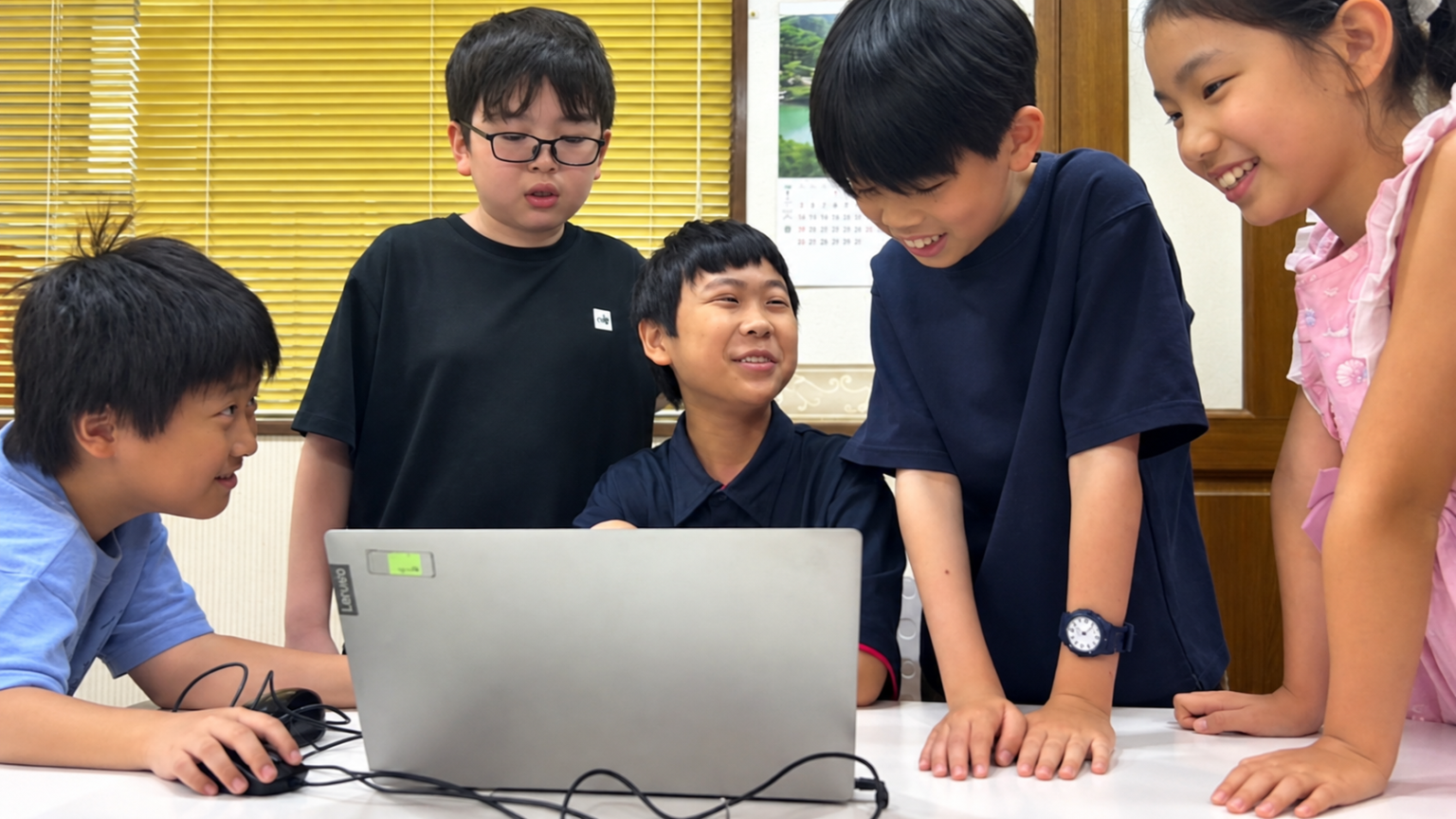
The guidelines allow tutors and online resources for specific areas of the curriculum, under the parent’s direction and primarily at home. But a registered parent “may not enrol their learner on a full-time basis in an online school or at a centre where children are grouped to receive tuition on a full-time basis”. The 2018 Policy adds that an institution operating like an independent school while unregistered, “commonly known as a tutor centre, cottage school, home school centre and micro school”, is outside home education.
| Option | Legal footing | Who is responsible | Notes |
|---|---|---|---|
| Registered home education | SASA s51, registered with the provincial Head of Department | The parent | Phase reports by a competent assessor |
| Home education with tutors or online classes | Allowed as support for specific areas of the curriculum | The parent, who must supervise | No pre-approved list of providers; the parent checks they are suitable |
| Several home-educated learners together | Allowed if quality is not undermined and section 51 is still met (guidelines 15(17)) | Each parent | A co-op of parents, not a school |
| Full-time online school | Not home education, according to the guidelines | The provider | Ask the provider and your province how it is registered |
| Cottage school, tutor centre, micro school or learning centre run like a school | Outside home education; if unregistered while operating like an independent school, the 2018 Policy calls it illegal | The operator | The guidelines encourage early childhood centres offering Grade R to register as independent schools |
| Registered independent school | SASA s46: no one may run one unless the Head of Department registers it | The school | Standards not inferior to comparable public schools; running one unregistered is an offence |
| Public school | SASA | The school and province | Learners may enrol for Grades 10 to 12 after home education |
For the general differences between these models, see homeschooling vs online school vs alternative school. For how parent co-ops are organised and when one turns into a school, see how to start a homeschool co-op, written for the United States; check it against the rules above. For a very different system, see homeschooling in Singapore.
Homeschooling South Africa fees: what is official
There is no single figure. The Act, the 2018 Policy, the guidelines and the FAQ we read do not mention a fee for registering a learner. Curriculum packages, tutors, online classes and assessors set their own prices, so we do not quote ranges. CAPS documents and workbooks are free on the DBE website.
Building for children who learn outside school: NIJIN Academy South Africa
NIJIN Academy, run by NIJIN Inc. and founded by former public school teacher Tatsuro Hoshino, is for children in Japan who do not fit conventional school. Children join a metaverse campus from home, choose from small, discussion-based live classes, and can attend physical classrooms. NIJIN describes it as one of the largest alternative schools in Japan.
Figures are those published on NIJIN’s official websites. “Attendance recognition” means the child’s registered school in Japan counts learning at NIJIN Academy as school attendance. Japan’s rules differ from South Africa’s; nothing here suggests the same arrangement exists in South Africa.
NIJIN is looking for a Country Head for South Africa, who starts NIJIN Academy South Africa and leads it as business head and principal. Which children it serves and which legal form fits (an independent school, support for home-educating families, or something else) is not decided in advance; working that out with the provincial departments is part of the role.
You can start on a service contract, even as a side job alongside your current work. You can also set up a local company with NIJIN as a co-owner, for example with 20% of the shares for you and 80% for NIJIN. Investment is optional: if you choose to invest, the guide is JPY 1 to 2 million from you and JPY 4 to 8 million from NIJIN, decided together. This is not a franchise; you are not buying a package. Either way the compensation guide is the same.
| Revenue (excluding tax) | Country Head’s compensation, as a guide (10%) |
|---|---|
| JPY 100 million | JPY 10 million |
| JPY 200 million | JPY 20 million |
| JPY 500 million or more | JPY 50 million (cap) |
| No revenue | None under this formula |
A guide, not a forecast or a promise of income. Amounts are in Japanese yen only. If you hand part of the work to someone else, they are paid out of your 10%. All other terms are to be discussed in the interview.
We look for leadership, management, business ability and the skills of a principal. Experience of running an organisation and hiring people carries over directly. Ideally you work in English, another of South Africa’s official languages and Japanese, but English alone is enough to apply.
Questions and answers
What does the Department of Education require for homeschooling in South Africa?
For a child of compulsory school age, an application to the provincial Head of Department, a programme comparable to the national curriculum, and a competent assessor’s signed report at the end of Grades 3, 6 and 9, with a notice that you intend to continue. The legal basis is section 51 of the South African Schools Act, as replaced by the BELA Act.
Do I need to register for homeschooling in Grade 10 or Grade 11?
No. After Grade 9 or age 15, whichever comes first, registration and notification are not required. But if the learner wants the NSC, the NSC Regulations’ requirements for home-educated learners must be met before Grade 10 starts.
Can a homeschooled learner write matric (the NSC)?
Yes, if the learner registers with an education provider registered with the assessment body for the final NSC examination and meets the Grade 10, 11 and 12 programme and assessment requirements. Other exit examinations are allowed; check how universities treat them.
Is an online school the same as home education?
No. The DBE’s guidelines say a registered home-educating parent may use online providers for specific subjects, but may not enrol the learner full-time in an online school, because the parent must remain responsible.
Is there a fee for homeschooling registration in South Africa?
The official documents we read mention no registration fee. Other costs depend on the providers a family chooses.
Is the Country Head role a job or a business?
A business you lead. The Country Head is the founder, business head and principal of NIJIN Academy South Africa. You can begin on a service contract, even as a side job, or as a co-owner of a local company. Compensation is 10% of revenue as a guide, with no guaranteed income.
Build a place in South Africa for children who learn outside school
If you want to start a company in South Africa and solve a problem in education, and you have led and hired a team, read the role and apply. Teaching experience is not required.
Where to go next
Related guides
- Homeschooling vs online school vs alternative school
- Homeschooling in Singapore: MOE rules, PSLE and options
- How to start a homeschool co-op
- How to start a private school in Kenya
- How to start a microschool
- How to start an online school
Sources
Checked on 16 November 2026. Rules change; please check the original documents and your provincial education department.
- https://www.education.gov.za/Portals/0/Documents/Legislation/Acts/SASA%20as%20amended%20by%20BELA2024.pdf
- https://www.gov.za/documents/acts/basic-education-laws-amendment-act-32-2024-english-afrikaans-16-sep-2024
- https://www.education.gov.za/Portals/0/Documents/Policies/2025/GUIDELINES%20FOR%20PURPOSES%20OF%20IMPLEMENTING%20CERTAIN%20OF%20THE%202024%20AMENDMENTS%20TO%20THE%20SA%20SCHOOLS%20ACT%20(12%20June%202025).pdf
- https://www.education.gov.za/Portals/0/Documents/Policies/Policy%20on%20Home%20Education%2020182.pdf
- https://www.education.gov.za/Portals/0/Documents/Publications/Home%20Education/Frequently%20Asked%20Questions%20Updated%20%2018%20March%202026.pdf
- https://www.education.gov.za/Portals/0/Documents/Reports/GHS%202022_Final%2006%2005%2024_2%20Final.pdf
- https://nijin.co.jp/recruit/nijin-academy-south-africa-country-head/