
Philippines · Teachers and schools
Yes, the teacher shortage in the Philippines is real in 2026: the government created 32,916 new teaching positions in May 2026 on top of 31,614 vacancies already on its books, and as of 4 September 2026 DepEd still reported 25,019 teaching positions unfilled. Figures online disagree because they count different things. This guide separates them, sets out the documented causes, and what it all means for a teacher deciding what to do next.
Every figure comes from an official source we opened (DBM, PIDS, EDCOM 2 as cited by PIDS, the World Bank), with its date. Where we could not open one, we left the number out.
In this article
- Teacher shortage in the Philippines 2026: the numbers
- Teacher shortage statistics: what each number counts
- Why the shortage persists: six causes on the record
- What DepEd and DBM are doing, 2024 to 2026
- What the shortage means for children’s learning
- Are teachers in demand in the Philippines?
- Teacher shortage in the Philippines: research to read
- Supporting children outside the public classroom
- Leading NIJIN Academy Philippines
- Questions and answers
Teacher shortage in the Philippines 2026: the numbers
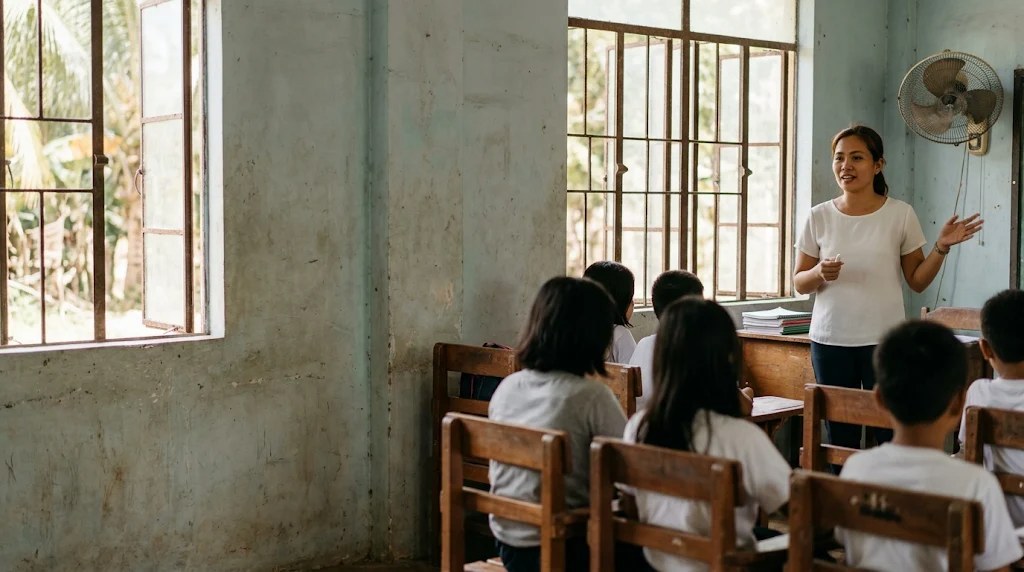
The clearest official picture is a DepEd–DBM joint press release of 10 September 2026, which set out the teaching posts already authorised and how many were still empty.
Sources: DepEd–DBM joint press release, 10 September 2026; PIDS Discussion Paper 2025-33 (November 2025), citing EDCOM 2.
The same release says that, of the positions newly created in 2026, 22,649 had been filled and 8,733 were still unfilled as of 4 September 2026. The proposed 2027 budget funds the filling of 64,530 authorised posts: the 32,916 new ones plus the 31,614 older vacancies.
The year before was smaller. On 18 May 2025, DBM approved 16,000 new teaching positions for 2025, described as the first tranche of 20,000 targeted that year: 15,343 Teacher I posts at Salary Grade 11, 157 Special Science Teachers at Salary Grade 13 and 500 SPED teachers at Salary Grade 14.
Teacher shortage statistics: what each number counts
Figures for the shortage range from about 20,000 to well over 100,000. Most are not wrong; they answer different questions.
| What is counted | Latest official figure we could open | What it tells you | What it does not tell you |
|---|---|---|---|
| New posts created (items) | 32,916 approved by DBM in May 2026; 16,000 in May 2025 | How many new jobs the budget pays for | Whether those jobs are filled, or enough |
| Vacant posts on the books | 31,614 as of 24 April 2026 | Paid-for posts nobody holds yet | Where children most need a teacher |
| Unfilled after hiring | 25,019 as of 4 September 2026 | The gap between authorised and actual hiring | The gap against an ideal class size |
| Unfilled posts in a past year | Nearly 46,000 in 2023 (EDCOM 2, cited by PIDS, 2025) | That slow hiring is not new | Today’s situation |
| Class size pressure | Many public schools at about 1 teacher to 40 learners (EDCOM 2, cited by PIDS, 2025) | Crowding in the classroom | The number of teachers to hire |
| Out-of-field teaching | 62% of public high school teachers (EDCOM 2, cited by PIDS, 2025) | A shortage of the right specialists | A shortage of people as such |
Teacher groups cite a far larger “needed teachers” gap, calculated against an ideal class size. We could not open an official document with that estimate, so we do not repeat it. If you quote one, ask for the method.
Why the shortage persists: six causes on the record
1. Hiring is slower than budgeting
A post can be funded and still sit empty. PIDS’s review of the Localization Law (Discussion Paper 2025-23, published September 2025) names “bureaucratic hold-ups that hinder teacher deployment”, political meddling in hiring decisions, and a restricted pool of eligible candidates in some regions.
2. Local hiring rules narrow the pool
The Localization Law (Republic Act 8190, 1996) gives priority to applicants who live in the same city or municipality as the school. PIDS found it helped retention, but that rigid residency rules can exclude qualified teachers from nearby areas. It recommends hardship pay, housing support and service credits for remote and “Last Mile” schools.
3. The right specialists are missing
Where no local applicant has the right major, a teacher is assigned outside their field. EDCOM 2 found 62% of public high school teachers teaching subjects they did not major in, which PIDS links to hiring based on availability rather than specialisation.
4. Teachers carry non-teaching work
A PIDS policy note (2019-01) described public school teachers as “chronically overworked”, with paperwork, feeding, deworming, census and election duties on top of a full teaching load. DepEd Order No. 002, s. 2024 ordered the removal of administrative tasks from teachers, and DBM approved 5,000 Administrative Officer II posts for fiscal year 2024 to take them over.
5. Not enough classrooms
Teachers need rooms. The 2026 national budget, signed on 5 January 2026, funds the construction of 24,964 classrooms alongside the 32,916 teaching and 32,268 non-teaching positions, according to DBM. Backlog estimates from DepEd and EDCOM 2 differ, so we do not print one.
6. Some teachers leave the public system
Teachers move to private schools, to online work and abroad. The PIDS localization review notes, citing a 2012 SEAMEO INNOTECH report, that a significant proportion of quality teachers emigrated. We did not find a current official count of teachers leaving the Philippines. If you are weighing that path yourself, our guide to teaching jobs abroad for Filipino teachers covers licensed agencies and the legal process.
What DepEd and DBM are doing, 2024 to 2026
- 2024: administrative tasks out, support staff in. DepEd Order No. 002, s. 2024 removes administrative tasks from teachers’ workloads; DBM approves 5,000 Administrative Officer II posts for 2024.
- May 2025: 16,000 new teaching posts. The first tranche of 20,000 targeted for 2025, mostly Teacher I, funded from DepEd’s 2025 appropriations.
- January 2026: the 2026 budget. Funding for 32,916 teaching and 32,268 non-teaching positions and 24,964 classrooms.
- May 2026: 32,916 posts approved. DBM approves the new teaching positions for SY 2026–2027.
- September 2026: the pipeline check. 25,019 teaching posts still unfilled; the proposed 2027 budget funds the filling of 64,530 authorised posts but proposes no new batch of Teacher I items.
For a teacher, the practical message is simple: positions exist, and the bottleneck is often the hiring process in your Schools Division Office (SDO). Our guide to private and public school teacher salary in the Philippines walks through Teacher I pay and how SDO calls for applications work.
What the shortage means for children’s learning
A shortage is not only a staffing statistic. Fewer teachers mean bigger classes, more out-of-field teaching and less time for each child. The World Bank’s learning poverty brief for the Philippines (2022) reports that 91 percent of children at late primary age were not proficient in reading, on the latest data before pandemic school closures. That brief also finds 90 percent of pupils did not reach minimum proficiency at the end of primary school, proxied by grade 5 data from 2019.
No study we opened attributes these figures to teacher numbers alone, but PIDS links out-of-field teaching to weaker instruction. We explain the learning figures, and how to read them, in learning poverty in the Philippines.
Are teachers in demand in the Philippines?
Yes, in the public system above all: tens of thousands of funded teaching posts were still waiting to be filled in late 2026. But demand is not the same everywhere or in every role. Here is how the main paths compare.
| Path | Where demand comes from | What to check first | Read more |
|---|---|---|---|
| Public school Teacher I | New items and old vacancies, especially in remote areas and specialist subjects | LET passing, your SDO’s call for applications, residency priority | Salary guide |
| ALS teacher | Learners outside the formal school system | ALS items in your division | ALS teacher |
| Private school teacher | Private schools set their own pay and hiring | Contract terms and pay against the public scale | Private vs public |
| Online teaching | Platforms and schools teaching remotely | Who the employer is, and how you are paid | Online teaching jobs |
| Teacher plus business (dual career) | Families who want support outside school hours | DepEd rules on outside work for public employees | Side hustles for teachers |
| Leading a school or learning centre | Children the public system cannot reach well | Ownership rules, permits, a team | Start a learning center |
Thinking of leaving a public post? Read DepEd teacher resignation first.
Teacher shortage in the Philippines: research to read
For a thesis or proposal, start with these free official studies rather than news summaries.
- PIDS DP 2025-23 (September 2025): the Localization Law and teacher hiring.
- PIDS DP 2025-33 (November 2025): teacher–subject mismatch, a survey of 245 teachers.
- PIDS DP 2025-55 (December 2025): teacher workload, time-use diaries from 696 teachers.
- PIDS Policy Note 2019-01: the non-teaching workload.
- DBM press releases (2025–2026): the official counts of new and vacant teaching posts.
For the world picture, see the global teacher shortage.
Want to build something for children the system cannot reach?
NIJIN is looking for one person to start NIJIN Academy in the Philippines and lead it as both business head and principal. Teaching experience is not required, and you can start on a service contract alongside your current job.
See the Country Head role in the PhilippinesSupporting children outside the public classroom
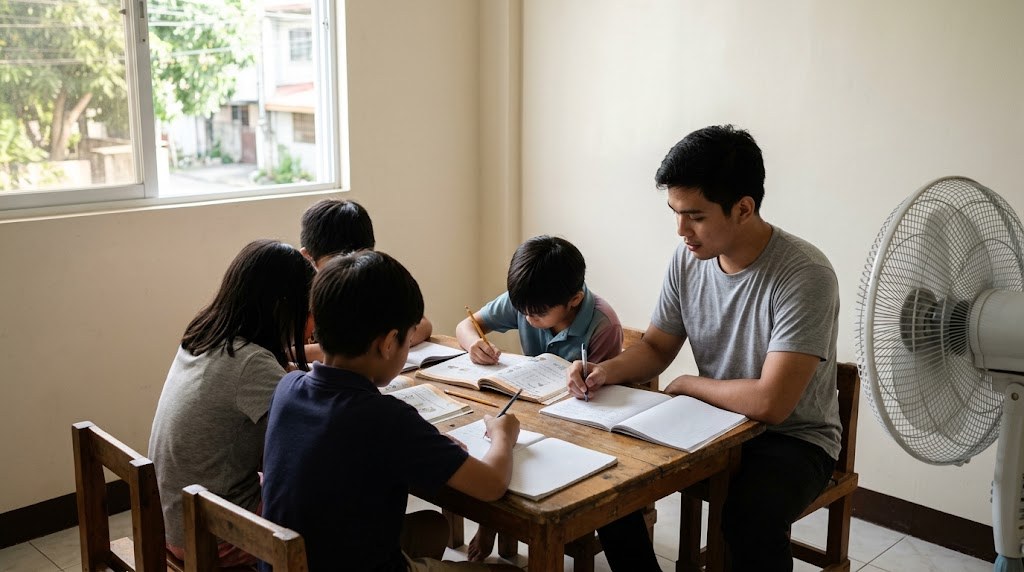
The government’s response is to hire more teachers and build more classrooms, and that is the main road. But the numbers above show it will take years. In the meantime, the Philippines already recognises in law that learning does not happen only in a regular classroom: the Alternative Learning System was strengthened by Republic Act No. 11510 in 2020, and DepEd Order No. 001, s. 2022 sets rules for homeschooling as an alternative delivery mode.
That leaves room for people who build places around school: learning centres, small groups, online classes, homeschool support. Before starting, read the permits side in our guide to the DepEd permit to operate and our guide on how to start a school in the Philippines.
One rule shapes every school business in the country. Under Article XIV, Section 4(2) of the 1987 Constitution, educational institutions other than those established by religious groups and mission boards must be owned solely by Filipino citizens or by corporations at least 60 percent Filipino-owned, and their control and administration must be vested in Filipino citizens.
Leading NIJIN Academy Philippines
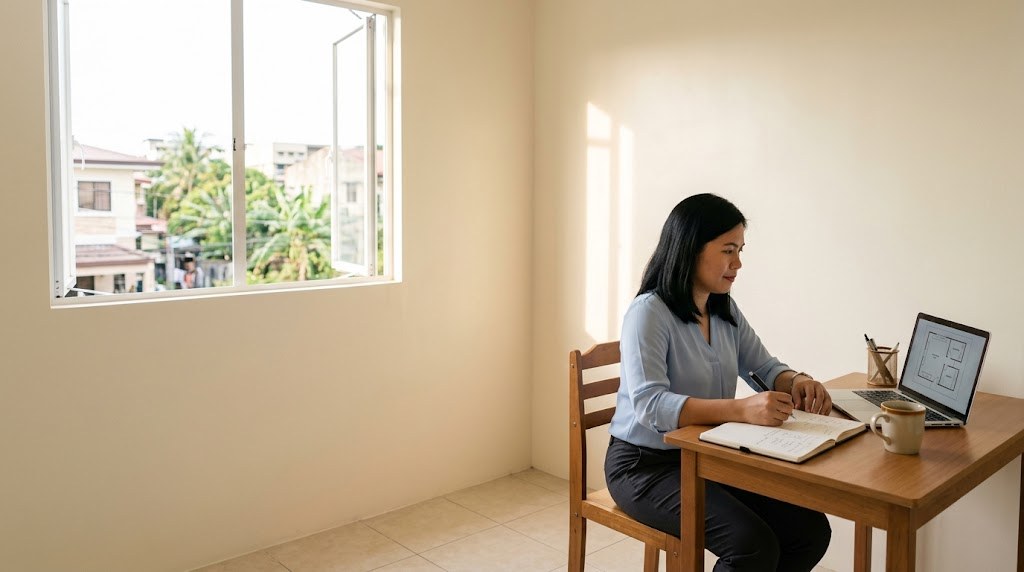
NIJIN Academy is an alternative school in Japan for elementary and junior high school students who do not fit conventional school; many had stopped attending altogether. It opened in September 2023 and is run by NIJIN Inc., founded by Tatsuro Hoshino, who taught at a public elementary school for seven years. Children join from home through a metaverse campus, choose from about 100 live online classes a month, and can also attend physical classrooms.
Figures are those published by NIJIN. NIJIN Academy makes no promise about test results.
NIJIN is now looking for a Country Head for the Philippines: one person who starts NIJIN Academy Philippines and leads it as business head and principal. It is not a franchise: you build and lead the local school, with NIJIN’s experience behind you. As stated on the role page:
- Compensation, as a guide: 10% of revenue (excluding tax), capped at JPY 50 million. For example, JPY 100 million in revenue gives JPY 10 million. This is a guide, not a promise of income; with no revenue, the formula pays nothing.
- Start on a service contract: you can begin as a side job alongside your current work, with the same 10% guide, and decide later whether to become a co-owner.
- Investment is optional: one option is a local company you co-own. If you invest, the guide is JPY 1 to 2 million from you and JPY 4 to 8 million from NIJIN, decided with you.
- Ownership follows Philippine law: the role page gives 20% for you and 80% for NIJIN as an example, but schools here must meet the 60% Filipino ownership rule. The actual structure is decided in the interview and with professional advisers.
- No teaching licence required: what matters is leadership, management, business ability and the skills of a principal. Experience of hiring and running a team carries over directly.
- Languages: ideally three: Filipino, English and Japanese. English alone is fine.
Contract type, location, start date and every other term are discussed in the interview.
Questions and answers
How many teachers does the Philippines need in 2026?
It depends on what you count: 32,916 new posts (May 2026), 31,614 older vacancies (April 2026), 25,019 posts unfilled (4 September 2026). Estimates against an ideal class size are higher.
What is the DepEd teacher shortage in the Philippines caused by?
Official studies point to slow hiring, residency rules, missing specialists, non-teaching workloads, too few classrooms and teachers leaving the public system.
Was there a teacher shortage in the Philippines in 2025?
Yes. DBM approved 16,000 new teaching positions in May 2025 as the first tranche of 20,000 targeted for that year, and PIDS research published in 2025 described public schools as still struggling with a shortage of teachers.
Are teachers in demand in the Philippines?
Yes, especially in public schools, in remote areas and in specialist subjects such as science and mathematics. Funded posts exist; the hiring process in each Schools Division Office decides how fast they are filled.
Is there research on the teacher shortage in the Philippines?
Yes. PIDS has published EDCOM 2-supported studies on hiring (2025-23) and mismatch (2025-33), plus a workload study (2025-55). Links are in the sources.
Can a teacher lead NIJIN Academy Philippines without leaving their job?
You can start on a service contract, even as a side job alongside your current work. Check the rules that apply to your current employer first. Compensation is 10% of revenue as a guide, with no guaranteed income. Other terms are discussed in the interview.
Build a school in the Philippines for children who need more time
If you want to build something for children the public classroom cannot fully reach, and you have led and hired a team, read the role and apply. Teaching experience is not required. Investment is optional.
See the Country Head role in the PhilippinesOr apply directly, in English. It takes a few minutes.
Apply for the Country Head roleWhere to go next
Related guides
- Learning poverty in the Philippines: the figures and what they mean
- ALS teacher: role, salary grade and hiring
- Private school teacher salary in the Philippines
- Teaching jobs abroad for Filipino teachers
- The global teacher shortage: causes and solutions
Sources
Official pages checked on 20 November 2026. Figures carry the date they refer to; please check the originals for later updates.
- DBM–DepEd joint press release, 10 September 2026: 64,530 teaching positions
- DBM press release, 18 May 2025: 16,000 new teaching positions
- DBM press release, 5 January 2026: the 2026 national budget
- DBM press release: 5,000 DepEd non-teaching positions and DepEd Order No. 002, s. 2024
- PIDS press release, 4 November 2025: review of teacher localization policies
- PIDS Discussion Paper 2025-23: Review of the Localization Law and Its Effect on the Hiring of Teachers
- PIDS Discussion Paper 2025-33: Teacher Specialization and Subject-Taught Mismatch
- PIDS Discussion Paper 2025-55: The Impact of Curriculum Reform on Teacher Workload
- PIDS Policy Note 2019-01: Pressures on Public School Teachers and Implications on Quality
- World Bank: Philippines Learning Poverty Brief (2022)
- 1987 Constitution of the Philippines, Article XIV (Lawphil)
- Republic Act No. 11510, the ALS Act (Lawphil)
- NIJIN Academy Philippines: Country Head