
Australia guide
Homeschooling in Australia is legal in every state and territory, but there is no single national system: parents must register (or, in the Northern Territory, get approval) with their own state or territory’s education authority, and each one sets its own rules on age, learning plans, reporting and reviews. In New South Wales that authority is now the NSW Department of Education, in Victoria it is the VRQA, and in Queensland it is Queensland Home Education (QHE).
This guide uses only official state and territory sources. It is not legal advice; rules change, so confirm your situation with your state or territory’s home education team.
In this article
- Is homeschooling legal in Australia?
- Homeschooling Australia by state: who registers you
- Homeschooling Australia NSW
- Homeschooling Australia Victoria
- Homeschooling Australia QLD
- Homeschooling Australia WA, SA, Tasmania, ACT and NT
- Homeschooling Australia curriculum
- Homeschooling Australia statistics
- Homeschooling Australia cost: what to budget for
- Home education vs distance education vs online school
- When a learning group becomes a school
- Building for children who learn outside school: NIJIN Academy Australia
- Questions and answers
Is homeschooling legal in Australia?
Yes. Each state and territory regulates home education under its own law, such as the Education Act 1990 (NSW) or the Education (General Provisions) Act 2006 (Queensland). The common thread is simple: a child of compulsory school age who is not enrolled at a school must be registered or approved for home education.
So the rules depend on where the child lives, and the words differ: NSW says “home schooling”, Queensland, WA and the ACT say “home education”.
Homeschooling Australia by state: who registers you
Authorities as named on each government’s own page or Act, checked in November 2026:
| State or territory | Who registers or approves | What the official page highlights |
|---|---|---|
| New South Wales | NSW Department of Education (Home Schooling Directorate) | Child must be registered and live in NSW; an Authorised Person reviews your educational programme |
| Victoria | Victorian Registration and Qualifications Authority (VRQA) | Learning plan for each child across 8 learning areas; assessment can take up to 28 days |
| Queensland | Queensland Home Education (QHE), Department of Education | Provisional registration once you lodge; QHE has 90 days by law to decide |
| Western Australia | Department of Education | Registration ends school enrolment; evaluation meetings with a home education moderator |
| South Australia | Department for Education | Parents must show a suitable programme with resources and opportunities for social interaction |
| Tasmania | The Registrar, Education (Education Act 2016) | The Registrar keeps the register of home educators and approved home education programmes |
| ACT | ACT Government Home Education team | Registration for up to 2 years; a Home Education Report once a year |
| Northern Territory | Department of Education and Training | Approval valid for one school year; programmes must meet ACARA requirements |
Exact conditions (documents, review visits, exemptions, special needs) are set by each authority and are not summarised in full here. Ask the authority before you withdraw a child from school.
Homeschooling Australia NSW
NSW is the state many guides still describe out of date. The official home schooling page now says the Department of Education regulates home schooling and registers eligible children; the NESA syllabuses remain the basis of the educational programme. A consultation on new registration policy closed on 10 August 2026; the current Guidelines stay in effect until it is final.
- Age: children can be registered from the start of the year they turn 5 (if they turn 5 on or before 31 July), up to 18, and for up to 2 more years to finish a planned programme. Children younger than 6 and older than 17 do not have to be enrolled or registered.
- Documents: the child’s birth certificate or other identity document, two documents confirming the NSW address where home schooling will happen, and any court orders.
- Program first: you plan an educational programme before applying, then an Authorised Person from the department discusses and reviews it with you.
- Mainly at home: home schooling must happen primarily in the child’s home on the certificate; extended travel is not supported.
Homeschooling Australia Victoria
In Victoria you register with the VRQA if you live in Victoria and your child is between 6 and 17. You can start at the beginning of the year your child turns 6, or by their 6th birthday.
- Complete the application form. Up to 2 children per form, with proof of birth date and parental responsibility.
- Write a learning plan for each child. It explains how you will teach the 8 key learning areas. You decide the content and do not have to follow the Victorian Curriculum; you can ask for an exemption from a learning area if you explain why.
- Keep the child enrolled while you wait. Children aged 6 to 17 must stay enrolled at a registered school until the VRQA approves the application.
- Wait for the decision. Assessment can take up to 28 days from when the application is complete.
- Consider partial enrolment at a government school for some subjects, if the principal agrees.
Homeschooling Australia QLD
Queensland’s unit is now called Queensland Home Education (QHE), part of the Department of Education. You can register if your child is between 5 and a half and 18 years old (by 31 December), is not enrolled at a school, and you are their parent or legal guardian living in Queensland.
- Apply online, by email or by post, with copies of the birth certificate, Medicare card, any court orders and an educational program summary. You may design it yourself, work with a registered teacher, or buy a programme from a home education business.
- Once you lodge an application in the approved form, your child is provisionally registered and you can begin while QHE decides.
- By law QHE has 90 days to decide; the clock restarts if it asks for more information.
- A registered family must send a report each year on the child’s educational progress, with an updated programme for the next year.
- For short-term needs there is a temporary 60-day provisional registration that does not need a programme or annual report.
Homeschooling Australia WA, SA, Tasmania, ACT and NT
Western Australia. The Department of Education registers home educators and evaluates their programmes and progress under the School Education Act 1999. Registering ends your child’s enrolment at their school. A home education moderator holds an initial evaluation meeting within 3 months, then one each year.
South Australia. Parents apply to the Department for Education and must prove they are providing a suitable education programme, including appropriate resources and opportunities for social interaction.
Tasmania. The Education Act 2016 provides for the registration and monitoring of home education. The Registrar, Education, keeps the register of approved home education programmes and home educators.
ACT. Registration is required by law for children aged 6 to 17 who live in the ACT. It lasts up to 2 years, you report on progress once a year, and you can start as soon as you submit a complete application.
Northern Territory. The home education programme must be approved by the Department of Education and Training; until then the child stays enrolled and keeps attending school. Approval lasts one school year, so families reapply each year (for 2027, by 27 November 2026). Year 11 and 12 students must complete 25 hours of learning a week, and home-educated students do not receive the NT Certificate of Education and Training.
Homeschooling Australia curriculum
The Australian Curriculum, published by ACARA, sets out what young Australians should be taught from Foundation to Year 10, in three dimensions: learning areas, general capabilities and cross-curriculum priorities. States then build on it, and home educators are held to their own state’s rules rather than to the national document itself.
| State or territory | What the official page says about curriculum |
|---|---|
| NSW | The educational programme is based on NESA’s syllabuses; the department provides syllabus information and sample materials. |
| Victoria | The plan covers 8 key learning areas; you do not have to follow the Victorian Curriculum or any specific curriculum. |
| Queensland | A programme summary showing high-quality learning that meets the child’s needs; an Australian Curriculum template is one optional example. |
| Northern Territory | All programmes must meet ACARA requirements; commercial programmes must align with the Australian Curriculum. |
| WA, SA, Tasmania, ACT | A programme that meets the child’s needs, checked through evaluation, reporting or approval. Read each department’s programme guidance. |
For resources, start with what governments publish free: the Australian Curriculum website, NSW’s home schooling support material, the VRQA’s learning plan templates and QHE’s programme templates (goal-directed, thematic and Australian Curriculum examples). Commercial programmes are allowed in several states, but the plan still has to meet your state’s test.
Want to build a place in Australia for children who learn outside school?
NIJIN Academy, an alternative school in Japan with a metaverse campus and 50+ physical classrooms, is looking for one founder to start and lead NIJIN Academy Australia as business head and principal. Teaching experience is not required.
See the Country Head role in AustraliaHomeschooling Australia statistics
There is no single national count that we could confirm in an official source, so the most reliable numbers come from the states that publish their own. Two of the largest do.
NSW figures include children with an exemption from registration (NSW Department of Education, data report published June 2026). Queensland’s 2025 collection year runs from 3 August 2024 to 1 August 2025 (QHE data).
Both show a jump in 2022 (NSW +37.43%, Queensland +68.95%), then slower growth (NSW +4.88%, Queensland +4.30% in 2025).
The churn is large, too. In Queensland’s 2025 collection year, 6,515 registrations began and 5,903 ended, so many children move between school and home rather than leaving school for good. QHE refused 520 applications, about 9% of ongoing applications. In NSW, 21.20% of 2025 applications named special learning needs as the reason and 19.08% philosophical reasons, and Sydney West held 34.58% of registered children.
Behind these numbers sits a wider issue of children who are enrolled but often absent; we cover that, and the pressure on teachers, in the teacher shortage in Australia.
Homeschooling Australia cost: what to budget for
We found no official figure for what home education costs a family in Australia, and prices vary widely, so we list the items to budget for rather than invent averages. Ask your state’s authority whether any fee applies to registration.
- Curriculum or purchased programmes, if you do not build your own
- Books, stationery, science and art materials
- A device, internet connection and any paid learning platforms
- Tutors or a registered teacher for some subjects
- Classes, sport, excursions and co-op or group activities
- Exam or course fees for senior secondary pathways or VET
- Income a parent gives up by teaching at home
Home education vs distance education vs online school
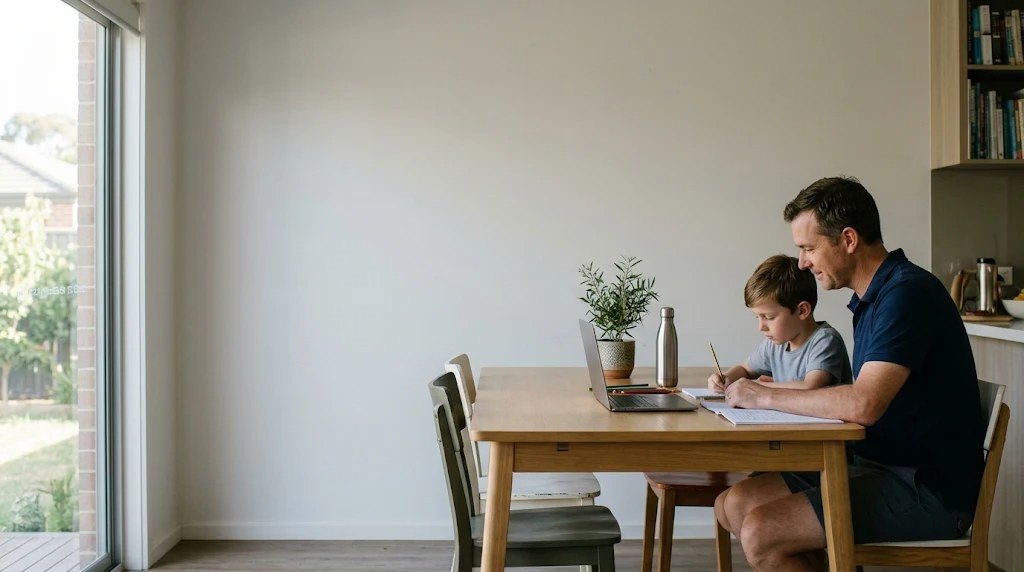
These three are often confused, and the difference matters legally. Victoria’s regulator puts it plainly: distance education is provided by registered providers, such as Virtual School Victoria, while home education is provided by parents, and you cannot register a child for both.
| Home education | Distance education | Online school | |
|---|---|---|---|
| Who is responsible | The parent plans, delivers and reports | A government or registered school provider teaches | Depends on the provider and its registration |
| Registration | The child is registered for home education | The child is enrolled with the provider | Check whether the provider is a registered school in your state; if not, the child may still need home education registration |
| Senior qualifications | Varies; NT home education students do not receive the NTCET | Usually through the provider | Ask the provider and your state’s authority |
For a wider comparison, see homeschooling vs online school vs alternative school. Across the Tasman, the rules work differently again: read homeschooling in New Zealand.
When a learning group becomes a school
For educators, the important line is between helping home educators and running an unregistered school. The VRQA says home schooling can include groups of students coming together for short periods, excursions and a tutor for single subjects. But attending a “quasi” or unregistered school is not home schooling. Such a place typically employs staff to deliver instruction, with parents usually not present, and teaches across all or many of the 8 learning areas.
So if you want to run something bigger than a tutoring session, ask the regulator early. Our guides on how to start a homeschool co-op and how to start a microschool cover the in-between models, and how to start a school in Australia explains school registration in each state.
Building for children who learn outside school: NIJIN Academy Australia
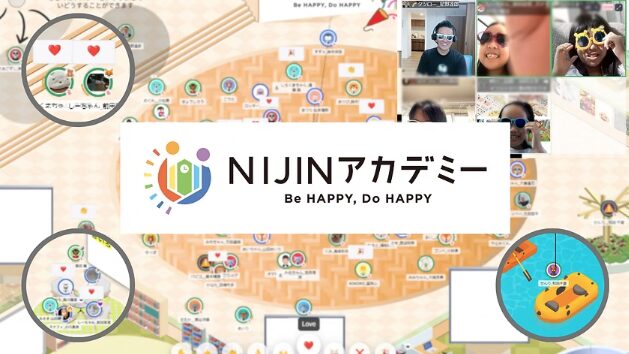
What one home-educating family finds hardest to provide is a community: other children, and several adults who know the child.
NIJIN Academy is one answer from Japan. It is an alternative school for elementary and junior high school students who do not fit conventional school, opened in September 2023 by NIJIN Inc. Children join from home through a metaverse campus, choose from about 100 small, conversation-based live online classes a month, and can also attend physical classrooms. NIJIN describes it as one of the largest alternative schools in Japan.
Figures published by NIJIN. “Attendance recognition” means the child’s registered school in Japan counts learning at NIJIN Academy as school attendance.
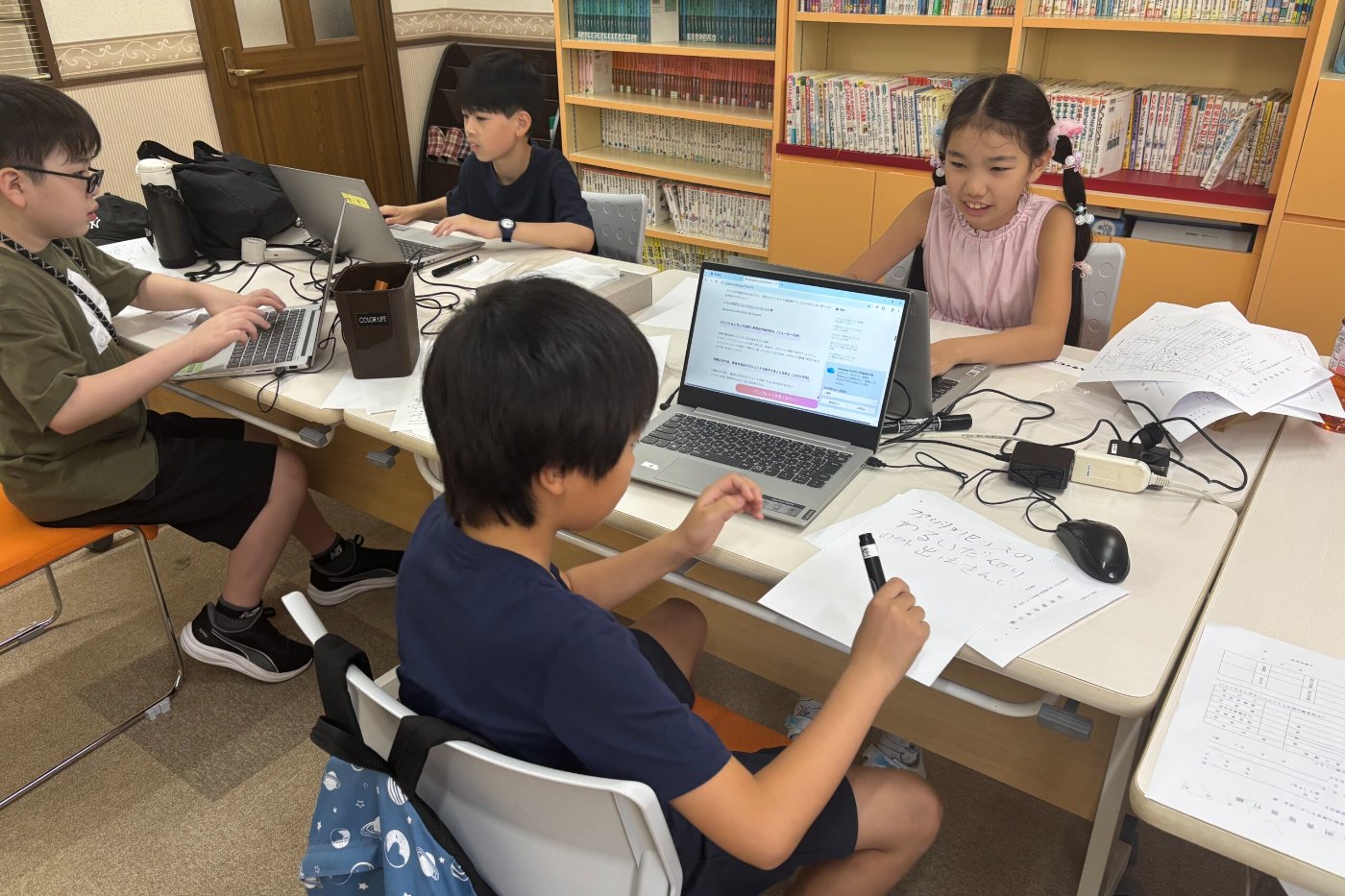
NIJIN is looking for a Country Head to start NIJIN Academy Australia and lead it as business head and principal. It is not a franchise: you do not buy into a ready-made package; you build the school with NIJIN. Which form fits Australia, and under which state’s rules, is worked out together.
Investment is optional. You can start on a service contract, even as a side job alongside your current work, and decide later whether to become a co-owner of a local company (for example 20% of the shares for you and 80% for NIJIN; if you invest, the guide is JPY 1 to 2 million from you). As a guide, compensation is 10% of revenue excluding tax, capped at JPY 50 million, and it is the same guide either way. It is not guaranteed: no revenue means no pay under this formula.
Questions and answers
Do you have to register for homeschooling in Australia?
Yes. Every state and territory requires a child of compulsory school age who is not at school to be registered, or in the NT approved, with its education authority.
Who handles homeschooling in NSW now, NESA or the Department of Education?
The NSW Department of Education regulates home schooling and registers children. Programs are still based on NESA’s syllabuses.
Do I have to follow the Australian Curriculum when homeschooling?
It depends on the state: not in Victoria; yes in the NT (ACARA requirements); NSW uses NESA syllabuses.
How long does homeschooling registration take in QLD and Victoria?
QHE: up to 90 days, with provisional registration once you lodge. VRQA: up to 28 days, with the child enrolled at school meanwhile.
What percentage of Australian children are homeschooled?
We found no official national percentage; NSW and Queensland publish their own counts (above).
How much does homeschooling cost in Australia?
There is no official average. Budget for programmes, materials, devices, tutors, activities and the income a parent may give up.
Is the NIJIN Country Head role a job or a business?
A founder’s role in a business, with compensation guided at 10% of revenue. You can start on a service contract alongside your current work.
Build a place in Australia for children who learn outside school
If you want to start a company in Australia and solve a problem in education, and you have led and hired a team, read the role and apply. Teaching experience is not required.
Where to go next
Related guides
- How to start a school in Australia
- Teacher shortage in Australia
- Homeschooling in New Zealand
- How to start a homeschool co-op
- How to start a microschool
- Homeschooling vs online school vs alternative school
Sources
Checked in November 2026. Rules and pages change; please check the originals.
- https://www.nsw.gov.au/education-and-training/home-schooling
- https://www.nsw.gov.au/education-and-training/home-schooling/applying-to-register
- https://www.nsw.gov.au/sites/default/files/noindex/2026-06/home-schooling-data-reports-relating-to-2025.pdf
- https://www2.vrqa.vic.gov.au/home-education
- https://www2.vrqa.vic.gov.au/register-home-educate
- https://education.qld.gov.au/schools-educators/other-education/home-education
- https://education.qld.gov.au/schools-educators/other-education/home-education/registration
- https://education.qld.gov.au/schools-educators/other-education/home-education/qhe-data
- https://www.education.wa.edu.au/home-educator-responsibilities-and-registration
- https://www.education.sa.gov.au/students/curriculum-and-learning/home-education
- https://www.legislation.tas.gov.au/view/whole/html/inforce/current/act-2016-051
- https://www.act.gov.au/education-and-training/find-a-school-and-enrol/home-education-home-schooling
- https://nt.gov.au/learning/primary-and-secondary-students/home-education
- https://www.australiancurriculum.edu.au/
- https://nijin.co.jp/recruit/nijin-academy-australia-country-head/
- https://academy.nijin.co.jp/