
For education founders in the Philippines
The price of an education franchise in the Philippines is not one number: it is a franchise fee, a recurring royalty, and the cost of a site, staff and permits that you pay yourself, and none of it buys you a DepEd permit to operate, which every private school must still get in its own name. Before you compare brands, compare the three ways in: buying a franchise, starting from zero on your own, or co-founding a local company with an operator that already runs a school.
This guide lists the cost lines to ask about, what Philippine law says about franchise-type contracts, how the DepEd permit, DTI and SEC registrations fit around a franchise, and a side-by-side comparison of the three routes. It is not legal or tax advice.
In this article
- What you buy in an education franchise
- Education franchise Philippines price: the cost lines
- What Philippine law says about franchise contracts
- The franchise and the DepEd permit to operate
- DTI, SEC and the mayor’s permit
- Franchise vs starting alone vs co-founding a company
- The checklist before you sign
- Questions and answers
What you buy in an education franchise
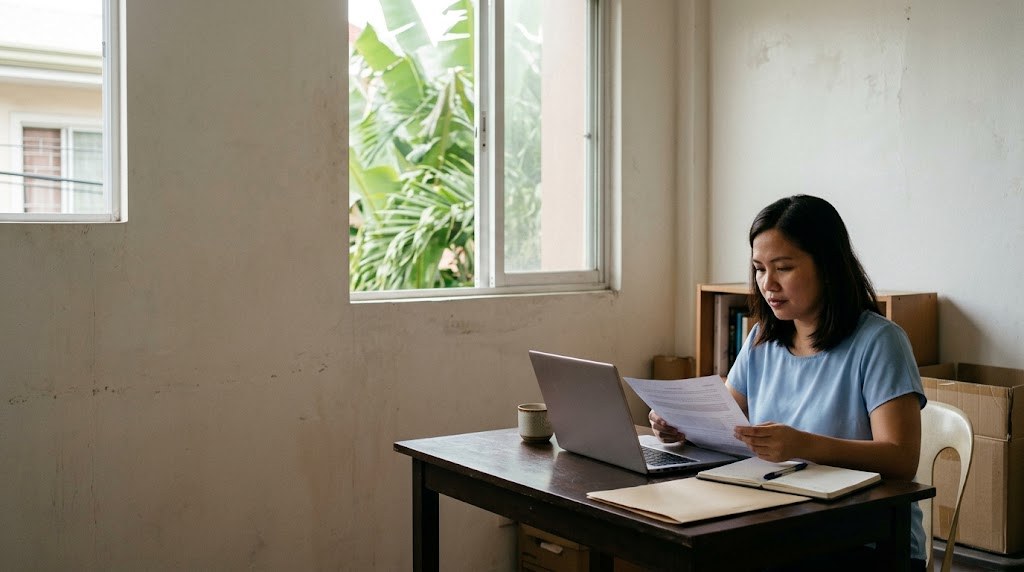
A franchise in education is a contract: the franchisor lets you use its name, method, materials and way of running a centre; you pay fees and follow its standards. You own your unit; the brand stays theirs.
The word “education franchise” covers very different businesses in the Philippines, and the difference matters more than the brand:
| Format | What the centre does | The question to settle first |
|---|---|---|
| Tutorial or enrichment centre (reading, math, robotics, coding, languages) | Classes after school or on weekends; children stay enrolled in their regular school | Does your Schools Division Office treat it as outside the private school permit system? Ask in writing. |
| Preschool or play school | Early childhood classes, sometimes Kindergarten | Will it offer DepEd Kindergarten? If so, it needs a government permit for that level. |
| Basic education school (K to 12) | The child’s main school, issuing records and diplomas | The school itself needs a DepEd permit and, later, recognition, for each grade level. |
| Online or hybrid programme | Live or self-paced classes, sometimes with a physical site | Where is the child legally enrolled, and who is responsible for the records? |
The U.S. Department of Commerce’s country guide for the Philippines lists education among the popular franchise concepts in the country. The format you choose decides which government offices you deal with, so it comes before price.
Education franchise Philippines price: the cost lines
Published “initial investment” figures rarely include everything. Ask every franchisor for each line below, in writing, so you can compare them fairly.
| Cost line | What it usually covers | When you pay | Ask the franchisor |
|---|---|---|---|
| Franchise fee | The right to use the brand and system for the contract term; initial training | Once, at signing | Is any part refundable if the permit or site falls through? |
| Royalty | Continuing use of the brand and system | Monthly or per student | Is it a percentage of gross revenue, a fixed amount, or per enrolled child? Is there a minimum? |
| Marketing or brand fund | National advertising and brand materials | Monthly | How is the fund spent, and do you see the accounts? |
| Materials and licences | Workbooks, kits, software, platform seats | Per student or per term | Must you buy only from the franchisor? At what price? |
| Site fit-out | Renovation, furniture, signage to brand standards | Before opening | Who chooses the contractor? What is the minimum floor area? |
| Staff and training | Salaries, required certification of your teachers | Monthly; training before opening | Do new hires have to be trained by the franchisor, and at whose cost? |
| Government permits | SEC or DTI registration, mayor’s permit, DepEd permit if you run a school | Before opening; renewals yearly | Which of these does the franchisor help with? Which do you handle alone? |
Why this guide gives no brand prices. Franchise directories and news articles publish investment ranges for education brands, but those figures change, and we could not confirm them against each franchisor’s own current offer. The only figure that counts is the one in the document the franchisor gives you, dated and signed.
Add one line no franchisor will fill in for you: the months you run at a loss before enrolment covers your fixed costs. A centre that needs a full room to break even is a risk at any franchise price.
What Philippine law says about franchise contracts
A franchise agreement licenses a brand and a way of doing business. In the Philippines, the Intellectual Property Code (Republic Act No. 8293) defines “technology transfer arrangements” in Section 4.2 as contracts involving the transfer of systematic knowledge for, among other things, the rendering of a service, including management contracts, and the licensing of all forms of intellectual property rights. Whether a particular franchise contract falls under that definition is a question for a Philippine lawyer, but founders should know that Sections 85 to 92 of the Code set rules for these arrangements.
Section 87 lists clauses that are presumed to have an adverse effect on competition and trade. Among them are clauses that:
- oblige the licensee to buy capital goods, materials or other technologies from a specific source, or to employ personnel named by the licensor;
- prevent the licensee from adapting the technology to local conditions, as long as quality standards are kept;
- exempt the licensor from liability for not fulfilling its responsibilities under the arrangement.
Section 88 lists provisions that must be included, such as Philippine law governing the contract, continued access to improvements during the arrangement, and Philippine taxes on payments under the arrangement being borne by the licensor. Under Section 92, an arrangement that does not conform to Sections 87 and 88 is unenforceable unless it is approved and registered with the Intellectual Property Office under the exceptional cases of Section 91.
This summarises the published text of the law, not whether any contract complies. Have a Philippine lawyer read yours.
The franchise and the DepEd permit to operate
This is the point most franchise brochures leave out. If your centre is a school that offers Kindergarten or any grade from 1 to 12, the permit is issued to your school, not to the brand. The Education Act of 1982 (Batas Pambansa Blg. 232), Section 27, makes the educational operations of schools subject to prior government authorisation, and Section 28 makes operating a school without authorisation punishable.
A Schools Division Office’s Citizen’s Charter shows what that means in practice. DepEd’s Zambales division describes the Government Permit to Operate as authorising a private school to open Kindergarten, Elementary or Junior High School, or additional grade levels, for one school year, and lists the documents it checks. Among them:
- A letter of intent to the Regional Director, through the Schools Division Superintendent
- A certified copy of the SEC Certificate of Registration and Articles of Incorporation
- A notarized feasibility study
- A student or school manual with a child protection policy and an anti-bullying policy
- The proposed annual budget and the proposed tuition and other school fees
The same charter lists an application and inspection fee of PHP 2,035 per program or course, paid at the division office. Each office sets its own list, so use your division’s.
For a franchisee, two things follow: the SEC papers on that list mean a school is run by a corporation, not a business name registered to an individual; and the brand does not replace the inspection, because DepEd reviews your site, staff and budget. The full process is in our guide to the DepEd permit to operate.
If your franchise is a tutorial centre whose children stay enrolled in their own schools, ask your Schools Division Office in writing whether it needs a permit. We found no official statement to cite.
DTI, SEC and the mayor’s permit
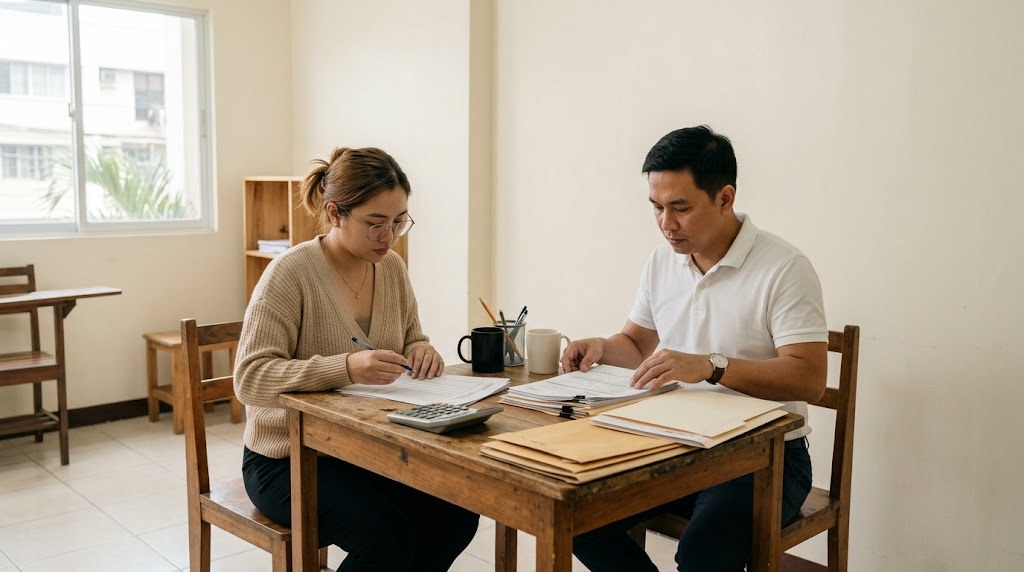
| Registration | What it is | When it fits |
|---|---|---|
| DTI business name (BNRS) | The Department of Trade and Industry registers business names used by individuals, through its Business Name Registration System | A sole proprietor running a centre under a trade name. Not enough on its own for a school that needs a DepEd permit, because the permit checklist asks for SEC papers. |
| SEC corporation | Stock or non-stock corporation under the Revised Corporation Code (Republic Act No. 11232) | Schools, and any business with several owners. Section 106 sets 5 to 15 trustees, in multiples of five, for educational institutions organised as non-stock corporations. |
| Mayor’s or business permit | Under the Local Government Code (Republic Act No. 7160), the mayor issues licenses and permits | Every physical site, franchised or not. Requirements are set by each city or municipality. |
Ownership is the other legal point. Article XIV, Section 4(2) of the 1987 Constitution says that educational institutions, other than those established by religious groups and mission boards, shall be owned solely by Filipino citizens or by corporations at least 60 percent owned by Filipino citizens, and that their control and administration shall be vested in Filipino citizens. If a foreign brand or investor is involved in a school, have a Philippine lawyer check the structure against this section before anything is signed.
Want to found a school in the Philippines without buying a franchise?
NIJIN Academy is an alternative school in Japan for children who do not fit conventional school, opened in September 2023 by NIJIN Inc. Children join from home through a metaverse campus, choose from about 100 live online classes a month, and can also attend 52 physical classrooms across Japan. NIJIN is looking for one person to start NIJIN Academy Philippines and lead it, as business head and principal. It is not a franchise: you do not buy the format. Investment is optional.
See the Country Head role in the PhilippinesFranchise vs starting alone vs co-founding a company
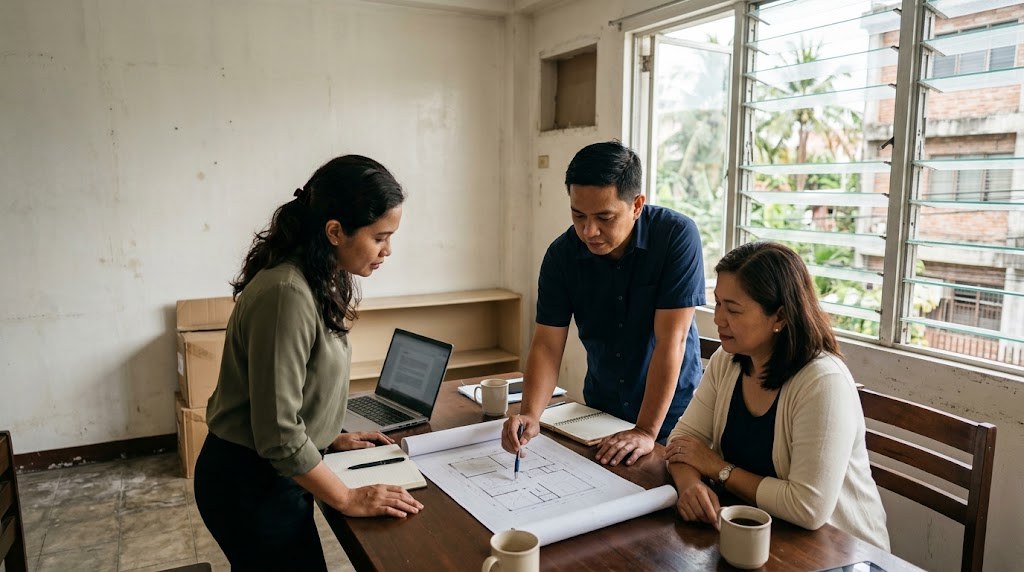
No route is better in general. The franchise column describes franchising in general, not any brand.
| Education franchise | From zero, on your own | Co-founding a local company (NIJIN Academy Philippines) | |
|---|---|---|---|
| Who designs the programme | The franchisor; you follow its format | You, from a blank page | You start from a model run with more than 1,000 children in Japan and decide what fits Filipino families |
| What you pay to start | Franchise fee, fit-out, materials, permits | Everything, with no fee to a brand | Investment is optional. If you invest, the guide is JPY 1 to 2 million from you and JPY 4 to 8 million from NIJIN, decided together |
| Ongoing payments | Royalty and fund fees to the franchisor | None to a brand | Not a franchise royalty model; other terms are discussed in the interview. Your compensation guide: 10% of revenue (excluding tax) |
| Ownership | You own your unit; the brand is theirs | Yours and your co-incorporators’ | A local company set up together; for example 20% for you and 80% for NIJIN, or start on a service contract first |
| DepEd, SEC, DTI, permits | Your responsibility, sometimes with help | Your responsibility | Worked out together for the format chosen; the structure must fit Philippine law, including Article XIV |
| Best fit | You want a ready format and accept its limits | You have your own model and time to test it | You want to found and lead a company, and you are strongest at leading and hiring people |
The NIJIN column uses the terms on NIJIN’s recruitment page. Amounts are in Japanese yen only. The 10% is a guide, not a fixed pay scale or a promise of income: with no revenue, the formula pays nothing. The 20/80 split is an example; how the company is structured under Philippine law is discussed in the interview and with professional advisers.
The checklist before you sign
Whatever route you take, get written answers to these before you pay anything:
- Every fee line in the cost table, with amounts and timing
- Which format you are opening, and your Schools Division Office’s written view of whether it needs a DepEd permit
- Who registers with the SEC or DTI, and who holds the shares
- Whether the contract has been checked against Sections 87 and 88 of the Intellectual Property Code
- Whether you may adapt lessons and materials to your learners, in Filipino or the local language
- The contract term, renewal terms, and what you may do after it ends
Questions and answers
How much is an education franchise in the Philippines?
It depends on the brand and the format, and published ranges change. Compare offers line by line: franchise fee, royalty, marketing fund, materials, fit-out, staff training, permits and renewal. Use only the figures in the franchisor’s own signed documents.
What is the best school franchise in the Philippines?
There is no single best. The best fit is the one whose format your Schools Division Office and city hall will accept at your site, whose fees leave you profitable at 60% enrolment, and whose contract you would still sign after a lawyer has read it.
Does a franchise school need a DepEd permit to operate?
Yes, if it offers Kindergarten or any grade from 1 to 12. The permit is issued to your school for each grade level, after DepEd reviews your documents and inspects your site. The franchisor’s brand does not replace it.
Can a foreigner own a franchise in the Philippines?
For schools, Article XIV, Section 4(2) of the Constitution requires ownership by Filipino citizens or by corporations at least 60% Filipino-owned, except institutions established by religious groups and mission boards, with control and administration vested in Filipino citizens. For other kinds of business, the rules depend on the activity. Ask a Philippine lawyer.
Is NIJIN Academy Philippines a franchise?
No. You do not buy a format or pay a royalty. NIJIN is looking for one person to found and lead NIJIN Academy Philippines as Country Head, either as a co-owner of a local company or starting on a service contract, even as a side job. Investment is optional, and the compensation guide is 10% of revenue in both cases. The details are discussed in the interview.
Found NIJIN Academy Philippines, as its head and principal
NIJIN is looking for one person in the Philippines who wants to start a company and solve a problem in education. Teaching experience is not required: leadership, management, business ability and the skills of a principal are. English is enough to apply.
See the Country Head role in the PhilippinesWhere to go next
Related guides for founders
- DepEd permit to operate: requirements and timeline
- How to start a school in the Philippines
- How to start a learning center in the Philippines
- Microschool franchise: what you buy and what you don’t
- Education franchise in India: fees, law and alternatives
Sources
Laws are quoted from the published text. Checklists and fees are those of the office named. Please check the original for later changes.
- https://lawphil.net/statutes/repacts/ra1997/ra_8293_1997.html
- https://lawphil.net/statutes/bataspam/bp1982/bp_232_1982.html
- https://zambales.deped.gov.ph/citizens-charter/issuance-of-gov-permit-open-for-ps.html
- https://lawphil.net/statutes/repacts/ra2019/ra_11232_2019.html
- https://lawphil.net/statutes/repacts/ra1991/ra_7160_1991.html
- https://lawphil.net/consti/cons1987.html
- https://bnrs.dti.gov.ph/
- https://www.trade.gov/country-commercial-guides/philippines-distribution-and-sales-channels
- https://nijin.co.jp/recruit/nijin-academy-philippines-country-head/