For education founders in Pakistan
To open a private school in Pakistan, you register it with the education regulator of the province or territory where it will operate (in Islamabad, ICT-PEIRA), after you have the building, the qualified staff, the documents and the fee structure that regulator asks for, and before you admit pupils. There is no single national licence. The order of work is: decide what you are opening (school, academy or online school), find your regulator, meet its level-wise requirements, apply, pass the inspection, then open.
This guide is for founders, former principals and people who have run a tuition centre and want to go further. Where the rules differ by province, it says so and points you to the official office rather than guessing.
In this article
- Who registers a school in Pakistan: province by province
- How to open a private school in Pakistan, step by step
- Requirements to open a school in Pakistan: the Islamabad example
- How much does it cost to open a school in Pakistan?
- How to open an academy in Pakistan, and how it differs from a school
- Online school in Pakistan: what a virtual school must have
- The children a new school could reach
- Opening alone, through a franchise, or as a co-founder
- NIJIN Academy Pakistan: the Country Head route
- Questions and answers
Who registers a school in Pakistan: province by province
Article 25A of the Constitution of Pakistan says the State shall provide free and compulsory education to all children aged five to sixteen, “in such manner as may be determined by law”. Private schools, however, are regulated at provincial and territorial level: each province and Islamabad Capital Territory (ICT) has its own act, registering body and forms.
So the first question is “which office covers my address?”. The table names where to start, not what each law requires.
| Where the school will be | Where to start asking |
|---|---|
| Islamabad Capital Territory | ICT-PEIRA (Private Educational Institutions Regulatory Authority), under the ICT Private Educational Institutions (Registration & Regulation) Act, 2013. Registration and annual renewal run through an online portal. |
| Punjab | School Education Department, Punjab, and its district education offices |
| Sindh | Directorate of Registration & Inspection of Private Institutions, School Education and Literacy Department |
| Khyber Pakhtunkhwa | Elementary & Secondary Education Department and the provincial private schools regulator |
| Balochistan | The authority under the Balochistan Private Educational Institute Registration and Regulation Authority Act, 2015, which also covers fee regulation |
This article is general information, not legal advice. Confirm every requirement with the regulator in writing, and use a local lawyer for company and tax questions.
How to open a private school in Pakistan, step by step
Many guides start with “get a building”. That is the most expensive step, and the regulator judges it against the level you apply for, so work in this order instead.
- Decide the level and the model. Pre-school to higher secondary; physical, online or hybrid; school or academy. Every later requirement depends on this.
- Talk to families first. Learn what parents nearby pay now and why they would move. Collect real commitments.
- Get your regulator’s current checklist. Guidelines, application form, inspection proforma and the application window.
- Choose the legal form. Sole owner, partnership or company. In Islamabad, a registered partnership deed is a listed document where it applies.
- Secure a building that matches the level. Check rooms, sizes, safety and by-laws against the requirements before you sign.
- Hire the head and teachers on written contracts. Regulators check qualifications and employment terms.
- Write the policies. Curriculum, fees and annual increases, scholarships, admissions, HR.
- Apply, fix deficiencies, pass inspection. Expect observations and an inspection visit before a certificate is issued.
- Open small, then renew on time. In ICT, renewal is annual and late renewal carries a fine.
Requirements to open a school in Pakistan: the Islamabad example
No article can list “the” requirements for the whole country. One regulator’s published rules show what to expect. ICT-PEIRA’s level-wise pre-requisites for Islamabad, in summary:
| Level (ICT-PEIRA) | Infrastructure | Staff |
|---|---|---|
| Pre-school | 5 classrooms, capacity 150, room size 18′ × 24′ | Teachers with at least a B.Ed (fresh graduates) or a BA with 3 years’ teaching experience; a specialist English teacher |
| Primary | 5 classrooms for Grades I–V (capacity 150), or 8 classrooms from Playgroup to Grade V (capacity 240) | As above |
| Elementary | 13 classrooms from Playgroup to Grade VIII, capacity 390 | As above |
| Secondary and higher secondary | 17 classrooms (Playgroup to Grade XII) or 10 (Grades VI–XII); 3 science laboratories, a library and a computer laboratory | At least an M.Ed (fresh graduates) or an MA with 3 years’ experience; subject specialists |
The same document asks for a head, principal and vice principal with at least 5 years’ experience for primary and 8 years for secondary schools. Without that background, you may need to hire a qualified head.
PEIRA’s document checklist also works as a planning tool. Expect to prepare:
- Faculty list with qualifications, CVs, employment terms and salary slips
- Curriculum policy and examination board registration (for example BISE), where applicable
- Attested ownership deed, lease or rent agreement, and a floor-wise school map
- Declaration of ownership, or a registered partnership deed
- Fee structure, annual increase policy and scholarship policy
- Balance sheet and audit report for the preceding year (for an operating institution)
Source: ICT-PEIRA pre-requisites, registration flowchart and document checklist. Punjab, Sindh, Khyber Pakhtunkhwa and Balochistan publish their own requirements, which may be different.
Want to open a school in Pakistan without starting from a blank page?
NIJIN Academy, an alternative school in Japan, combines a metaverse campus, about 100 live online classes a month and more than 50 physical classrooms. NIJIN is looking for one person to start and lead NIJIN Academy Pakistan. Teaching experience is not required.
See the Country Head role in PakistanHow much does it cost to open a school in Pakistan?
Any single rupee figure online is someone else’s school in someone else’s city, and the regulator’s room requirements change the building you need. What is stable is the list of costs. Price each line with real quotes from your own area.
| Cost line | What it includes | One-off or monthly |
|---|---|---|
| Registration | Application form fee, registration fee, renewal fee, affidavits and attestations | One-off, then annual renewal |
| Building | Rent or purchase, advance, soundness certificate, any work to meet room and safety requirements | Both |
| Fit-out | Furniture, boards, library, laboratories and computers for the level you register | One-off |
| Staff | Head, teachers, administration, security and cleaning; at least the minimum wage, which ICT asks schools to confirm by affidavit | Monthly |
| Utilities and backup | Electricity, generator or solar backup, water, internet | Monthly |
| Curriculum, admissions, professional fees | Books, exam board registration, prospectus and open days, lawyer, accountant, audit | Annual |
Check the break-even number before you sign the lease. Pupils needed = total monthly fixed costs ÷ (monthly fee per pupil − monthly cost per pupil).
If that number is larger than you can realistically enrol in year one, change the plan: a lower level first, a smaller building or a hybrid model. Run it again at 60% of expected enrolment, and budget for scholarships: PEIRA has asked Islamabad schools to report on need-based scholarships.
For ways to start with very little capital, see how to start a school without money, and for funding sources, how to raise funds for a school.
How to open an academy in Pakistan, and how it differs from a school
In Pakistan, “academy” usually means a tuition or coaching centre that children attend after school. Many founders start here because the needs are smaller. Smaller does not mean unregulated. Balochistan’s 2015 Act, for instance, defines an institution as a privately managed “school, college, academy or tuition center” up to intermediate level. Ask your regulator whether your academy needs registration before you advertise.
| Academy (tuition / coaching) | Private school | Online (virtual) school | |
|---|---|---|---|
| What it replaces | Nothing; it supplements school | The child’s school | The child’s school |
| Where the child is enrolled | At another school | At your school | At your school |
| Building | A few rooms | Level-wise requirements | An administrative office and studio (ICT framework) |
| Registration | Check: may be covered by provincial law | Required | Check: rules are newer and differ by territory |
An academy can be a good first step: it builds your reputation with parents. But if your goal is a place where children belong, not only where they get marks, plan for a school from the start.
Online school in Pakistan: what a virtual school must have
An online school avoids the classroom and laboratory requirements that make a physical school expensive. But an online school that gives a formal qualification is still a school.
ICT-PEIRA has published a policy framework for regulating virtual schools in Islamabad. It defines a virtual school as an entity that gives instruction leading to a formal qualification up to Grade 12 and uses a learning management system, not physical classrooms, as its main mode of delivery. The framework notes that around 83% of private schools in ICT are in the low-fee category. Its requirements include:
- A registered administrative office in ICT for operations and parent contact
- One central recording studio (minimum 400 sq ft, soundproofed, with lighting) with power backup
- Dedicated internet of at least 100 Mbps, with a backup line
- A secure learning management system, with PEIRA given read-only access to attendance, grades and content logs
- Content aligned with the National Curriculum of Pakistan, and teachers certified in digital pedagogy
- Screen-time limits: up to 3 hours a day at primary, 4.5 at middle and 6 at secondary level
Outside Islamabad, ask your provincial regulator how it treats online schools. Our guide, how to start an online school that children keep attending, covers the teaching model and retention.
The children a new school could reach
According to UNICEF Pakistan, the country has the world’s second-highest number of out-of-school children: an estimated 25.1 million children aged 5 to 16 are not attending school, 35 per cent of that age group.
Children aged 5 to 16. Source: UNICEF Pakistan, Education (accessed November 2026).
UNICEF also notes that in Sindh and Khyber Pakhtunkhwa more girls than boys are out of school, and that public spending on education was about 0.8 per cent of GDP according to the Pakistan Economic Survey 2024–25. A fee-charging school will not reach every one of these children, but low-fee, hybrid and online models designed for affordability can reach some. For causes and models, see out of school children: the numbers and the causes.
Opening alone, through a franchise, or as a co-founder
| Open alone | School franchise | Co-found with an existing model | |
|---|---|---|---|
| Who designs the school | You, from nothing | The franchisor; you follow the manual | Shared: a tested model, adapted locally by you |
| Who pays to start | You | You, plus a franchise fee | Discussed; investment may be optional |
| Who owns it | You | You own the branch, not the brand | Shares in a joint company, or a contract |
| Main strength | Full freedom | A known brand | A partner who has solved the problems before |
If your strength is leading and hiring rather than designing a curriculum, the third route may fit. More in franchise vs own business in education.
NIJIN Academy Pakistan: the Country Head route
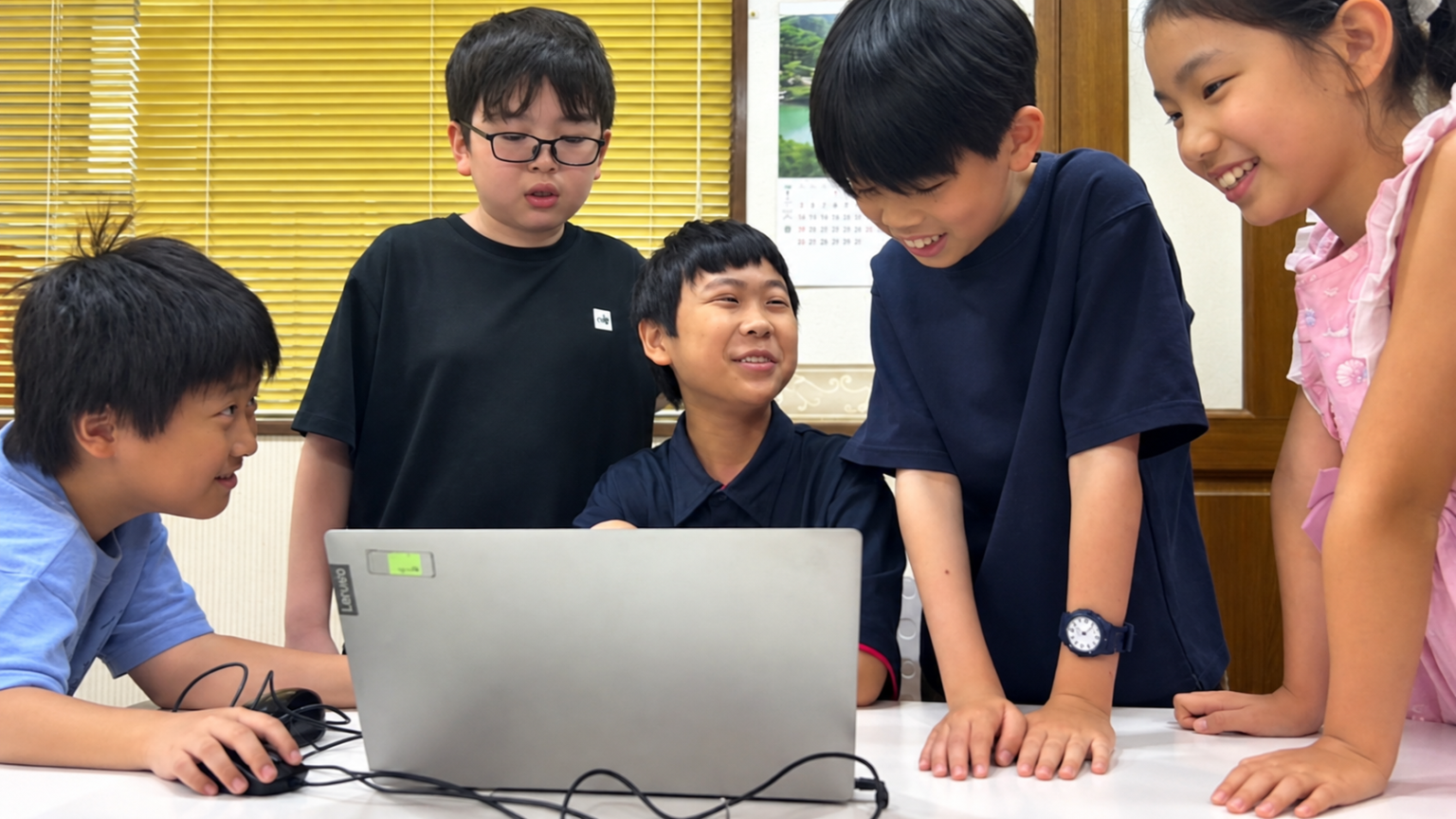
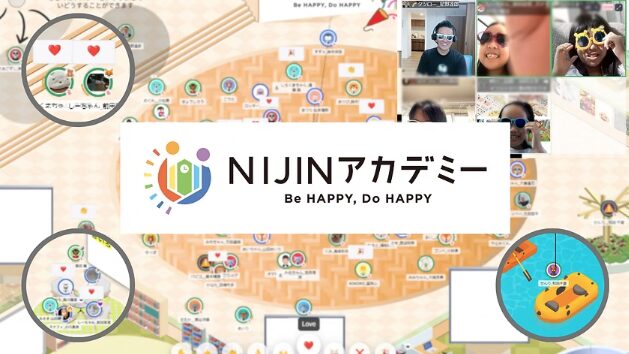
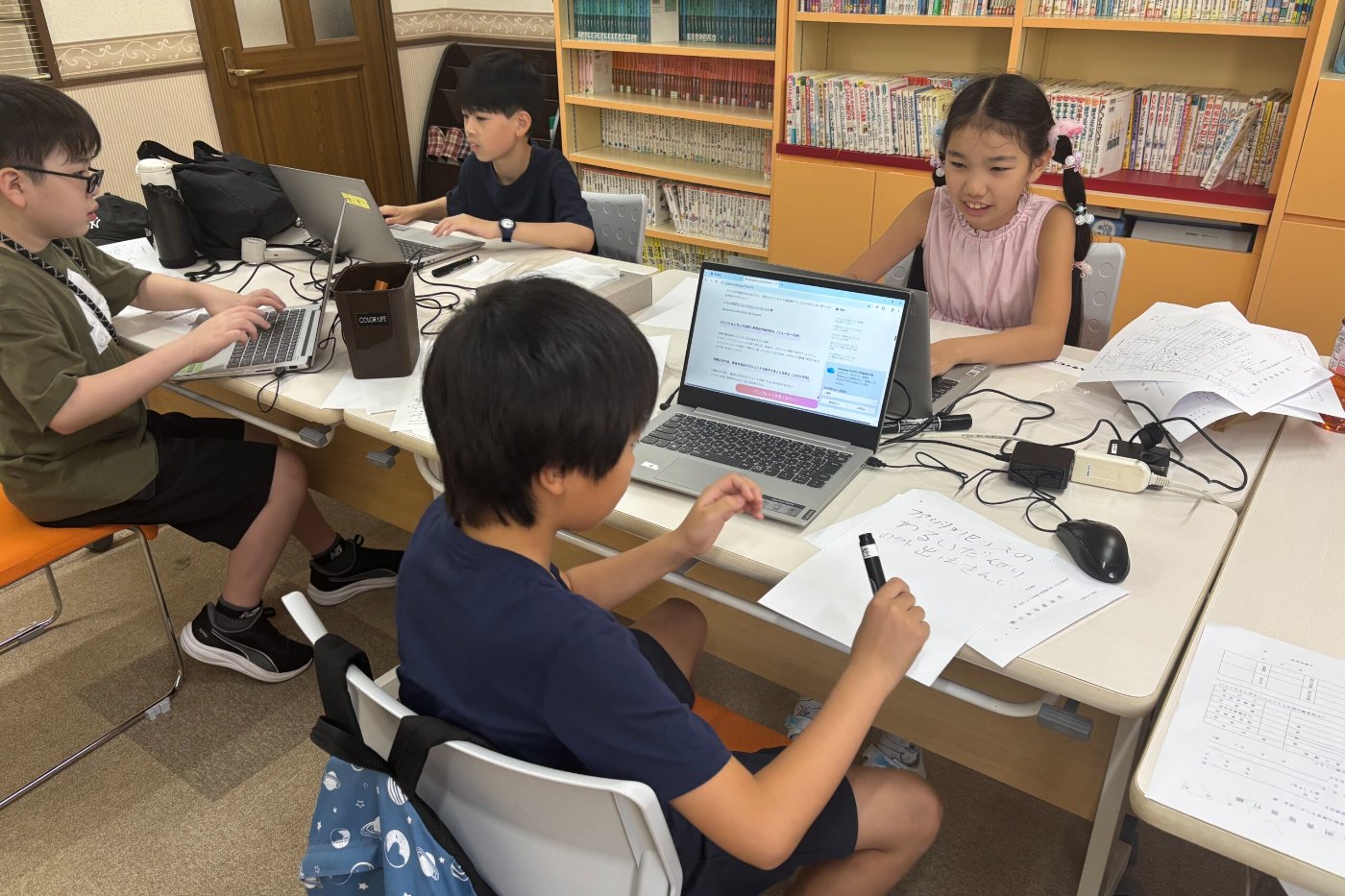
NIJIN Academy is an alternative school in Japan for elementary and junior high school students who do not fit conventional school; many had stopped going to school altogether. It opened in September 2023 and is run by NIJIN Inc., founded by Tatsuro Hoshino, who taught at a public elementary school for seven years. Children attend from home through a metaverse campus, join small, discussion-based live online classes, and can also go to physical classrooms. NIJIN describes it as one of the largest alternative schools in Japan.
Figures are those published on NIJIN’s official websites.
NIJIN is looking for one Country Head to start NIJIN Academy Pakistan and lead it as business head and principal. It is not a franchise. You can start in the way that suits you:
- Start on a service contract, even as a side job alongside your current work, and decide later whether to become a co-owner.
- Or co-found a local company with NIJIN: for example, you hold 20% of the shares and NIJIN 80%. If you invest, the guide is JPY 1 to 2 million from you and JPY 4 to 8 million from NIJIN, decided together. Investment is optional.
Either way, compensation as a guide is 10% of revenue (excluding tax): JPY 100 million of revenue gives JPY 10 million, JPY 200 million gives JPY 20 million, capped at JPY 50 million from JPY 500 million. This is a guide, not a guarantee: with no revenue, the formula pays nothing. Anyone you hand part of the role to is paid from your 10%. Everything else, including how the school fits provincial rules, is discussed in the interview.
Teaching experience is not required; NIJIN looks for leadership, management, business ability and a principal’s skills. Urdu, English and Japanese are ideal, but English alone is enough.
Questions and answers
How do I open a new school in Pakistan?
Choose the level and model, find the regulator for your province or ICT, meet its requirements, apply, pass inspection and receive a registration certificate before admitting pupils.
What are the requirements to open a school in Pakistan?
They differ by province and level. ICT-PEIRA publishes classroom, staff and document requirements for Islamabad; ask your provincial regulator for its equivalent before renting a building.
How much does it cost to open a school in Pakistan?
It depends on the city, the level and whether you rent or buy. Price the cost lines above with local quotes and calculate your break-even enrolment.
Do I need a licence to open an academy in Pakistan?
Possibly. Some provincial laws cover academies and tuition centres as well as schools; Balochistan’s 2015 Act, for example, includes them in its definition of an institution. Ask your regulator before you open.
Can I open an online school in Pakistan?
Yes, but a virtual school giving formal qualifications is regulated. ICT-PEIRA has published a framework for Islamabad; elsewhere, ask the provincial regulator.
Can I open a school if I am not a teacher?
Regulators set qualifications for teachers and experience for heads, so plan to hire a qualified head if you lack that background. NIJIN does not require teaching experience for its Country Head.
Is the Country Head role a job or a business?
Closer to a business. You lead NIJIN Academy Pakistan as business head and principal, on a service contract or as a co-owner; compensation is 10% of revenue as a guide, with nothing guaranteed.
Open a school in Pakistan, with a team behind you
If you want to build a school for children who do not fit school, and you have led and hired a team, NIJIN Academy Pakistan needs one person to start it. You can begin on a service contract, alongside your current work.
Where to go next
Country Head pages are open for Pakistan and many other countries. The global page covers every other country.
Related guides for founders
- How to start a school without money: what is possible
- How to start an online school that children attend
- Franchise vs own business in education: which fits you?
- Out of school children: the numbers, the rate and the causes
- How to raise funds for a school
- How to start an education business in six practical steps
Sources
Accessed November 2026. Rules and figures change; please check the original pages.
- https://www.unicef.org/pakistan/education
- https://www.na.gov.pk/uploads/documents/1333523681_951.pdf
- https://peira.gov.pk/
- https://peira.gov.pk/registration_form.php
- https://peira.gov.pk/assets/pdf/ProcessFlowChartofPEIs.pdf
- https://peira.gov.pk/assets/pdf/Checklist-for-Submission-of-Documents-for-Registration.pdf
- https://peira.gov.pk/assets/img/Regulatory%20Framework%20for%20Virtual%20Schools%20in%20ICT.pdf
- https://pabalochistan.gov.pk/storage/3955/2018-10-23-12_22_10act-17-2015.pdf
- https://sindheducation.gov.pk/
- https://schools.punjab.gov.pk/
- https://nijin.co.jp/recruit/nijin-academy-pakistan-country-head/
- https://academy.nijin.co.jp/