For education founders in Nigeria
To start a private school in Nigeria you need two separate approvals: registration of the organisation that owns the school with the Corporate Affairs Commission (CAC), and approval of the school itself by the Ministry of Education or quality assurance body of the state where it will operate. Only the state can let you run a school, so plan premises and staff to pass its inspection.
This guide separates what is federal (CAC) from what your state decides, shows what Lagos publishes on its official website, and gives you cost and running checklists to fill in with real quotes from your own town.
This article is general information, not legal or tax advice. School approval rules differ from state to state and change over time. Confirm every requirement with your state’s Ministry of Education and, where needed, a Nigerian lawyer.
In this article
- Two approvals: the CAC and your state
- Which CAC registration fits a school
- How to register a private school in Nigeria, step by step
- What Lagos State publishes about approval
- Questions to ask your state Ministry of Education
- Cost items to budget for
- How to run a private school successfully in Nigeria
- The children outside school
- Start alone, buy a franchise, or co-found
- Another route: lead NIJIN Academy Nigeria
- Questions and answers
Two approvals: the CAC and your state
“Registering a school” in Nigeria is at least two acts, handled by different authorities.
| CAC registration | State approval of the school | |
|---|---|---|
| Who handles it | Corporate Affairs Commission (federal) | The Ministry of Education or the education quality assurance office of your state (in Lagos, the Office of Education Quality Assurance, OEQA) |
| What it answers | Does the owner of the school legally exist? | May this school, at this address, teach children? |
| Where it happens | Online, on the CAC Company Registration Portal | At the state office, usually followed by an inspection of the premises |
| What you receive | An electronic certificate and a certified extract of registration | An approval letter (in Lagos, provisional approval comes first) |
| Same in every state? | Yes, it is a national register | No. Each state sets its own process and standards |
Two mistakes follow from mixing them up: opening as soon as the CAC certificate arrives (it does not approve a school), and choosing a building before you know the state’s standards. The state inspects the building, so choose it with the state’s checklist in hand.
Which CAC registration fits a school
The CAC, established under the Companies and Allied Matters Act (re-enacted in 2020), lists three services relevant to a school. Your choice shapes who owns the school and how you raise money.
| CAC option | What the CAC says about it | When founders tend to consider it |
|---|---|---|
| Business name | Registered end to end on the Company Registration Portal; individuals can register without a lawyer, chartered accountant or chartered secretary | A very small start owned by one person. Ask your state whether it accepts a business name as the owner of a school |
| Company (private limited) | Name search, reservation, digital pre-registration, payment of filing fees and stamp duty, then an electronic certificate and certified extract | A for-profit school with more than one owner, or one that may take investment |
| Incorporated trustees | At least two trustees, a registered constitution, minutes appointing the trustees, and possibly a newspaper notice of intention to incorporate | A non-profit, community, faith-based or mission school |
Fees and processing times are published on the CAC website and change. Check them there on the day you apply, not in a blog post.
How to register a private school in Nigeria, step by step
This order keeps you from paying twice. Details depend on your state.
- Decide what kind of school it is. Nursery, primary, secondary, or a combination; day or boarding; which curriculum.
- Get your state’s requirements in writing. Visit or contact the state Ministry of Education or its quality assurance office. Use the questions further down.
- Choose the legal form and register with the CAC. Business name, company or incorporated trustees, through the CAC Company Registration Portal.
- Secure premises that meet the state’s standards. Check land use, building safety and access before you sign.
- Recruit the head and the first teachers. States generally expect qualified teachers. Ask what evidence of qualification the inspectors will want to see.
- Submit the application and prepare for inspection. The state checks documents and visits the site.
- Open after approval, then keep complying. Approval is the start of oversight, not the end. In Lagos, further inspections follow for schools that want to present candidates for external examinations.
What Lagos State publishes about approval
Lagos State’s Office of Education Quality Assurance (OEQA) publishes the following on its official website, oeqalagos.com:
- In October 2026 the Lagos State Government directed private schools that are not yet approved to begin registration with OEQA immediately, saying registration is mandatory under the Lagos State Education Law. Applications are submitted at the OEQA office in Block 5, The Secretariat, Alausa, Ikeja.
- The same month, the state presented provisional approval letters to 101 private schools. OEQA described provisional approval as the beginning of a formal relationship with the Ministry, and said it does not by itself make a school an external examination centre.
- After provisional approval, schools were urged to begin a Subject Recognition Inspection, which validates the subjects a school is qualified to offer, with the report going to WAEC, NECO and the Lagos State Examinations Board.
- Schools were reminded of duties under the Lagos State Education Law and the Child Rights Act, including prompt reporting of abuse and bullying. OEQA stated zero tolerance for falsified documents.
The pages we read do not list fees, documents or facility standards, so ask OEQA directly. For founders elsewhere, the useful part is the shape: registration, inspection, provisional approval, continuing oversight. Expect the details to differ in your state.
Not in Lagos? Start with your state Ministry of Education (in the Federal Capital Territory, the FCT education authorities) and ask which office approves private schools at the level you plan to open.
Questions to ask your state Ministry of Education
Ask for the answers in writing, or for the official document that contains them.
- Which office approves private nursery, primary and secondary schools in this state, and is it the same office for each level?
- What is the current application form, and which documents must accompany it?
- What are the minimum standards for land, classrooms, toilets, water, fencing, fire safety and play space?
- What qualifications must the head and the teachers hold, and how are they verified?
- What fees are payable for application, inspection and approval, and how are they paid?
- How long does approval usually take, and is there a provisional stage?
- What child protection policies and reporting duties apply?
- For a secondary school, what extra inspections are needed to present candidates for WAEC, NECO or the state’s examinations?
Cost items to budget for
We do not print figures here: prices differ enormously between, say, Lekki, Ibadan and Kano, and last year’s numbers mislead. Get three real quotes for each line in your own area.
| Item | What it covers | One-off or monthly |
|---|---|---|
| Registration and approval | CAC filing and stamp duty; state application, inspection and approval fees; professional help if you use it | One-off, with renewals |
| Premises | Rent or land, renovation to the state’s standards, fencing, toilets, water, power backup | One-off and monthly |
| Furniture and equipment | Desks, boards, books, devices, play equipment, first aid and fire equipment | Mostly one-off |
| Staff | Head, teachers, assistants, security, cleaning, and the cost of covering absence | Monthly |
| Running costs | Fuel or electricity, internet, cleaning materials, maintenance | Monthly |
| Transport and meals | Only if you offer them; a school bus brings insurance and driver costs too | Both |
| Admissions and community | Open days, signage, a simple website, printed prospectus | Mostly one-off |
| Reserve | Enough to pay staff and rent through the months before enrolment fills | Set aside |
Then do the break-even arithmetic: pupils needed = fixed costs per term ÷ (fee per pupil per term − cost per pupil per term). Run it again at 60% of the enrolment you hope for. If you need help finding the money, see our guide on how to raise funds for a school, and if you are starting with very little capital, how to start a school without money.
How to run a private school successfully in Nigeria
- Collect fees on a clear, written schedule. Publish the fee, what it includes and the payment dates before admission. Decide in advance what happens when a family falls behind, and apply it consistently.
- Keep your best teachers. Pay on time every month. A teacher who leaves mid-year can take families with them.
- Stay compliant. Keep approval documents, staff records and safety checks up to date.
- Protect children. Have a written child protection policy, train every adult in it and report concerns promptly. In Lagos, OEQA has said failure here can attract serious sanctions.
- Know why families leave. Ask every family that withdraws, and fix the most common reason first.
Have you already led a school or a team in Nigeria?
NIJIN is looking for one person to start and lead NIJIN Academy Nigeria as its business head and principal. Teaching experience is not required, and investment is optional: you can start on a service contract alongside your current work.
See the Country Head role in NigeriaThe children outside school
A private school in Nigeria is a business, but the need behind it is large and well documented. In November 2024 UNICEF and the Federal Government released the 2024 Updated Situation Analysis of Children and Adolescents in Nigeria. Its summary reports that 10 million children of primary school age and 8 million of secondary school age are out of school, that 1 in 4 primary school children are out of school, and that 3 in 4 do not develop foundational learning skills.
UNICEF Nigeria’s education page adds that one in every five of the world’s out-of-school children is in Nigeria. UNESCO’s 2025 SDG 4 Scorecard puts the global figure at 272 million in 2023, most certainly an undercount.
A fee-paying school alone will not reach most of these children. But the numbers raise a founder’s question beyond filling a building: what kind of school, perhaps online or hybrid, could reach children outside school or not learning in it? See out-of-school children: causes and solutions.
Start alone, buy a franchise, or co-found
| Start alone | Buy a franchise | Co-found with an existing school operator | |
|---|---|---|---|
| Model and curriculum | You design everything | You buy the brand and the system | You adapt a working model with its team |
| Up-front money | All yours | Franchise fee plus set-up costs | Depends on the agreement; may be optional |
| Control | Full | Limited by the franchise contract | Shared; you lead locally |
| State approval | Your job | Usually your job | Worked out together |
| Best for | Founders with capital and a clear educational idea | Founders who want a recognised brand | Leaders strong in people and operations |
None of the three is better in general; see franchise vs own business in education.
Another route: lead NIJIN Academy Nigeria
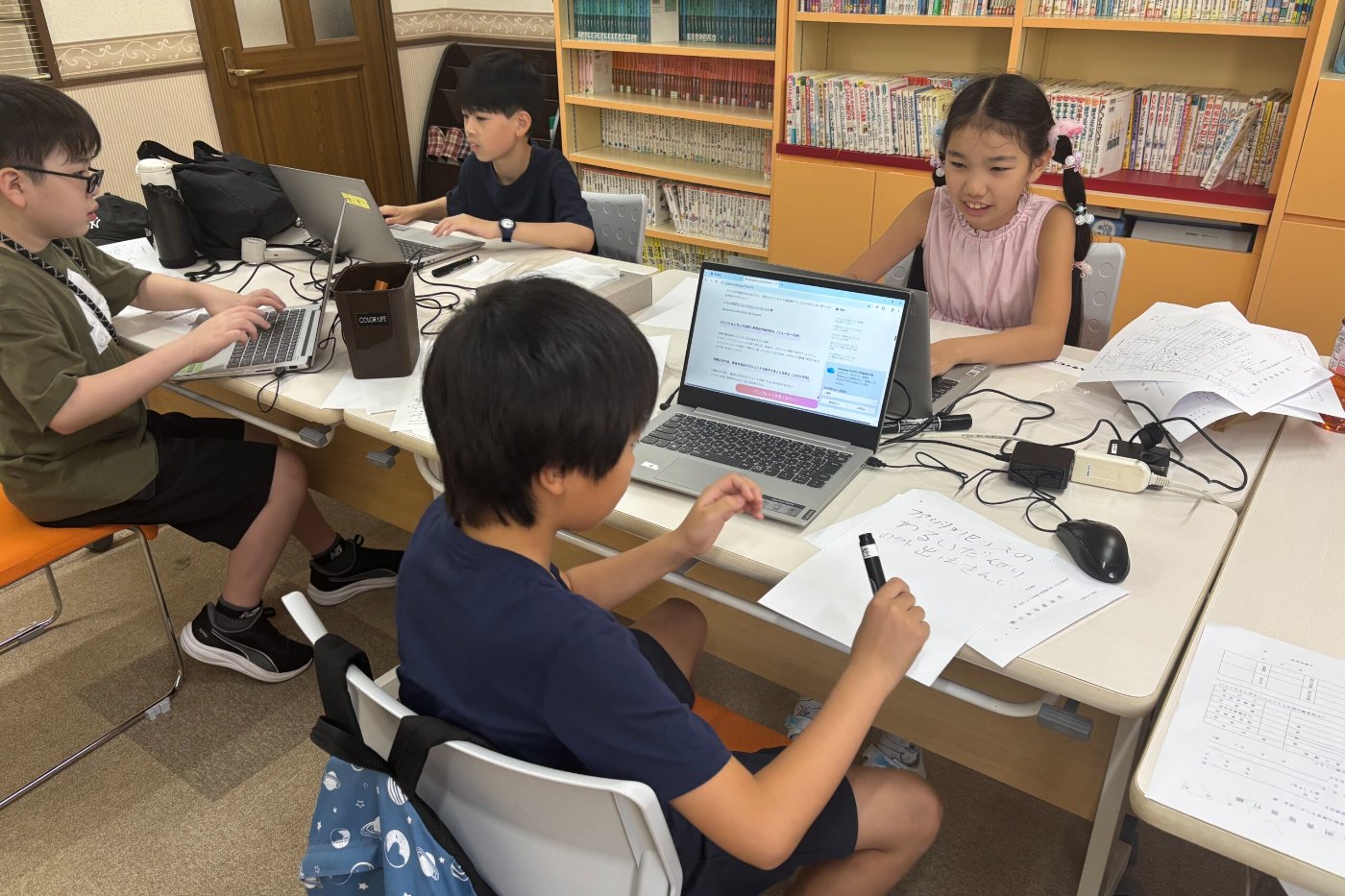
NIJIN Academy is an alternative school in Japan for elementary and junior high school students who do not fit conventional school, opened in September 2023 by NIJIN Inc. It is hybrid: children join from home through a metaverse campus, choose from about 100 live online classes a month, and can also attend physical classrooms. NIJIN describes it as one of the largest alternative schools in Japan.
Figures are those published on NIJIN’s official websites.
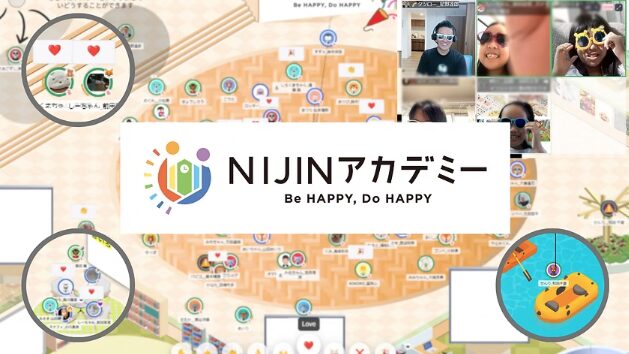
NIJIN is now looking for one person to start NIJIN Academy Nigeria and lead it as both business head and principal: the Country Head. It is not a franchise. You build the school with NIJIN and decide how its experience fits Nigerian children, parents and your state’s rules.
- Two ways to start. Set up a local company together as a shareholder (for example, 20% for you and 80% for NIJIN; if you invest, the guide is JPY 1 to 2 million from you and JPY 4 to 8 million from NIJIN, decided together). Or start on a service contract, even as a side job alongside your current work, and decide later whether to become a co-owner. Investment is optional.
- Compensation, as a guide. 10% of revenue excluding tax, capped at JPY 50 million: JPY 100 million of revenue gives JPY 10 million, JPY 200 million gives JPY 20 million. This is a guide, not a forecast or a promise of income. With no revenue, the formula pays nothing. If you hand part of the role to someone else, they are paid from your 10%.
- Who fits. Leadership, management, business ability and the skills of a principal. Teaching experience is not required. Experience of running and hiring for a team carries over directly. English is enough; Hausa, Yoruba or Igbo and Japanese are a plus.
- Everything else, including contract type, location and timing, is to be discussed in the interview.
Questions and answers
How do I register a private school in Nigeria?
Register the owning organisation with the CAC (business name, company or incorporated trustees) on the Company Registration Portal, then apply to your state’s Ministry of Education or quality assurance office for approval of the school. In Lagos, applications go to OEQA in Alausa, Ikeja.
Is CAC registration enough to start a school in Nigeria?
No. The CAC certificate shows that the owner exists as a business or non-profit. Permission to run a school comes from the state. Lagos, for example, has directed unapproved private schools to register.
How do I start a nursery or primary school in Nigeria?
The same two approvals apply, with the state’s standards for younger children. Ask which office approves nursery and primary schools. Many founders start with nursery and lower primary and add a class each year.
How much does it cost to start a school business in Nigeria?
It depends too much on location and size for one honest figure. Use the cost items table above and check official CAC and state fees on their own websites.
How do I run a private school successfully in Nigeria?
Collect fees on a clear schedule, pay teachers on time, keep approval and safety records current, protect children, and ask every family that leaves why.
Is the NIJIN Country Head a job or a business?
It is closer to founding a business, as a co-owner of a local company or on a service contract. Compensation, as a guide, is 10% of revenue, capped at JPY 50 million, and is not guaranteed.
Build a school in Nigeria, with a team behind you
NIJIN is looking for one founder to start and lead NIJIN Academy Nigeria. Teaching experience is not required, investment is optional, and you can start on a service contract alongside your current work.
Where to go next
Related guides for founders
- How to raise funds for a school: options for new founders
- How to start a school without money: what is possible
- Franchise vs own business in education: which fits you?
- Out-of-school children: the rate and the causes
- How to start an education business
- How to open a school in Pakistan
Sources
All figures are quoted with the year they refer to. Official pages were checked in November 2026; please check the originals for later updates.
- https://www.cac.gov.ng/
- https://www.cac.gov.ng/services/company-registration
- https://www.cac.gov.ng/services/business-name
- https://www.cac.gov.ng/services/incorporated-trustees
- https://oeqalagos.com/
- https://oeqalagos.com/lasg-orders-yet-to-be-approved-private-schools-to-register-with-oeqa/
- https://oeqalagos.com/lagos-presents-provisional-approval-to-101-private-schools/
- https://www.unicef.org/nigeria/press-releases/world-childrens-day-nigeria-and-unicef-unveil-report-state-nigerias-children-urging
- https://www.unicef.org/nigeria/education
- https://www.unesco.org/gem-report/en/publication/2025sdg4scorecard
- https://nijin.co.jp/recruit/nijin-academy-nigeria-country-head/
- https://academy.nijin.co.jp/