For education founders in India
Open schooling in India is a public system in which a learner registers with an open school board, either the National Institute of Open Schooling (NIOS) or a State Open School, studies at their own pace with self-instructional material and help from a study centre, and earns a recognised Class 10 or Class 12 certificate by passing the board’s examinations, held twice a year. For anyone who wants to start a school or a learning centre, the key point is this: the board certifies, but it does not run the place where most learners actually study. That place is what founders can build.
This guide explains how the system works, who it is for, which states have their own open school, and how admission and examinations run, using only official NIOS pages, state open school websites and the National Education Policy 2020.
In this article
- What open schooling in India is
- The open schooling system in India: NIOS and State Open Schools
- Which states have a State Open School
- Courses, levels and entry ages
- How admission and examinations work
- Who open schooling is for
- Is an open school certificate recognised?
- What a founder can build around open schooling
- A model from Japan for children who do not fit school
- Questions and answers
What open schooling in India is
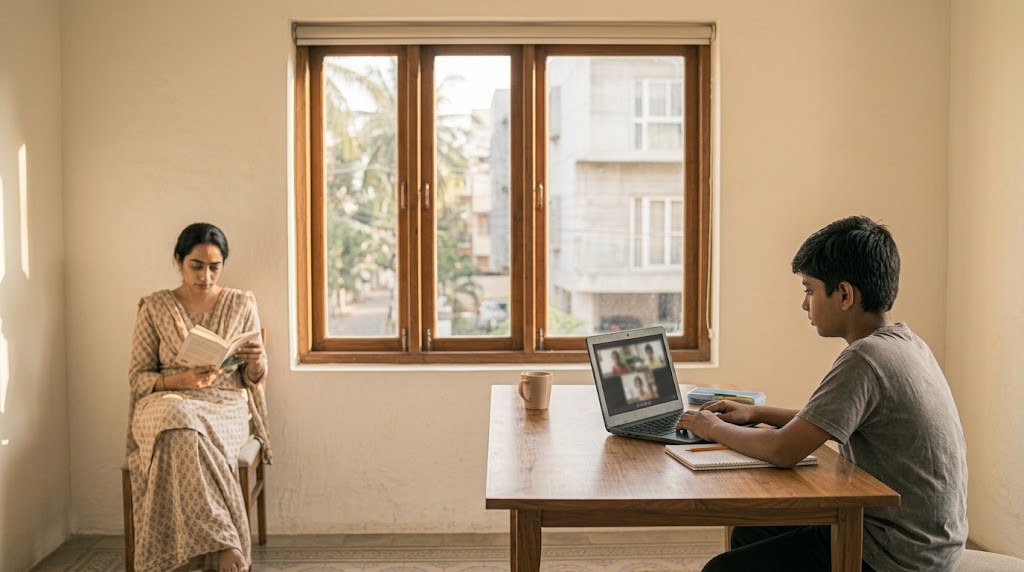
A regular school asks a child to attend on fixed days and move up one class each year. Open schooling removes most of those conditions. The learner chooses subjects, studies from self-instructional material, attends contact classes at a study centre where offered, and sits examinations when ready. The open board issues the certificate.
| Question | Regular school (CBSE, CISCE or State Board) | Open schooling (NIOS or a State Open School) |
|---|---|---|
| Where does the learner study? | In the school, on a fixed timetable | At home or at a study centre, at their own pace |
| Who issues the certificate? | The board the school is affiliated to | The open school board itself |
| How often are exams held? | Usually once a year for Class 10 and 12 | NIOS public exams twice a year, in April–May and October–November |
| Can subjects be passed one by one? | Generally no | Yes, through credit accumulation |
| Main support for the learner | Teachers in the classroom | Study material, contact classes and tutor-marked assignments |
The open schooling system in India: NIOS and State Open Schools
According to a NIOS regional centre page, open schooling began as a CBSE project in 1979. The Government of India set up the National Open School in 1989; a 1990 Gazette notification gave it the authority to examine and certify learners, and it was renamed NIOS in July 2002. NIOS calls itself the largest open schooling system in the world.
NIOS says it cannot serve every region and language alone, so it has encouraged states to set up State Open Schools (SOSs) that teach in regional languages and certify in their own name. The National Consortium for Open Schooling (NCOS), launched in September 1997 with its secretariat at NIOS, coordinates them.
The National Education Policy 2020 (paragraph 3.5) commits to expanding these programmes “for meeting the learning needs of young people in India who are not able to attend a physical school”, and encourages states to create or strengthen State Institutes of Open Schooling.
Which states have a State Open School
We found no single, dated national list, and answers online disagree. The table names only open schools confirmed on an official source: the NIOS admission portal’s list of recognised boards, or the open school’s own government website.
| State | Open school (name as published) | Where we confirmed it |
|---|---|---|
| Andhra Pradesh | Andhra Pradesh Open School Society | NIOS list of recognised boards |
| Bihar | Bihar Board of Open Schooling and Examination (BBOSE) | BBOSE official portal (Government of Bihar) |
| Chhattisgarh | Chhattisgarh State Open School, Raipur | NIOS list of recognised boards |
| Haryana | Haryana Open School, Bhiwani | NIOS list of recognised boards |
| Jammu and Kashmir | J&K State Open School, Srinagar | NIOS list of recognised boards |
| Karnataka | Karnataka Open School, Mysore | NIOS list of recognised boards |
| Kerala | Kerala State Open School, Thiruvananthapuram | NIOS list of recognised boards |
| Madhya Pradesh | Madhya Pradesh State Open School Education Board, Bhopal | NIOS list; MPSOS official website |
| Punjab | Punjab Open School | NIOS list of recognised boards |
| Rajasthan | Rajasthan State Open School, Jaipur | NIOS list of recognised boards |
| Telangana | Telangana Open School Society (TOSS) | TOSS official website (Government of Telangana) |
| West Bengal | West Bengal Council of Rabindra Open Schooling | NIOS list; council’s official website |
An undated NIOS regional centre page says SOSs exist in 17 states, adding Tamil Nadu, Uttar Pradesh, Assam, Delhi, Himachal Pradesh and Gujarat to most of the states above. It predates Telangana’s open school, so treat it as history. Before planning around any SOS, check on its own website that it is admitting learners this session, and in which languages.
Courses, levels and entry ages
NIOS offers five kinds of course. NEP 2020 asks NIOS and the State Open Schools to offer the same range.
| Course | Equivalent to | Entry condition published by NIOS |
|---|---|---|
| Open Basic Education (OBE), Levels A, B and C | Class 3, 5 and 8 | Offered through Accredited Agencies |
| Secondary | Class 10 | At least 14 years old on 31 January of the current year; passed Class 8, or a self-certificate that the learner has studied enough to pursue the course |
| Senior Secondary | Class 12 | At least 15 years old on 31 January of the current year; passed Secondary from a recognised Board |
| Open Vocational Education | Skill courses | Course-specific |
| Life Enrichment Programmes | Non-certificate learning | Course-specific |
Two details matter for founders. The self-certificate route lets a young person without a Class 8 pass enter Secondary, which is why open schooling is often the way back after leaving school early. And the NIOS portal notes a mandatory minimum gap of two years between passing Class 10 and Class 12, so a “fast track” promise to families would be wrong. NIOS lists seven media of instruction at Secondary (Hindi, English, Urdu, Marathi, Telugu, Gujarati and Malayalam) and three at Senior Secondary.
How admission and examinations work
NIOS admission is online, on sdmis.nios.ac.in, in streams and blocks. For 2026-27 the portal lists Stream 1 Block 1 at the normal fee from 16 March to 31 July (first exam April/May 2027) and Block 2 from 16 September to 31 January (first exam October/November 2027), with late fees after that.
- Register and choose subjects. Online, or through a study centre or regional centre.
- Study. NIOS supplies self-instructional material with audio and video; tutor-marked assignments (TMAs) go through the student portal.
- Sit the public exam. Twice a year, in April–May and October–November.
- Keep what you pass. Nine examination chances over five years, with credit accumulation.
- Use On-Demand Examination if needed. ODES papers are taken at NIOS headquarters in Noida, regional centres and designated Kendriya Vidyalayas.
Under Transfer of Credit (TOC), a learner of a recognised board who passed at least one subject but did not complete the course can carry eligible subjects into NIOS. Under part admission, a learner may take up to four subjects to update a qualification, for a mark sheet only.
What this means in practice. The hard part is rarely the rules. It is months of self-study without a teacher, a timetable or classmates. That gap is where a learning centre earns its place.
Who open schooling is for
NEP 2020 cites the NSSO 75th round survey of 2017-18: 3.22 crore children aged 6 to 17 were out of school. It makes bringing them back a top priority, with open and distance learning among the “multiple pathways”. Open schooling serves quite different groups:
- Young people who dropped out after Class 8 and want a Class 10 certificate (latest figures in our guide to the school dropout rate in India)
- Learners who failed subjects at another board and want to finish them
- Children and teenagers for whom a regular classroom is not working: anxiety, illness, bullying, or long periods away from school
- Home-educated learners who need a recognised certificate (see homeschooling in India)
- Young people in sport, the arts or work, and adults returning to education
Each group needs something different from the adults around them, which a board that posts study material cannot provide.
Want to build a place for learners the regular school misses?
NIJIN Academy is an alternative school in Japan for children who do not fit conventional school, opened in September 2023. NIJIN is looking for one founder to start and lead NIJIN Academy India as its business head and principal. Teaching experience is not required.
See the Country Head role in IndiaIs an open school certificate recognised?
NIOS was set up by the Government of India, and the 1990 Gazette notification gave it the power to examine and certify. Its regional centre pages carry notices such as one on recognising NIOS qualifications for admission to AICTE-approved institutions, and a Government of Tamil Nadu order on the equivalence of NIOS Class 10 and 12 certificates for employment. State Open Schools are created by their state governments; the Telangana Open School Society, for example, publishes its MHRD, COBSE and DoPT recognitions.
Recognition still depends on who reads the certificate. A university, entrance exam or employer may add conditions on subjects or marks, so families should check the rules of the institution they are aiming for. A founder who promises “valid everywhere” is promising something no board controls.
What a founder can build around open schooling
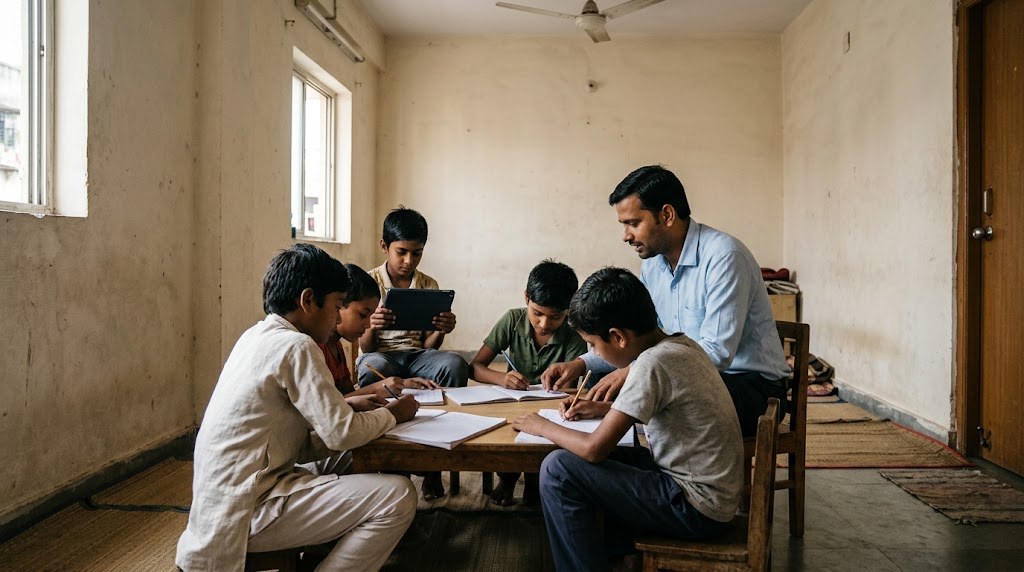
Open schooling separates what a regular school bundles: certification and daily learning. The board certifies. A place, a rhythm, a mentor and peers are left largely to the learner. There are three broad ways to work with the system.
| Route | What you run | What the founder must check |
|---|---|---|
| Become a NIOS study centre (Accredited Institution or Agency) | Contact classes, assignments and often exams for registered NIOS learners | Strict eligibility for an existing, board-affiliated school. See how to start a NIOS study centre. |
| An independent learning centre or small school whose learners register with NIOS or an SOS | Daily mentoring, small-group teaching, wellbeing support and exam preparation | How your state classifies the setting and treats learners of school age. Ask the state education department in writing. |
| A hybrid model: online classes plus regular in-person days | A wider range of subjects and peers than one room could offer | Where each child is legally enrolled. See how to start a hybrid school. |
- Which group will you serve first, in which language, and with which board: NIOS or your State Open School?
- Which exam session will your first learners aim at, and who tracks each learner’s subjects and exam chances?
- Who notices if a learner stops coming?
- For learners aged 6 to 14, what is your position under the RTE Act? (See school recognition under the RTE Act.)
This is not legal advice. Rules differ between states; confirm with your state education department and a lawyer before you open.
A model from Japan for children who do not fit school
NIJIN Academy, run by NIJIN Inc., works on this gap in Japan: an alternative school for elementary and junior high school students who do not fit conventional school, many of whom had stopped attending. Children join from home through a metaverse campus and can also go to physical classrooms.
Figures are those published by NIJIN. “Attendance recognition” means the school a child is registered at counts learning at NIJIN Academy as school attendance.
NIJIN is looking for a Country Head to start NIJIN Academy India, as business head and principal. It is not a franchise. You can lead it as a co-owner of a local company (for example, you 20%, NIJIN 80%) or start on a service contract, even as a side job. Investment is optional; if you invest, the guide is JPY 1 to 2 million from you and JPY 4 to 8 million from NIJIN. Either way the compensation guide is 10% of revenue excluding tax, up to JPY 50 million: a guide, not a promise of income.
How NIJIN Academy India would work with NIOS or a State Open School, and in which state, is not decided. Working that out is part of the job; other terms are discussed in the interview.
Questions and answers
Which is the open schooling board in India?
There are two layers: NIOS, the national open school set up by the Government of India, and State Open Schools such as the Rajasthan State Open School or the Telangana Open School Society. Each certifies its own learners.
What are the open schooling options in India?
At NIOS: Open Basic Education (Levels A, B and C), Secondary, Senior Secondary, vocational and life-enrichment courses, plus On-Demand Examination, Transfer of Credit and part admission. State Open Schools add courses in regional languages.
Which is the best open schooling in India?
No official ranking exists. Compare the medium of instruction, the subjects offered, the nearest study and exam centres, and the rules of the college or employer the learner is aiming for.
Is the open education system in India the same as an open college?
No. Open schooling leads to school certificates up to Class 12. Degree-level open and distance learning is a separate system run by universities; check each university’s rules.
Can a student who dropped out of school join NIOS?
Yes, if they meet the entry conditions: for Secondary, age 14 on 31 January and a Class 8 pass or a self-certificate. Passed subjects from another board may carry across through Transfer of Credit.
Is the Country Head role a job or a business?
It is closer to starting a business: you lead NIJIN Academy India as a co-owner or, to begin with, on a service contract. Compensation is, as a guide, 10% of revenue excluding tax, capped at JPY 50 million, not a fixed salary. Terms are discussed in the interview.
Build the place open-school learners are missing
India already gives young people a second route to a certificate. What many of them lack is a place to learn, and adults who notice them. If you have led an organisation and hired people, and you want to build that place, read the role. Teaching experience is not required.
See the Country Head role in IndiaWhere to go next
NIJIN Academy Country Head pages are open for several countries, and the global page covers every other country.
Related guides for founders
- How to start a NIOS study centre: eligibility, documents and fees
- Homeschooling in India: what the RTE Act says
- School dropout rate in India: the latest figures
- Alternative schools in India
- Microschools in India
- How to start a school in India
- Democratic schools in India
Sources
Pages were opened on 9 November 2026. NIOS and State Open School rules change each session; check the current prospectus.
- https://rcchandigarh.nios.ac.in/at-a-glance.html
- https://rcdelhi.nios.ac.in/ncos-2.html
- https://sdmis.nios.ac.in/
- https://static.pib.gov.in/WriteReadData/userfiles/NEP_Final_English_0.pdf
- https://mpsos.mponline.gov.in/
- https://www.telanganaopenschool.org/
- https://bboseonline.bihar.gov.in/WP/BBOSE/Default.aspx
- https://www.wbcros.in/
- https://nijin.co.jp/recruit/nijin-academy-india-country-head/